Leave Your Message
0%

Picking out the right equipment can honestly be pretty tricky sometimes. Take the Single Shaft Paddle Mixer, for example—it's a pretty popular pick across lots of different industries. I remember John Smith from MixTech Solutions mentioning once that, "Choosing the right mixer is key to keeping things efficient," and honestly, his advice really hits home for anyone trying to streamline their operations.

When you're thinking about going with a Single Shaft Paddle Mixer, it’s a good idea to really think about what you need. Like, what kind of materials are you working with? And how much capacity do you actually need? It’s crazy how many folks skip over asking these questions, and that’s when things can get a bit messy—inefficiencies creep in, resources get wasted, you name it.

Don’t forget to check out the design and size of the mixer too. Not all Single Shaft Paddle Mixers are one-size-fits-all. Some might not fit your production scale, and that can be a real pain. Every little detail matters if you want things to turn out right. So take your time, weigh your options, and don’t hesitate to ask an expert if you’re feeling stuck. Making the right choice here can really make a big difference in your success down the line.
How to Choose the Right Single Shaft Paddle Mixer for Your Needs

Understanding Single Shaft Paddle Mixers and Their Applications

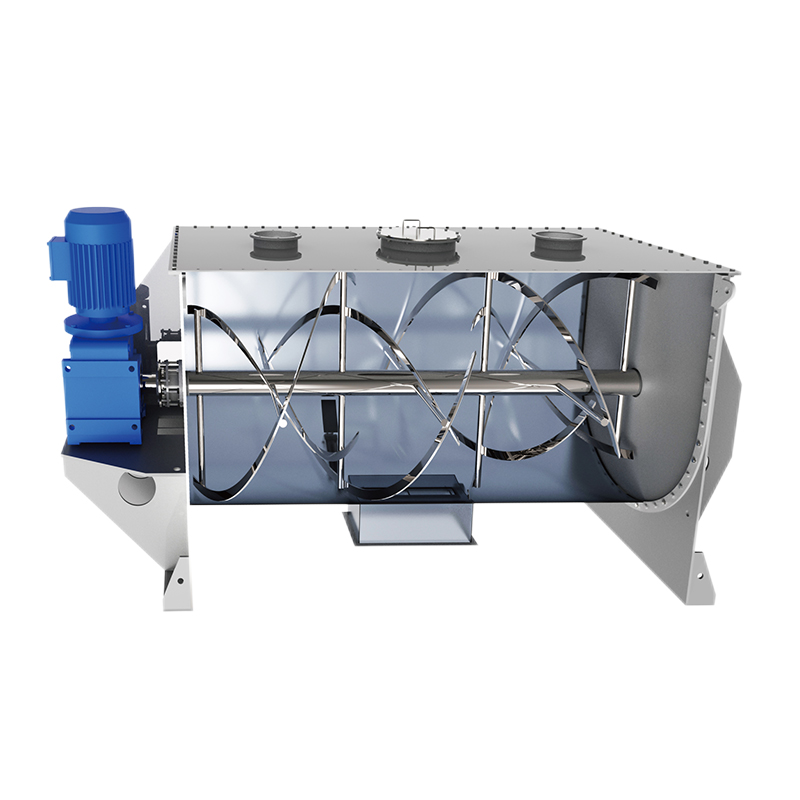
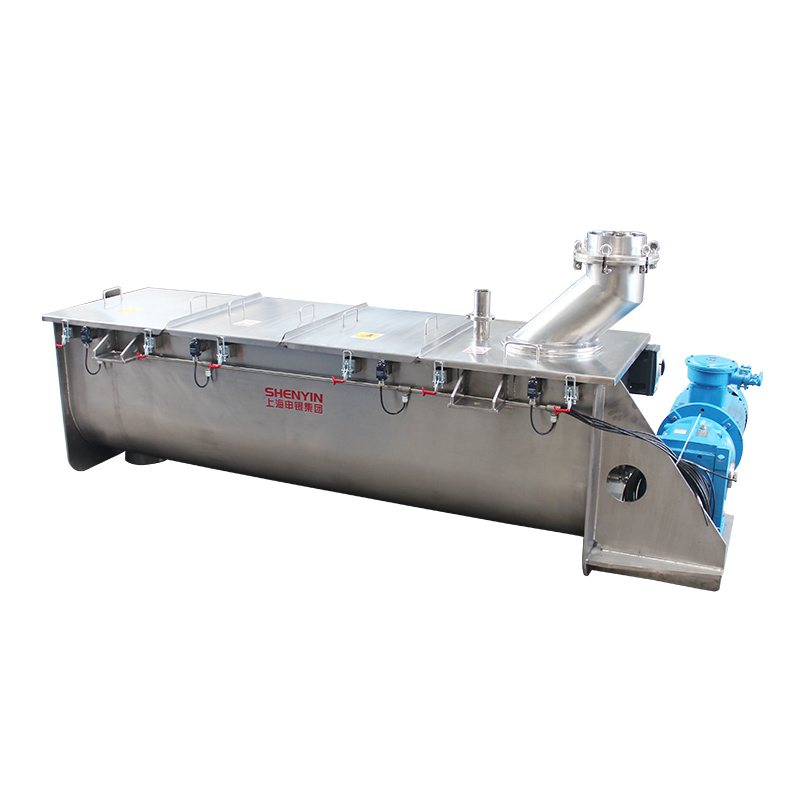
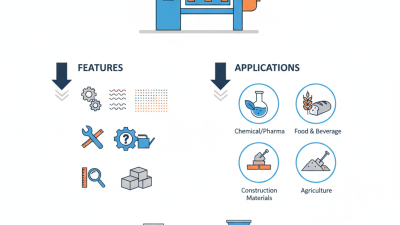
Single shaft paddle mixers are essential in many industries. They are used for various applications, including food processing, chemical production, and construction. Understanding how they work can guide you in making the right choice for your needs. These mixers combine materials efficiently while maintaining a homogeneous mixture.

When selecting a single shaft paddle mixer, consider the type of materials involved. Are you mixing powders, granules, or pastes? Each material requires different mixing techniques. The design often influences performance. For instance, paddle shape and configuration matter in achieving the desired consistency.

It’s also crucial to reflect on capacity needs. A larger unit may seem advantageous, but it can lead to inefficiencies with smaller batches. Maintenance requirements should not be overlooked either. Complex designs can be harder to clean and may wear out faster. Balancing these factors is essential for optimal operation in any setting.

Key Specifications to Consider When Selecting a Paddle Mixer

When selecting a paddle mixer, key specifications matter. The mixer’s capacity should align with your production needs. A larger capacity means more materials can be processed simultaneously. However, this might lead to inefficiencies if your batch sizes are small.

Mixing speed is another critical factor. A slower speed may not achieve the desired mix, while a high speed can result in over-processing. It's essential to assess your product requirements carefully. You might need to experiment with different speeds to find the sweet spot.

Consider the mixing mechanism's design. A Custom Single Shaft Paddle Mixer offers specific advantages for certain materials. For instance, if you're working with denser materials, a robust design can improve efficiency. Pay attention to durability too. A well-built mixer will serve you longer, but cheaper models might save money initially. This isn't always the best route. Think about long-term maintenance costs, as they can add up.

Assessing the Material Compatibility for Your Mixing Needs

Choosing the right single shaft paddle mixer begins with understanding material compatibility. Different materials have unique properties that affect blending. For instance, dry powders require different considerations compared to wet slurries. Knowing the density, viscosity, and flow characteristics is essential.

Consider the materials you plan to mix. Are they susceptible to heat? Do they bind easily? Some materials, like clays, may clump together. Others, like granules, might flow freely. Understanding these traits can inform your decision. Mixing abrasive materials demands more durable paddles.

Testing your chosen mixer with real materials can reveal potential issues. A brilliant design might not work with your specific formulation. It's essential to adjust based on feedback. Remember, what seems perfect on paper may not translate in practice. Stay open to making changes as you learn.

Evaluating Performance Factors: Capacity and Mixing Times

How to Choose the Right Single Shaft Paddle Mixer for Your Needs

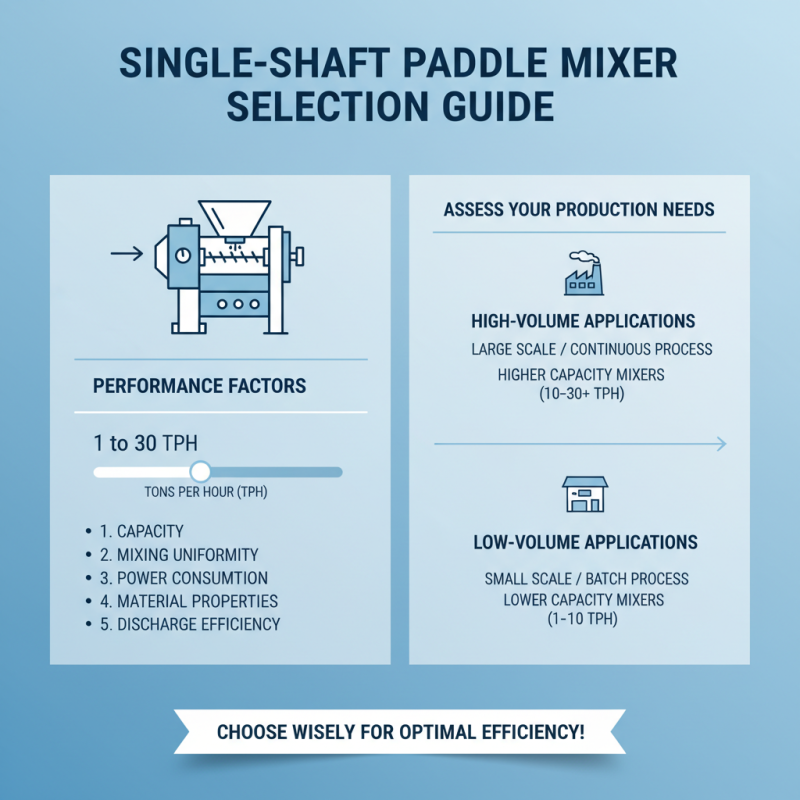
When choosing a single shaft paddle mixer, evaluate performance factors carefully. Capacity is a critical factor. Many mixers can handle 1 to 30 tons per hour. Yet, not all applications need such high volumes. Assess your production requirements. For small-scale operations, a lower-capacity mixer may suffice.

Mixing times also play a significant role. Optimal mixing may take anywhere from 3 to 15 minutes, depending on the materials involved. For example, powder and liquid mixtures may require more time to achieve uniformity. A study indicated that inefficient mixing could lead to product inconsistency. This can affect quality and waste valuable resources.

Consider CE Certification Single Shaft Paddle Mixer. This certification ensures that the equipment meets essential safety and environmental standards. It's crucial for compliance and operational efficiency. However, not all mixers will provide reliable performance. Potential buyers should research each model's specifications and user reviews. Quality varies widely among mixers on the market today.

Maintenance and Durability Considerations for Paddle Mixers

When selecting a single shaft paddle mixer, maintenance and durability are paramount. These mixers play a crucial role in ensuring material homogeneity. A study from the International Journal of Food Engineering highlights that equipment failure can result in a 30% decrease in production efficiency. Regular maintenance can prevent these losses.

Paddle mixers are subject to wear and tear. Over time, components like paddles and shafts can degrade. It's essential to periodically check for signs of wear, such as uneven mixing or unusual noises. This vigilance can help extend the lifespan of the machinery. Tips for maintenance include scheduling routine inspections and keeping a log of any repairs done. This habit could enhance operational effectiveness.

Operating under heavy loads can also take a toll on a mixer’s durability. Manufacturers suggest monitoring the mixing frequency and load to avoid overuse. Investing in higher-quality materials, like stainless steel, can improve durability, though it may come with a higher initial cost. Balancing cost and quality can be tricky, but the right choice will save money in the long run.

Budgeting for Your Paddle Mixer Purchase: Cost vs. Features

Budgeting for a paddle mixer purchase requires careful consideration. You often face a trade-off between cost and features. A basic Single Shaft Mixer might come with a lower price tag. However, it may lack advanced functionalities. Features like controlled speed settings or specialized blades can drive up costs significantly.

Industry data reflects that mixers with enhanced features can increase productivity by up to 25%. This return on investment can justify the higher initial spending. An entry-level model might be sufficient for simple applications, yet it may not handle more complex mixing tasks efficiently. It's crucial to evaluate your needsbefore making a decision. Investing in a reliable Single Shaft Mixer could reduce downtime and maintenance costs.

The market also shows that mixers with additional features have a longer lifespan. For example, mixers equipped with better materials and technology can last 15-20 years, while cheaper models often break down sooner. Balancing cost and features is essential. Reflect on your specific operational demands to avoid overspending or selecting an inadequate machine. Each choice carries its consequences.

Where to Source the Right Single Shaft Paddle Mixer for Your Operation

When sourcing the right Single Shaft Paddle Mixer for your operation, consider focusing on specific needs. Analyze production volume, material type, and mixer capacity. Reports suggest that 70% of mixers fail due to improper sizing. This can lead to inefficient mixing or costly downtime.

Local suppliers often offer tailored solutions. Check out online platforms and trade shows for various models. Consider vendors who provide support and maintenance. Data shows that companies partnering with reliable distributors report a 30% increase in efficiency. A strong after-sales service can reduce operational hiccups.

Tips: Assess your material handling requirements. Ensure your Single Mixer Machine fits seamlessly into your workflow. Additionally, explore energy consumption data. An efficient mixer can decrease operational costs.

Take your time to evaluate options and trust your instincts. Flexibility matters in the long run.

FAQS

: What is the main purpose of the product?

: The product aims to provide enhanced user experience. It addresses common needs in daily life.

How do I use the product effectively?

Follow the user guide closely. Practice with it regularly for better familiarity and skill.

Can it be used by beginners?

Yes, beginners can use it. Some may find it challenging at first, requiring patience.

What are the common challenges users face?

Users often struggle with setup and adjustments. They might need to revisit instructions multiple times.

Are there maintenance tips I should follow?

Regular cleaning is essential. Keep it in a dry place to ensure its longevity and effectiveness.

How can I troubleshoot any issues?

Check the manual for guidance. Sometimes, a simple reset resolves many problems.

Is there a return policy?

Yes, there is a return policy. However, terms may vary, so it’s wise to review them carefully.

How long does delivery usually take?

Delivery times can vary. Sometimes, it may be delayed due to unforeseen circumstances.

Can I ask for support if needed?

Yes, support is available. Engaging with customer service can clarify your doubts effectively.

What should I do if I’m unhappy with the product?

Reflect on your usage experience. If still unsatisfied, consider the return process and share feedback.

Conclusion

When selecting the right Single Shaft Paddle Mixer for your operations, it is essential to understand its functionalities and applications. Key specifications such as capacity, mixing times, and material compatibility play a crucial role in ensuring that the mixer meets your unique requirements. Evaluating performance factors helps in determining the efficiency of the mixing process, while maintenance and durability considerations ensure long-term reliability.

Budgeting is also a significant aspect, as potential buyers must balance cost against features to make an informed decision. Lastly, sourcing the appropriate Single Shaft Paddle Mixer from reliable suppliers can further enhance your operational efficiency. By considering these factors, you can optimize your mixing processes and achieve better results in your production line.

Jackson

Jackson

Jackson is a dedicated marketing professional at Shanghai Shenyin Machinery (Group) Co., Ltd., where he leverages his extensive expertise in the machinery industry to promote the company’s innovative products. With a deep understanding of the market dynamics and customer needs, Jackson plays a......
Previous The Comprehensive Guide to Sourcing High Quality Mixer Accessories