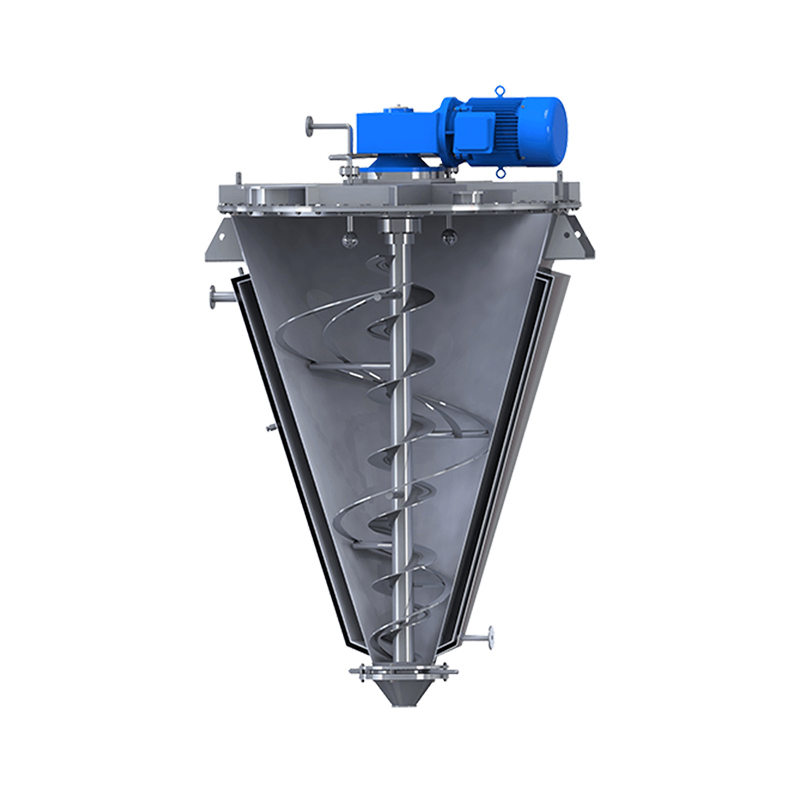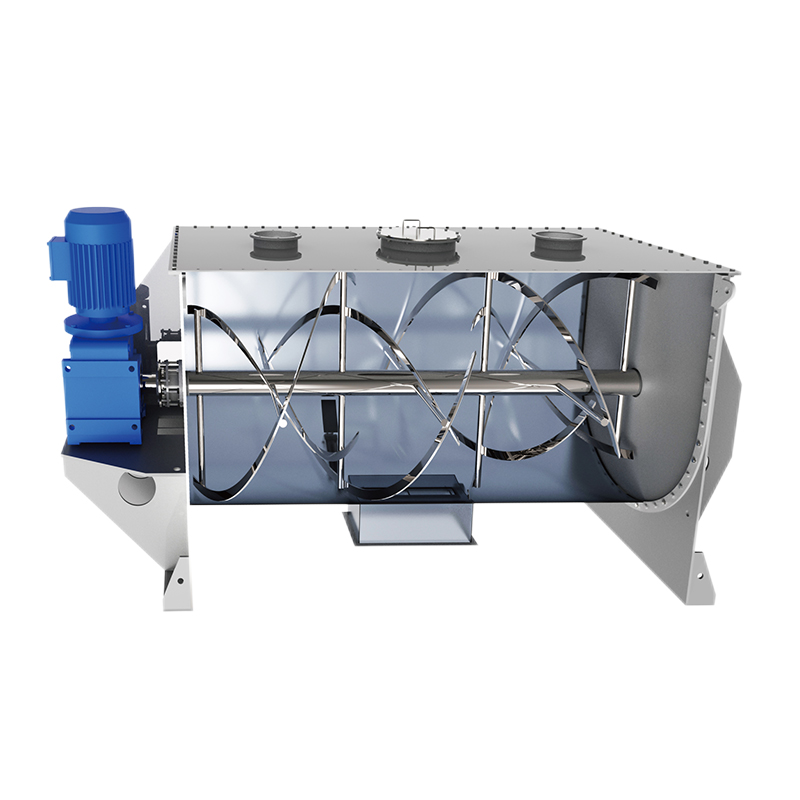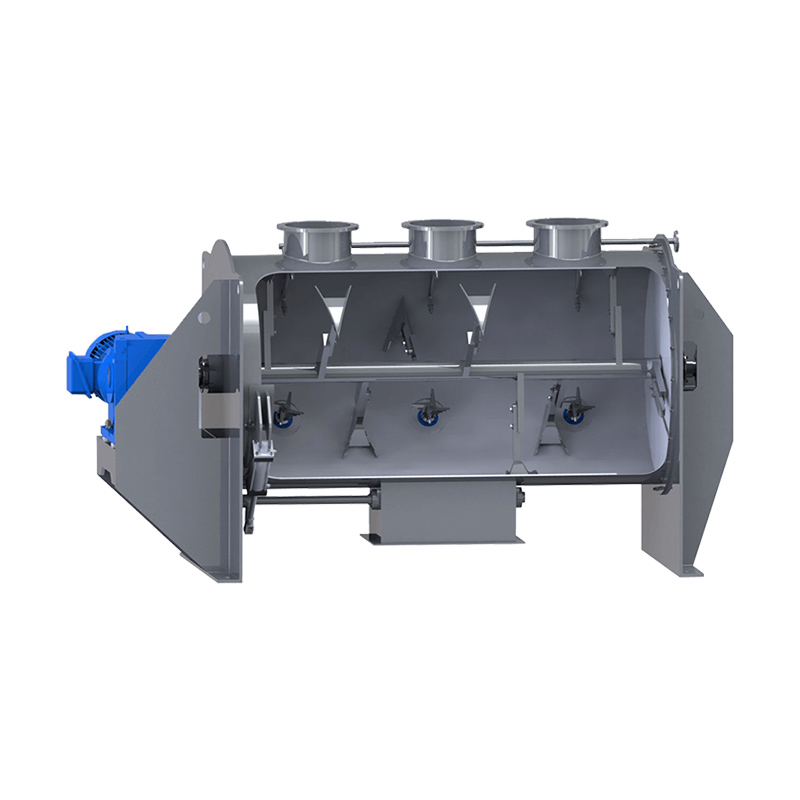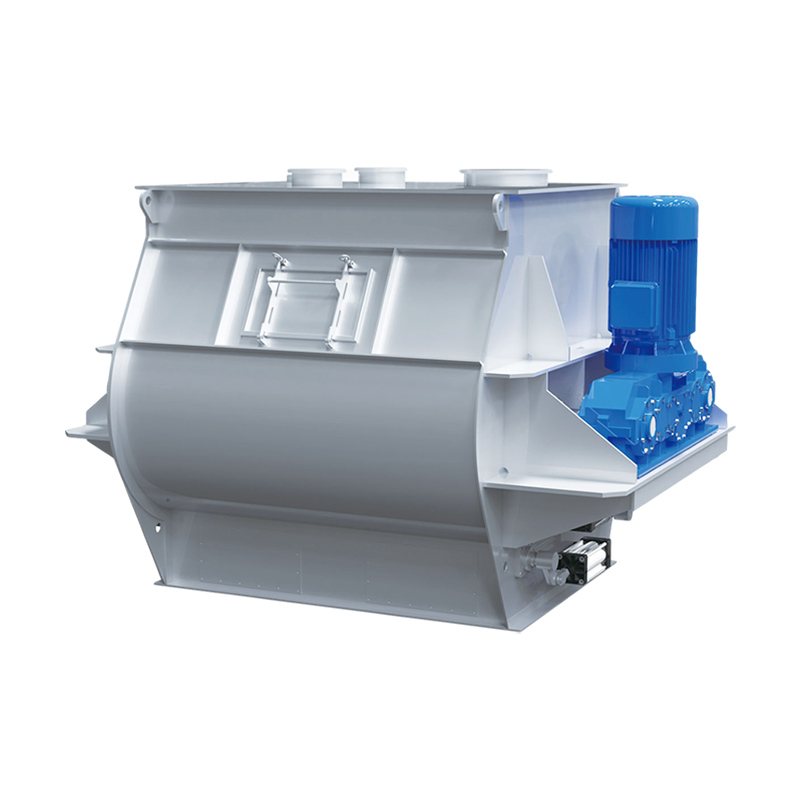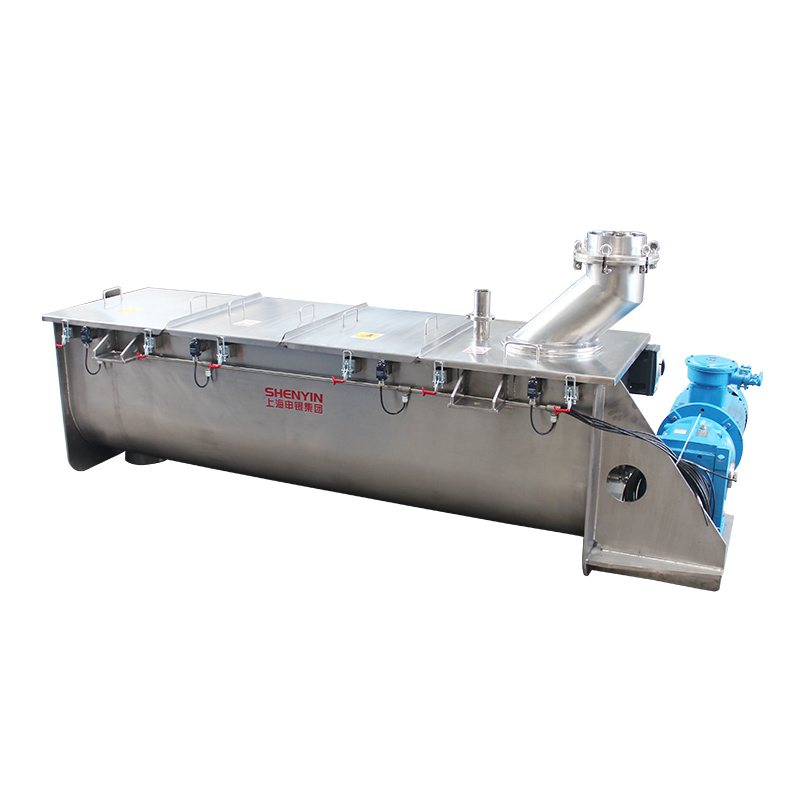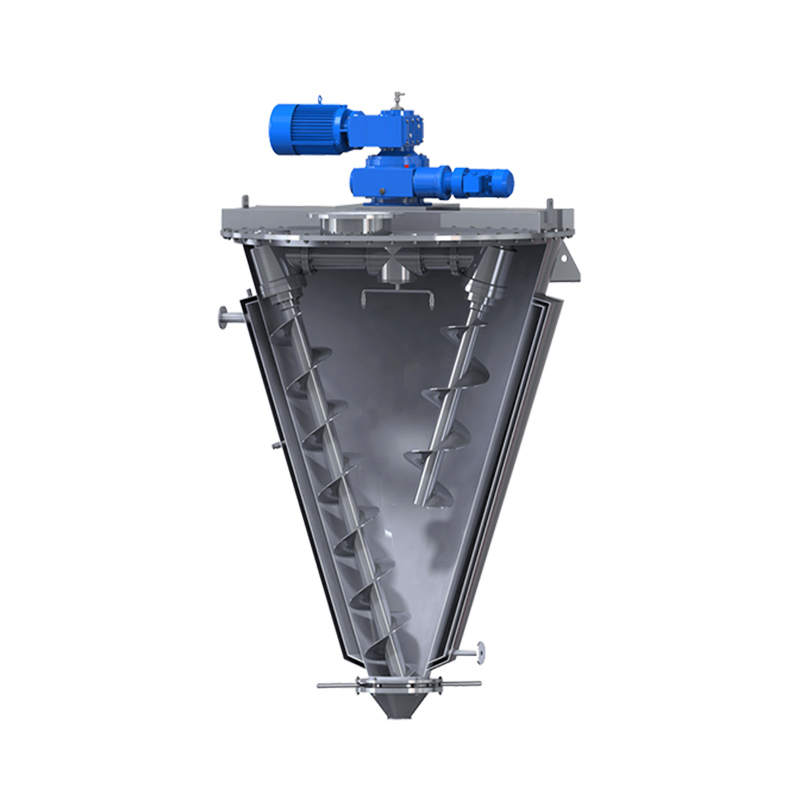
A Paddle Mixer is a pretty handy tool in a bunch of industries, like food processing and pharmaceuticals. It works by using rotating paddles to blend ingredients efficiently. These paddles create a smooth, flowing motion that helps achieve a consistent mix — super important for making sure the final product turns out just right. Companies like EquipNet rely on Paddle Mixers to step up their production game.
Getting the hang of how a Paddle Mixer operates can really help businesses boost their quality. Honestly, the design isn’t complicated at all — it’s quite simple, but still smart. As the paddles spin, they lift, fold, and turn the ingredients over and over, making sure everything gets evenly mixed. It sounds easy, but nailing that perfect blend actually involves paying close attention to things like speed and timing.
That said, there are some tricky parts. Overdoing it on mixing can sometimes change the texture in ways you don’t want. So, finding that sweet spot between mixing things thoroughly and keeping the ingredients intact is pretty important. Watching how different materials react during mixing can really help fine-tune the process. Sometimes, these hurdles inspire new ideas and a deeper understanding of what's really going on inside the mixer — which can lead to even better results down the line.
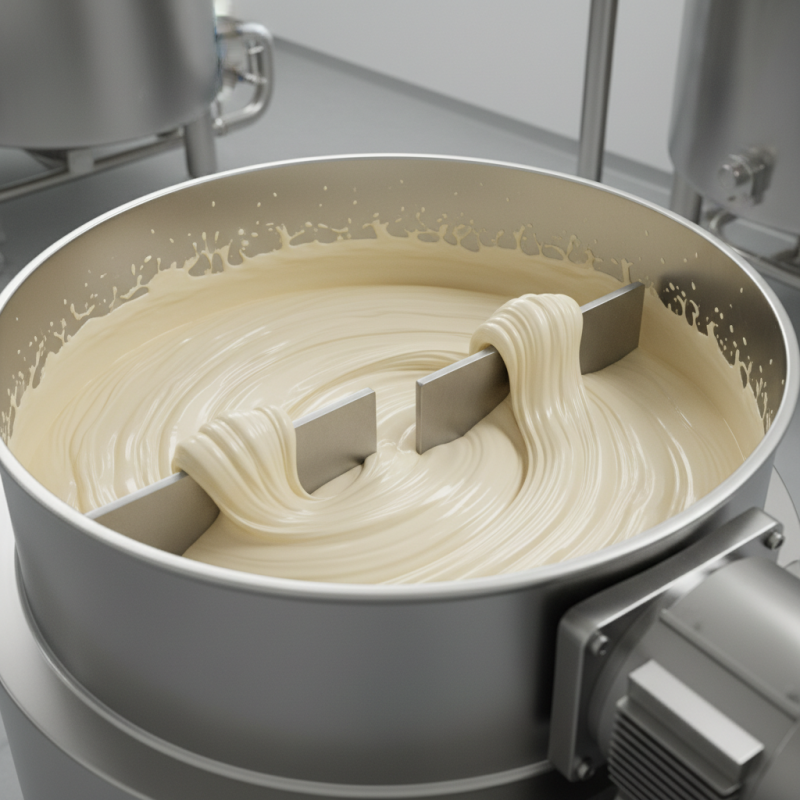
A paddle mixer is an essential piece of equipment in various industries. It is designed for blending, mixing, and homogenizing materials efficiently. The primary function revolves around the effective incorporation of solids and liquids. This device is widely used in food processing, chemical manufacturing, and pharmaceuticals. According to industry reports, the global paddle mixer market is projected to grow at a compound annual growth rate of 5% from 2023 to 2030.
How does a paddle mixer work? It consists of a set of rotating blades or paddles. These paddles move materials in multiple directions. This movement ensures even distribution and reduces clumping. In many instances, users have noted that achieving a uniform mix is not always straightforward. Operator technique and material characteristics can affect the outcome. Variations in particle size or moisture content often lead to inconsistent results.
The efficiency of a paddle mixer can vary widely based on its design and application. Some studies suggest that selecting the right paddle size and speed is critical. Failure to do so can result in suboptimal mixing. In the end, finding the right balance between speed and material type is key. Even small changes can have significant impacts on the overall performance of the Paddle In Mixer. Understanding these nuances is crucial for operators aiming for high-quality results.
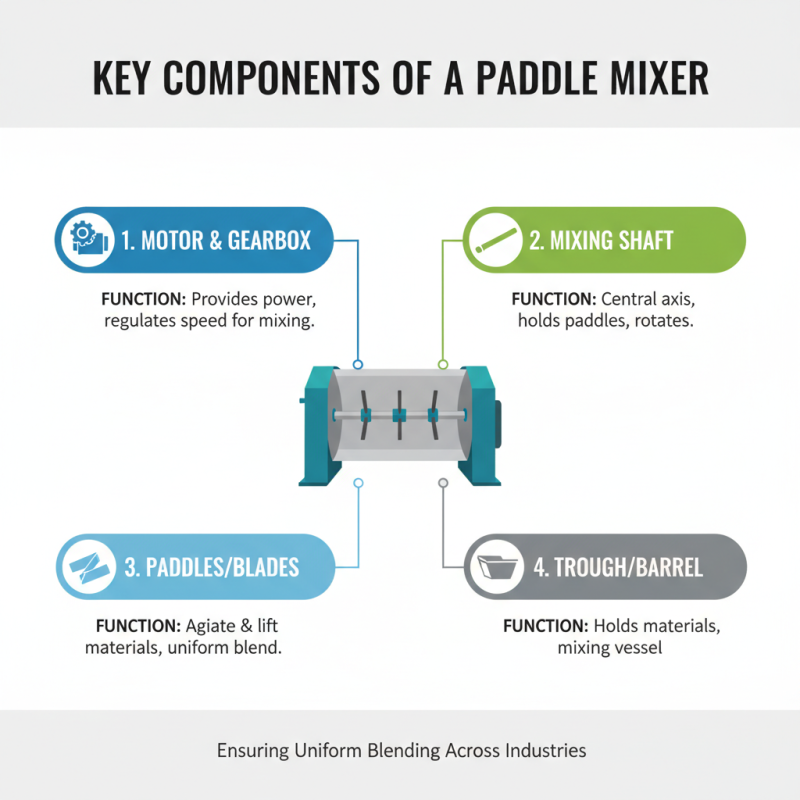
Paddle mixers are essential in various industries. They ensure uniform Mixing Of Materials. Key components define how well these mixers operate.
The paddle blades are crucial. They move the materials efficiently. The design of these blades affects mixing speed and quality. Different shapes can handle different materials. For instance, some blades work better with dry powders, while others suit wet materials.
The mixing chamber also plays a vital role. It dictates the volume and shape of materials processed. A well-designed chamber minimizes dead zones, ensuring all ingredients blend evenly.
**Tip:** Regularly check paddle wear. Replacing worn paddles can improve mixing quality.
Another essential component is the drive system. It powers the paddles. The motor’s size must match the mixer’s workload. An inadequate motor can lead to inefficiencies.
**Tip:** Monitor motor performance. Overheating may signal an issue.
Understanding these components helps in optimizing your paddle mixer. Adjusting blade design or motor power can enhance mixing processes in many applications.
Paddle mixers are designed to create consistent and uniform mixtures. They utilize a series of paddles attached to a rotating shaft. These paddles move materials in a way that encourages interaction between components. As a result, the mixer promotes homogeneous mixing.
When materials enter the paddle mixer, they often resist combining. This challenge is part of the mixing process. Paddles effectively push and pull materials, breaking down clumps. It may take several rotations for all components to blend well. Sometimes, achieving the perfect mix requires adjusting speed or time. Mixed results may occur if parameters are not optimized.
Operators need to monitor the process closely. Inadequate mixing may lead to uneven product quality. There can be a tendency to rush, but patience is important. A well-mixed batch can significantly impact the final product. Continuous assessment and minor adjustments are often necessary to ensure success. Homogeneous mixing is not just an outcome; it is an ongoing journey.
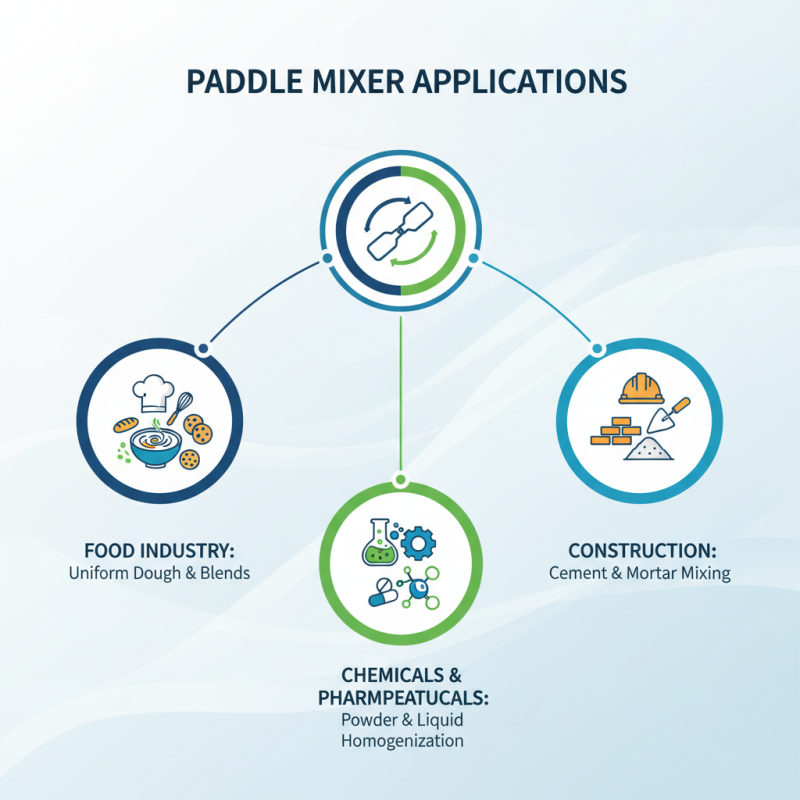
Paddle mixers are crucial in various industries. They provide efficient mixing solutions for many materials. In the food industry, paddle mixers blend powders, liquids, and pastes. They ensure a uniform distribution of ingredients, enhancing flavor and texture. For example, in bakery production, these mixers can evenly combine flour, sugar, and fats, creating a consistent dough.
In the construction sector, paddle mixers play a different role. They mix compounds for concrete or mortar applications. The powerful mixing action ensures homogeneity, which is vital for strength. However, achieving the right consistency can be challenging. Sometimes, operators must adjust settings to get the desired outcome.
Chemical industries also utilize paddle mixers. They create uniform mixtures for paints, coatings, and adhesives. The mixing process needs to be precise; otherwise, the final product may lack quality. Despite their effectiveness, paddle mixers do have limitations. Overmixing can lead to unwanted changes in texture or properties. This is something users need to be mindful of. Paddle On Mixer technology continues to evolve, but careful monitoring ensures the best results.
Paddle mixers are essential tools in various industries. They are designed to blend different materials effectively. However, when compared to other mixers, paddle mixers showcase distinct advantages. Their unique design allows for efficient mixing. This efficiency is especially evident in processes that require consistency and uniformity.
Speed is another critical factor. Paddle mixers excel in rapidly combining ingredients. They often reduce mixing time significantly. This aspect is crucial in high-demand environments. Yet, users must remember that not all materials are suitable for paddle mixers. Some mixtures may not achieve the desired homogeneity. It’s vital to assess the nature of the materials prior to mixing.
In many labs, the Lab Paddle Mixer stands out for its versatility. It can handle both dry and wet ingredients. However, its performance can vary based on the formulation. Users should remain mindful of adjustments needed for specific applications. Consistency is key, but achieving it can sometimes be challenging. Each mixing process may require different settings and techniques. Therefore, without careful consideration, the results may not always meet expectations.
Paddle mixers are widely used in various industries for efficient blending. Their performance can be influenced by several key factors. Understanding these factors is crucial for achieving optimal mixing results.
One significant factor is the design of the paddle. The shape and size can affect how materials interact. A larger paddle surface area can improve mixing, but it may also create more friction. The speed of the mixer plays a role too. Higher speeds can lead to better blending, but excessive speed may cause overheating. Users should always monitor temperature.
Tips: Start with a slow speed during initial mixing. Gradually increase to prevent clumping. Always check consistency before proceeding.
Another critical element is the material being mixed. Different substances have varying densities and viscosities. Thick materials require different settings than powders. Users must adjust paddles and speed accordingly, as improper settings can lead to incomplete mixing.
Tips: Conduct small tests with new materials. This helps in finding the correct mixer settings. Consider the moisture content as well, as it impacts blending efficiency.
This bar chart illustrates the various factors influencing the efficiency of paddle mixers, showcasing how each factor contributes to overall mixing performance. Higher values indicate greater influence on efficiency.
Paddle mixers play a critical role in many industries, including food processing and pharmaceuticals. However, they require careful maintenance to ensure longevity and efficiency. Regular checks on paddle wear and alignment can prevent significant downtime. A recent industry report highlights that improper maintenance can reduce mixer efficiency by up to 30%.
For optimal functioning of a Long Paddle Mixer, cleanliness is paramount. Residual materials can lead to contamination and affect the quality of the mix. Operators should create a routine cleaning schedule, targeting both the mixer and surrounding areas.
Tip: Use non-corrosive cleaning agents to avoid damaging the Mixer Components.
Additionally, monitoring the motor's performance is crucial. Motors tend to fail when they overheat or are overworked. Keeping an eye on operating temperatures can help detect issues early.
Tip: Implement thermal sensors to alert staff about abnormal temperatures.
Ultimately, diligent maintenance and attention to operational details can enhance the performance of paddle mixers. It’s essential to reflect on these practices for consistent production quality.
In today’s fast-paced manufacturing environment, having the right mixing equipment is crucial for achieving efficiency and maintaining product quality. The CM Series continuous mixers stand out due to their ability to simultaneously feed and discharge materials, which considerably streamlines the production process. This unique capability not only enhances operational efficiency but also allows for continuous workflow without the downtime typically associated with batch mixing systems.
One of the significant advantages of the CM Series mixers is their ability to ensure even mixing and consistent output. By integrating this mixer into large-scale production lines, manufacturers can achieve a higher level of product stability and uniformity. The mixer is designed to handle various materials, adapting to different mixing needs while ensuring that all components are blended thoroughly. As a result, businesses can trust that their final products meet quality standards consistently, making the CM Series a versatile solution for diverse mixing requirements.
: Paddle mixers blend various materials efficiently in industries such as food, construction, and chemicals.
The shape and size of paddle blades influence mixing speed and material interaction. Larger surfaces improve blending but may increase friction.
Always check paddle wear and motor performance. Overheating or worn paddles can decrease mixing quality.
Proper adjustments to speed and paddle design are essential. Incorrect settings can lead to incomplete mixing or overheating.
Achieving the right consistency can be tough, especially with thick materials. Users must adjust settings thoughtfully.
Density and viscosity impact mixing efficiency. Thick substances require different settings compared to powders for effective blending.
Conduct small tests with new materials. This helps you determine the right paddle settings and speeds.
A well-designed chamber reduces dead zones, allowing for a more uniform blend of ingredients.
Yes, overmixing may cause unwanted texture changes. Users need to be cautious about blending duration.
The motor must match the workload. An inadequate motor can lead to inefficiencies and affect product quality.
A Paddle Mixer is an essential piece of equipment in various industries, known for its ability to create a homogeneous mixture of materials. It consists of key components such as paddles, a mixing chamber, and a drive mechanism, each playing a crucial role in the mixing process. Paddle Mixers work by utilizing the action of the paddles to lift, fold, and shear materials, ensuring even distribution and consistency throughout the mixture. This mechanism not only improves the quality of the output but also enhances efficiency and speed compared to other mixing technologies.
Applications of Paddle Mixers span across diverse sectors including food processing, pharmaceuticals, and construction, where they are valued for their effectiveness in mixing powders, granules, and pastes. However, the performance of Paddle Mixers can be influenced by various factors, including material characteristics and mixing speed. Proper maintenance and operational considerations are paramount to ensure optimal performance and longevity of the mixer, making it a vital tool in production processes.