
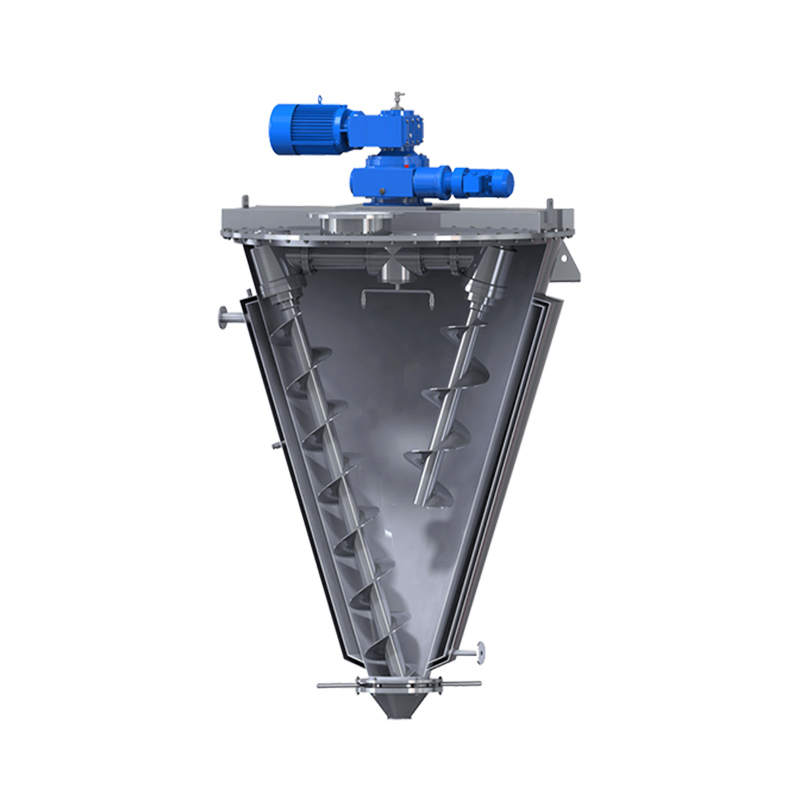
 Conical Screw Mixer
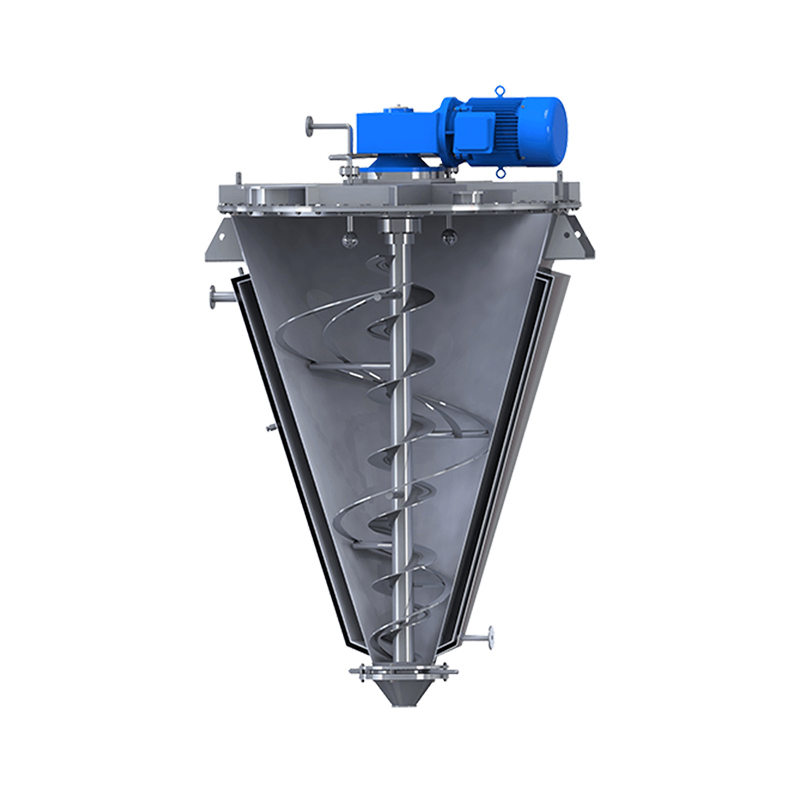 Conical Screw Belt Mixer
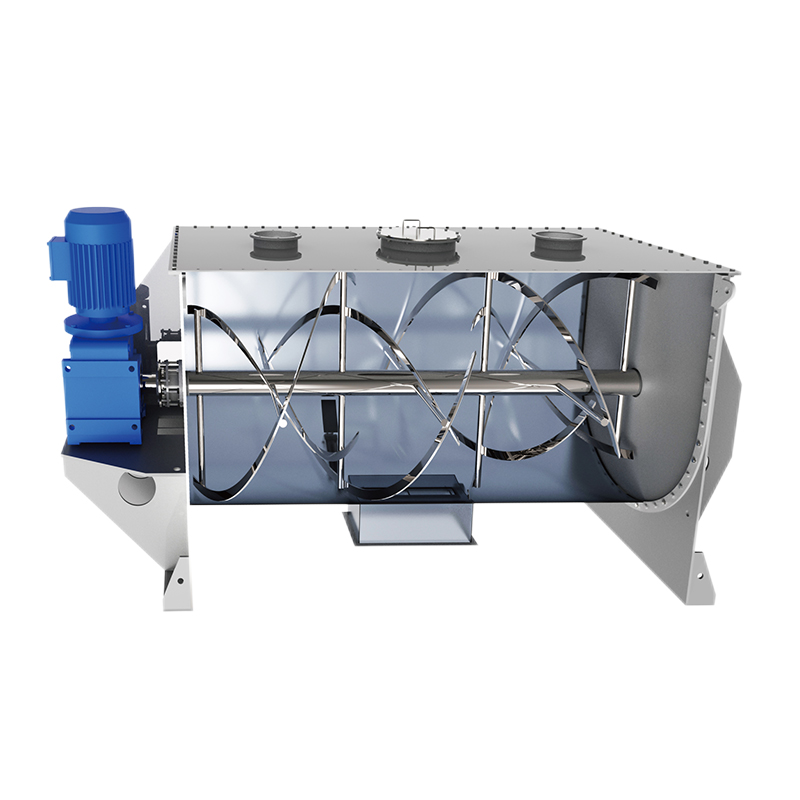 Ribbon Blender
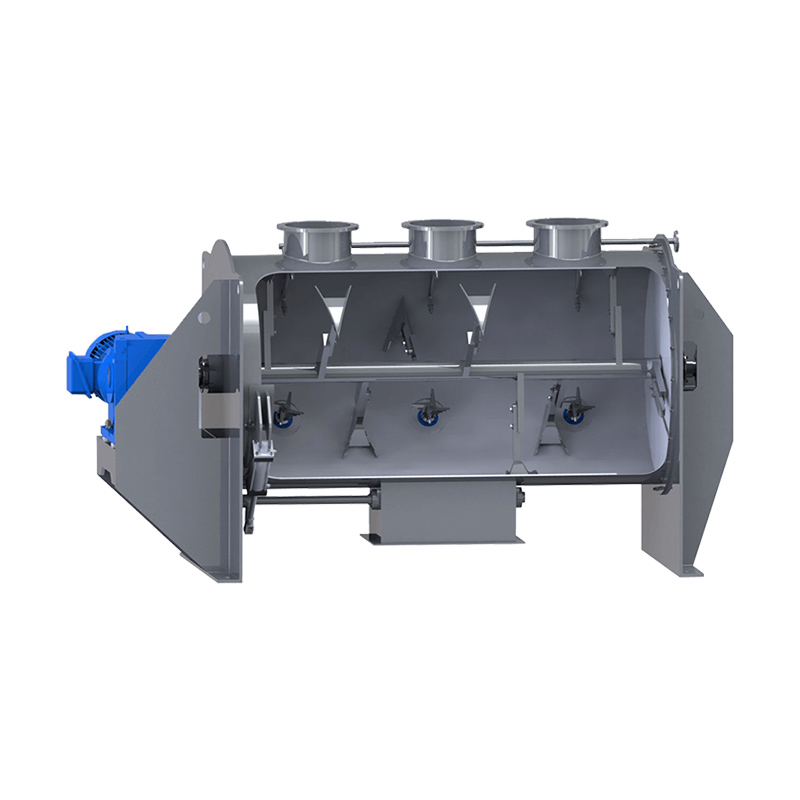 Plough-shear Mixer
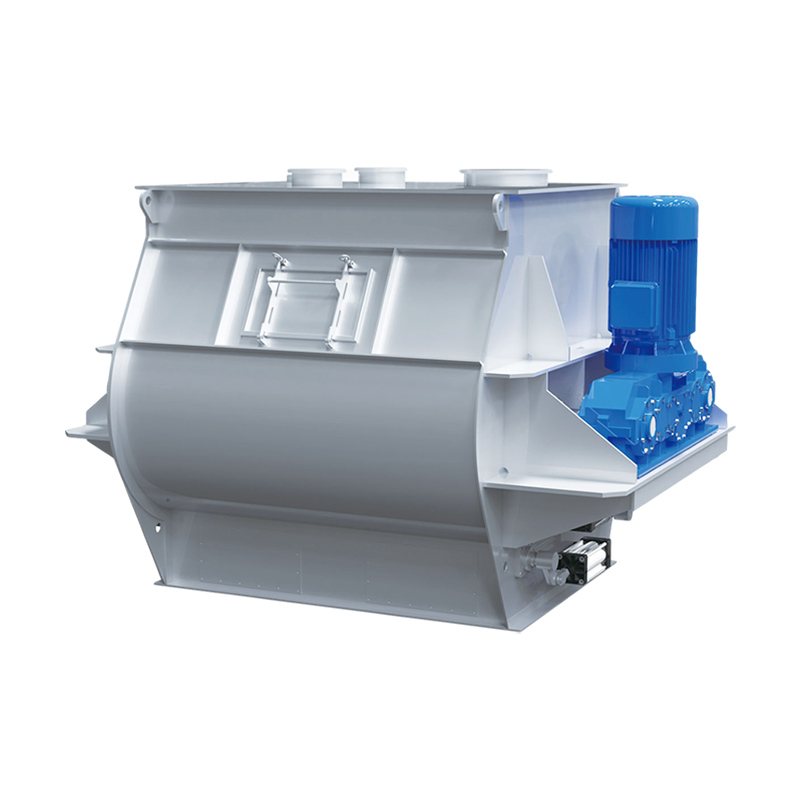 Double Shaft Paddle Mixer
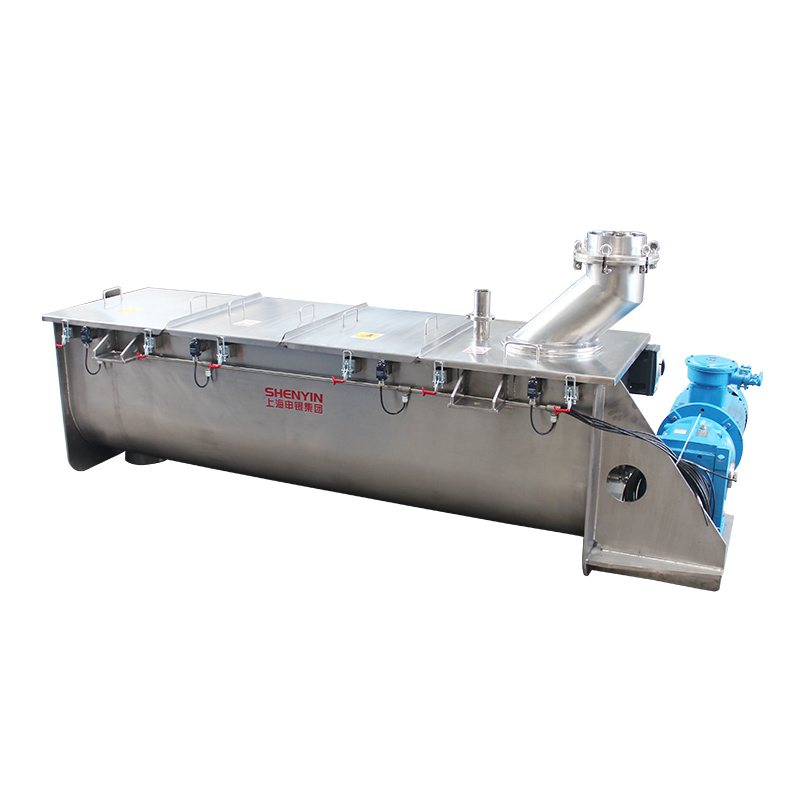 CM Series Mixer



What Common Pitfalls to Avoid When Sourcing Conical Screw Mixer for Industrial Powder Production?
I have seen buyers stumble into costly traps when sourcing a Conical Screw Mixer. Common pitfalls include ignoring process needs, design flaws, material mismatches, weak supplier support, poor scalability planning, skipped maintenance, and price-only decisions. Spotting these early saves money and ensures the equipment truly fits your powder production.
Key Takeaways
- Understand your powder's behavior and set clear mixing goals before you buy a mixer.
- Check the mixer's design, materials, and safety features to ensure it fits your production needs.
- Evaluate supplier expertise and after-sales support to avoid costly downtime and future problems.
Ignoring Process Requirements
Matching Powder Characteristics
I always start by asking one question: what does the powder actually do inside the vessel? Friability, segregation tendency, heat sensitivity, shear sensitivity, particle shape, bulk behavior, surface condition, flow characteristics, and functional performance all change how a conical screw mixer performs. Differences in particle size or density create problems during circulation, discharge, or scale-up. A buyer who skips this step risks a machine that runs but never blends.
Some materials demand extra caution. Hard agglomerated material larger than 2 mm, bulk density greater than 2 kg/L, powder size larger than 500 mesh, or damp and hygroscopic powder all stress the mixer in different ways. So do exothermic, inflammable, or adhesive materials, a specific gravity ratio beyond 1:20, a size ratio beyond 1:100, vacuum or negative pressure operation, compressed air filling, severe abrasion, non-metal contact requirements, and heavy duty loading. I treat each of these as a design input, not an afterthought.
For free-flowing blends with fragile particles, evaluate conical screw mixers and tumble blenders first.
Setting Clear Mixing Goals
Improper loading leads to inconsistent blending results. Operating at too high a speed prevents materials from blending as desired. Excessively large batch sizes cause uneven mixing and poor product consistency. Inadequate mixing time leaves the blend incomplete, while overly long times degrade sensitive materials. Ignoring shear sensitivity breaks, smears, or separates the powder. I write these goals down before I request a quote.
Overlooking Conical Screw Mixer Design
Screw and Discharge Configuration
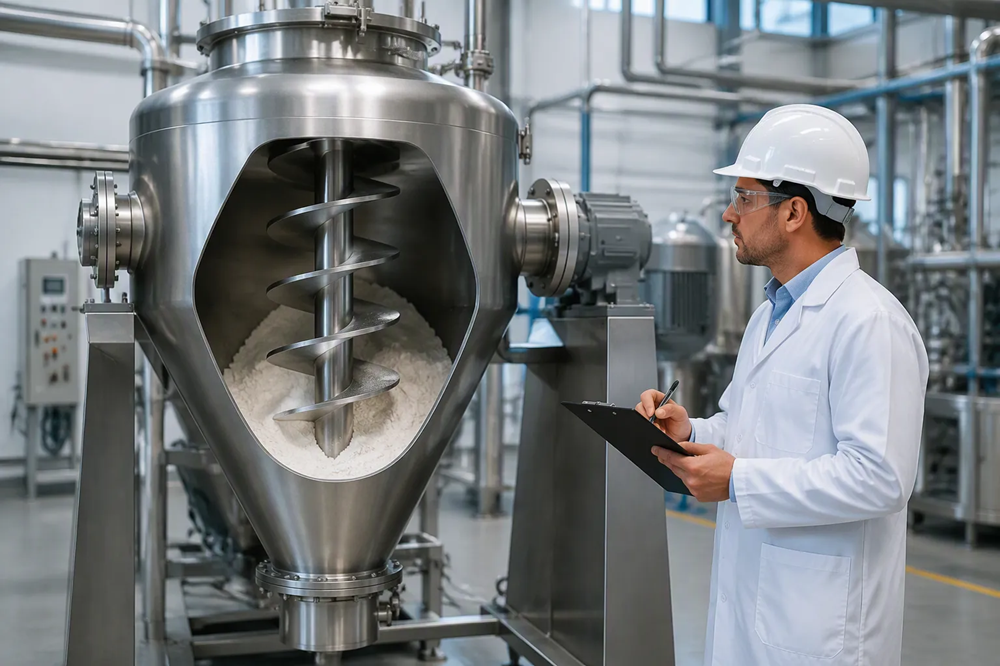
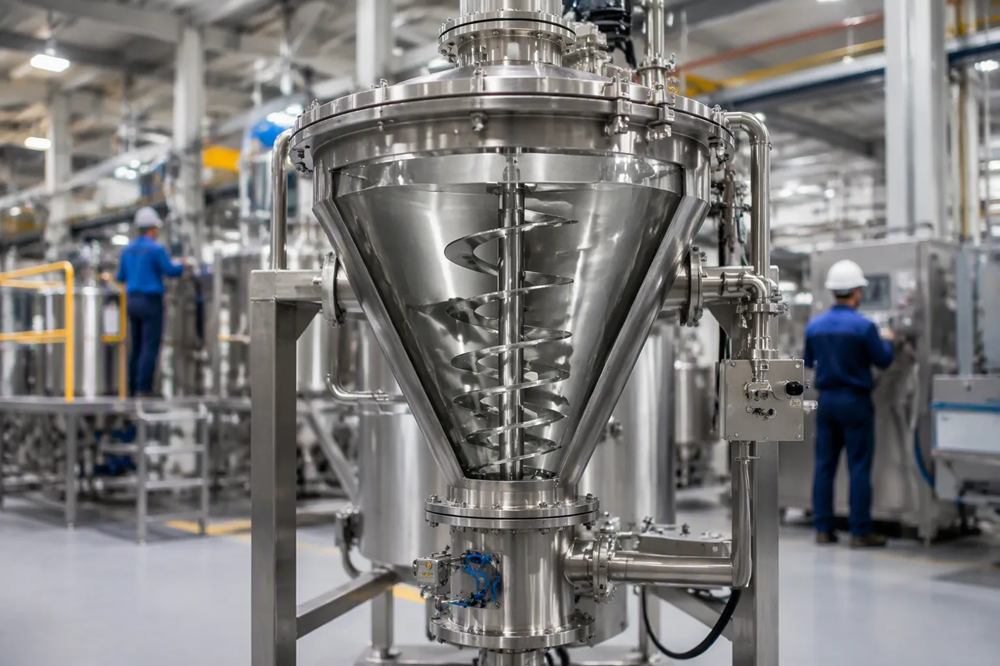
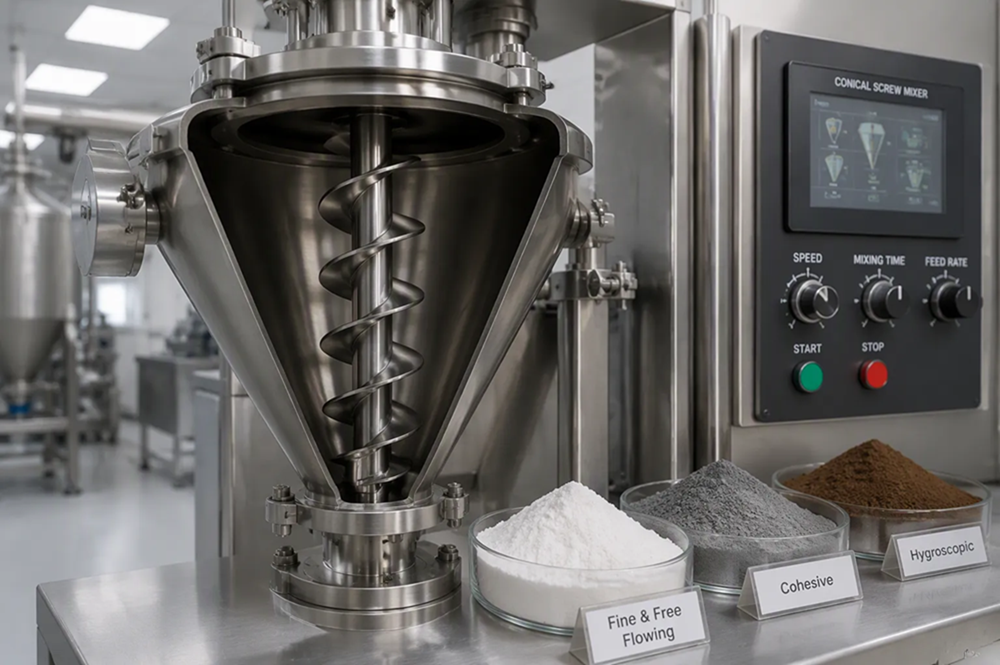
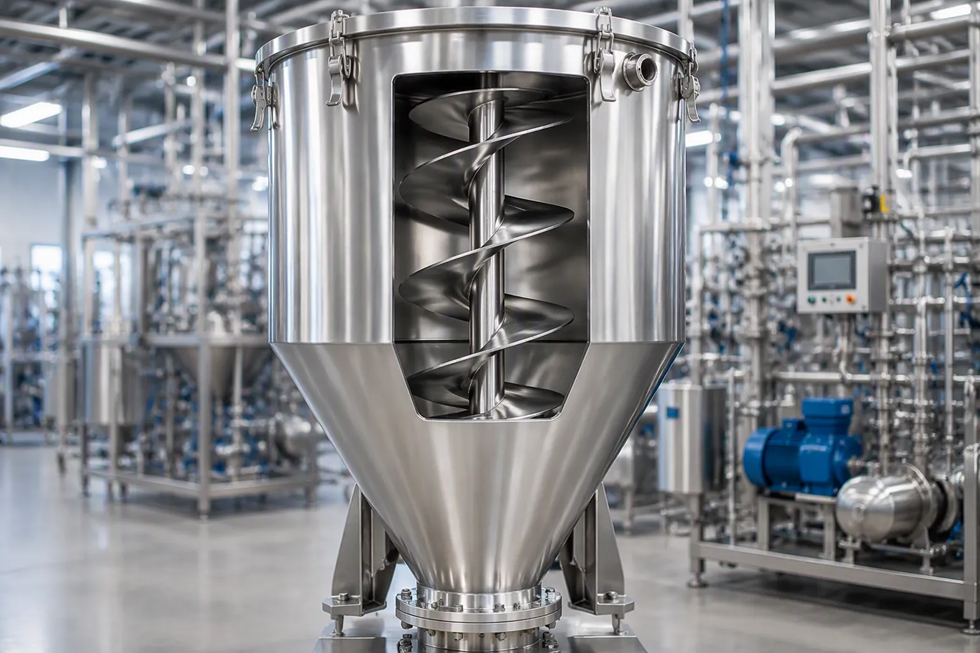
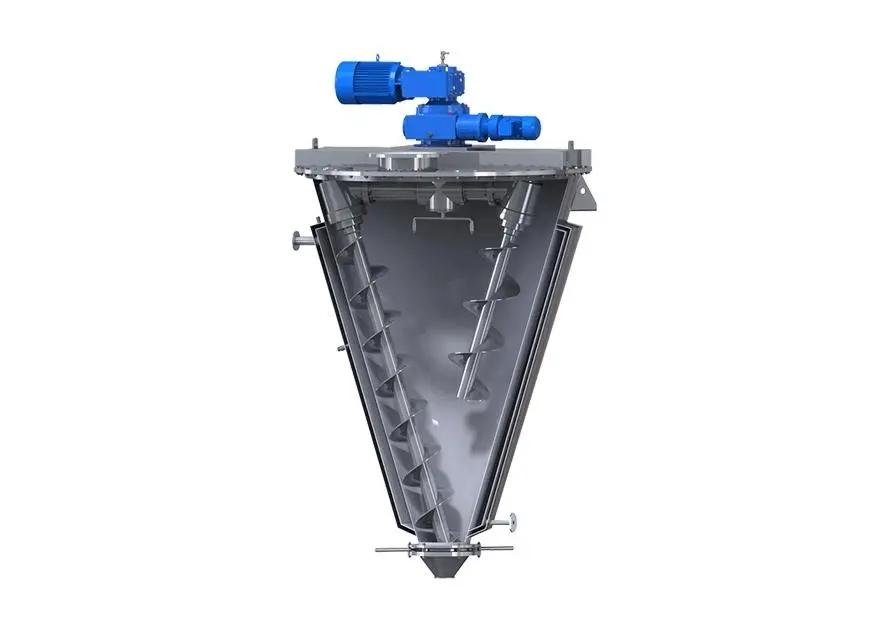
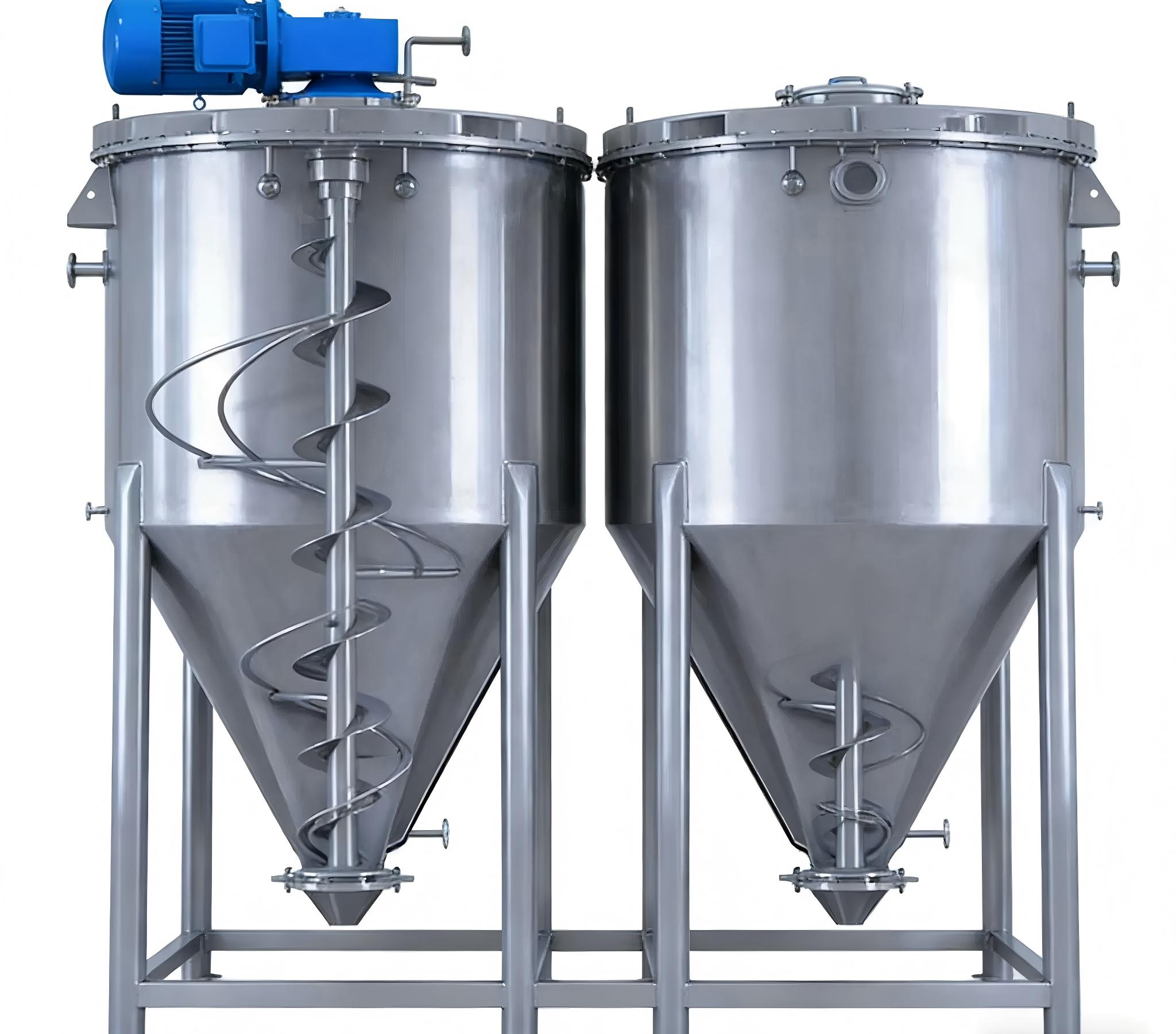
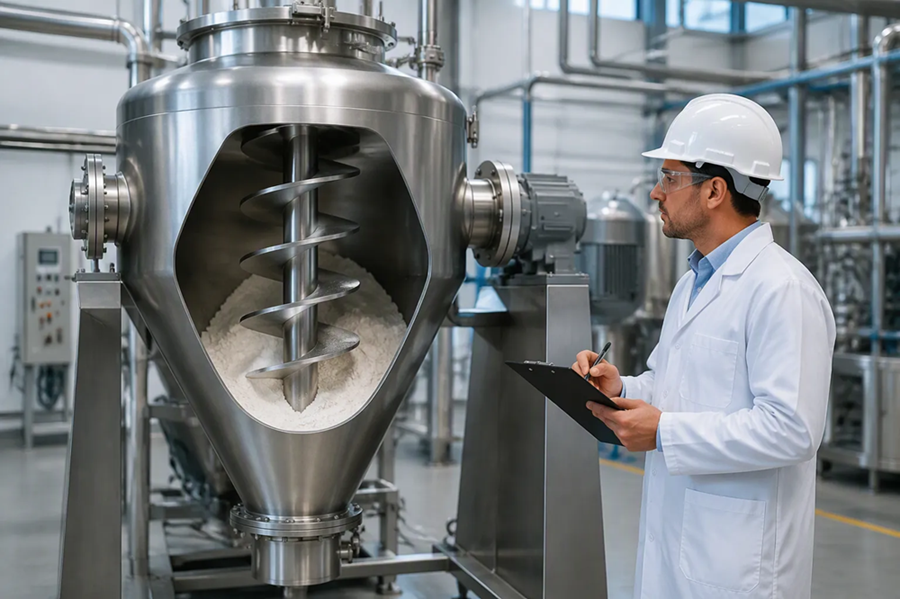
I look at the screw arrangement first. A standard design uses two screws, one long and one short. This setup ensures thorough mixing through combined rotation and revolution. Some equipment uses a single long screw. Larger or more demanding applications may need three screws, two short and one long, arranged symmetrically. The screw rotates around its own axis while revolving around the central axis of the cone vessel along the inner wall. This dual motion repeatedly lifts material and produces shearing, convection, and diffusion for uniform mixing.
Discharge configuration matters just as much. A lobe valve fitted closely to the bottom of the long screw reduces dead corners during mixing. Buyers can also choose a butterfly valve, ball valve, star-shaped discharge, or side outlet. Neglecting proper control over dosing and discharge causes batch-to-batch variability. I always confirm the discharge type matches the powder flow behavior.
Installation and Safety Features
Improper installation creates real problems. A weak foundation, uneven surface, or loose mounting bolts cause vibration and abnormal noise. A damaged speed changer with worn gear teeth or misaligned shafts produces the same symptoms. Electrical faults and motor overload trigger unexpected shutdowns. I recommend overload protection for the motor and sensor-based feedback systems to monitor material levels and discharge valve status. Mechanical jamming of the discharge valve requires regular inspection and lubrication.
Safety features and operator accessibility prevent hazards and maintenance difficulties. I check that guards, emergency stops, and access points allow safe cleaning and service. A level, reinforced platform and vibration analysis during commissioning catch alignment issues early. These steps protect both the equipment and the people running it.
Underestimating Material Compatibility
Matching Materials to Powders
I have watched buyers select a conical screw mixer without studying how their powder behaves. Segregative powders separate when particle size or density differs. Free-flowing powders slide through the vessel instead of blending. Both behaviors demand different screw geometries and mixing speeds. A machine that works for one powder may fail completely for another.
I ask suppliers to test my actual powder, not a generic sample. A mixer that handles free-flowing granules may struggle with cohesive or sticky materials. The wrong choice produces dead zones, poor uniformity, and wasted batches.
Construction Quality and Hygiene
Hygienic design directly affects batch quality and regulatory compliance. In food plants, FDA FSMA Preventive Controls (21 CFR 117.40) requires equipment to be adequately cleanable and designed to protect against allergen cross-contact. Seams on food-contact surfaces must be smoothly bonded. Dietary supplement manufacturers must follow 21 CFR Part 111, which demands equipment of appropriate design and construction for adequate cleaning.
| Standard | Key Hygienic Requirement |
|---|---|
| FDA FSMA 21 CFR 117.40(a)(1) | Equipment must be adequately cleanable |
| FDA FSMA 21 CFR 117.40(b) | Seams must be smoothly bonded |
| 21 CFR Part 111 (§111.27) | Equipment design must enable adequate cleaning |
| 3-A SSI | Product contact surfaces at or smoother than 32 microinch Ra |
| EHEDG Guideline 22 | Covers dry particulate processing hygiene |
I also check for full-penetration welds ground flush on product-contact surfaces. No pinholes, undercut, or crevices should exist. Large access doors with safe interlocks and removable agitators make cleaning practical. Shaft seals must prevent powder ingress into bearing housings. These details separate a compliant mixer from one that fails inspection.
Failing to Assess Supplier Expertise
Evaluating Technical Knowledge
I often meet buyers who select a supplier without verifying technical depth. That mistake costs time and money. A supplier with limited expertise shows clear warning signs. I look for these red flags:
- Inability to provide screw and barrel metallurgy specifications
- Vague or generic datasheets without performance curves
- Refusal to share reference customer contacts
- Missing or unverifiable certifications
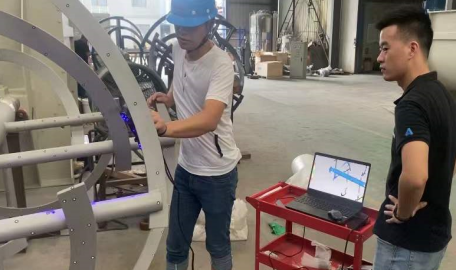
- Stock photographs instead of actual factory images
- Unusually low pricing without technical justification
- Pressure to commit without a trial or factory visit
The Value of After-Sales Support
I also evaluate what happens after I place the order. Industry guidance on selecting a planetary mixer reveals a common risk: even a minor seal failure can lead to a six-week wait for replacement components if spare-part stock is insufficient. That extended downtime stops production completely. I check spare-part lead times before signing a contract.
Neglecting Scalability and Future Needs
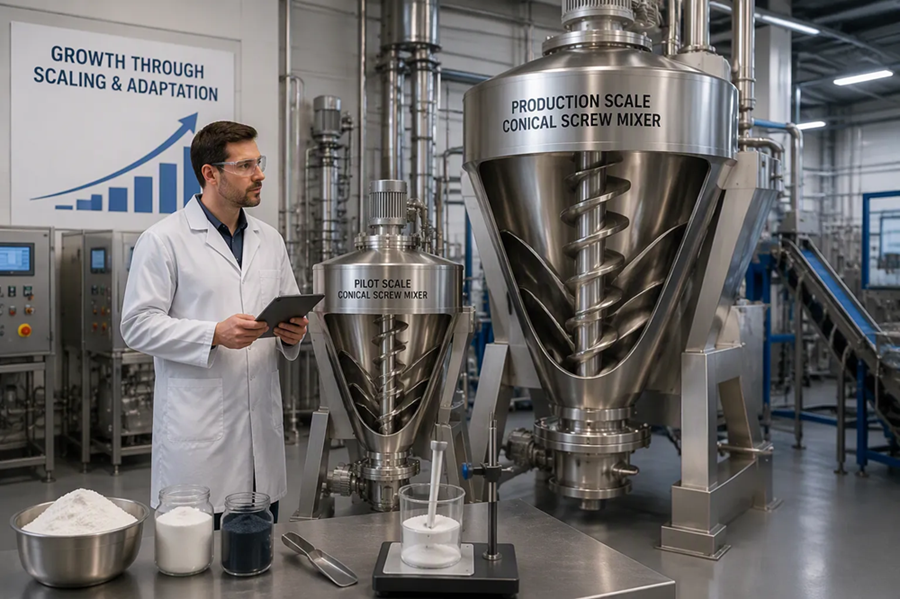
Sizing the Conical Screw Mixer for Growth
I always advise buyers to think beyond their current batch size. A Conical Screw Mixer that works today may fail tomorrow. Production demands increase. Manufacturers now offer modular systems with energy-efficient designs. These designs provide flexibility without requiring a complete equipment replacement. Limited scalability beyond roughly 3,000 liters often needs custom engineering. I ask suppliers about their experience scaling up from pilot to production size. Without this planning, a growing company faces expensive retrofits or a second purchase.
Limited scalability beyond ~3,000 liters without custom engineering. Consider future scalability if production will grow.
Adapting to New Formulations
A conical screw mixer handles multiple powder recipes without losing mixing quality. The three-dimensional mixing action makes this possible. The screw rotates while revolving around the vessel wall. It lifts material from the bottom while gravity pulls other particles downward. This combines convective and diffusive mixing with gentle, low-shear action.
Disregarding Maintenance and Cleaning
Designing for Easy Maintenance
I have seen buyers treat maintenance access as an afterthought. That decision costs them dearly. A conical screw mixer with poor access points turns a simple seal replacement into a full-day project.
| Design Feature | How It Supports Easy Maintenance |
|---|---|
| Sealed design | Ensures a clean and safe working environment |
| Easy access | Minimizes downtime and optimizes productivity |
| User-friendly access | Enables efficient cleaning and maintenance |
Cleaning Between Batches
Cross-contamination between powder batches is a serious risk. The most effective way to implement clean-in-place (CIP) is to incorporate it at the design stage. A fully automatic CIP process eliminates manual cleaning, controlling flow, pressure, concentration, and temperature.
Deciding Solely on Price
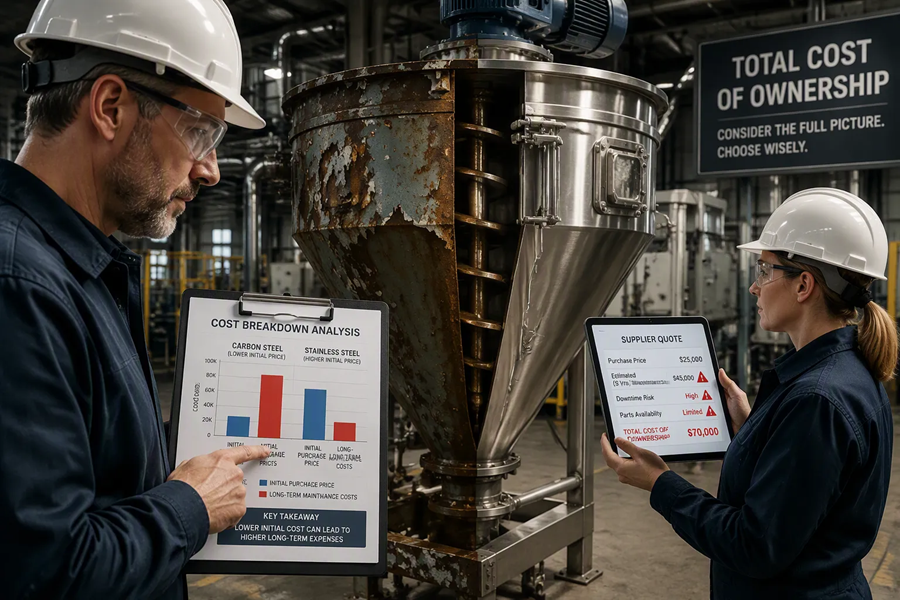
The True Cost of Cheap Equipment
I have watched buyers chase the lowest quote and pay far more later. A cheap mixer hides expenses that never appear on the purchase order. Material choice drives much of this hidden cost. Carbon steel is the budget option and corrodes easily. A carbon steel conical screw mixer then needs protective coatings or frequent repainting.
Compared with conical screw mixers, Cone Mixers are less prone to faults and incur lower under-management costs.
Balancing Cost with Value
- Startup/Small-scale: Focus on 100-500L models.
- Growth/Medium-scale: Use 1000-3000L semi-automatic units.
- Large-scale: Invest in ultra-large models with PLC automation.
Sourcing a Conical Screw Mixer taught me to look past the price tag. I always evaluate process needs, design, material compatibility, and supplier support first.
FAQ
How do I know if a conical screw mixer fits my powder?
I test my actual powder, not a generic sample. Particle size, density, and flow behavior decide screw geometry and mixing speed.
What should I check before signing with a supplier?
I verify metallurgy specs, reference customers, and spare-part lead times.
Can I add capacity without buying a new mixer?
I plan for growth upfront. Modular designs and parallel units handle higher volumes.