 Conical Screw Mixer
 Conical Screw Belt Mixer
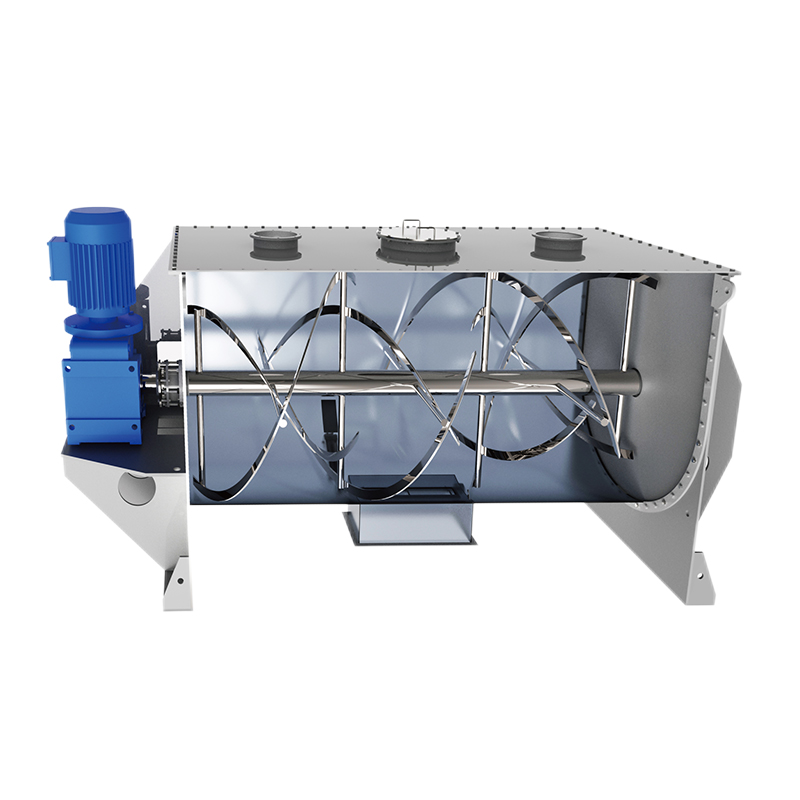 Ribbon Blender
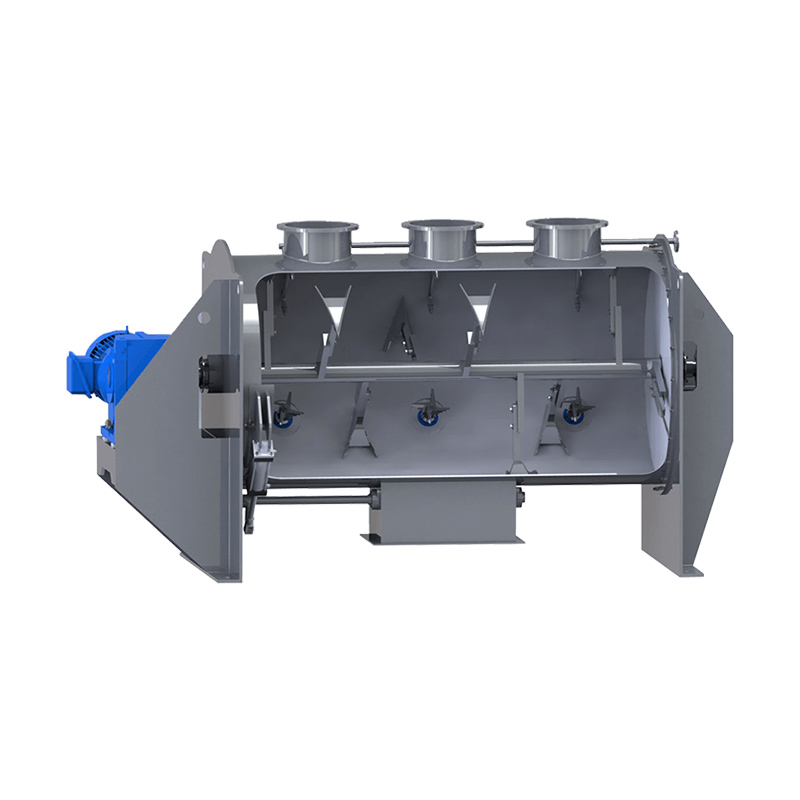 Plough-shear Mixer
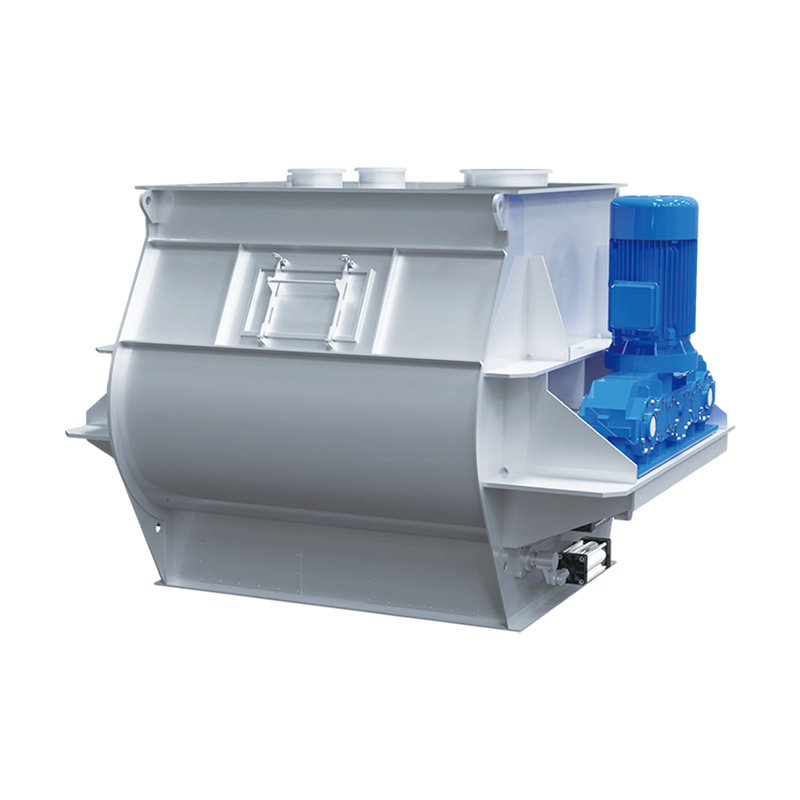 Double Shaft Paddle Mixer
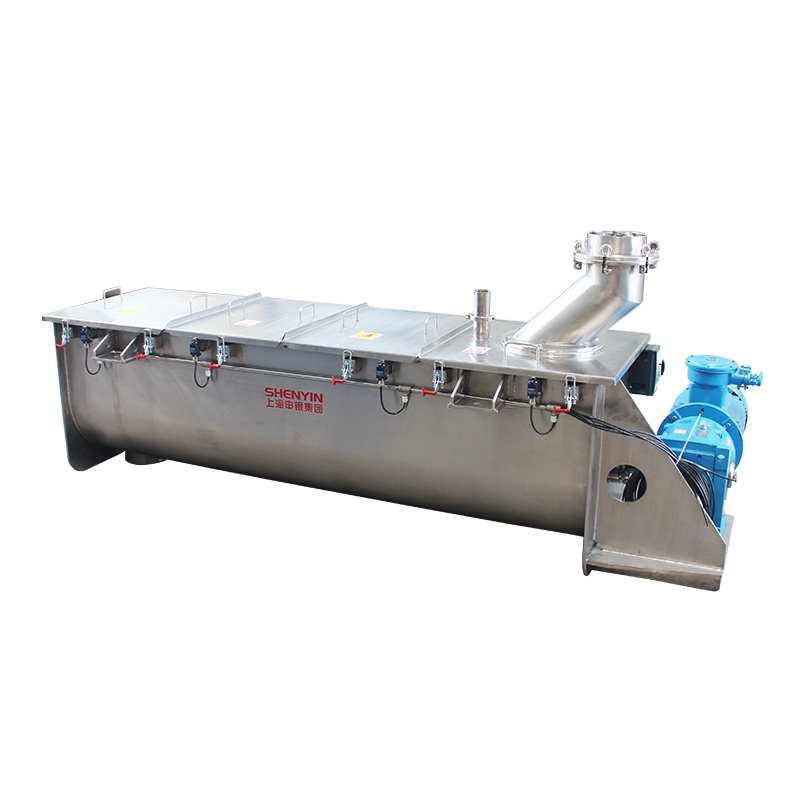 CM Series Mixer
Leave Your Message
When it comes to choosing a Retractable Rotor Mixer for 2026, global buyers these days need more than just a slick product list—they want proof from real-world processing conditions. It’s not just about size, either. Things like viscosity, solids content, temperature, shear sensitivity, and how often you run batches all play a huge role. A mixer that works smoothly in a tiny lab vessel might not cut it inside a massive 10,000-liter production tank—and skipping that step can end up costing a pretty penny. You really have to pay close attention to details like seal design, retractable access, wetted materials, motor efficiency, and how easy it is to clean. Sure, stainless steel 316L is often a safe bet for many hygienic applications, but you still need to double-check its chemical compatibility depending on what you’re processing. When shopping around, it’s worth comparing equipment from different brands like Silverson, Admix, or SPX FLOW—look at their technical drawings, test results, maintenance access, and local support options. Don’t just go for the flashiest pitch; do your homework.
Dr. Edward L. Paul, a recognized expert in industrial mixing, summed it up nicely: “Mixing starts with understanding the process.” That’s still true today. The fanciest, most powerful mixer isn’t necessarily the best choice. The real winner is the one that can deliver consistent dispersion, keep product quality high, and do so safely. And don’t forget—good documentation and real-world experience are just as important.
In this guide, we’ll look at some of the top options across food, cosmetics, pharma, chemicals, and other regulated fields. We’ll consider factors like rotor speed, stator setup, shaft length, seal types, control systems, and installation needs. Honestly, some comparisons might not be perfect because performance data isn’t always standardized across the board. Basically, don’t treat rankings as gospel—think of them as a starting point. A hands-on factory trial is often where you’ll uncover important details that brochures just can’t show. That’s where real judgment begins, so be prepared to dig a little deeper.
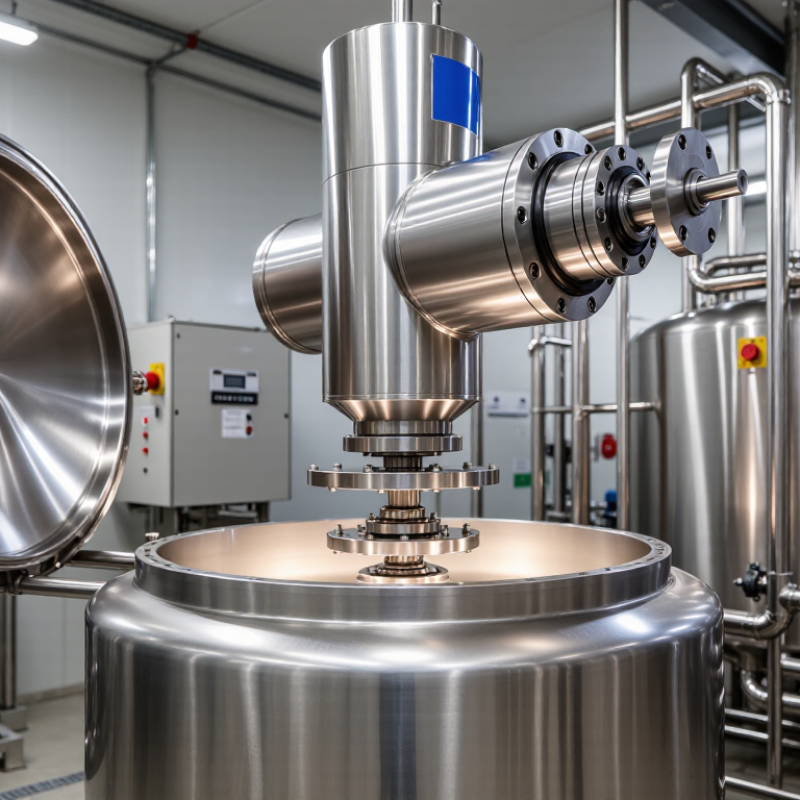
2026 Best Retractable Rotor Mixer for Global Buyers?
A retractable rotor mixer is a tank-mounted mixing unit that can be withdrawn during production. Its rotor spins inside the vessel, creating circulation, shear, or dispersion. Depending on the design, the rotor may use blades, teeth, or a high-speed impeller. A drive motor turns the shaft through a sealed housing. When maintenance is needed, an isolation valve or retracting mechanism separates the mixer from the process zone. The tank may remain filled. That is the practical advantage.
Its performance depends on rotor diameter, speed, liquid viscosity, and tank geometry. A small rotor may create a narrow, energetic zone near the shaft. It may not blend the bottom properly. Baffles, clearance, and installation height matter. The U.S. Department of Energy reports that motor-driven systems consume about 43–46% of global electricity. Efficient selection therefore matters beyond the motor nameplate. Lower speed with better circulation can reduce wasted energy, though testing is still necessary.
For corrosive or hygienic service, shaft seals and wetted materials deserve close inspection. A Custom Retractable Rotor Mixer can match these details to vessel size and cleaning routines. Request torque data, seal-life assumptions, noise levels, and tested power consumption. Some supplier figures look impressive but use ideal water conditions. Real fluids are less cooperative. The IEA also identifies motor-system optimization as a major industrial efficiency opportunity. That evidence supports variable-speed control, but operators should verify results on their own process.
A practical comparison of retractable high-shear rotor-stator mixer configurations, operating ranges, and selection factors.
| Configuration / Evaluation Point | Typical Technical Data | How It Works | Best-Suited Applications | Buyer Considerations |
|---|---|---|---|---|
| Laboratory / Small-Batch Retractable Rotor Mixer | Motor power: approximately 0.75–4 kW Rotor speed: approximately 1,500–3,600 rpm Typical batch volume: 5–100 L Typical viscosity: up to approximately 10,000 mPa·s | A rotor spins inside a fixed stator. The product is drawn through the stator slots, exposed to intense shear, and discharged back into the vessel. The mixer head can be withdrawn from the tank for cleaning or maintenance. | Laboratory trials, formulation development, cosmetics, sauces, emulsions, dispersions, and small coating batches. | Confirm the minimum working volume, shaft length, speed control, and whether the vessel requires a special mounting flange. |
| Pilot-Plant Retractable Rotor Mixer | Motor power: approximately 4–15 kW Rotor speed: approximately 1,000–3,000 rpm Typical batch volume: 100–1,000 L Typical viscosity: up to approximately 30,000 mPa·s | The retractable shaft positions the rotor-stator head inside the product zone during processing and removes it above the liquid level after the batch. This supports rapid product changeover and reduces exposure during cleaning. | Scale-up studies, personal-care products, liquid detergents, adhesives, pigment dispersions, and food ingredients. | Check whether laboratory and production units use comparable rotor diameter, tip speed, residence time, and power-per-volume ratios. |
| Standard Production Retractable Rotor Mixer | Motor power: approximately 15–45 kW Rotor speed: approximately 750–3,000 rpm Typical batch volume: 500–5,000 L Typical viscosity: up to approximately 50,000 mPa·s | High-speed rotation creates a pumping effect and strong local shear. The stator controls flow through narrow openings, helping break agglomerates, reduce droplet size, and accelerate dispersion or emulsification. | Paints, inks, coatings, polymer dispersions, creams, lotions, liquid fertilizers, and industrial chemical formulations. | Select a variable-frequency drive when different products require different shear levels, start-up speeds, or temperature-control profiles. |
| Heavy-Duty Production Retractable Rotor Mixer | Motor power: approximately 45–75 kW or higher Rotor speed: approximately 500–2,400 rpm Typical batch volume: 3,000–20,000 L Typical viscosity: approximately 50,000–100,000 mPa·s, subject to formulation | A large rotor-stator assembly delivers high circulation and localized shear. A separate low-speed anchor or sweep agitator may be required for very viscous products or vessels with heat-transfer surfaces. | Large-volume coatings, construction chemicals, sealants, polymer products, industrial cleaners, and high-solids formulations. | Verify shaft rigidity, mechanical-seal design, lifting-system capacity, vessel reinforcement, cooling requirements, and emergency stopping arrangements. |
| Operating Principle | Rotor-stator clearance is commonly in the millimetre or sub-millimetre range, depending on head design and product requirements. | The rotating rotor generates fluid movement. Product passes through the stationary stator openings, where velocity gradients and turbulence create shear. Repeated circulation progressively improves mixing uniformity. | Fast blending, powder wetting, particle deagglomeration, liquid-liquid emulsification, and suspension preparation. | A rotor mixer is not automatically a complete substitute for a low-speed agitator, especially in highly viscous or shear-sensitive products. |
| Retracting Mechanism | Pneumatic, hydraulic, or motorized vertical movement; stroke length is normally matched to vessel height and liquid level. | The mixer head moves into the batch for processing and retracts to a safe raised position for inspection, cleaning, product changeover, or vessel access. | Multi-product plants, frequent changeovers, sanitary processing, and vessels that cannot accommodate a permanently submerged mixer head. | Specify raised and lowered positions, travel speed, position sensors, mechanical stops, and interlocks that prevent operation outside the safe position. |
| Materials of Construction | Product-contact parts commonly use stainless steel grades such as 304 or 316L; elastomers may include EPDM, FKM, or PTFE, depending on compatibility. | The rotor, stator, shaft, housing, and seal system are selected according to corrosion resistance, abrasion, temperature, hygiene requirements, and cleaning chemistry. | Food, pharmaceutical, cosmetic, chemical, and abrasive mineral-processing applications. | Request material certificates, surface-finish data, weld-finish details, gasket compatibility, and cleaning-validation information where applicable. |
| Temperature and Pressure Capability | Application limits vary widely; many systems are designed for atmospheric or low-pressure service, while sealed vessels require specifically rated mechanical seals and housings. | The mixer transfers mechanical energy into the product and may increase temperature through shear. Vessel pressure, vacuum, and cooling must therefore be considered together. | Heated coatings, vacuum deaeration, solvent-based products, emulsions, and temperature-sensitive formulations. | Provide the supplier with operating temperature, design temperature, pressure or vacuum, solvent data, and required cooling-water conditions. |
| Hygiene and Cleanability | Clean-in-place suitability depends on spray coverage, drainability, internal geometry, seal arrangement, and the cleaning process. | Retracting the head can simplify access and reduce cross-contamination risk, but it does not by itself guarantee hygienic cleaning. | Food, beverage, personal-care, pharmaceutical, and specialty chemical production. | Ask for drainability, clean-in-place test results, surface finish, seal accessibility, and validated cleaning procedures. |
| Global Electrical and Safety Requirements | Common industrial supplies include 3-phase systems at approximately 380–480 V and 50 or 60 Hz, but the final motor and control-panel specification must match the installation country. | Sensors and interlocks can prevent rotor operation while the head is raised, the access cover is open, or the vessel is not ready for operation. | International plants, hazardous-area installations, automated production lines, and safety-controlled facilities. | Confirm local electrical code, enclosure rating, grounding, emergency stop, guarding, hazardous-area classification, and required conformity documentation. |
| Best Overall Selection Criteria for 2026 | Match the mixer to product viscosity, batch volume, solids content, required droplet or particle size, processing temperature, and cleaning method. | The most suitable unit is determined by process performance rather than motor power alone. Tip speed, flow rate, shear intensity, circulation pattern, and residence time should be evaluated together. | Global buyers seeking reliable scale-up, flexible production, reduced changeover time, and maintainable equipment. | Request a process trial or test report using the actual formulation before final purchase, particularly for high-solids, abrasive, shear-sensitive, or temperature-sensitive products. |
Note: The technical ranges above are typical engineering reference values for retractable rotor-stator mixers. Actual performance depends on rotor diameter, stator geometry, tip speed, product rheology, solids concentration, vessel design, temperature, and the required process result. Final specifications should be confirmed through application testing and supplier documentation.
The SYJW series double shaft Paddle Mixer is a practical solution for blending materials with noticeably different physical properties. Often described as a gravityless mixer or gravityless particle mixer, it uses two coordinated paddle shafts to create a thorough, multi-directional mixing action. This design helps reduce the tendency of heavier or finer particles to settle, making it suitable for materials that differ in specific gravity, fineness, fluidity, or particle size.
When selecting this type of Industrial Mixer, consider the material characteristics, required batch capacity, moisture level, and desired mixing time. The double-shaft paddle arrangement promotes efficient circulation throughout the mixing chamber, helping achieve a more uniform blend while limiting dead zones. It can be adapted for various powder, granular, and particulate processing requirements, provided that the equipment configuration matches the application.
Operational efficiency also depends on proper loading, controlled feeding, and regular inspection of the paddles, seals, and drive components. A suitable mixer should offer stable performance, convenient maintenance, and reliable construction for continuous production environments. Working with an experienced manufacturer and qualified supplier can help users select the appropriate model, chamber size, material-contact construction, and discharge arrangement for their specific process.
Not necessarily. High speed can disperse thin liquids quickly but may create foam. Check the normal operating speed range. Maximum speed can mislead.
Torque matters more for thick coatings, pastes, and emulsions. These materials resist movement during startup and mixing. A slower rotor may perform better.
Match power with viscosity, batch volume, and starting conditions. A mixer handling 500 liters during operation may struggle with a cold, full vessel. Small test batches can hide this weakness.
Compare rated torque, gearbox ratio, duty cycle, and overload protection. Also check whether speed stays stable under load. Horsepower alone is incomplete.
Vessel shape, liquid depth, rotor position, and formulation affect capacity. The rotor should reach the working zone without scraping walls. Dead corners reduce consistency.
Request tests using your actual formulation, temperature, and solids content. Useful results include blend time, power use, and samples from different heights. One perfect laboratory result is not enough.
Prepare a level, load-rated foundation with enough service clearance. Measure the vessel opening, shaft travel, and lifting path before delivery. Leave room for cleaning and emergency access.
Check voltage, frequency, phase, grounding, and motor protection requirements. Confirm safe retraction near pipes, platforms, and tank walls. A small clearance error can stop production.
Test rotation direction, vibration, noise, seals, and the emergency stop. Inspect guards and interlocks before continuous operation. Record the measurements onsite.
Seal replacement and inspection need a clear route. A crowded layout may look efficient but frustrate technicians later. Output is not everything.
A Retractable Rotor Mixer is an industrial mixing system designed to deliver efficient, uniform blending while allowing the rotor assembly to be withdrawn from the vessel for inspection, cleaning, or maintenance. Its operation depends on coordinated rotor speed, motor power, shaft design, and mixing elements that generate circulation, shear, and material movement. These features make it suitable for applications such as liquid blending, suspension preparation, dispersion, emulsion processing, and other demanding industrial operations.
For global facilities, selecting the right model requires careful evaluation of mixing capacity, viscosity, batch size, power supply, installation space, vessel configuration, and operating conditions. Buyers should also review mounting requirements, sealing arrangements, safety protections, maintenance access, spare-part availability, and technical service capability. In 2026, the best choice will be a Retractable Rotor Mixer that balances performance, energy efficiency, reliability, cleaning convenience, and long-term support while meeting the specific process and facility requirements of each installation.