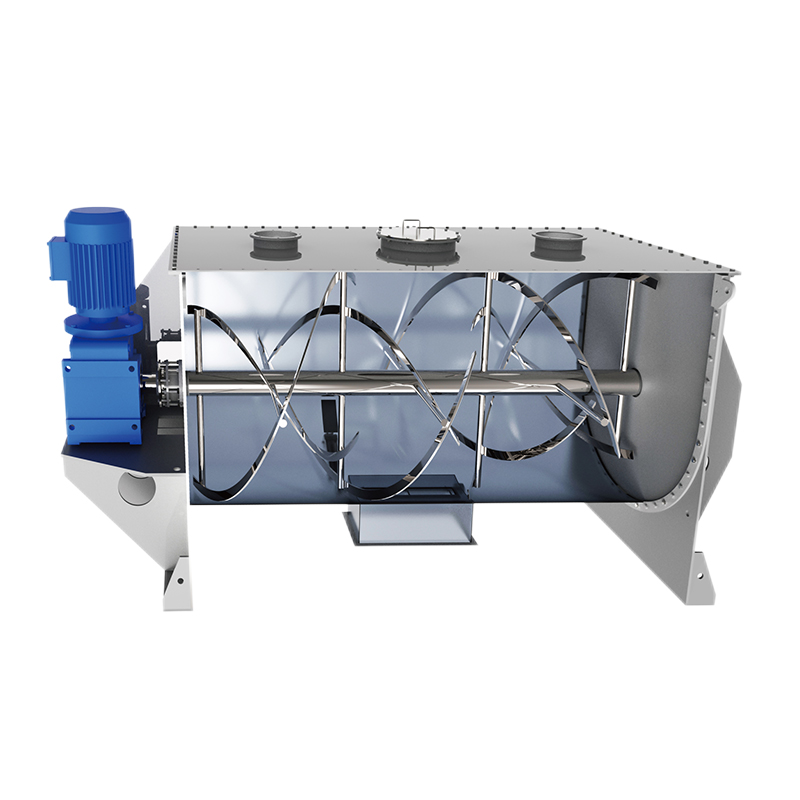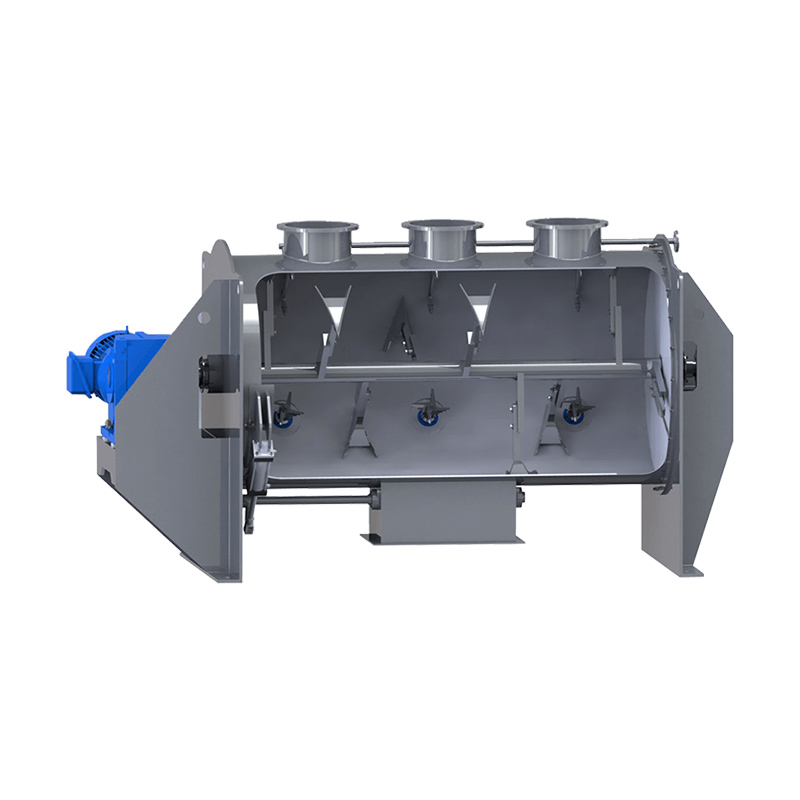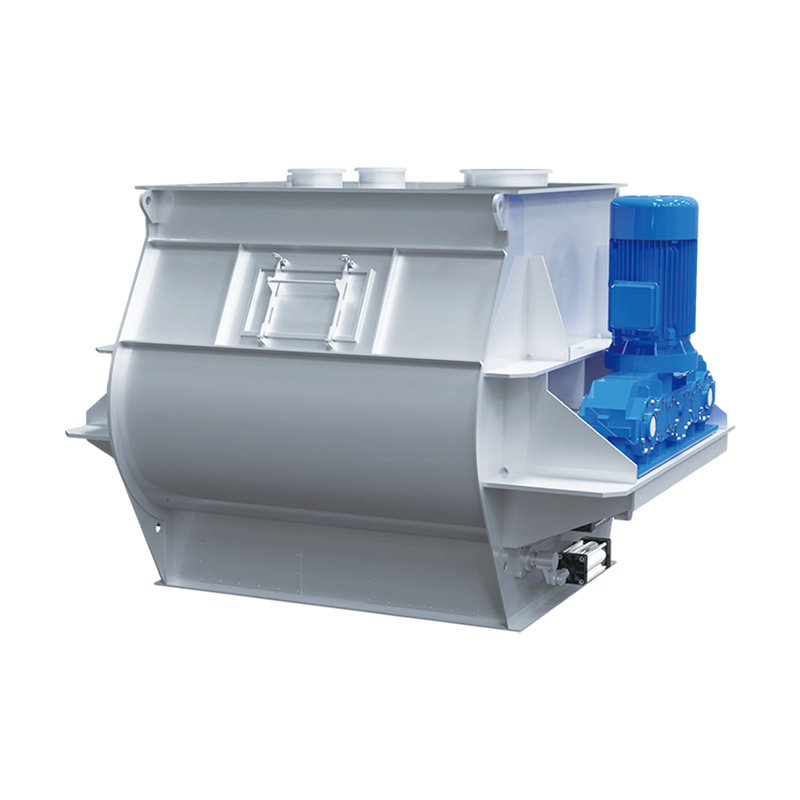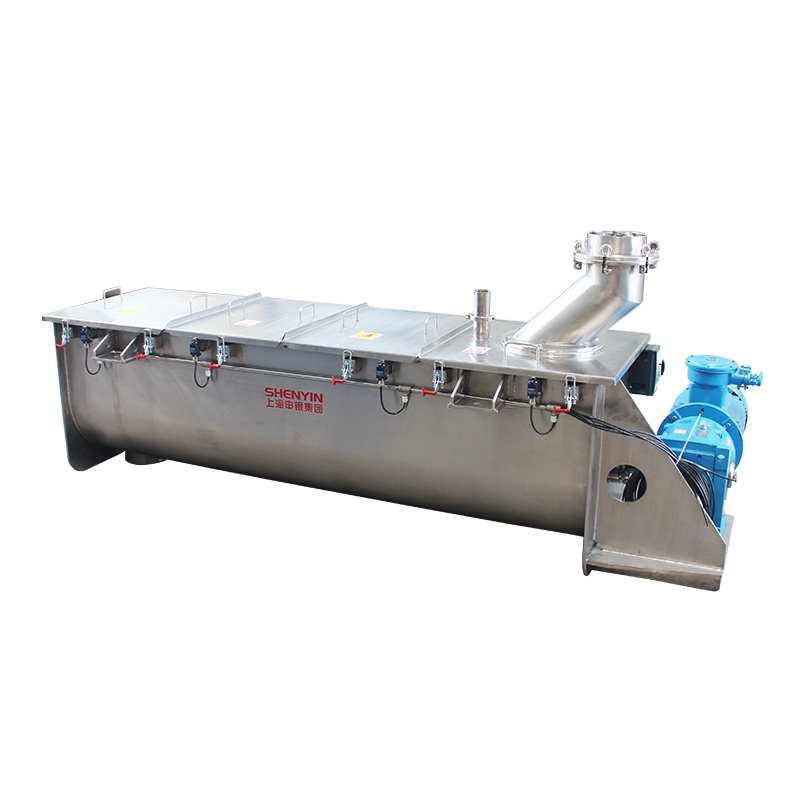
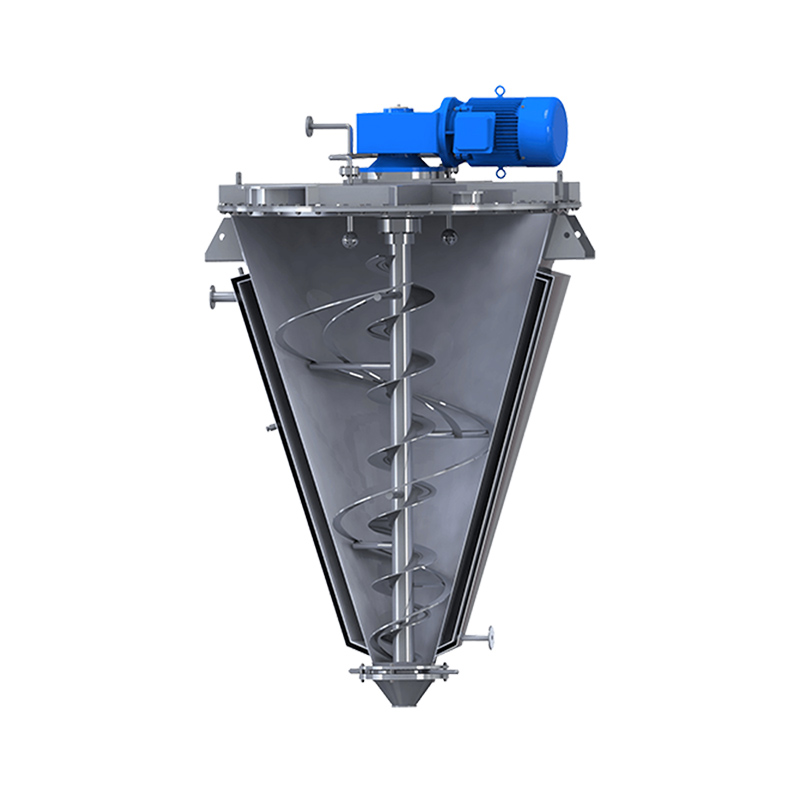
Choosing the right Ribbon Blenders isn't exactly a walk in the park. It’s rarely just about comparing prices or motor ratings. You really need to think about whether the machine fits the material you're working with, the batch size, your production pace, and how easy it is to clean. For example, a powder that flows easily might mix smoothly, but if you're dealing with a sticky, cohesive formulation, you could end up with dead zones close to the walls of the vessel. So, yeah — those small details really do matter.
Peter Wypych, a well-respected guy in bulk-solids handling, has a good rule of thumb: “Pick equipment for the process, not just for the product.” That’s a tip worth keeping in mind whenever you’re making a purchase. You want to look into the design of the ribbon, how fast the shaft spins, the fill level, torque, how the discharge is set up, and whether the machine is compatible with the material you're using. And don’t forget to see how it performs with your smallest required batch size. A big, fancy machine might look awesome, but if it’s not filled properly, the mixing quality could be pretty weak.
In this guide, I’ve put together ten practical tips to help you choose reliable Ribbon Blenders. Things like testing your specific materials, dealing with scale-up challenges, access for cleaning, controlling dust, maintenance needs, and support from the supplier. Reputable manufacturers such as Munson Machinery and Marion Process Solutions often suggest testing tricky materials before you commit to buying. That’s advice worth paying attention to.
Of course, no checklist can cover everything. Material behavior can change depending on humidity, particle size, or temperature—stuff you might not think about right away. Sometimes, specifications look complete on paper but skip over important details like discharge time or how easy it is to clean out the machine. That can be a pretty uncomfortable gap during the buying process. Asking the right questions can really help you uncover these issues. In the end, the best choice isn’t just about a shiny brochure — it’s about balancing performance, safety, ease of maintenance, and long-term costs.
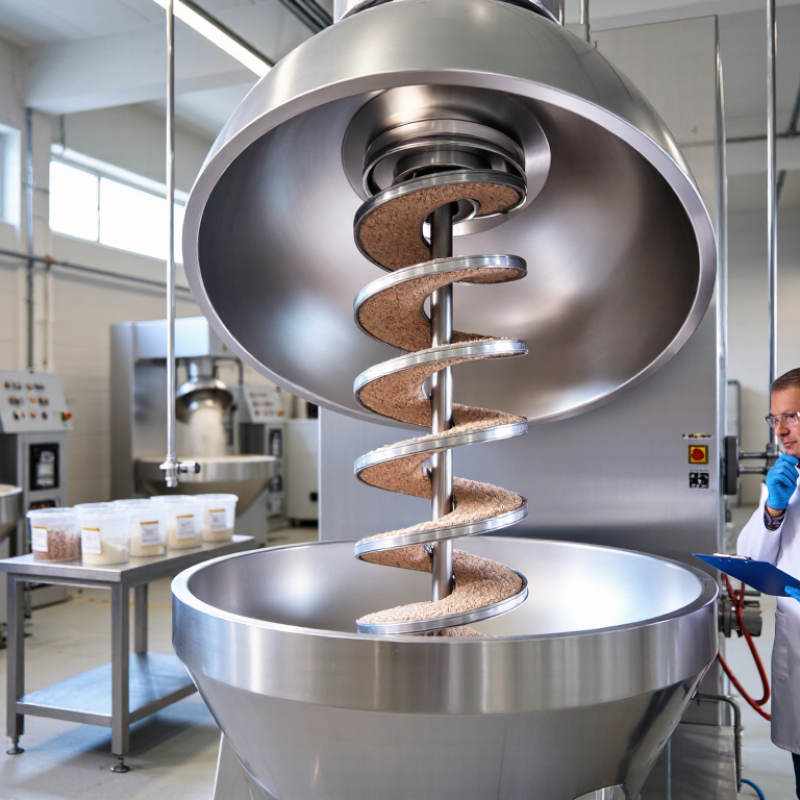
Choosing the best ribbon blender starts with powder properties, not motor size. Measure bulk density, tapped density, moisture, particle size, and flowability before requesting quotations. ASTM D1895 provides methods for bulk and tapped density testing. USP General Chapter 1174 also recognizes flow behavior as a critical powder characteristic. A 20% density change can affect the actual batch volume and filling level.
Batch size must match the blender’s working volume, not its total shell volume. A 30–70% working fill usually supports effective ribbon movement and powder turnover. Below 30%, the ribbons may move material without creating consistent contact. Above 70%, the powder can ride over the blades and leave unmixed pockets near the walls. Measure it in practice. A trial batch reveals more than a brochure.
For Custom Ribbon Blenders, define the smallest and largest batch clearly. Report both weight and volume, because a 500-kilogram batch can occupy very different spaces after aeration. The Carr Index, calculated from density data, can flag flow concerns before production testing. Still, I would not trust one laboratory result alone. Humidity, compaction, and loading order can change performance. Record those details during trials, even when the process feels predictable. Good selection combines published test methods, operator experience, and honest review of imperfect results.
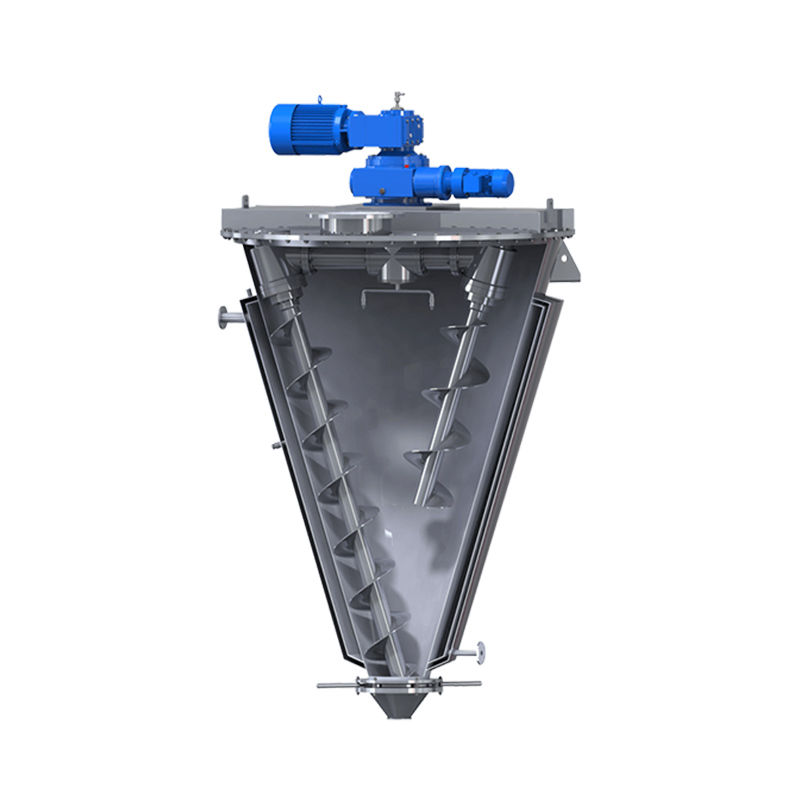
Choosing the best ribbon blender starts with powder behavior, not vessel size. In plant trials, I watch how material breaks, slides, and settles. Cohesive powders need overlapping inner and outer ribbons. This geometry creates axial movement and repeated circulation. It also reduces stagnant pockets near the end plates. Keep clearance tight, but verify thermal expansion and cleaning access. Small details matter.
For free-flowing powders, a gentler ribbon profile may prevent excessive aeration and segregation. Moderate tip speed is usually safer than simply adding horsepower. Observe the discharge pattern after each test. A sharp, centered release often indicates consistent movement. Yet a fast blend can still be poor. Sampling only the surface is a common mistake. Take samples from several depths and locations. Moisture, particle size, and fill level can change the result. I would not trust one successful batch.
Fragile powders require wider clearances, lower speed, and fewer aggressive recirculation cycles. A ribbon that works for cohesive material may crush soft granules or create fines. Check product temperature and dust formation during a timed trial. Use actual production material when possible. Laboratory substitutes can behave too perfectly. One overlooked issue is residue under the ribbon shaft. Inspect it after discharge. The best geometry balances uniformity, shear, cleaning, and reliable scale-up. That balance is rarely obvious from a catalog drawing.
| Tip | Powder Characteristic | Recommended Ribbon Geometry | Key Selection Data | Why It Works | Practical Design Check |
|---|---|---|---|---|---|
| 1 | Free-flowing powders with good bulk movement | Standard double ribbon with inner and outer helical flights | Typical working fill: 30–70% of gross volume | Opposing axial movement creates circulation from both ends toward the center and back toward the vessel wall, promoting efficient convective blending. | Confirm that the selected fill level leaves enough free space for powder circulation rather than compressing the bed. |
| 2 | Cohesive, slightly agglomerated, or poorly flowing powders | Double ribbon with a closer flight pitch or supplementary agitator elements | Start with moderate rotational speed and evaluate torque during loading | More controlled axial turnover and additional local movement can help break stagnant zones and distribute cohesive material. | Use trials to balance improved dispersion against excessive heat generation or product compaction. |
| 3 | Fragile granules, crystals, coated particles, or friable solids | Low-shear ribbon with smooth, broad flights and conservative speed | Common starting speed: approximately 10–30 rpm, subject to scale and material | Ribbon blenders generally provide convective mixing with less impact than high-speed impellers, helping reduce breakage when operated gently. | Measure fines generation, bulk-density change, and particle-size distribution before finalizing the operating speed. |
| 4 | Powders requiring rapid distribution of a minor ingredient | Double ribbon with a dedicated liquid or powder addition point near the active mixing zone | Minor-ingredient loading should be verified by sampling; no universal ratio applies | Correct addition location improves the chance that a low-dose component enters the primary circulation pattern instead of remaining near the inlet. | Add the minor component after the main powder has established circulation, unless process validation indicates otherwise. |
| 5 | Powders with a tendency to form wall deposits | Outer ribbon positioned close to the vessel wall, with suitable product-clearance control | Clearance is equipment-specific; commonly engineered in the millimeter range | The outer flight helps sweep material from the wall region and reduces inactive layers that can cause concentration differences. | Check clearance against particle size, thermal expansion, sanitation requirements, and the risk of metal-to-metal contact. |
| 6 | Powders with different bulk densities or particle sizes | Balanced inner/outer ribbon geometry with controlled, not excessive, mixing time | Validate blend uniformity at multiple locations and time points | Uniform circulation can reduce concentration gradients, but overmixing may promote segregation after the desired blend is reached. | Determine the optimum endpoint from statistically representative samples rather than relying only on a fixed time. |
| 7 | Heat-sensitive powders or products exposed to long residence times | Low-speed ribbon configuration with efficient discharge and optional jacketed vessel | Monitor product temperature, motor load, and batch time | Lower mechanical energy and shorter processing time can limit temperature rise caused by friction and repeated particle movement. | Set a maximum product-temperature limit and verify it under the largest expected batch load. |
| 8 | Powders containing liquids, oils, or small quantities of binders | Ribbon flights with spray or atomizing nozzles positioned for broad coverage | Liquid addition rate must be matched to powder absorption and mixing capacity | Distributed liquid addition helps prevent localized wet lumps and supports more uniform coating or granulation behavior. | Evaluate nozzle location, droplet size, spray pressure, and cleaning access; avoid adding liquid faster than the powder can absorb it. |
| 9 | Dense or high-load powders with elevated starting torque | Robust double ribbon with an appropriately sized drive and torque margin | Specify motor and gearbox from measured or estimated peak torque, not average power alone | Dense materials can create high resistance during startup and during discharge, especially when the vessel is heavily filled. | Include overload protection, controlled startup, and a documented maximum fill mass for the selected drive system. |
| 10 | Hygienic, allergen-sensitive, or frequently changing products | Open-access ribbon design with minimized crevices, drainable surfaces, and removable contact parts where practical | Target cleaning validation according to the product and regulatory requirements | A simple, accessible geometry reduces retained product and makes inspection, cleaning, and changeover more reliable. | Review seals, shaft penetrations, dead zones, surface finish, inspection ports, and discharge completeness before purchase. |
Set mixing targets before comparing ribbon blender specifications. Many dry blends reach visible uniformity within 5–15 minutes, but appearance can mislead. A pale powder may hide concentrated pockets beneath the surface. Define the target with assay results, not just a timer.
The FDA Process Validation guidance recommends science-based sampling across equipment locations and processing time. For pharmaceutical products, USP uses an acceptance value of 15 for content uniformity. This limit does not apply to every industry, but it shows why “mixed” needs a measurable definition.
Test samples near the discharge, sidewall, and center. Three samples may be convenient. They may also miss segregation.
When evaluating CE Certification Ribbon Blenders, request documented trials using your actual powder, fill level, and batch size. Record blend time, shaft speed, load percentage, and sample results. A 5-minute target can reduce cycle time, but a 15-minute target may protect consistency. It depends on particle size, density, moisture, and ingredient shape. Small density differences matter.
Leave room for doubt. Overmixing can create heat, attrition, or renewed segregation. Underfilling can reduce contact between particles. I would begin with 5, 10, and 15-minute samples, then repeat the test on another day. One successful batch is not strong evidence. Use the results to set a practical endpoint, with a defined tolerance and documented operator checks.
Choosing the best ribbon blender starts with torque, not motor horsepower. At 20–40 RPM, the shaft turns slowly but faces substantial resistance from cohesive powders. Calculate torque with T = 9,550P/n, where T is Newton-metres, P is kilowatts, and n is RPM. A 15 kW drive at 30 RPM delivers about 4,775 Nm before losses. That figure changes sharply when bulk density rises. A product at 900 kg/m³ can load the ribbons far more heavily than one at 350 kg/m³.
Measure real density.
Do not trust a catalogue average. Test the heaviest formulation, maximum fill level, and cold-start condition. The U.S. Department of Energy’s Industrial Motor Systems Market Assessment found that motor-driven systems represented about 69% of manufacturing electricity use, making efficient drive selection commercially important. Variable-frequency control can support gentle starts and stable 20–40 RPM operation, but it cannot rescue an undersized gearbox. Leave practical torque margin for bridging, moisture variation, and uneven charging.
A 2024 industrial Mixing Equipment outlook estimated the global market at roughly USD 1.4 billion in 2023, reflecting growing demand for reliable powder processing equipment. For aRibbon Blenders Supplier, the useful question is not “How large is the motor?” It is “What torque reaches the shaft?” Check gearbox service factors, coupling ratings, seal temperatures, and emergency-stop loads. I would also repeat the trial after several production cycles. Powder behavior often changes. That detail is easy to miss.
Hygienic service starts with the metal, not the paint or outer frame. Choose 304 stainless steel for many dry, non-corrosive powders. Select 316L when chlorides, moisture, or aggressive cleaning agents may appear. Ask for material certificates and verify weld quality. I have seen attractive machines fail because product trapped around rough welds. Tip: inspect every internal corner with a strong light.
Specify an internal surface roughness of Ra ≤0.8 μm. Measure it with a calibrated profilometer, rather than trusting a polished appearance. Tip: request test records for the vessel, ribbon, shaft, and discharge area. Smooth surfaces reduce powder retention and make cleaning more consistent. Avoid unnecessary dead legs, exposed threads, and deep crevices. Select hygienic seals that match the product and cleaning temperature. A Ribbon Blenders Manufacturer should explain these details clearly, not hide them behind general claims.
Consider the powder’s bulk density, moisture, abrasiveness, and required batch size. Tip: compare working volume with actual production loads, not the vessel’s total volume. Check whether the ribbon clears the wall without creating difficult-to-clean contact points. Review the discharge valve carefully. It should empty reliably without leaving a visible heel of material. Tip: ask for a cleaning demonstration using your real powder. No design is perfect. Your process may reveal a small residue zone that factory testing missed.
Choosing the best ribbon blender starts at the discharge point. A bottom outlet should empty without a hidden shelf beneath the ribbon. Ask for a measured residual-hold-up test, not a supplier estimate. Even a thin powder layer can affect potency, allergens, or batch yield. The European Hygienic Engineering and Design Group recommends minimizing dead spaces and improving drainability in hygienic equipment. That principle deserves practical proof.
Inspect the seal area closely. Product should not migrate into packing gaps, shaft shoulders, or inaccessible bearing housings. Specify seal materials, pressure limits, replacement time, and inspection access. The 3-A Sanitary Standards General Requirements reference a surface finish of approximately 0.8 micrometres Ra for many product-contact applications. Rougher surfaces may retain powder, especially after humidity changes. Small details matter.
Cleanability also depends on the ribbon geometry. Request internal photographs, water or dry-cleaning validation records, and discharge maps from several load levels. A blender may empty well when full, then hold material at half load. I have seen operators trust a clean-looking outlet while powder remained behind the rear ribbon. That assumption was wrong. A short access panel can be more valuable than a polished specification sheet. Review cleaning time, solvent or water use, seal wear, and the quantity recovered after cleaning. The best choice is measurable, inspectable, and slightly boring. That is usually safer.
Choosing the best ribbon blender requires more than comparing volume, motor power, and purchase price. In plant assessments, ATEX verification often reveals overlooked risks. Confirm whether combustible dust or vapor zones exist around charging, blending, and discharge points. Check the equipment category, temperature class, grounding design, and documented conformity. Ask for certificates that match the actual configuration, not a similar model.
Scale-up evidence matters just as much. Request trials using your real ingredients, moisture range, and target batch size. Review blend uniformity, fill ratio, shaft torque, cycle time, and discharge residue. A small laboratory result may not predict production behavior. Dust buildup can change unexpectedly. I have seen apparently acceptable tests fail after scale-up because the powder flowed differently near the vessel walls.
Validation should cover materials, weld quality, surface finish, cleaning access, and measurement records. For regulated production, define IQ, OQ, and PQ responsibilities before signing. Confirm change-control procedures and data retention. Lifecycle cost deserves equal attention. Include energy use, seal replacement, cleaning labor, spare parts, downtime, and technical support. The cheapest quotation can become expensive after repeated stoppages. A spreadsheet can still lie. Leave room for uncertainty, and challenge every assumption with plant data.
Measure bulk density, tapped density, moisture, particle size, and flowability. A 20% density change can alter the required batch volume. Use actual process material whenever possible. Laboratory powder may behave too perfectly.
A 30–70% working fill is commonly practical. Below 30%, particle contact may become inconsistent. Above 70%, powder may ride over the ribbons. Test the level with a real batch.
Density and aeration can change the occupied volume significantly. A 500-kilogram batch may expand after loading. Report the smallest and largest batch clearly. Weight alone is not enough.
Cohesive powders often need overlapping inner and outer ribbons. This design encourages axial movement and repeated circulation. Keep clearance reasonably tight. Still, verify cleaning access and thermal expansion.
Use a moderate ribbon speed and avoid unnecessary aeration. More horsepower does not always improve uniformity. Inspect the discharge pattern after each trial. A fast blend can still be poor.
Use wider clearances, lower speed, and fewer aggressive recirculation cycles. Check temperature and dust formation during timed trials. Inspect residue beneath the shaft after discharge. Small fines can reveal excessive stress.
Many dry blends reach useful uniformity within 5–15 minutes. Appearance alone can hide concentrated pockets. Test samples at five, ten, and fifteen minutes. One successful batch proves little.
Collect samples near the center, sidewall, and discharge area. Sample from different depths, not only the surface. Three samples may miss segregation. Repeat trials on another day when possible.
Choosing the right Ribbon Blenders starts with understanding the powder, including its flowability, cohesion, moisture sensitivity, bulk density, and particle fragility. Define the required batch size and aim for a practical working fill of approximately 30–70% to support effective movement and consistent contact. Ribbon geometry should match the material, while realistic mixing targets help prevent unnecessary processing time; many dry blends can achieve uniformity within 5–15 minutes when properly configured.
Drive selection should account for torque, bulk density, starting load, and a typical ribbon speed of 20–40 RPM. For hygienic applications, 304 or 316L stainless steel and a surface finish of Ra ≤0.8 μm can simplify sanitation. Also assess discharge design, shaft seals, cleanability, and residual hold-up. Before purchase, confirm ATEX requirements where applicable, review scale-up and validation data, and compare total lifecycle cost, including energy use, maintenance, cleaning, and expected service life.