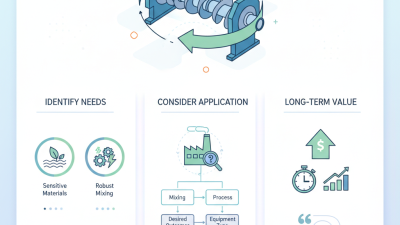
Choosing the right Ribbon Agitator can really make a big difference in your production process. I mean, it impacts how well your materials mix, the overall quality of your product, and even your operational costs. So, understanding the different types and features is pretty important if you want to make a smart choice.
Ribbon Agitators come in various designs, each suited for specific applications. It’s a good idea to think about what kind of materials you’ll be working with. Things like viscosity and density are pretty big factors here. Take your time to assess exactly what you need before pulling the trigger on a purchase.
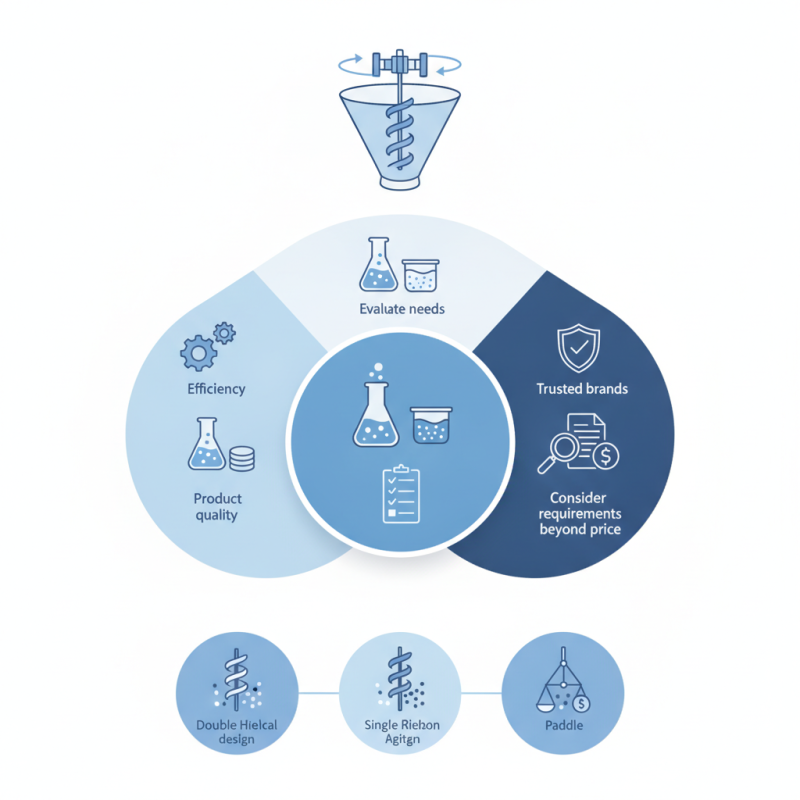
And honestly, quality really counts when selecting a Ribbon Agitator. Brands with a solid reputation tend to be more dependable—they’ve proven themselves over time. That said, it’s wise to gather info from different sources, so you get a clear picture of what suits your needs best. Remember, picking the right Ribbon Agitator isn’t just about finding the cheapest option; it’s about considering your specific mixing requirements and making a well-informed decision.
Understanding Ribbon Agitator Types and Their Applications
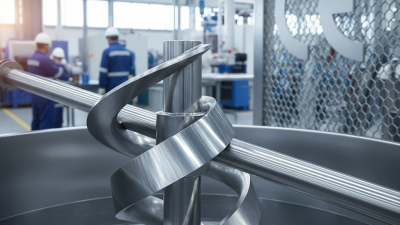
When choosing a ribbon agitator, understanding the types available is crucial. Ribbon agitators are commonly used for mixing powders, granules, and various liquids. Each type has specific features that influence its effectiveness in different applications. For instance, a standard ribbon agitator works well for bulk solids. However, for more complex mixtures, a Custom Ribbon Agitator may provide better results.
Different industries utilize these agitators uniquely. Food processingbenefits from the Gentle Mixing capabilities, whilechemical industries rely on efficient blending. It’s essential to consider your specific requirements. The size, material, and motor power of the agitator play significant roles in its performance. Sometimes, opting for a larger or more powerful model seems beneficial, but it may lead to inefficiencies or excessive energy use.
Evaluating the right agitator requires careful thought. Do not rush the decision. The wrong choice can result in poor mixing and compromised product quality. Look for examples and case studies related to your industry. Ask professionals for insights into their experiences with various ribbon agitators. This real-world feedback can guide you toward making a more informed decision.
Key Factors in Selecting the Right Ribbon Agitator Size
When selecting the right ribbon agitator size, size matters significantly. An ideal agitator needs to fit your mixing requirements. Consider the volume of your materials. If your production scale is large, a bigger agitator is essential for uniform mixing. A ribbon agitator that is too small may lead to inefficiencies and inconsistent product quality.
Assess the viscosity of your materials too. Thick mixtures require a more powerful agitator with a larger diameter. The mixing speed also plays a role. Faster speeds are needed for lighter materials, while heavier mixtures demand slower speeds. Understanding your specific needs ensures optimal functionality.
Don’t forget to check for compliance, like CE Certification Ribbon Agitator. This certification ensures the equipment meets safety and environmental standards. Poor choices can lead to operational issues down the line. Select an agitator that not only fits your physical space but is also reliable and safe for your staff. Always gather feedback from past experiences and aim for continuous improvement in your mixing operations.
Materials and Construction: Importance in Agitator Performance
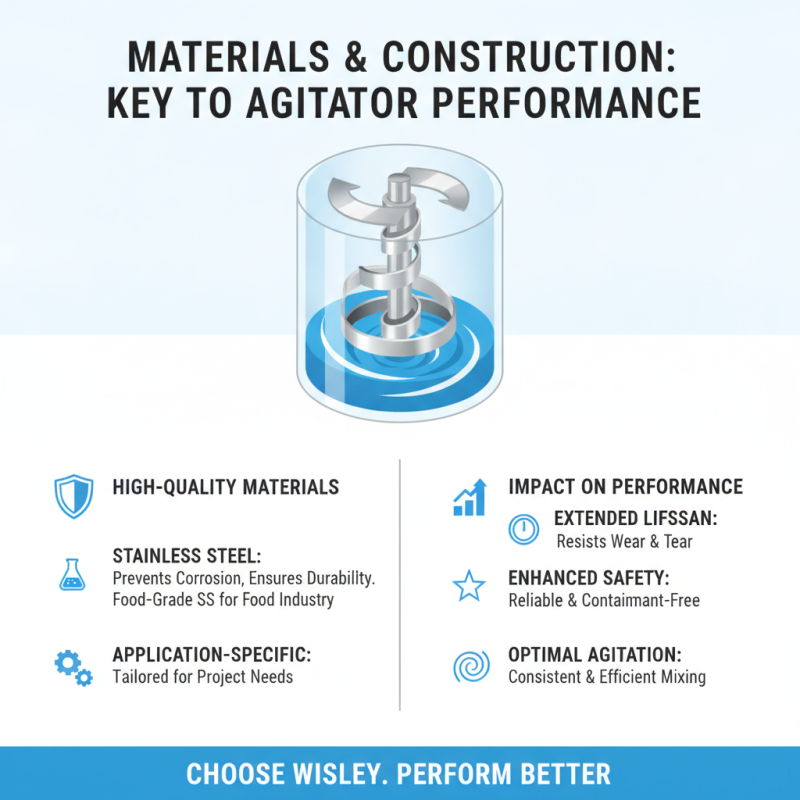
When selecting a ribbon agitator, the materials and construction are critical factors that directly influence its performance. A well-built agitator uses high-quality materials such as stainless steel, which prevents corrosion and ensures durability. Different projects may require specific materials, such as food-grade stainless steel for the food industry. Choosing the right material can enhance the lifespan of the agitator and ensure safety in various applications.
Moreover, construction details play a significant role. The design of the ribbon blades affects how efficiently they mix substances. Blades must be designed at appropriate angles to create effective turbulence. A common mistake is underestimating how a poor design can result in uneven mixing. If the blades lack precision, the agitation may not achieve desired results, leading to inconsistent product quality.
Paying attention to tolerances and fit during assembly is equally important. Even minor misalignments can reduce the efficiency of the agitator. This kind of oversight might require costly rework or replacements down the line. Therefore, it is essential to consider these aspects carefully. An experienced operator will evaluate not just the agitator but the entire mixing process to ensure everything works seamlessly together.
Efficiency Metrics: Power Consumption in Ribbon Agitators
When selecting a ribbon agitator, power consumption is a crucial factor. Understanding how much energy your agitator will use can lead to significant cost savings. Efficiency metrics measure the performance of these machines. They indicate how much power is needed to achieve optimal mixing. Ideally, you want a design that minimizes power usage while maximizing output.
The Screw Agitator stands out for its performance in various applications. It often requires less energy than other mixing devices. However, not all designs are created equal. You might notice differences in energy usage depending on build quality and materials. Sometimes, higher initial costs can lead to savings in energy bills. It is essential to research before making a decision.
Keep in mind that what works for one application might not suit another. Assess the specific needs of your operation. Consider the materials you are mixing and the desired viscosity. Sometimes, experimenting with different configurations helps. Balancing efficiency with effectiveness is key. This approach can lead to better performance and reduced operational costs.
How to Choose the Best Ribbon Agitator for Your Needs? - Efficiency Metrics: Power Consumption in Ribbon Agitators
| Model | Power Consumption (kW) | Capacity (liters) | Agitation Speed (RPM) | Efficiency Rating |
| Agitator A | 2.5 | 500 | 50 | High |
| Agitator B | 3.0 | 1000 | 60 | Medium |
| Agitator C | 1.8 | 300 | 40 | Very High |
| Agitator D | 2.2 | 800 | 55 | High |
| Agitator E | 3.5 | 1200 | 70 | Medium |
Mixing Characteristics: Shear Rate and Viscosity Considerations
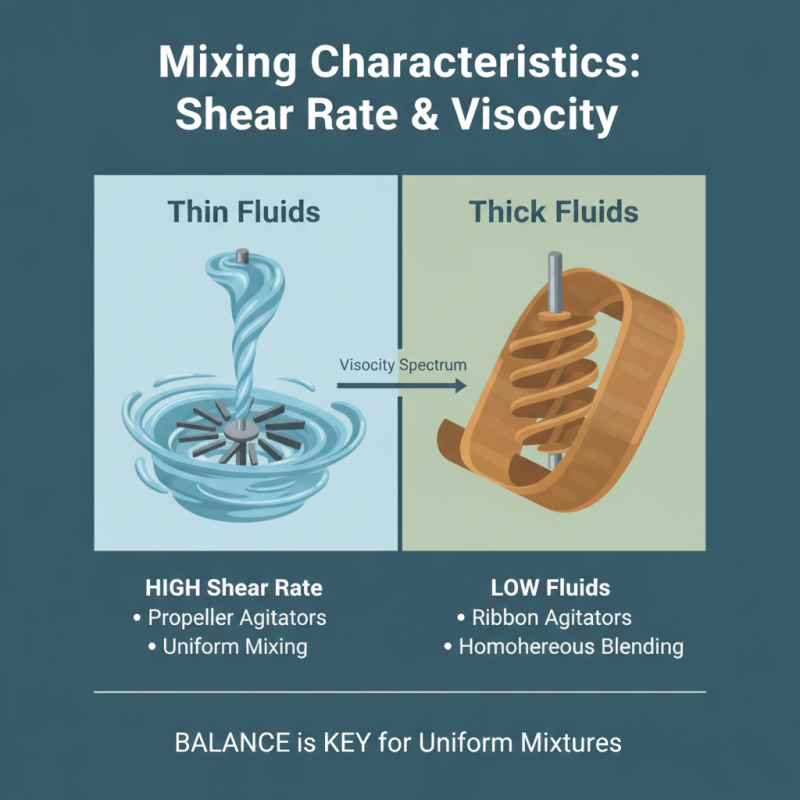
When selecting a ribbon agitator, understanding mixing characteristics is crucial. The shear rate and viscosity of the materials you work with can greatly influence your choice. A High Shear rate is ideal for thin fluids, while thicker materials may require a lower rate. This balance affects how uniformly your mixtures come together.
Tips: Assess your materials’ viscosity before making a decision. Consider the flow properties, which impact how well the agitator performs. Each application may require adjustments, depending on the material's response during mixing.
The design of the ribbon agitator can also affect the shear rate. Some designs may generate turbulence, which is beneficial for certain processes. However, excessive turbulence can lead to heat build-up or degradation of sensitive materials. It’s vital to evaluate the specific needs of your process.
Tips: Don’t overlook the operational environment. The temperature and pressure conditions can alter the viscosity of your materials. Knowledge of your application ensures more reliable mixing outcomes. Always be open to adjusting your initial choice based on real-time observations.
Maintenance and Durability: Evaluating Long-term Performance
When evaluating ribbon agitators for your operations, maintenance and durability are critical factors. The lifespan of a well-maintained agitator typically ranges from 7 to 10 years. However, various factors can significantly impact this duration. Wear and tear from abrasive materials may require more frequent inspections. Regular maintenance is essential for optimal performance. Data from the Mixing Equipment Manufacturers Association suggests that proper upkeep can extend equipment life by up to 30%.
The choice of materials in the construction of ribbon agitators also plays a vital role. Stainless steel is preferred for its resistance to corrosion, but other materials may offer cost benefits. Yet, opting for lower-quality materials can increase maintenance needs. An industry report highlights that 45% of operational downtime results from equipment failures linked to poor material selection. Thus, understanding the demands of your specific application is crucial for choosing the right agitator.
User feedback often emphasizes the need for replacements sooner than expected. Some have reported issues due to inadequate testing in harsh environments. Investing in durable components and conducting thorough performance evaluations can mitigate these risks. Remember, balancing cost with reliability is key. Always consider not just purchase cost but the total cost of ownership over time.
Cost-Benefit Analysis: Investment Versus Operational Efficiency
When choosing a ribbon agitator, a cost-benefit analysis is crucial. This tool enhances mixing efficiency in various applications. The upfront investment can be significant, yet the operational efficiency it brings often justifies the cost. A reliable agitator reduces mixing times and ensures uniform consistency. This is vital in industries like food processing and pharmaceuticals, where precision matters.
However, not every ribbon agitator delivers the same performance. Some may offer features that seem beneficial but fail under actual use. It's important to assess durability and ease of maintenance. An agitator that breaks down often can lead to costly downtimes. A careful evaluation of long-term operating costs versus initial spending is essential. Look closely at power consumption and maintenance needs.
Investing in a high-quality Powder Agitator might seem steep initially. Still, the improved production efficiency and reduced labor costs could enhance profitability. Sometimes, a cheaper model results in frequent issues, leading to hidden costs. Reflecting on these aspects can lead to better decision-making. Choose wisely, and the right ribbon agitator can provide a solid return on investment.
Exploring the Benefits and Features of High-Quality Ribbon Blenders for Your Production Needs
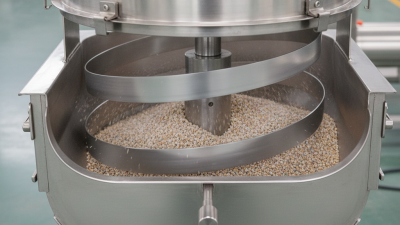
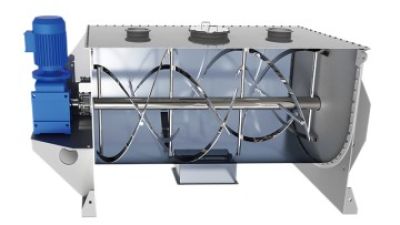
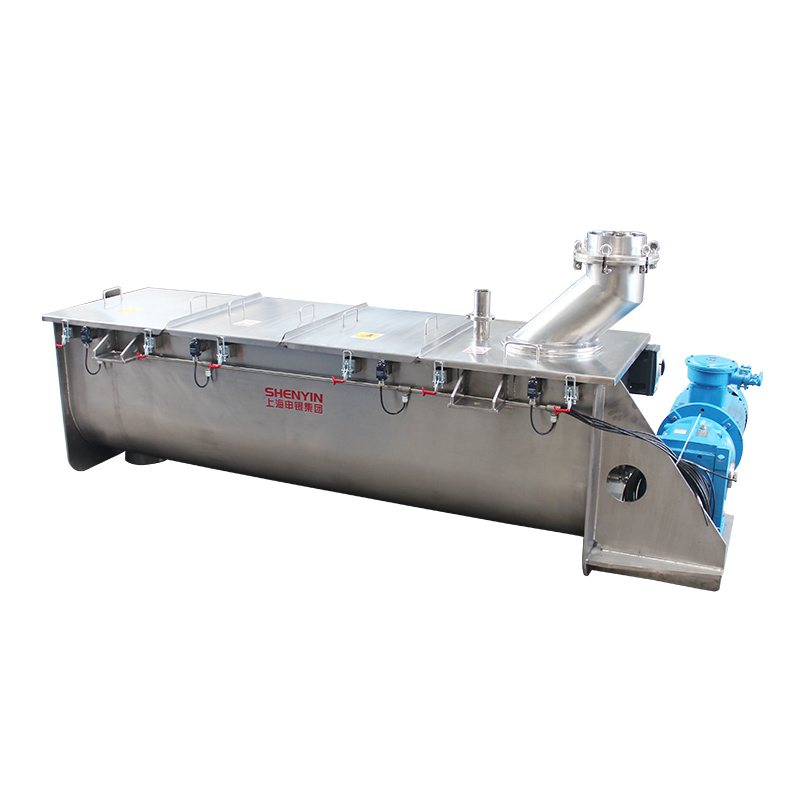
High-quality ribbon blenders are essential tools for achieving optimal mixing in production environments. These mixers are designed with efficiency and effectiveness in mind, making them suitable for a wide range of materials, including those with difficult rheological properties. The innovative design of a double-layer spiral belt system allows for quick and thorough mixing. As materials are simultaneously pushed towards the center of the cylinder by the outer spiral belt and towards the sides by the inner belt, a unique circulation and alternating convection is created. This ensures that all materials are uniformly blended, resulting in consistent quality in the final product.
For materials that exhibit poor fluidity, traditional mixing solutions often fall short, leading to dead corners and incomplete mixing. However, modern ribbon blenders can be equipped with a patented scraper structure at both ends of the spindle. This feature effectively addresses the shortcomings of conventional designs by continuously pushing the materials back towards the center of the mixing chamber. As the machine operates, the scrapers ensure that every particle is engaged in the mixing process, promoting a more thorough and effective blend while preventing material buildup and ensuring a clean discharge. This not only enhances productivity but also minimizes waste, making ribbon blenders an invaluable asset for any production line.
FAQS
: Consider shear rate and viscosity of your materials. This balance is key to achieving uniform mixtures.
Viscosity affects how well the agitator performs. Thin fluids need high shear rates; thicker materials need lower rates.
Yes, different designs create varying levels of turbulence. Excess turbulence can cause heat build-up.
They can alter the viscosity of materials. It's crucial to understand these factors for reliable mixing.
It's a tool to compare investment costs with operational efficiency. An efficient agitator can justify initial costs.
An agitator that frequently breaks down can lead to costly downtimes. Evaluate maintenance needs before choosing.
Yes, analyze power consumption and maintenance alongside initial spending for better decision-making.
A low-cost model may lead to frequent issues, resulting in hidden costs.
Reflect on production efficiency and reduced labor costs to enhance profitability over time.
Yes, be open to adjustments based on real-time observations for better results.
Conclusion
When selecting the best Ribbon Agitator for specific needs, it's essential to understand the various types and their applications. Key factors include choosing the right size based on production requirements, as well as considering the materials and construction of the agitator, which significantly impact its performance. Efficiency metrics, such as power consumption, are crucial for evaluating long-term operational costs.
Additionally, mixing characteristics like shear rate and viscosity play a vital role in determining the effectiveness of the Ribbon Agitator. Maintenance and durability also need careful assessment to ensure reliable long-term performance. Finally, a thorough cost-benefit analysis will help weigh the initial investment against expected operational efficiency, allowing for an informed decision that aligns with both budget and performance goals.

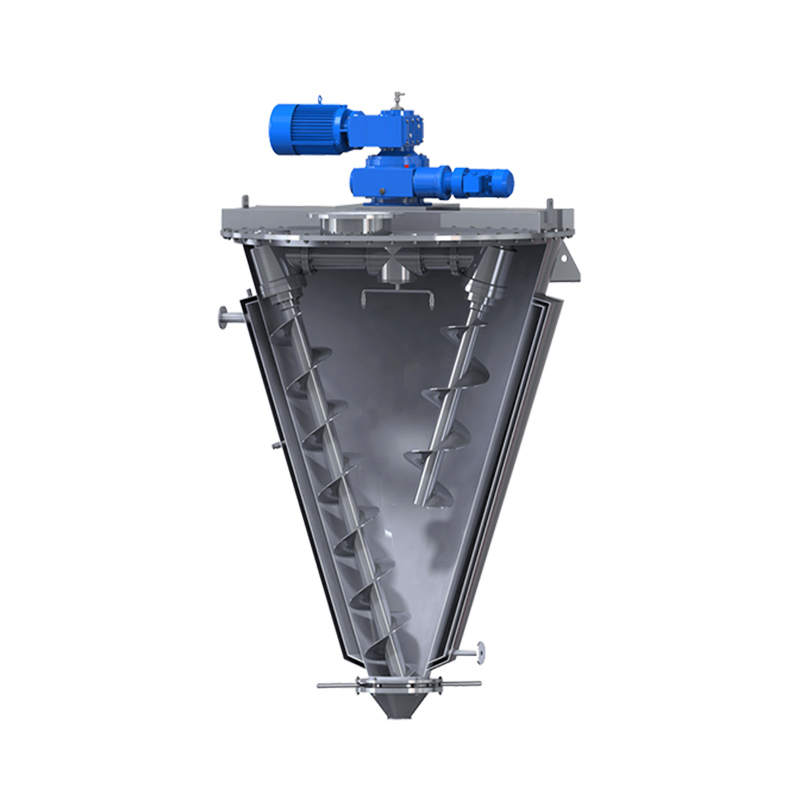 Conical Screw Mixer
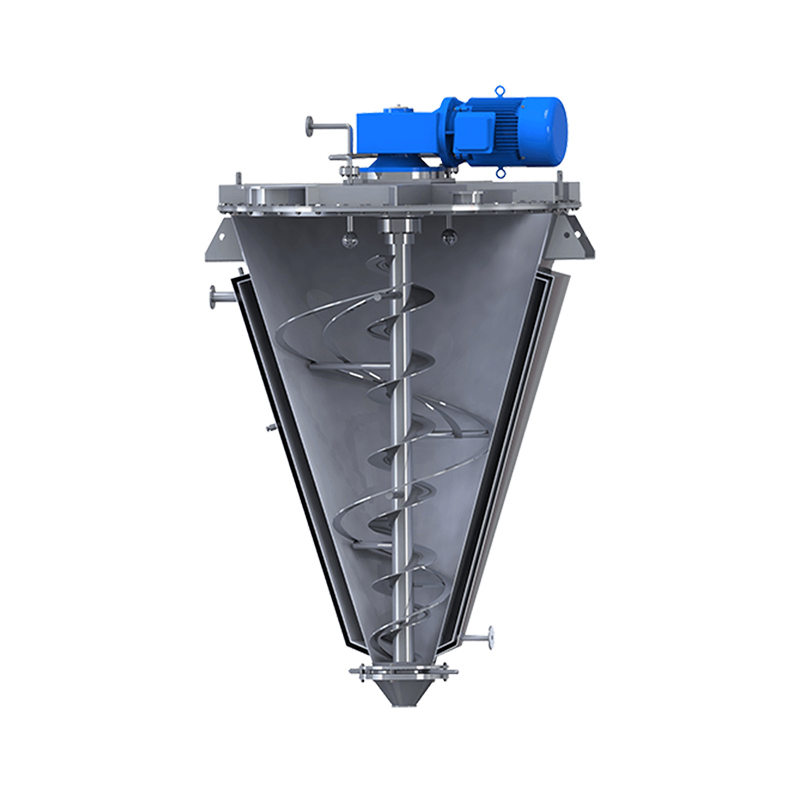 Conical Screw Belt Mixer
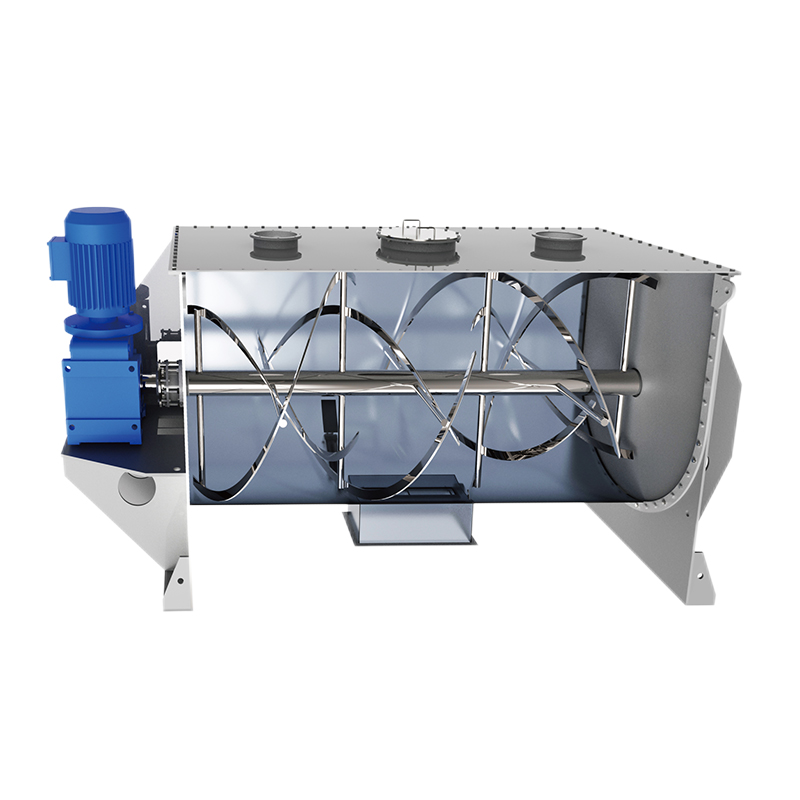 Ribbon Blender
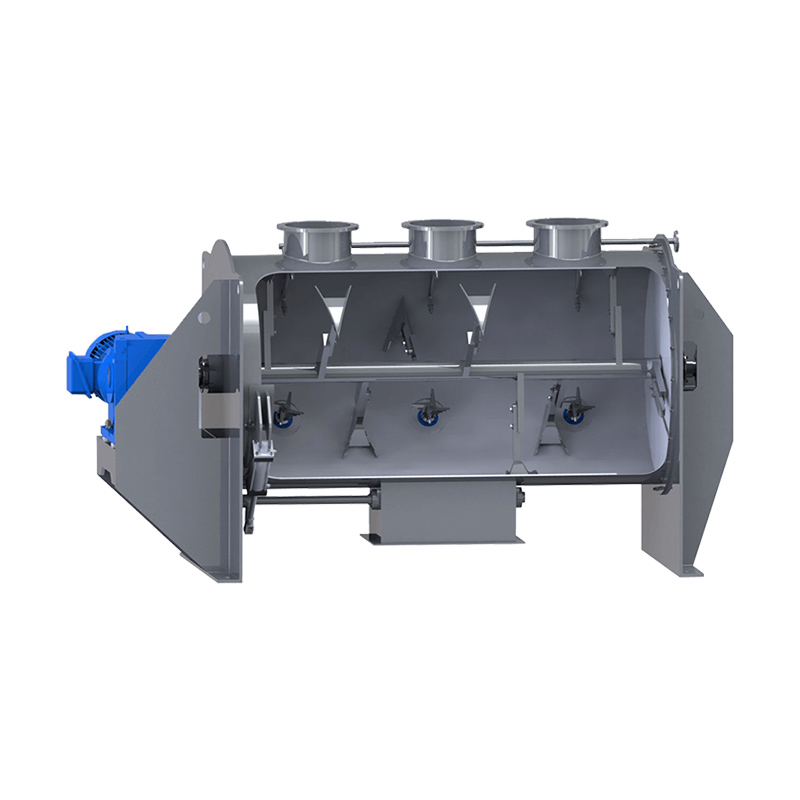 Plough-shear Mixer
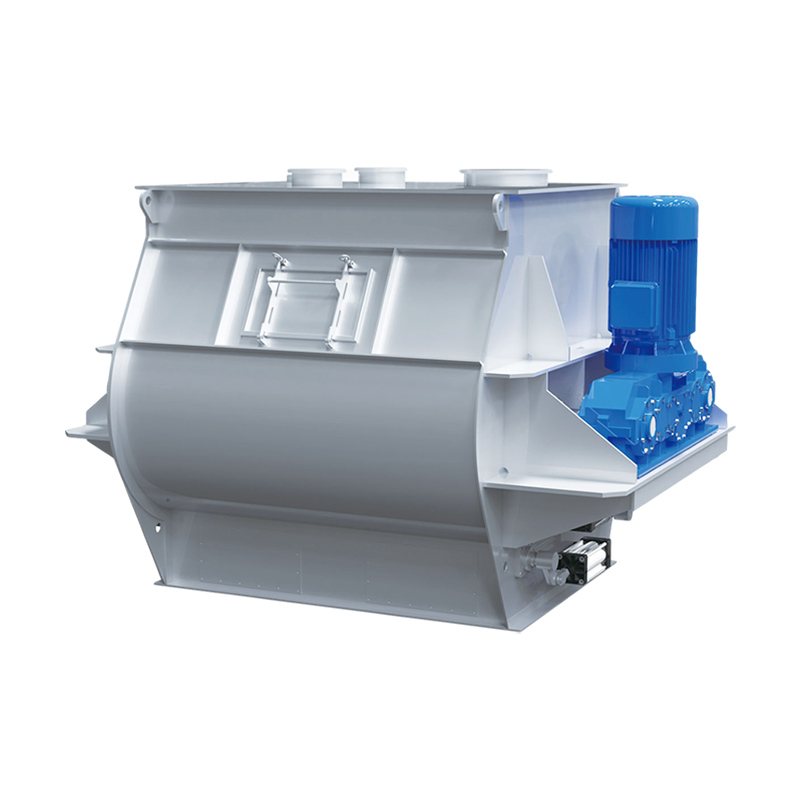 Double Shaft Paddle Mixer
 CM Series Mixer