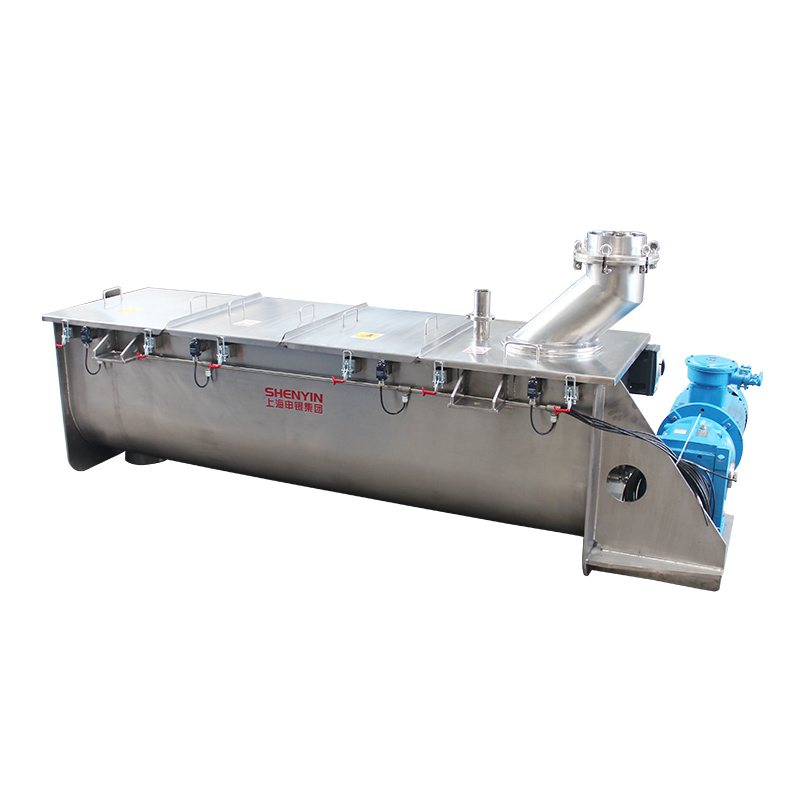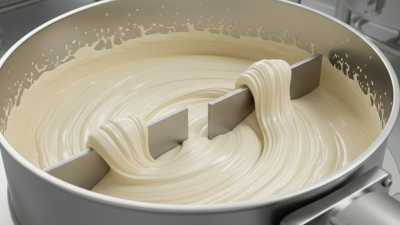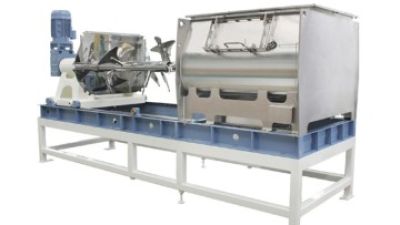
Picking a reliable Manual Paddle Mixer manufacturer in China isn’t just about comparing prices. You really need to find a supplier who understands your specific needs—like the type of material you're mixing, the batch size, your working environment, and what your operators can handle. For example, a mixer that's great for dry mortar might not work well for adhesives, grout, or thick coatings. Tiny details make a big difference, you know? Things like handle balance, paddle shape, shaft strength, and how well the gearbox is protected can all impact your daily productivity.
Daniel Wu, who’s an independent consultant with hands-on experience in construction equipment, points out, “A Manual Paddle Mixer shows its true worth when it stays steady despite the resistance of different materials.” That’s an important thing to keep in mind. Sometimes, the capacity listed in the catalog sounds impressive, but performance can actually suffer when you’re pushing a nearly full drum. It’s a good idea to check things like torque delivery, motor stability, the welds on the paddles, and how good the protective finishes are. If you can, ask for videos of the mixer tested with a similar mix—better yet, request a sample trial if possible.
Companies like Henan Ruisen Machinery, Shandong Innovation Machinery, and Jiangsu Tongyi Machinery each have their own strengths. One might offer more options for customization, another might be faster when it comes to spare parts, and a third could be better at handling export packaging and paperwork. Remember, just because a brand name is famous doesn’t mean it’s the perfect fit for your needs. Don’t fall for that assumption.
This guide is here to help you compare Chinese Manual Paddle Mixer Manufacturers more practically. It recommends considering factors like how experienced the factory is, how strict their quality control is, how well they communicate technically, their ability to customize, after-sales support, and overall operating costs. Also, make sure to check if replacement paddles are easy to find and whether you can get good access for cleaning. Keep in mind—paying the lowest price upfront isn’t always the best deal. Sometimes, the cheapest mixer ends up costing you more in repairs and downtime in the long run. What really matters is real performance, not just a shiny brochure.
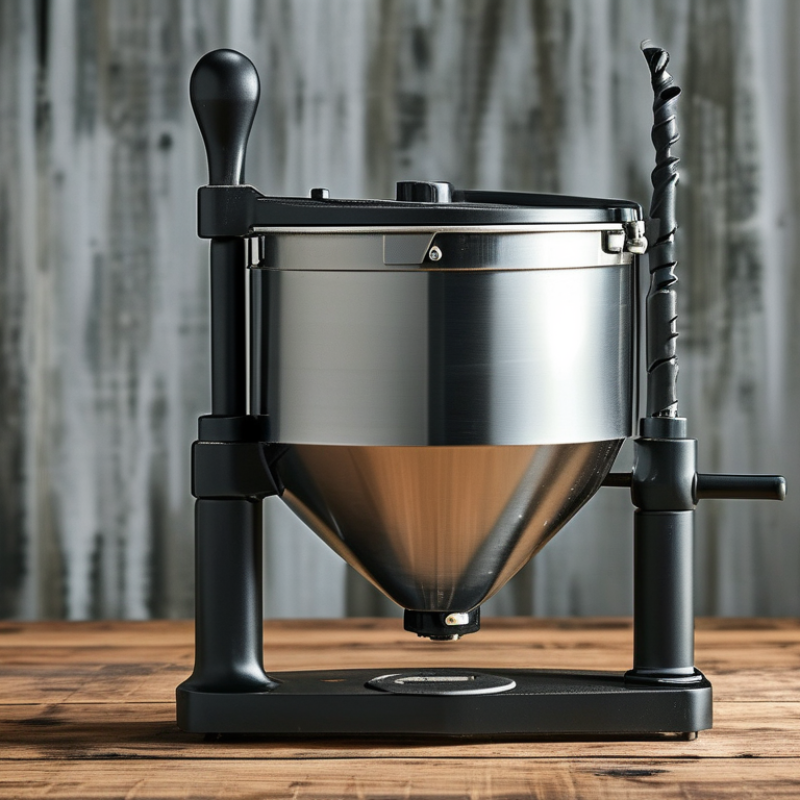
A manual paddle mixer is a hand-operated tool for blending powders, granules, and certain damp materials. Its flat or curved paddles move ingredients through a container without electricity. The operator controls mixing speed, pressure, and direction. This simple design suits small batches, remote sites, and workshops with limited power.
In practical use, workers often mix dry mortar, plaster, cement additives, animal feed, soil amendments, or food-grade powders. A typical batch may sit in a 20-liter tub. The paddle should reach the bottom without scraping aggressively. Slow strokes reduce dust, while repeated lifting helps break hidden pockets. A Manual Powder Mixer works best when the material is loose and reasonably dry. Sticky compounds can overload the shaft and tire the operator quickly.
Material compatibility needs careful checking. Stainless steel resists corrosion, but it may not suit every chemical mixture. A strong handle improves control, although excessive weight reduces working comfort. I would test a small batch first. That step is easy to overlook. Some powders appear blended after two minutes, yet darker particles remain beneath the surface. Clean the paddles between batches, inspect welds, and keep the container stable. Manual mixing is not always faster, but it can reveal texture changes that powered equipment hides.
A reliable manual paddle mixer should feel controlled before it feels powerful. During product inspections, I check the handle, shaft, and paddle connection by hand. A balanced shaft reduces wrist strain when mixing thick mortar, plaster, or compound. The grip should remain comfortable after several minutes of steady turning.
Material quality matters in daily work. Stainless steel or properly coated components resist moisture and surface corrosion. However, a shiny finish alone proves little. Inspect welds, thread alignment, and the locking mechanism closely. Loose joints can introduce wobbling, wasted effort, and uneven mixtures. The paddle should have a practical shape that moves material from the bottom and sides of the bucket.
Good manufacturers also provide clear load guidance and replacement-part information. This detail reflects engineering discipline and supports long-term maintenance. Ask whether the shaft stays straight under normal manual pressure. Ask about cleaning instructions, too. Dried compound around the joint can damage performance. I once trusted a strong-looking mixer with a poorly designed grip; the tool worked, but my hand tired quickly. That mistake changed my inspection routine. Reliability is not only about metal strength. It includes comfort, repairability, consistent mixing, and honest technical specifications. Perfect tools are rare, so careful evaluation still matters.
This practical evaluation model assigns a 100-point reliability score to the features that most directly affect safe operation, consistent mixing, service life, and user control. Motor protection, variable-speed control, durable construction, ergonomic handling, and paddle compatibility should be checked together rather than evaluated separately.
Comparing China’s top manual paddle mixer manufacturers requires more than checking catalog prices. Start with the working details: batch size, powder density, moisture, paddle clearance, and discharge height. A 100-liter mixer may handle 60 kilograms of one powder, but only 35 kilograms of another. Ask for a filmed trial using your actual material. That small test can reveal dead zones, difficult cleaning, or excessive effort at the handle.
The ISO Survey 2022 recorded 1,265,216 ISO 9001 certificates worldwide, yet certification alone does not prove manufacturing consistency. Request batch records, material certificates, weld inspection reports, and test procedures. For food or pharmaceutical applications, inspect contact surfaces closely. Smooth stainless steel can still hide rough weld transitions. Ask whether the supplier measures surface finish, rather than simply describing it as “polished.” This matters.
Compare suppliers through measurable evidence. Check mixing uniformity results, usually reported as a coefficient of variation, and require the test method. A lower CV generally indicates better consistency, but sampling locations can distort the result. Be careful here. A polished quotation is not performance data. For a Custom Manual Powder Mixer, compare paddle geometry, shaft sealing, frame rigidity, spare-part availability, and operator ergonomics. Pull the handle yourself if possible. Resistance, vibration, and awkward discharge height are easy to miss in online discussions. Also review lead time, packaging photos, warranty terms, and remote technical support before making the decision.
China Top Manual Paddle Mixer Manufacturers How to Choose?
When evaluating manual paddle mixer manufacturers in China, inspect materials before comparing prices. A practical mixer should use corrosion-resistant stainless steel for contact surfaces. Check welds, paddle edges, shaft alignment, and handle strength. Rough welds can trap powder and complicate cleaning. Thin metal may reduce weight, but it can flex during heavy mixing. Ask for material grades and surface treatment records. Avoid guesswork.
Capacity must reflect the working load, not the drum’s total volume. Leave enough space for powders to move around the paddles. If a mixer holds 100 liters, its effective batch may be much smaller. Request test data for your actual powder density and batch size. Measure loading height, discharge access, and operator effort. These details affect daily productivity. Small batches still need consistent movement.
Mixing performance requires a repeatable test. Use colored salt, flour, or another safe reference powder to inspect uniformity. Check samples from the top, center, and bottom. Look for dead zones near corners and beneath the paddle. Record mixing time, batch weight, and visible variation. A CE Certification Manual Powder Mixer may meet important conformity requirements, but certification does not prove excellent mixing results. Review supporting documents carefully. Real tests matter.
Manufacturers should explain maintenance intervals, replacement parts, and cleaning procedures. A dependable supplier can discuss limitations without exaggeration. That honesty is valuable. I would also question any promised capacity that lacks test conditions. Performance often changes with moisture, particle size, and operator technique.
When selecting a Manual Mixing Machine, inspect certifications before comparing prices. ISO Survey 2022 reported 1,265,216 valid ISO 9001 certificates worldwide. However, a certificate proves a management system, not perfect mixer performance. Check its scope, issuing body, production site, and expiry date. For food or pharmaceutical use, request material certificates for product-contact stainless steel, preferably EN 10204 3.1 documents. Verify compliance with applicable food-contact rules, such as EU Regulation 1935/2004 or equivalent requirements. CE marking may indicate a manufacturer’s declaration, not independent product certification.
Testing should match your actual process. Ask for documented trials using a similar powder, viscosity, batch size, and mixing time. The report should record torque, paddle speed, noise, shaft runout, leakage, and emergency-stop function. Inspect welds and internal corners closely. A smooth, cleanable surface matters more than a polished photograph. Surface roughness around Ra 0.8 μm is commonly requested for hygienic equipment, but confirm your sector’s specification. I still treat paperwork as a starting point, not proof.
Tips: Request one sample test video and one signed factory report. Check whether measurements use calibrated instruments. Ask for calibration records. Confirm that testing covers the exact Manual Mixing Machine configuration, including paddle shape and motor capacity. An audit visit can reveal unfinished welds, inconsistent polishing, or poor document control. These details are easy to miss.
| Evaluation Area | What to Check | Relevant Certification or Standard | Documents or Test Evidence to Request | Acceptance Guidance |
|---|---|---|---|---|
| Quality management system | Whether the manufacturing site operates a controlled quality system covering design, purchasing, production, inspection, corrective action, and traceability. | ISO 9001:2015 | Valid certificate, certification scope, manufacturing-site address, issue and expiry dates, and certification-body details. | The certificate should cover the relevant equipment or manufacturing activity and the actual production site. |
| Conformity for European markets | Risk assessment, safeguarding, operating instructions, declaration of conformity, and technical documentation for the intended machine configuration. | Applicable EU machinery legislation; EN ISO 12100 for machinery risk assessment and risk reduction. | EU Declaration of Conformity, risk-assessment summary, instruction manual, safety-device list, and product configuration details. | Do not rely on a CE logo alone; verify that the declaration matches the supplied model, motor, controls, and intended use. |
| Electrical safety | Protection against electric shock, correct grounding, insulation, wiring quality, emergency-stop operation, and protection against unexpected starting. | IEC 60204-1, where applicable to the machine’s electrical equipment. | Electrical schematic, grounding-continuity record, insulation-resistance record, functional safety checklist, and emergency-stop test record. | Test results should identify the machine serial number, test date, instrument, measured value, and pass/fail result. |
| Enclosure and water protection | Resistance of electrical enclosures to solid objects and water, especially for washdown or humid production areas. | IEC 60529 for IP-code classification. | IP-rating declaration or test report, enclosure drawings, gasket specifications, and confirmation of the tested configuration. | The claimed IP rating should apply to the complete relevant enclosure, not only to an individual component. |
| Mechanical guarding | Protection from rotating paddles, shafts, couplings, pinch points, sharp edges, and access during operation or cleaning. | EN ISO 12100 and applicable guarding requirements for machinery. | Guarding drawings, interlock specifications where used, hazard analysis, and functional test records. | Guards should remain secure during normal operation and should not be removable without tools when access creates a foreseeable hazard. |
| Material suitability | Material grade, corrosion resistance, weld quality, surface finish, and compatibility with the processed powder, granule, or paste. | Applicable material specifications; food-contact requirements only when the application requires them. | Material certificates, welding records, surface-finish measurement where specified, and corrosion or compatibility information. | Material certificates should identify the grade and heat or batch reference for product-contact parts. |
| Food, pharmaceutical, or cosmetic applications | Whether all product-contact materials, seals, lubricants, and surface treatments are suitable for the intended regulated application. | EU Regulation (EC) No. 1935/2004, EU GMP Regulation (EC) No. 2023/2006, or applicable FDA food-contact requirements, depending on the destination and use. | Supplier declarations, seal and lubricant specifications, cleaning instructions, allergen-control information, and product-contact material traceability. | Regulatory compliance must be assessed for the complete product-contact system and intended process conditions. |
| Mixing performance | Batch capacity, fill level, mixing time, homogeneity, discharge behavior, and performance with the buyer’s actual materials. | No single universal pass/fail standard; acceptance criteria should be defined in the purchase specification. | Factory acceptance-test report, trial-mix video or record, sampling plan, laboratory results, and agreed test recipe. | Use representative raw materials and define the allowable variation in composition, moisture, density, and mixing time before testing. |
| Capacity and operating load | Rated working volume, maximum safe load, bulk-density range, motor power, and possible overload conditions. | Manufacturer’s documented design limits and purchaser-defined operating requirements. | Capacity calculation, motor data sheet, overload-protection settings, load test, and continuous-operation record. | Do not compare nominal volume alone; compare usable working volume and the material-density range. |
| Noise and vibration | Noise level, bearing condition, shaft alignment, imbalance, foundation stability, and abnormal vibration under load. | ISO 3744 may be used for sound-power testing; ISO 20816 may be relevant for evaluating machine vibration, subject to application. | Noise measurement report, vibration readings, test conditions, measuring locations, and calibration information. | Compare results measured at the same distance, operating speed, load, and surrounding acoustic conditions. |
| Welds and fabrication | Weld penetration, cracks, porosity, distortion, internal cleanliness, and accessibility for inspection and cleaning. | Applicable welding procedure and inspection requirements defined in the purchase specification. | Welding procedure records, welder qualifications where required, visual inspection records, and non-destructive-test reports when specified. | Inspection scope should reflect the risk and service conditions; visual inspection alone may not detect every internal defect. |
| Factory acceptance test | Whether the completed mixer meets the agreed mechanical, electrical, safety, and performance requirements before shipment. | Buyer-approved FAT protocol; no universal FAT format applies to every mixer. | Signed FAT checklist, dimensional inspection, dry run, loaded run, emergency-stop test, leak check, and punch-list closure. | Require test conditions, measured values, deviations, corrective actions, and final approval signatures. |
| Traceability and after-sales support | Serial-number control, spare-parts availability, maintenance instructions, warranty terms, and response procedures. | ISO 9001 traceability practices and contract-specific service requirements. | Serial-number plate, parts list, maintenance schedule, lubrication chart, warranty document, and recommended spare-parts list. | Documentation should correspond to the exact supplied configuration and remain available throughout the expected service life. |
Note: Certification and testing requirements depend on the destination market, machine configuration, materials processed, and intended application. Confirm the applicable legal requirements with the importer or qualified compliance professional.
Choosing among China’s top manual paddle mixer manufacturers requires more than checking the lowest quotation. In my experience, price differences often reflect steel thickness, paddle design, surface finishing, and assembly quality. Ask for the mixer’s working volume, frame material, shaft diameter, and estimated service life. A very cheap unit may save money initially, but weak seals or uneven paddles can create costly downtime. Request clear quotations with packaging, delivery terms, spare parts, and inspection details included.
Customization should be practical, not decorative. Confirm whether the manufacturer can adjust hopper size, paddle shape, discharge height, or contact materials. Ask for technical drawings before production. Small changes can affect cleaning time and mixing consistency. I once saw a buyer focus on capacity alone and overlook the outlet position. The mixer arrived, but it did not fit the existing line. That mistake was avoidable. Samples, photos, and written specifications improve reliability.
Tips: Compare at least three detailed quotations. Check welds and moving parts through inspection photos or video. Ask how quickly support replies to faults. A dependable supplier should explain warranty limits, replacement-part availability, installation guidance, and maintenance steps. Do not accept vague promises. Request a signed after-sales plan. Also, leave room for doubt: advertised performance may differ under real materials, moisture levels, and batch sizes. Test conditions should be stated clearly.
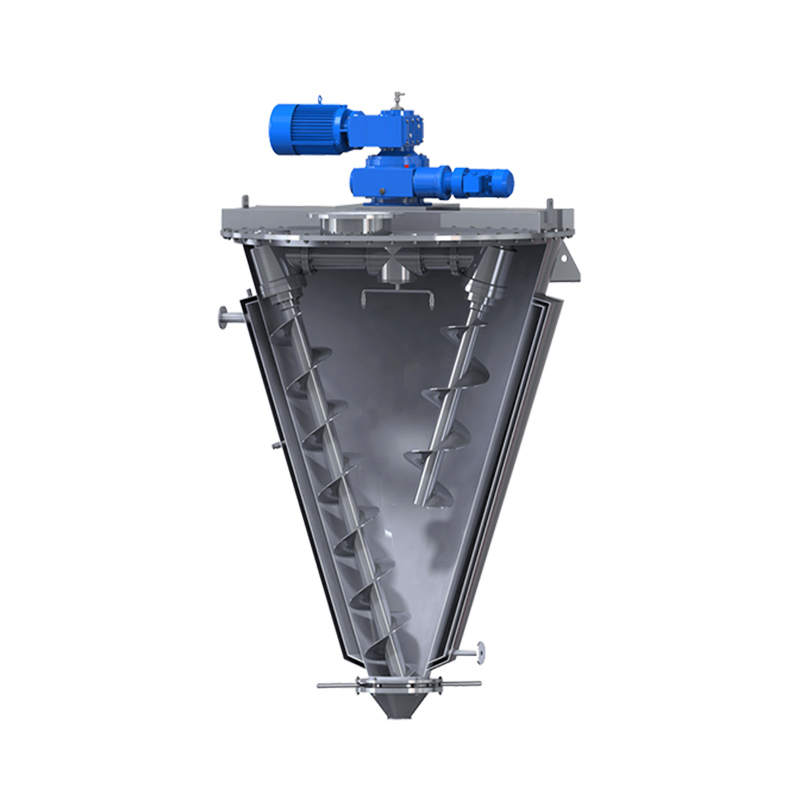
The GP-SYJW Series Pull-Type Gravity-Free Mixer is designed for food businesses and professional kitchens seeking efficient, hygienic blending performance. Its gravity-free mixing structure helps combine food seasonings, prepared vegetable seasonings, spice blends, and other dry or semi-dry ingredients evenly, while reducing the risk of material accumulation and cross-contamination. The pull-type design also supports convenient loading, unloading, and cleaning, making it suitable for production environments where sanitation and operating efficiency are equally important.
Manufactured by experienced suppliers in China, this mixer is built to support consistent processing and long-term cleanliness. Its practical configuration allows operators to handle different recipes with greater flexibility, whether preparing small specialty batches or regular commercial quantities. Smooth internal surfaces and a hygiene-focused design make routine maintenance easier, helping kitchens and food-processing facilities maintain dependable standards throughout daily operations.
For seasoning manufacturers, prepared-food producers, restaurants, and catering businesses, the GP-SYJW Series offers a reliable solution for streamlined blending. It can help improve ingredient distribution, reduce manual labor, and maintain stable product quality from batch to batch. With its combination of convenient operation, hygienic construction, and adaptable performance, this pull-type gravity-free mixer is a practical choice for modern food preparation and processing.
: It is a hand-operated tool for blending powders, granules, and some damp materials. Its paddles move ingredients without electricity.
It suits workshops, remote sites, and small production areas. Typical materials include dry mortar, plaster, feed, soil amendments, and food-grade powders.
A 20-liter tub is a practical example for small batches. The paddle should reach the bottom without scraping forcefully.
Use slow strokes to reduce dust and improve control. Lift the paddle repeatedly to break hidden pockets. Test it first.
Loose, reasonably dry materials usually work best. Sticky compounds can overload the shaft and quickly tire the operator.
Check the paddle and shaft materials against the mixture. Stainless steel resists corrosion, but it is not suitable for every chemical blend.
Compare steel thickness, paddle shape, shaft diameter, working volume, and assembly quality. Request prices covering packaging, delivery, spare parts, and inspection details.
Possible changes include hopper size, paddle shape, discharge height, and contact materials. Ask for drawings before production. Small changes matter.
Request written warranty limits, replacement-part details, installation guidance, and maintenance instructions. Check how quickly support responds to faults.
Do not judge performance from capacity or price alone. A mixer may fit the tub but fail to fit the existing outlet. Advertised results can differ with moisture and batch size.
Choosing the right China-based Manual Paddle Mixer manufacturer requires more than comparing prices. First, understand the mixer’s intended use, such as blending construction materials, chemicals, coatings, or other viscous products. A reliable model should offer a strong motor, ergonomic handle, durable paddle, stable speed control, safe operation, and easy maintenance. Buyers should also compare mixing capacity, material quality, paddle design, output consistency, and performance under continuous use.
Before making a decision, review the manufacturer’s production capabilities, quality certifications, inspection procedures, and testing records. It is also important to request clear information about customization options, minimum order quantities, delivery schedules, warranty terms, spare parts, and technical support. A professional supplier should provide transparent quotations and responsive after-sales service. By evaluating product performance, manufacturing standards, communication, and long-term support together, buyers can select a Manual Paddle Mixer that offers dependable operation and good overall value.