Leave Your Message
0%

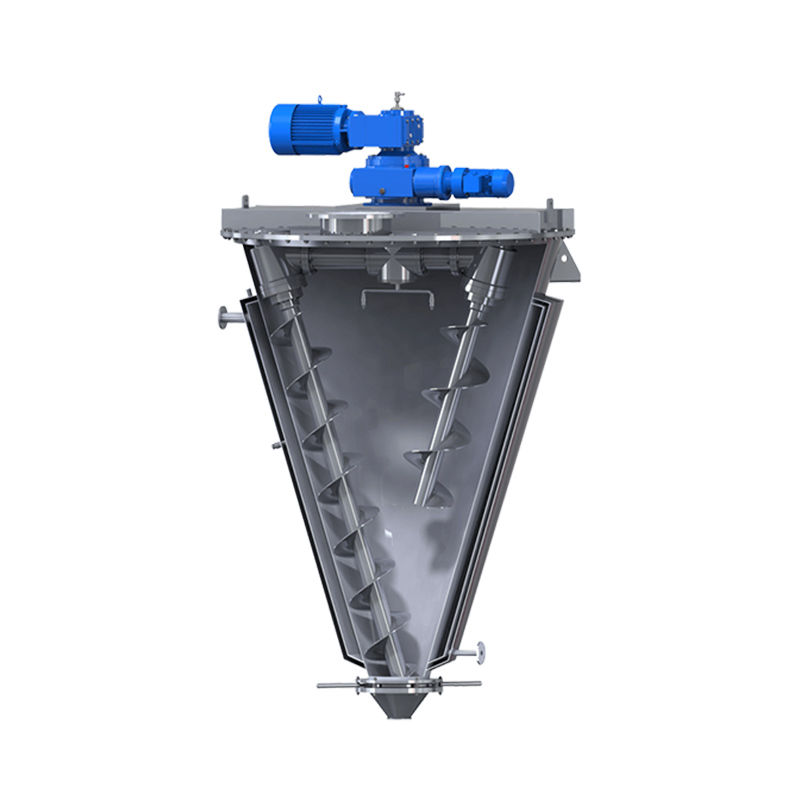
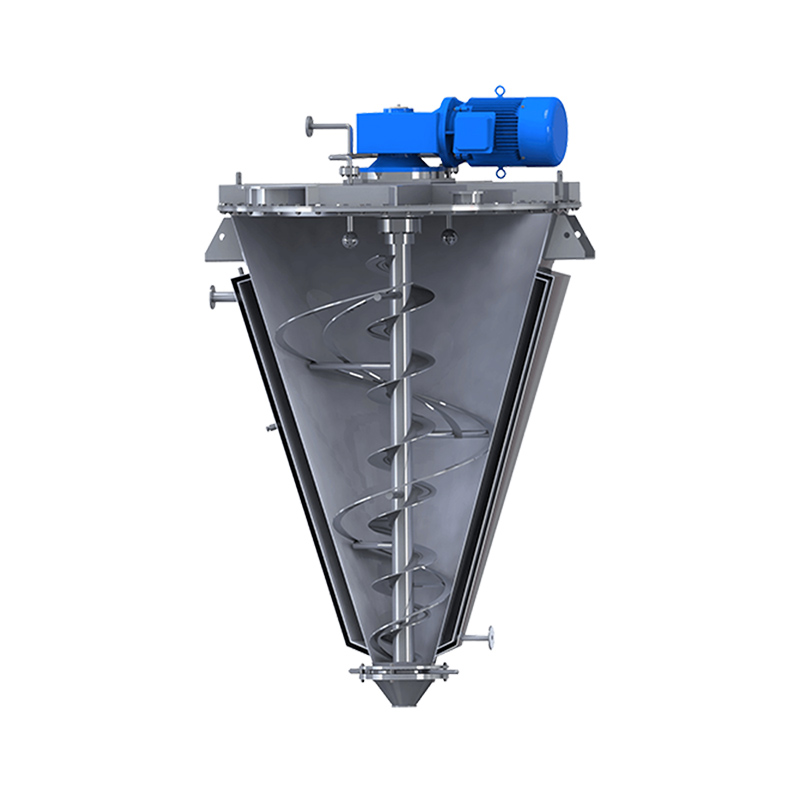
A Conical Screw Mixeris a Vertical Blending machine designed for powders, granules, and other dry materials. Its tapered vessel contains one or more screw elements that lift material upward along the wall. Gravity then moves it downward through the central zone. This gentle circulation can produce uniform blends while limiting heat, dust, and product damage.

Dr. Paul W. Cleary, a recognized researcher in granular processing, describes the practical goal clearly: “Effective mixing is controlled movement, not movement alone.” That principle matters on a factory floor. A good Conical Screw Mixer must handle ingredient density, particle size, moisture, and flowability. It must also discharge cleanly. Residue around a bottom valve can affect the next batch.

Companies such as Hosokawa Micron and Marion Process Solutions apply this equipment across food, chemical, pharmaceutical, and battery-material production. Their systems may include jacketed vessels, vacuum connections, spray nozzles, or sanitary finishes. The details are not decorative. They influence cleaning time, temperature control, maintenance, and product consistency.

Yet no mixer solves every process problem. A longer mixing cycle may improve uniformity but reduce productivity. A faster screw may shorten processing time but increase particle breakage. Testing remains essential. Sampling from several vessel locations can reveal what one sample hides.

This guide explains how a Conical Screw Mixer works, where it performs well, and which design choices deserve closer review. The machine looks simple. The process is not.
What Is a Conical Screw Mixer?

Definition and Core Purpose of a Conical Screw Mixer

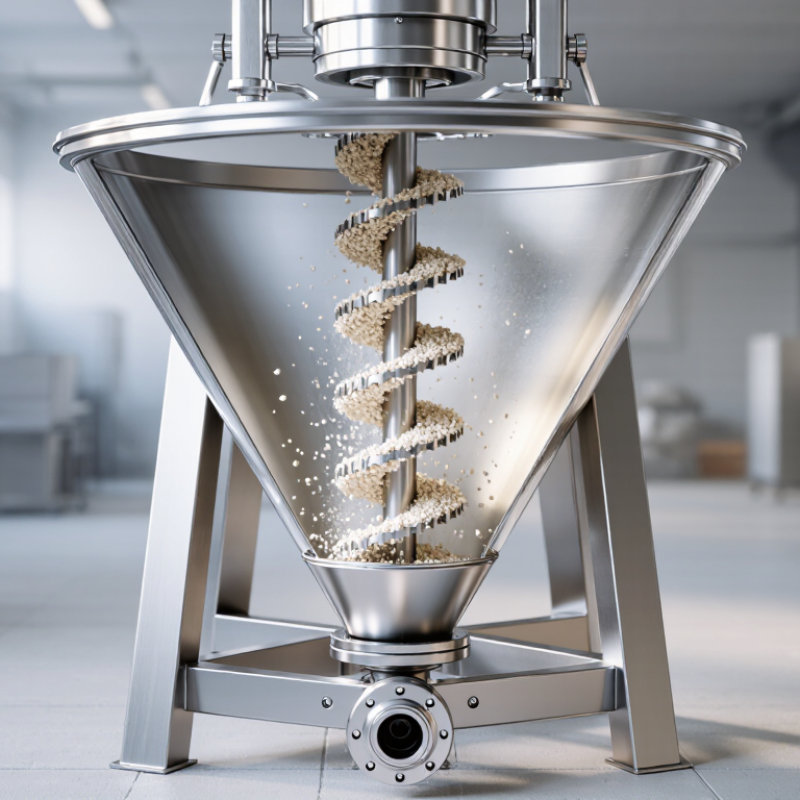
A conical screw mixer is a vertical blending machine with a cone-shaped vessel and a rotating screw. The screw moves material upward along the vessel wall. Gravity then carries it downward through the central area. This circulation creates gentle, three-dimensional mixing with limited product damage. Its core purpose is to produce a consistent blend from powders, granules, crystals, or similar dry materials.

The conical design supports controlled discharge through a bottom outlet. It also reduces stagnant corners, although poor loading can still create uneven zones. In practical operation, I would check fill level, particle size, moisture, and mixing time together. These factors strongly affect the final blend. A Conical Screw Mixer With Heating Jacket can add controlled heat around the vessel. This feature helps warm materials, remove moisture, or maintain flow during processing. Operators should monitor wall temperature, because the product temperature may respond more slowly. That detail is easy to overlook.

Tips: Keep the mixer within its recommended fill range. Start with a conservative speed and increase it only when necessary. Inspect the discharge area after each trial batch. A small sample from one location is not enough. Take samples from several points and compare their appearance or test results. Cleaning also deserves attention. Fine powder can remain behind seals, outlet edges, and inspection ports. In my experience, faster mixing does not always mean better mixing. Some materials need more time, not more force.

How the Conical Screw Mixing Process Works

What Is a Conical Screw Mixer?

How the Conical Screw Mixing Process Works

A conical screw mixer uses a rotating screw inside a tapered vessel. The screw usually moves material upward along the vessel wall. Gravity then pulls the material downward through the center. This creates a slow, continuous circulation pattern.

The process starts when dry powders, granules, or similar materials enter the cone. As the screw rotates, heavier particles travel differently from lighter particles. The changing vessel diameter also alters the material’s movement. This combination helps distribute ingredients throughout the batch.

Watch the circulation closely.

In practical operation, mixing time depends on fill level, particle size, moisture, and screw speed. A higher speed does not always produce better results. It may create excess heat, dust, or particle breakdown. Lower speeds can be gentler, but they may require more time.

Sampling remains important. Operators can collect small samples from different locations and compare their composition. This helps reveal uneven zones that visual observation may miss. The mixer should not be overloaded, because restricted movement can leave unmixed pockets near the cone wall.

The process is not flawless. Cohesive powders may form lumps, while materials with different densities may separate after mixing. Careful loading, controlled speed, and suitable discharge methods can reduce these problems. Still, every formulation behaves differently. Trial batches and measured sampling are often more reliable than assumptions.

Main Components and Design Features

What Is a Conical Screw Mixer?

A conical screw mixer combines powders, granules, and delicate solids inside a cone-shaped vessel. Its main working part is a vertical screw that moves material upward along the vessel wall. Gravity then guides the material downward through the central area. This circulation creates gentle, three-dimensional mixing.

Main Components and Design Features

The conical vessel supports controlled material flow and reduces dead zones near the bottom. A geared drive rotates the screw at a measured speed. Reliable seals protect the drive area from dust and moisture. The discharge valve should open cleanly, without trapping product around its edges.

A Conical Screw Mixer With Cooling Jacket adds temperature control around the vessel wall. Cooling fluid removes heat produced by friction or sensitive ingredients. Operators should check jacket coverage, weld quality, and drain points. Inspection ports help confirm mixing conditions, although visibility may remain limited. That limitation deserves attention.

Tips: Match the screw speed to particle size and bulk density. Start with a low speed during testing. Monitor motor load, product temperature, and discharge time. Keep seals accessible for routine inspection. A small residue pocket can affect the next batch. In practice, even a well-designed mixer may need adjustment after installation, because real powders flow differently from test materials.

Materials Commonly Processed in Conical Screw Mixers

What Is a Conical Screw Mixer?

Materials Commonly Processed in Conical Screw Mixers

Conical screw mixers handle powders, granules, pellets, and cohesive solids. Their rotating screw lifts material upward along the vessel wall. Gravity then moves it downward through the center. This circulation supports gentle blending with limited product damage. Common food materials include flour, starch, spices, sugar, protein powders, and dehydrated vegetables. Chemical processors may mix pigments, minerals, detergents, and fertilizer compounds. Pharmaceutical applications often involve excipients and other controlled powder ingredients.

Material behavior matters more than appearance. Fine silica-like powders can bridge near discharge points. Damp sugar may form small lumps. Fragile granules can break under excessive speed. Liquids may be added through spray nozzles, but uneven dosing remains possible. The FAO’s latest food-loss estimates report that about 13.2% of food is lost before retail worldwide. Better powder handling can reduce waste, although mixing alone cannot solve every loss point. A uniform sample may still hide segregation after transport. That detail deserves testing.

Tips: Measure bulk density, moisture, particle size, and flowability before selecting the mixer. Test discharge behavior at full scale when possible. Keep loading below the validated working level. Record blend time, screw speed, and sampling locations. Operators sometimes rely on visual consistency, which is not enough. Use laboratory analysis to confirm uniformity. These checks align with risk-based process control principles described in FDA process-validation guidance and reduce avoidable rework.

Advantages and Operational Limitations

What Is a Conical Screw Mixer?
Advantages and Operational Limitations

A conical screw mixer moves powder upward along a rotating screw. Gravity then returns material toward the vessel outlet. This circulation creates gentle, three-dimensional blending with relatively low shear. It suits powders, granules, crystals, and some fragile agglomerates. A Custom Conical Screw Mixer can also combine mixing, drying, heating, or vacuum processing in one vessel.

The design uses little floor space and often supports efficient discharge. Its closed structure can reduce dust exposure during controlled production. According to the U.S. Department of Energy’s Improving Motor and Drive System Performance report, motor-driven systems consume more than half of industrial electricity. Therefore, screw speed, batch size, and motor loading deserve careful evaluation. Oversized drives waste energy. Undersized drives may stall.

Operational limitations become visible with cohesive powders. Material can cling to the cone wall, leaving uneven pockets near the outlet. Fine powders may bridge, while heavy granules can segregate after mixing. Cleaning also takes time, especially around seals and internal supports. Heat transfer is not always uniform.

Plant trials matter.

A 2024 powder-processing market analysis identifies energy efficiency, contamination control, and flexible batch processing as major equipment priorities. Yet market data cannot replace site testing. Engineers should measure blend uniformity, discharge residue, torque, cleaning time, and residence time using the actual formulation. The best laboratory result may fail at production scale. That possibility should remain visible.

What Is a Conical Screw Mixer? - Advantages and Operational Limitations
Data Dimension Typical Data or Characteristic Operational Meaning
Equipment Type Vertical, single-screw convective mixer A helical screw rotates around its own axis while commonly orbiting the vessel wall, lifting material from the lower cone toward the top and returning it along the vessel perimeter.
Vessel Geometry Conical vessel with a narrow bottom outlet The geometry promotes axial circulation and helps discharge powders, granules, and other bulk solids with relatively little residual material.
Common Materials Dry powders, granules, crystals, pellets, and some cohesive solids The mixer is particularly useful when the product must be blended without intense grinding or excessive particle breakage.
Typical Working Fill Level Approximately 30%–80% of the usable vessel volume The exact range depends on vessel design, product flowability, bulk density, and the required mixing uniformity. Very low or very high fills can reduce circulation efficiency.
Typical Mixing Time About 5–30 minutes for many free-flowing dry blends Actual time varies with batch size, particle-size distribution, moisture, cohesion, loading sequence, screw speed, and the uniformity specification.
Mixing Mechanism Convective circulation with moderate particle movement Large groups of particles are transported through the vessel, producing efficient bulk movement while generally applying less mechanical stress than high-shear mixers.
Shear Level Low to moderate, depending on speed and internal design This is advantageous for fragile granules and particles that should retain their shape. It may be insufficient for breaking agglomerates or creating intensive dispersion.
Blend Uniformity Good for free-flowing materials with compatible physical properties Segregation can still occur when components differ substantially in particle size, density, shape, or flowability, especially after mixing and during discharge.
Liquid Addition Suitable for limited liquid addition with spray or dosing systems Small liquid additions can be distributed during mixing, but excessive liquid may create lumps, wet walls, or convert a free-flowing blend into a sticky mass.
Heat Transfer Capability Usually moderate when the vessel includes a jacket A jacket can support heating or cooling, but heat transfer is generally slower than in mixers designed specifically for high-intensity thermal processing.
Product Discharge Bottom discharge through a valve or outlet The conical bottom supports gravity-assisted emptying. Valve selection and outlet design are important for preventing bridging, hold-up, and contamination between batches.
Particle Breakage Generally low when operated at appropriate speed The mixer can help preserve granule structure, although excessive speed, long residence time, abrasive solids, or poorly designed clearances may increase attrition.
Energy Demand Typically lower than high-shear or intensive milling equipment Lower mechanical intensity can reduce energy use, but the installed power requirement still depends on bulk density, cohesion, batch volume, screw geometry, and starting torque.
Cleaning and Changeover Relatively accessible compared with many horizontal systems The conical vessel and bottom outlet can support draining and cleaning, but the screw, seals, discharge valve, and internal surfaces must still be inspected for retained product.
Scale-Up Consideration Requires more than simply increasing vessel volume Scale-up should evaluate circulation pattern, screw tip speed, power per unit volume, fill ratio, mixing time, discharge behavior, and segregation risk.
Primary Advantages Gentle blending, broad product flexibility, efficient discharge, and optional heating or cooling These features make the equipment suitable for many batch powder processes where product integrity and low residual hold-up are important.
Primary Operational Limitations Not ideal for intensive deagglomeration, very high liquid loading, or severe density differences Additional equipment or process controls may be required for strong dispersion, wet granulation, rapid agglomerate breakdown, or highly segregation-prone formulations.
Key Control Variables Fill level, screw speed, mixing time, loading sequence, liquid addition rate, and discharge rate Consistent control of these variables is essential for repeatable blend quality and for minimizing segregation during transfer and unloading.
Note: The values shown are typical engineering ranges for general dry-solid processing. Final operating limits should be established through product-specific trials, safety evaluation, and equipment testing.

Industrial Applications and Selection Considerations

A conical screw mixer uses one or two screws inside a cone-shaped vessel. As the screws rotate and orbit, material moves vertically and radially. This action blends powders, granules, pastes, and small liquid additions with relatively low shear. The narrowing vessel helps lift material from the lower cone toward the upper zone. Operators can achieve controlled mixing without relying on a high-speed blade. It is not magic.

Industrial applications depend on the material’s behavior. Food processors use conical mixers for seasoning blends, powdered drinks, and premixes. Chemical plants may handle pigments, detergents, catalysts, or mineral powders. Pharmaceutical production often requires enclosed handling, validated cleaning, and carefully controlled exposure. Vacuum operation can support drying, while jacketed walls can manage temperature during sensitive batches. In practice, one mixer rarely solves every process problem. Test data matters.

Selection should begin with bulk density, particle size, moisture, flowability, and batch volume. Ask whether the product compacts, smears, abrades, or changes temperature during mixing. These details influence screw geometry, motor torque, vessel finish, seal design, and discharge speed. When evaluating a CE Certification Conical Screw Mixer, verify applicable conformity documents, guarding, electrical controls, and pressure ratings. Do not treat a certificate as proof of process performance. Request a representative trial with real ingredients, not substitute powder. Check blend uniformity, residue after discharge, cleaning time, and energy use. A larger machine is not automatically better. A small overlooked detail can become expensive.

China Conical Screw Mixer Suppliers: VSH Series Insights Backed by Grand View Research and MarketsandMarkets Reports

The global industrial mixer market is gaining momentum as manufacturers pursue higher throughput, consistent quality, and lower operating costs. Recent market analyses cited in leading Grand View Research and MarketsandMarkets reports project steady growth through the decade, driven by demand from chemicals, food processing, pharmaceuticals, and advanced materials. Within this landscape, conical screw mixers are valued for gentle, uniform blending and efficient handling of powders, granules, and heat-sensitive materials.

The VSH Series Cone Screw Mixer is designed around these requirements, combining a vertical conical vessel with a rotating screw for controlled circulation and low-shear mixing. Since its introduction in 1983, the series has served more than 20,000 customers in China and international markets. Its configuration supports reliable batch processing while helping reduce material segregation, dead zones, and unnecessary energy consumption. Optional heating, cooling, vacuum, and discharge arrangements can further adapt the equipment to different production conditions.

Beyond mechanical performance, supplier support is an important purchasing consideration highlighted by industry research. A structured after-sales system records equipment operation, maintenance feedback, and customer satisfaction, creating a practical database for design improvements and process optimization. For manufacturers comparing China conical screw mixer suppliers, this combination of long-term application experience, responsive service, and continuous engineering development makes the VSH Series a capable choice for modern powder-processing lines.

FAQS

What is a conical screw mixer?

It is a vertical machine with a cone-shaped vessel and a rotating screw. The screw lifts material upward. Gravity moves it downward through the center.

What materials can it mix?

It commonly mixes powders, granules, crystals, and other dry solids. Delicate materials may benefit from its gentle movement.

How does the mixing action work?

The screw moves material along the vessel wall. Gravity then returns it through the central area. This creates three-dimensional circulation.

Why is the conical vessel useful?

Its shape supports controlled flow and reduces stagnant corners near the bottom. However, poor loading can still create uneven zones.

What affects final blend quality?

Fill level, particle size, moisture, density, speed, and mixing time all matter. Faster mixing is not always better. Some materials need more time.

How should operators choose the screw speed?

Begin with a conservative speed during testing. Increase it only when necessary. Monitor motor load, temperature, and discharge time.

Can the mixer control material temperature?

Yes, a jacket around the vessel can provide heating or cooling. Wall temperature may change before the product temperature responds.

How can operators check whether mixing is uniform?

Take samples from several locations. Compare their appearance or test results. One sample is not enough. Check again.

What cleaning and inspection points need attention?

Inspect seals, outlet edges, inspection ports, and discharge valves. Fine powder can hide in small residue pockets. That matters.

What practical mistake should operators avoid?

Do not assume laboratory results will match production performance. Real powders may flow differently. I would allow time for adjustment.

Conclusion

A Conical Screw Mixer is a specialized industrial machine designed to blend powders, granules, pastes, and other bulk materials with consistent results. Its conical vessel contains one or more screw elements that rotate around the vessel while also turning on their own axes. This combined movement lifts material from the lower section and distributes it throughout the mixing chamber, creating gentle but effective circulation. The design commonly includes a conical tank, screw assembly, drive system, discharge outlet, access ports, and optional heating or cooling features.

Conical Screw Mixers are commonly used for dry powders, additives, pigments, minerals, food ingredients, pharmaceutical formulations, and chemical materials. Their main advantages include thorough mixing, low product damage, efficient handling of cohesive materials, and reliable bottom discharge. However, mixing time, fill level, moisture, particle size, and material flowability must be carefully considered, as some products may require additional processing or specialized configurations. Selection should be based on capacity, batch requirements, cleaning needs, temperature control, material characteristics, and the desired level of mixing uniformity.

Jackson

Jackson

Jackson is a dedicated marketing professional at Shanghai Shenyin Machinery (Group) Co., Ltd., where he leverages his extensive expertise in the machinery industry to promote the company’s innovative products. With a deep understanding of the market dynamics and customer needs, Jackson plays a......
Previous How to Choose the Right Paddle Mixer for Your Needs?