Leave Your Message
0%

Choosing the right Solid Mixer isn’t just about flipping through a catalog. It’s a thoughtful decision that depends on how your powders behave, your production goals, sanitation requirements, and the experience of your operators. For instance, a mixer that works great with dry flour might not be so hot when handling sticky minerals, fragile granules, or ingredients sensitive to heat. Picking the wrong one can lead to dead spots, segregation issues, longer cleaning times, and inconsistent product discharge—that’s a headache nobody wants.

Research backs this up. Both Grand View Research and MarketsandMarkets highlight that Industrial Mixers are a booming area, especially with industries like food, pharma, chemicals, and high-tech materials pushing growth. Their reports point out trends like automation, saving energy, designs that make cleaning easier, and equipment that can handle bigger batches as key drivers. And those things really matter on the shop floor. For example, a 500-liter mixer might look fine on paper, but if you’re only filling it halfway, it can really mess with how well things blend—powders don’t flow uniformly all the time.

But let’s be honest—brochures only tell part of the story. The real proof comes from testing your actual materials. When you evaluate a mixer, ask for test data using your powders – moisture content, particle size, how you load it up. Take a close look at how well it mixes, how long it takes, how much energy it uses, whether residues stay behind, and how easy it is to discharge. Industry standards like ASTM testing and FDA guidelines can help you make a smart, defensible decision, especially if your product is regulated. And if hygiene is a big deal, principles from EHEDG can be really helpful for assessing how easy it is to clean and how well the mixer prevents contamination.

Sometimes, small details make all the difference in performance.

When you're comparing options, keep in mind things like the type of mixer, the working volume, blade design, shear level, material compatibility, ease of cleaning, and overall running costs. With solid-solid mixing, density differences can cause separation after blending, so that’s something to watch out for. No single approach or method is foolproof—be ready to question initial assumptions. Talking to references, doing in-house trials, checking maintenance logs, and listening to operators’ feedback can all help you refine your choice before making that purchase. Remember, a good solid mixer isn’t just about power; it’s about consistency—being able to deliver reliable results in real-world conditions, every single time.
7 Tips for Choosing the Right Solid Mixer?

Define Powder Properties: Particle Size, Bulk Density, Moisture, and Flowability

7 Tips for Choosing the Right Solid Mixer?

Define Powder Properties: Particle Size, Bulk Density, Moisture, and Flowability

Before selecting Solid Solid Mixing Equipment, measure the powder, not just the product name. Record D10, D50, and D90 particle sizes. A sample with a 50-micrometre median can behave differently when its fines increase sharply. Particle-size distribution also affects segregation, filling time, and mixer loading.

Bulk density matters during every trial. Loose powder may occupy twice the volume of its tapped state. ASTM D7481 and USP General Chapter provide recognized procedures for comparing these values. Calculate the Hausner ratio and Carr Index as screening tools. A Carr Index below 15 often indicates good flow, while values above 25 suggest poorer flow. These ranges are useful, but not absolute.

Moisture can create lumps on a mixer wall. It can also reduce flowability after storage. Measure moisture at a controlled temperature, then test the powder after realistic humidity exposure. Flowability should be checked with shear testing when the material is cohesive. A simple angle-of-repose test may look convenient, but it can hide arching under load. A neat spreadsheet can still mislead. I would repeat tests from several containers, because one sample rarely represents production. Record the mixer fill level, rotation speed, and discharge behavior beside each result. Small changes in fines or moisture may require a different paddle design, mixing time, or cleaning method.

Match Mixer Type to Solids: Tumble, Ribbon, Paddle, or High-Shear Design

Choosing the right solid mixer starts with the powder, not the equipment catalogue. A 2024 Fortune Business Insights report valued the industrial mixer market at roughly 8 billion dollars in 2023. That growth reflects broader processing needs, but market size does not choose a mixer for you. Bulk density, moisture, particle shape, and heat sensitivity matter more.

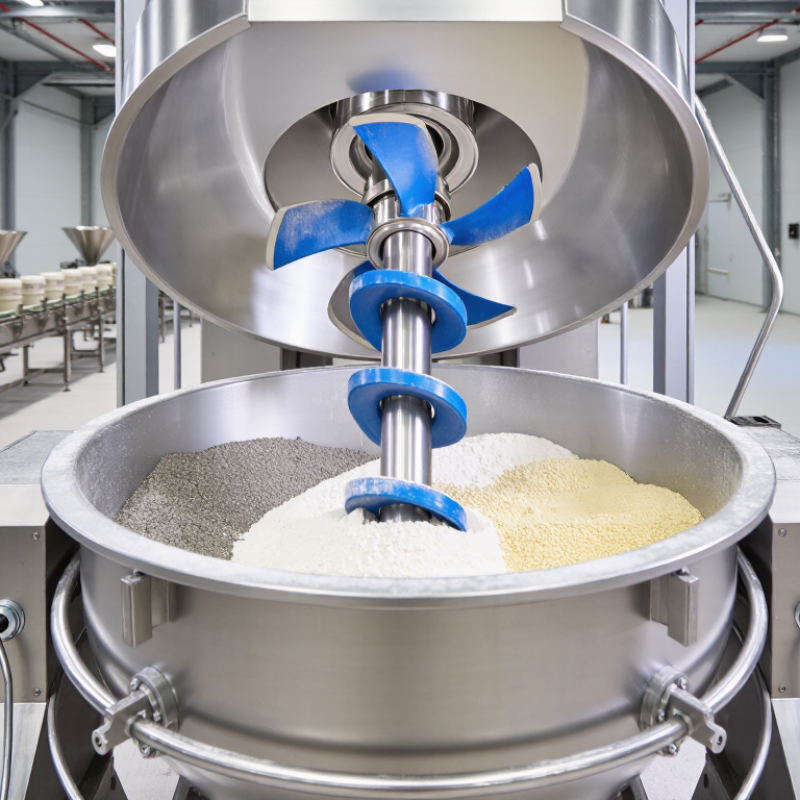
Tumble mixers suit free-flowing, fragile solids that need gentle movement. Think dry grains or coated particles. Their low-shear action protects shape, but blending may take longer.

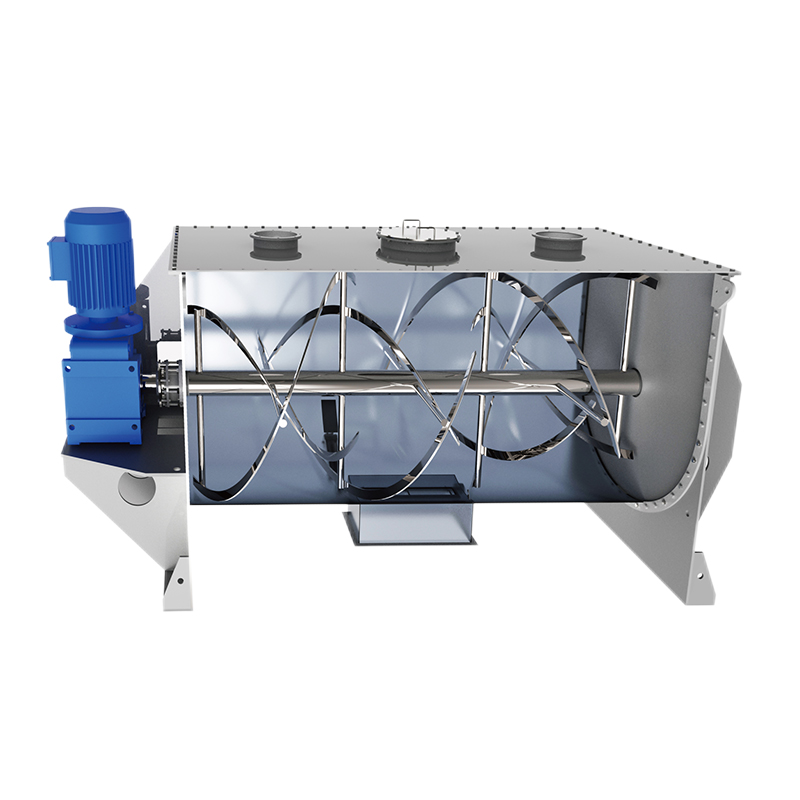
Ribbon mixers create stronger circulation for powders with moderate cohesion. They work well when uniformity matters, although poorly filled troughs can leave dead zones.

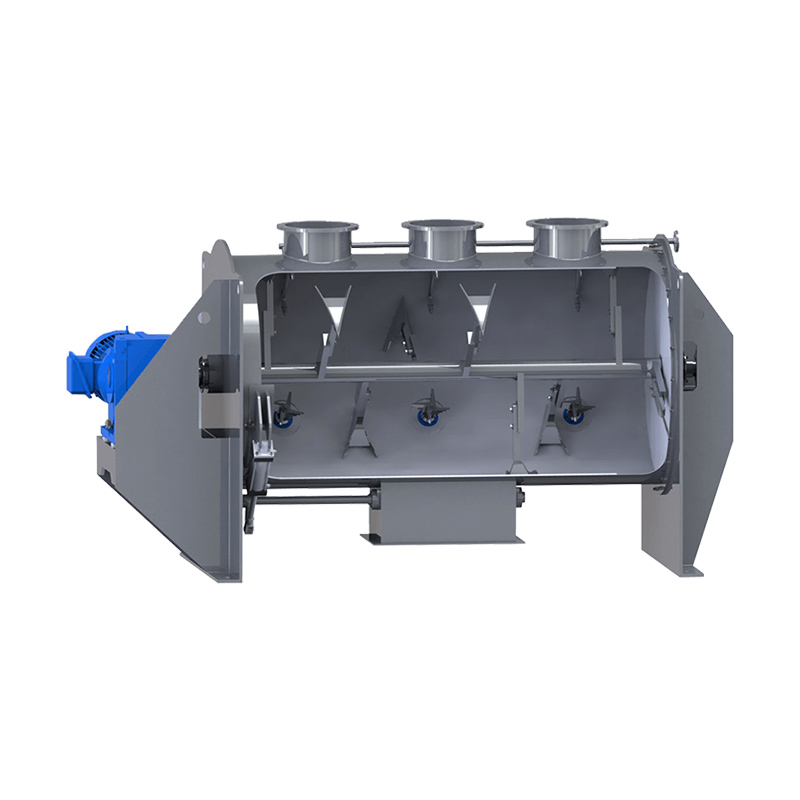
Paddle mixers handle heavier, irregular solids and can move damp materials effectively. They often need more torque.

High-shear mixers are useful when powders must break agglomerates or absorb liquid quickly. They generate heat, however. That detail is easy to underestimate.

ASTM D6128 testing shows why flow behavior should be measured rather than guessed. Cohesive strength and wall friction can change discharge performance significantly. In practice, I would request a small trial using the real particle-size distribution. One clean sample is not enough. Seasonal moisture may expose a bad decision.

Custom Solid Solid Mixing Equipment should therefore reflect actual loading, fill level, cleaning limits, and target mixing time. A ribbon design may look efficient, yet a paddle unit could be safer for fragile inclusions. My first selection is not always right. Review the trial data before approving the final design.

Size Capacity Using the 30–70% Working-Volume Industry Range

Choosing the right solid mixer starts with working volume, not the vessel’s advertised capacity.

A 1,000-liter mixer may not process 1,000 liters effectively. Most dry powders mix reliably between 30% and 70% of the vessel’s total volume. This range leaves enough space for lifting, folding, and particle movement.

For example, a 500-liter vessel usually suits batches between 150 and 350 liters.

Material density, moisture, flowability, and particle size can shift that range. Fine powder may spread unevenly when the vessel is too full. A small batch may also tumble poorly inside a large chamber.

I once saw this mistake during a trial. The mixer looked impressive, but the 15% load produced dead zones near the bottom. It was an expensive lesson.

Ask for test data using your actual material. Measure fill height, mixing time, discharge residue, and cleaning effort. Check whether the proposed mixer handles your smallest and largest batch without manual adjustment.

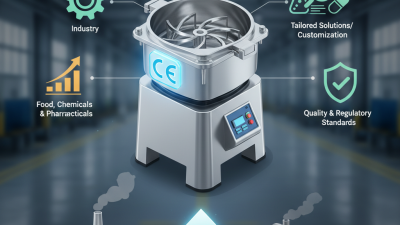
When reviewing CE Certification Solid Solid Mixing Equipment , verify the documentation, safety controls, and technical file rather than trusting a label alone.

Load cells, variable-speed drives, and sampling ports can improve control, but they also add maintenance points. A practical selection should match your daily batch pattern, not an ideal production plan.

Leave room for future changes, but avoid paying for unused volume. Small details matter.

Compare Power, Torque, and Mixing Time Against Batch Requirements

Choosing a solid mixer starts with the batch, not the motor label. Define batch weight, fill level, bulk density, moisture, and particle size. These details affect load resistance.

Power supports sustained operation, while torque starts and turns material under resistance. A mixer handling 100 kilograms of dense powder may need stronger starting torque than a larger, lighter batch. Check both values. Do not judge performance by horsepower alone.

Mixing time must match production targets and material behavior. Short cycles can leave dry pockets. Long cycles may generate heat, break particles, or waste energy. Plant trials should measure uniformity at several sample points, including the bottom and discharge area. That sounds simple.

Custom Solid Solid Mixing may require different paddle shapes, speeds, or charging sequences. Calculate the required output per hour before selecting capacity. A mixer running near its limit can consume more power and wear faster. Yet, oversizing also creates poor circulation and unnecessary cost.

Record motor load, torque response, temperature, and mixing time during trials. Compare these results against the real batch requirement, not an ideal laboratory sample. A common mistake is trusting one successful test. Material moisture changes, and production rarely stays perfect. Leave operating headroom for heavier batches and seasonal variation.

Set Blend Uniformity Targets, Commonly ≤5% Coefficient of Variation

7 Tips for Choosing the Right Solid Mixer?

Set Blend Uniformity Targets, Commonly ≤5% Coefficient of Variation

Tip 1: Define the target before comparing mixers. For many solid blends, a coefficient of variation (CV) of 5% or less is a practical starting point. However, the product, dose, and process risk may require a tighter limit. A neat number can still mislead. Confirm the target with development data and quality specialists.

Tip 2: Match the mixer to the powder’s behavior. Check particle size, density, moisture, flowability, and electrostatic tendency. In practical trials, density differences often create segregation after discharge. A mixer may achieve good results inside the vessel, then lose uniformity during transfer. Test both stages. Do not trust one sample.

Tip 3: Use a planned sampling method. Take samples from different locations and at several mixing times. Analyze enough units to show real variation. The calculation method must remain consistent. Small samples can hide poor distribution. This is where many evaluations become weak.

Tip 4: Review loading level and mixing energy. Underfilling may reduce movement, while overfilling can limit powder circulation. Record speed, time, fill volume, and temperature during every trial. These details support repeatability and reliable scale-up.

Tip 5: Challenge the process deliberately. Add a slightly cohesive or poorly flowing material during development, when appropriate. This reveals whether the mixer has a comfortable operating range. Our assumptions are not always correct. Results may force a better target or a different sampling plan.

Verify Hygienic Design with EHEDG Principles and FDA 21 CFR Requirements

A hygienic solid mixer should be evaluated beyond its mixing performance. EHEDG principles emphasize cleanability, drainability, suitable materials, and the elimination of contamination traps. Inspect the vessel interior, agitator, seals, shaft connections, and discharge outlet. Smooth, continuous welds matter. So do accessible surfaces.

Look for dead zones around blades, corners, gaskets, and inspection ports. Powder can collect there, especially when humidity changes. A design may look polished but still hide difficult-to-clean areas.

Check whether the mixer supports validated cleaning methods, including dry cleaning or wet cleaning when appropriate. Ask for surface-finish data, material certificates, and cleaning validation records. Do not rely on photographs alone.

FDA 21 CFR compliance depends on the product and process. Food applications may involve current good manufacturing practice requirements under 21 CFR Part 117. Pharmaceutical operations may require relevant provisions of Part 211.

Product-contact materials must be suitable for their intended use and controlled against contamination. That distinction matters. FDA does not simply approve every mixer design.

During supplier discussions, request a hygienic design assessment linked to EHEDG principles and applicable 21 CFR requirements. Review how operators inspect seals and remove residual powder.

Verify that maintenance tasks do not introduce fibers, lubricants, or metal fragments. I have found that overlooked access points often create the greatest risk.

Perfect documentation is uncommon, so question unclear evidence and record every assumption before purchase.

Assess ATEX Safety, Cleanability, Maintenance, and Total Cost of Ownership

7 Tips for Choosing the Right Solid Mixer

Assess ATEX Safety, Cleanability, Maintenance, and Total Cost of Ownership

Choosing a solid mixer starts with the powder, not the catalogue. Check particle size, moisture, bulk density, and sensitivity to heat. For combustible dusts, request a documented ATEX risk assessment. Confirm the equipment matches the classified zone, operating temperature, pressure, and dust properties. Bonding, grounding, and protective monitoring need clear verification. A certificate alone is not enough.

Cleanability affects both product quality and production time. Inspect the mixing chamber for dead corners, exposed threads, and powder traps. Smooth welds and accessible seals simplify inspection. Ask whether operators can open the machine safely without heavy lifting. Test cleaning procedures with realistic residues, not only water. Dry powders often hide behind shafts and discharge valves. That detail matters.

Maintenance planning should be practical. Look for visible inspection points, replaceable wear parts, and straightforward seal access. Ask how long a bearing or discharge valve typically takes to replace. Keep critical spares available. Small delays become expensive during a full production shift. One weakness is easy to miss: a low purchase price may conceal high labor costs. Compare energy use, cleaning time, spare parts, service visits, and expected downtime over several years. Record these assumptions. They may prove wrong, but untested assumptions are worse.

7 Tips for Choosing the Right Solid Mixer? – Assess ATEX Safety, Cleanability, Maintenance, and Total Cost of Ownership

Tip Evaluation Dimension What to Check Typical Technical Benchmark Preferred Selection Indicator TCO Effect
1 Define the Product and Process Review bulk density, particle size, moisture, cohesion, friability, heat sensitivity, batch size, and required mixing time. Common industrial batch capacities range from approximately 50 L to more than 10,000 L; practical fill levels are often about 30%–70% of gross volume. The mixer achieves the required blend uniformity without excessive breakage, segregation, or temperature rise. High: incorrect sizing can increase energy use, waste, and rework.
2 Assess ATEX and Dust-Explosion Safety Identify combustible dust hazards, dust zones, minimum ignition energy, Kst, Pmax, and possible ignition sources from motors, bearings, static electricity, and hot surfaces. ATEX equipment selection depends on the classified zone and dust group; surface temperature must remain below the material’s allowable ignition temperature with a suitable safety margin. Documented zoning, grounding and bonding, temperature monitoring, suitable electrical equipment, and correctly specified explosion protection or venting. Very high: non-compliance creates major safety, regulatory, and insurance risks.
3 Verify Mixing Performance Request test data for blend uniformity, sampling method, scale-up behavior, batch-to-batch repeatability, and mixing time. For many free-flowing powders, a coefficient of variation of approximately 5% or lower is used as a practical uniformity target, but the acceptable value depends on the product and application. The supplier demonstrates consistent results using the actual formulation or a representative surrogate material. Medium to high: poor uniformity increases rejected batches and laboratory testing.
4 Prioritize Cleanability and Hygiene Inspect internal corners, shaft seals, dead zones, weld quality, access doors, drainability, surface finish, and compatibility with dry or wet cleaning. Product-contact stainless-steel surfaces are commonly specified with a smooth hygienic finish; an Ra value around 0.8 µm or lower is frequently used for demanding sanitary applications. Fast product discharge, minimal residue retention, tool-free access where practical, and validated cleaning procedures. High: cleaning labor and changeover downtime directly affect production cost.
5 Evaluate Maintenance and Reliability Check bearing arrangement, seals, gearbox access, wear-part replacement, lubrication requirements, inspection points, spare-parts availability, and service support. Preventive maintenance intervals vary by load, speed, dust level, and duty cycle; bearings, seals, couplings, and wear liners are typical inspection items. Routine inspection can be completed safely with accessible components and documented maintenance intervals. High: unplanned downtime often costs more than the replacement part itself.
6 Compare Energy and Operating Efficiency Compare motor rating, operating speed, batch duration, usable capacity, loading and discharge time, and auxiliary equipment requirements. Installed motor power varies widely with mixer type, capacity, bulk density, and product behavior; energy per batch is more meaningful than motor size alone. Short validated cycle time, high usable volume, low recirculation demand, and efficient discharge reduce energy per kilogram of product. Medium to high: savings accumulate over the equipment lifetime.
7 Calculate Total Cost of Ownership Include purchase price, installation, controls, ATEX measures, utilities, labor, cleaning, maintenance, spare parts, validation, downtime, and expected service life. A useful life-cycle model should compare at least 5–10 years of operating expenses rather than purchase price alone. The selected mixer provides the lowest risk-adjusted cost per acceptable batch while meeting safety, quality, and capacity requirements. Critical: the lowest initial price is not necessarily the lowest lifetime cost.
Decision rule: Select the mixer that meets the required product quality and ATEX safety level while minimizing validated cost per acceptable batch—not simply the lowest purchase price.

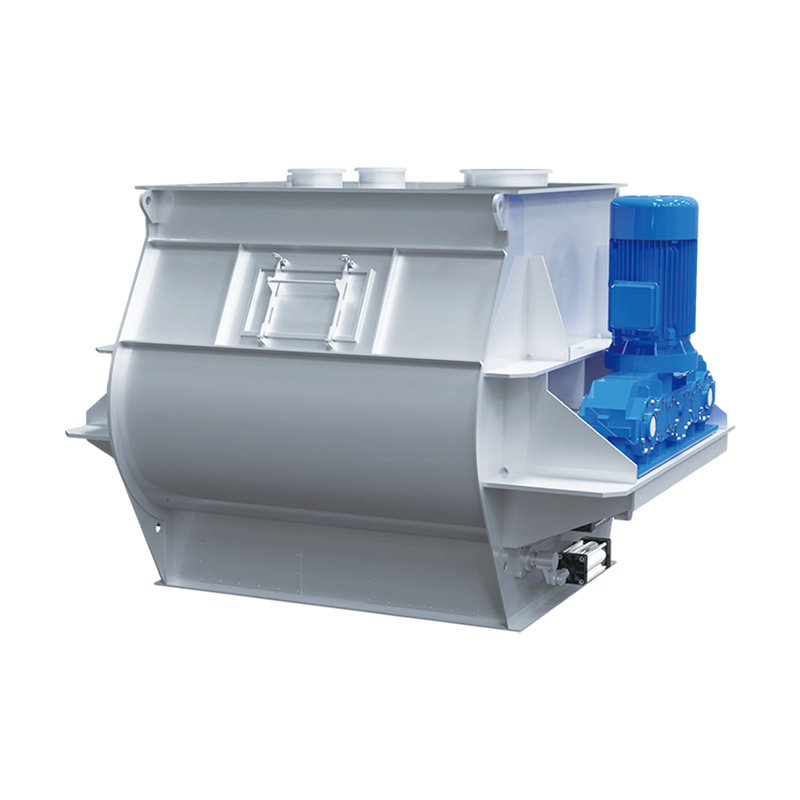
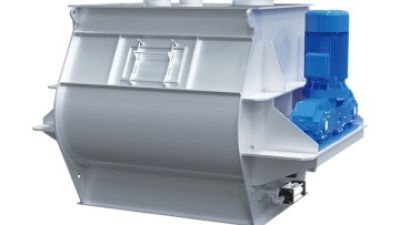
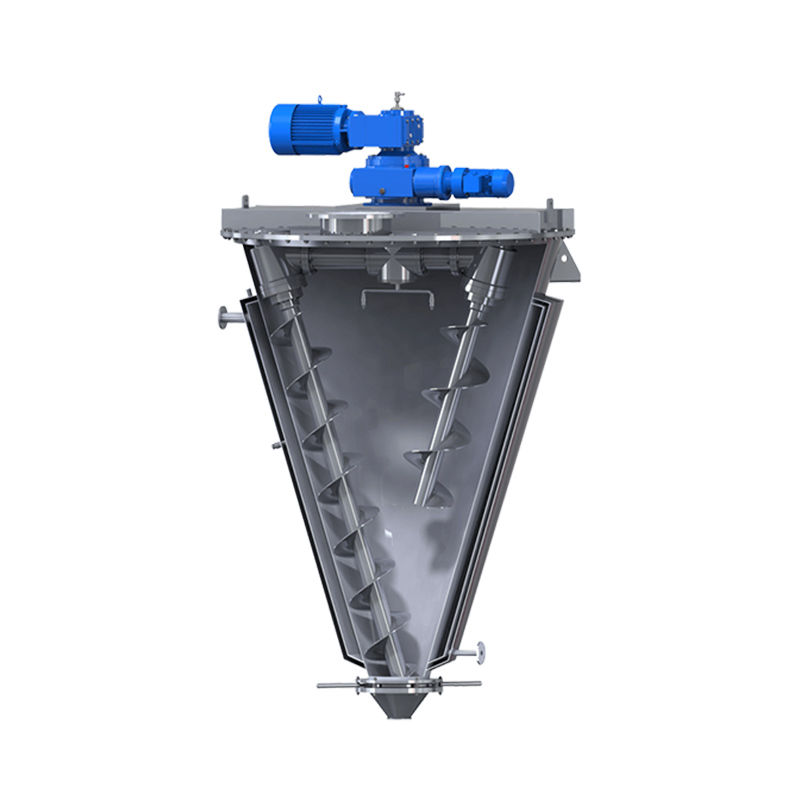
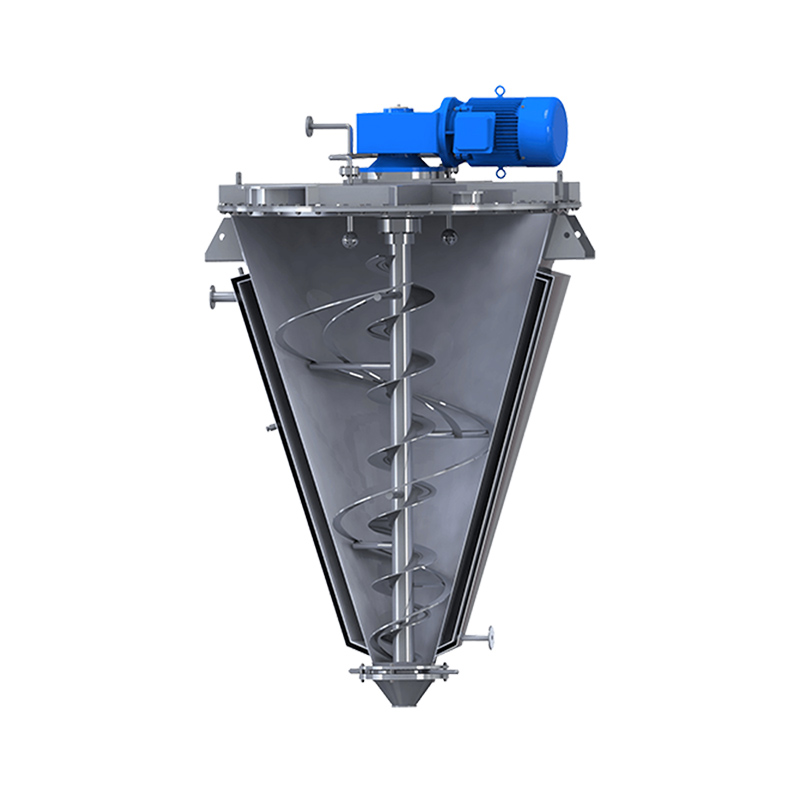
China SYJW Series Industrial Double Shaft Paddle Mixer: A Guide to Gravityless Mixing Solutions

Double-shaft paddle mixers are increasingly used where conventional gravity-dependent equipment struggles with materials that differ significantly in density, particle size, moisture, or flowability. A gravityless mixing design suspends and disperses particles through intensive counter-rotating paddle action, helping reduce segregation and dead zones. This is particularly valuable in food, chemicals, minerals, construction materials, and agricultural formulations, where consistent composition directly affects product quality. The FAO’s *World Food and Agriculture—Statistical Yearbook 2023* reported global primary crop production of approximately 9.9 billion tonnes in 2021, highlighting the scale of bulk-material processing and the need for reliable, high-throughput handling systems.

The SYJW-series configuration is designed to promote rapid cross-mixing while accommodating challenging powder and granule combinations. Its twin shafts generate overlapping movement patterns, improving contact between components with different specific gravities and fineness levels. A 2024 *Food Waste Index Report* from the United Nations Environment Programme estimated that 1.05 billion tonnes of food were wasted globally in 2022, reinforcing the importance of process control, uniform formulation, and reduced off-specification production. With adaptable operating parameters, robust construction, and factory-direct manufacturing support in China, this gravityless particle mixer provides an efficient option for producers seeking dependable blending performance, controlled residence time, and scalable production capacity.

FAQS

What information should I define before choosing a solid mixer?

Record batch weight, fill level, bulk density, moisture, and particle size. These details determine load resistance.

Why should I compare power and torque?

Power supports continuous operation. Torque starts and turns material under resistance. Dense powder may need stronger starting torque.

How can I choose a suitable mixing time?

Match the cycle to production targets and material behavior. Short cycles may leave dry pockets. Long cycles may create heat.

What should plant trials measure?

Measure uniformity at several points, including the chamber bottom and discharge area. Record motor load, torque, temperature, and cycle time.

Is a larger mixer always better?

No. Oversizing can reduce circulation and increase cost. A mixer near its limit may wear faster and use more power.

How should combustible dust safety be assessed?

Request a documented risk assessment. Confirm the equipment suits the classified zone, temperature, pressure, and dust properties.

What cleanability details deserve close inspection?

Check for dead corners, exposed threads, powder traps, rough welds, and hidden seals. Test cleaning with realistic dry residues.

How can I compare the real cost of different mixers?

Include energy, cleaning labor, spare parts, service visits, and expected downtime. A low purchase price may hide expensive maintenance.

What maintenance features are useful?

Choose visible inspection points, replaceable wear parts, and accessible seals. Keep critical spares available. Small delays can stop a shift.

Why should I leave operating headroom?

Moisture and bulk density can change during production. One successful trial proves little. Seasonal variation may create heavier batches.

Conclusion

Choosing the right Solid Mixer begins with a clear understanding of the powder being processed. Evaluate particle size, bulk density, moisture content, and flowability before selecting a design. Tumble, ribbon, paddle, and high-shear mixers each suit different solids and blending challenges. Capacity should be calculated within the practical 30–70% working-volume range to support efficient movement and consistent results. It is also important to compare motor power, torque, and mixing time with the batch size and production schedule.

Performance and compliance should guide the final decision. Establish a blend uniformity target, commonly a coefficient of variation of 5% or less, and confirm that the equipment can achieve it reliably. Hygienic construction should reflect EHEDG principles and applicable FDA 21 CFR requirements, while hazardous-area applications may require ATEX-related safety measures. Finally, assess cleanability, inspection access, maintenance needs, energy use, and long-term operating costs to select a mixer that delivers dependable performance and strong total value.

Amelia

Amelia

Amelia is a dedicated marketing professional at Shanghai Shenyin Machinery (Group) Co., Ltd., where she specializes in showcasing the company's cutting-edge products and innovative solutions. With a deep understanding of the machinery industry, she plays a crucial role in communicating the unique......
Previous 2026 Best Retractable Rotor Mixer for Global Buyers?