Leave Your Message
0%

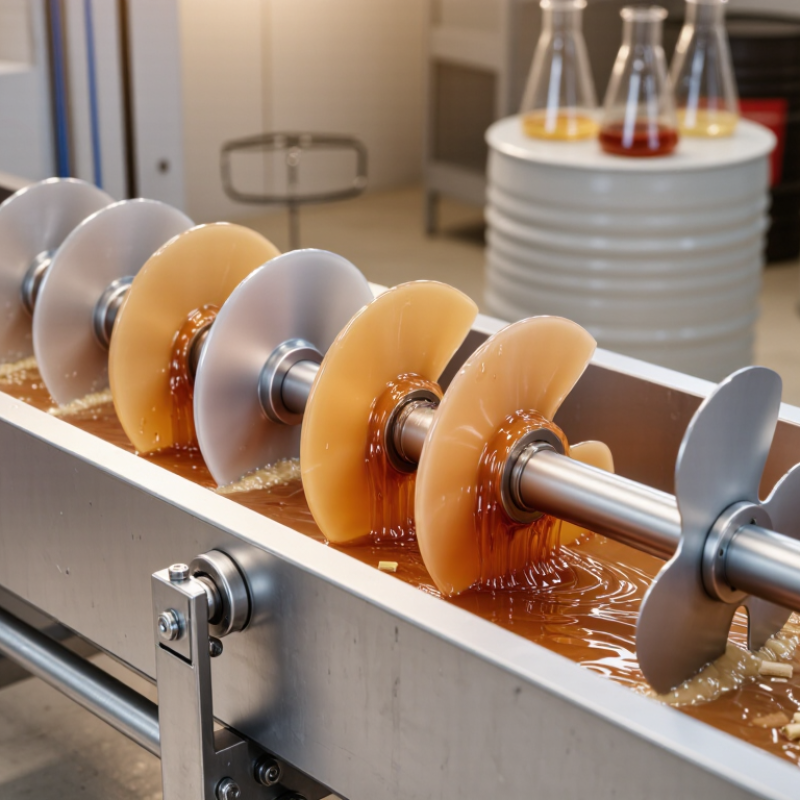
You know, Resin Paddle Mixer technology is kind of at that sweet spot where material science, process engineering, and everyday production control all come together. Basically, it's designed to handle those thick, viscous resins—plus fillers, pigments, fibers, and whatever additives you throw in—with a steady mechanical push. Picture this: the mixer typically has a horizontal trough and a couple of paddle shafts spinning inside, getting everything blended nice and even. So here's the thing: as those paddles spin around, they're not just churning the resin—they're lifting it, folding it, and gently nudging it through the chamber. It's a slow, steady journey instead of getting thrashed around. And honestly, that distinction makes all the difference.

You know, if you look at the latest industry reports, it's pretty clear why controlled mixing is getting so much buzz. Grand View Research did this deep dive on the Industrial Mixer market, and they're seeing a real push for efficient, custom mixing gear in chemicals, plastics, and advanced materials. And over at MarketsandMarkets, their composites report ties the growth in resin-based manufacturing to a bigger need for consistent, repeatable mixing. But honestly, these reports are more about where the market's heading than any guarantee of what'll happen on the plant floor. You know, conditions can really vary a lot. When you're running a resin paddle mixer, you've got to juggle paddle speed, how full the chamber is, temperature, and how long the resin stays in there. Go too slow and you might end up with dry pockets. But crank it up too fast and you could trap air, wreck delicate fibers, or build up heat you don't want. In practice, operators usually check torque trends, the look of the discharge, and the batch temperature all at once—those little details are often the first clue that something's off. Sometimes the resin looks perfectly smooth on the outside, but inside it's not mixed well at all.

Look, this guide walks you through how the equipment actually works and where it tends to hit its limits. We'll also touch on cleaning, scaling things up, keeping it maintained, and how materials behave. But here's the catch: you still need to do a lab trial. No matter what the catalogue specs say, they can't fully predict how a tricky formulation will behave. Real-world experience is gold, sure, but it can also lull you into assumptions that deserve a second look.
What Is a Resin Paddle Mixer and How Does It Work?

Resin Paddle Mixer: Definition and Core Purpose

A resin paddle mixer is an industrial machine designed to blend resin with controlled, consistent movement. Its core purpose is simple: distribute ingredients evenly without creating unnecessary heat or air bubbles. A flat or shaped Resin Mixing Paddle rotates through the vessel, pushing thick material from the wall toward the center. This action helps break up pockets of unmixed resin, pigments, fillers, or curing agents.

In practical operation, the paddle speed matters. Slow rotation usually protects delicate formulations and reduces splashing. Higher speed may improve blending, but it can trap air or raise the resin temperature. Experienced operators check the mixture visually and measure temperature during production. A smooth surface does not always prove complete mixing. Material can remain denser near the bottom. That detail is easy to miss.

Tips

Scrape the vessel wall before mixing. Use the recommended fill level. Inspect the paddle for buildup after each batch. Keep notes on mixing time, speed, and temperature. Small records often reveal problems earlier than appearance alone. Avoid assuming every resin behaves similarly; viscosity changes with temperature, formulation, and storage time. A short trial batch is often wiser than immediate full-scale production.

Key Components and Their Functions

What Is a Resin Paddle Mixer and How Does It Work?

Key Components and Their Functions

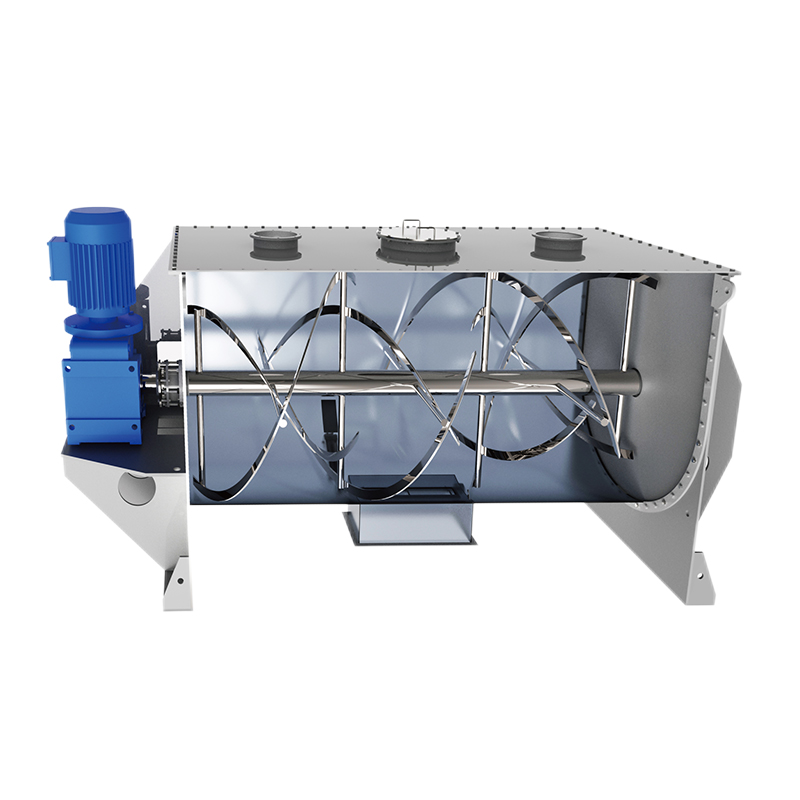
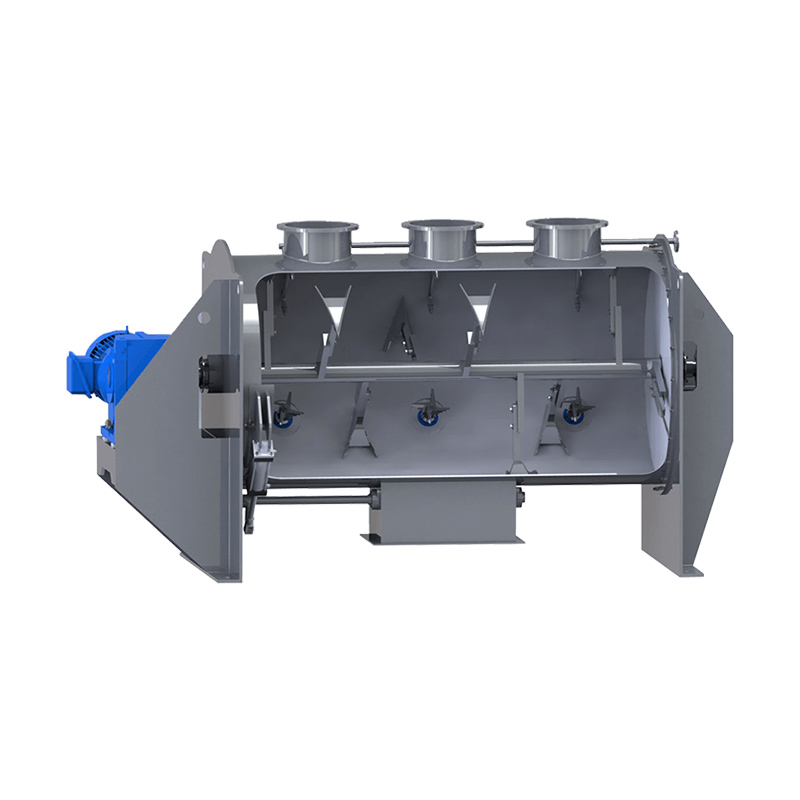
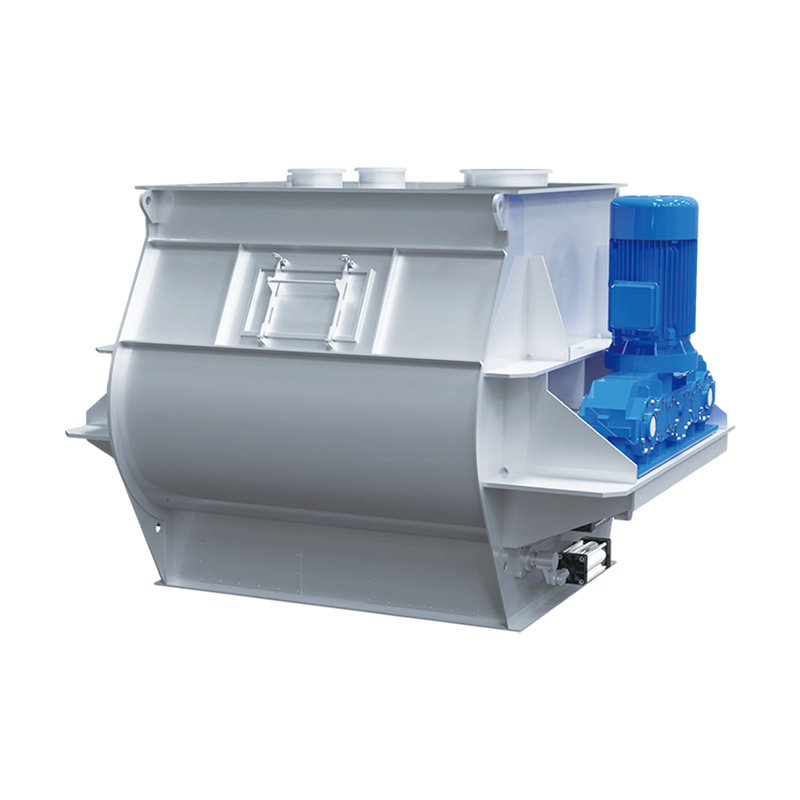
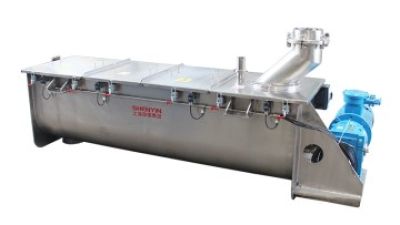
A resin paddle mixer combines resin, hardeners, fillers, pigments, and additives inside a horizontal mixing vessel. Its main body is a strong chamber designed to handle thick, resistant materials. The paddles sit on a rotating shaft and move through the batch in overlapping paths. This action folds material inward, breaks stagnant areas, and spreads additives more evenly. Mixing behavior changes with viscosity, temperature, and batch size.

The drive system includes an electric motor, gearbox, couplings, and bearings. The gearbox reduces speed while increasing torque, which is essential when resin becomes dense or sticky. Each paddle shape affects circulation and shear. Some designs create gentle folding, while others provide stronger dispersion. A sealed shaft prevents material from reaching the bearings. This detail matters. Small seal damage can cause contamination or costly maintenance.

Many mixers include a heating or cooling jacket around the vessel. Temperature control can reduce viscosity or protect heat-sensitive resin. A discharge gate opens at the lowest point, helping operators remove material with less residue. Some systems also use vacuum ports to reduce trapped air, though vacuum settings require careful control. The control panel manages speed, temperature, mixing time, and discharge timing. In practice, no setting works perfectly for every formulation. Operators often adjust speed after observing clumps, wall buildup, or uneven color. That hands-on judgment remains important.

How Resin Materials Move Inside the Mixing Chamber

A resin paddle mixer uses broad, slow-moving blades to shift viscous material through a sealed mixing chamber. Unlike a high-speed disperser, the paddle creates controlled circulation rather than violent turbulence. The Epoxy Resin Mixing Paddle pushes resin from the chamber wall toward the center, while nearby material moves upward and then folds downward. This repeated folding reduces dead zones and helps distribute hardeners, pigments, fillers, and additives.

Inside the chamber, resin movement depends heavily on viscosity, temperature, and fill level. Cold resin may cling to the wall like thick syrup. Heated resin flows more easily, but excessive heat can shorten working time. A 2024 report from Grand View Research estimated the global epoxy resin market at more than USD 12 billion, showing why consistent batch quality matters across industrial applications. The same report identifies coatings, adhesives, and electrical uses as major demand areas.

Practical mixing is less perfect than diagrams suggest. Operators often see a slow central turnover and heavier material near the bottom. The U.S. Department of Energy reports that industrial motor systems can represent a major share of manufacturing electricity use, so oversized mixers may waste energy. Paddle speed should match the resin’s rheology, not habit. A small speed increase can improve folding, yet it may also trap air. Visual checks help, but they cannot replace torque readings, temperature logs, and sample testing. The chamber still hides its weakest zone.

What Is a Resin Paddle Mixer and How Does It Work?

Resin paddle mixers use rotating paddles to create axial, radial, and tangential material movement. The normalized profile below shows how these movement modes typically contribute to material circulation inside the mixing chamber.

As the paddles rotate, resin is lifted and pushed along the chamber axis while also being redirected across the mixer width. This repeated circulation improves wetting, heat distribution, and blend uniformity. The values are normalized engineering indicators rather than direct measurements from a specific machine.

Step-by-Step Mixing Process

What Is a Resin Paddle Mixer and How Does It Work?

Step-by-Step Mixing Process

A Resin Mixer starts with a clean vessel, dry paddles, and a verified batch sheet. Operators inspect seals, blade clearance, and temperature sensors before charging materials. Weigh the resin and hardener separately. Small errors can change viscosity, curing time, and final strength. Grand View Research’s 2024 Epoxy Resin Market report valued the global market at approximately USD 12 billion in 2023, increasing the need for repeatable processing.

Add the resin first and begin at low speed. The paddles should create steady circulation without pulling excessive air into the liquid. Introduce fillers gradually, using short pauses between additions. Scrape the vessel wall when material forms a dry ring. Raise the speed only after the powder becomes fully wetted. Watch torque and temperature continuously. A sudden torque increase may indicate poor dispersion or an overloaded batch.

Keep it controlled.

For reactive systems, measure working time and temperature against the technical specification. ASTM D2471 provides methods for evaluating gel time and exothermic behavior. If the formulation permits, apply vacuum after mixing to remove visible bubbles. Do not rely on appearance alone. Take a small sample for viscosity, color, and cure checks. The first trial may not be perfect. Paddle speed, filler loading, and vacuum time often need careful adjustment. Operators should record those changes before repeating the batch.

Factors Affecting Mixing Quality and Efficiency

A resin paddle mixer uses rotating blades to lift, fold, and redistribute resin through a horizontal vessel. A Mixer For Resin performs well only when operating conditions match the material. Viscosity, moisture, particle size, and temperature strongly influence mixing quality. Cold resin can resist paddle movement. Excess heat may shorten working time or change curing behavior.

Fill level matters. An overloaded vessel creates dead zones near the walls. An underfilled vessel increases energy use without improving uniformity. Many process engineers target a stable working load, then verify it through samples taken from several points. Paddle speed also requires balance. Higher speed may reduce mixing time, but it can introduce air, raise temperature, and increase motor demand. The U.S. Department of Energy’s Industrial Motor Systems Market Assessment reported that motor systems used about 23% of total U.S. electricity. Efficient speed control therefore deserves practical attention.

Clearance between paddles and the vessel affects both turnover and residue. Poor clearance can leave unmixed streaks along the bottom. The material addition sequence matters too. Fine powders added too quickly may form dry pockets. A slower feed often improves wetting. ISO 9001-based process controls support recording batch time, temperature, torque, and sampling results. Yet records alone cannot guarantee uniformity. Operators should inspect difficult batches closely. Small changes may matter. A useful review question is simple: did the mixer reduce variation, or merely move it around?

What Is a Resin Paddle Mixer and How Does It Work? - Factors Affecting Mixing Quality and Efficiency

Data Dimension Typical Value or Range How It Affects Mixing Practical Guidance
Mixer configuration Horizontal trough with one or two counter-rotating shafts fitted with paddles Paddles lift, fold, divide, and redistribute resin particles and additives throughout the batch. Use a double-shaft design when faster axial movement and stronger convective mixing are required.
Suitable material forms Dry powders, granules, pellets, short fibers, fillers, pigments, and premixed compounds Differences in particle size, density, shape, and flowability determine segregation and blending behavior. Screen out large agglomerates and assess powder flow before selecting the paddle profile.
Working fill level Approximately 30–70% of the effective mixing volume Too little material reduces paddle-material contact; excessive filling restricts circulation and increases torque. Keep the fill level within the mixer manufacturer’s validated operating window for consistent circulation.
Batch capacity Common industrial equipment: about 0.1–20 m³ per batch Larger batches can improve throughput but may require longer residence time and higher drive power. Size the mixer based on bulk density, batch mass, fill ratio, and required production rate.
Paddle tip speed Often about 0.5–3.0 m/s for gentle-to-moderate dry blending Higher speed generally shortens mixing time but can increase dust, heat generation, particle breakage, and segregation. Increase speed gradually and verify product temperature, particle integrity, and uniformity.
Mixing time Commonly 2–15 minutes after all ingredients are charged Time must be long enough to reach uniformity but not so long that particles segregate or the resin is damaged. Establish the endpoint through sampling rather than relying only on a fixed timer.
Ingredient addition sequence Base resin first; low-dose additives are commonly pre-diluted or premixed The sequence influences dispersion of pigments, catalysts, lubricants, and reinforcing fillers. Add minor ingredients with a carrier or concentrate to reduce localized over-concentration.
Moisture content Keep within the material specification; many moisture-sensitive resin systems require well below 1% moisture Moisture may cause clumping, poor flow, hydrolysis, voids, or inconsistent curing in moisture-sensitive formulations. Use dry feed materials, sealed storage, and dehumidified or conditioned air when required.
Temperature control Typically maintained near ambient temperature for dry blending; heating or cooling may be used when specified Excessive heat can soften resin, trigger premature reaction, or change flowability and bulk density. Monitor product temperature continuously for thermally sensitive or reactive formulations.
Bulk-density difference Material-specific; large density differences increase segregation risk Heavy particles can settle while light particles migrate upward during mixing or discharge. Use compatible particle sizes, moderate speed, short discharge paths, and gentle downstream handling.
Particle size distribution A narrow distribution generally blends more predictably than a very broad distribution Fine particles may fill voids while coarse particles can separate during conveying or discharge. Control milling, screening, and feed consistency before optimizing mixer settings.
Torque and power demand Strongly dependent on fill level, bulk density, friction, moisture, and paddle speed Rising torque may indicate overfilling, agglomeration, excessive moisture, or an incorrect formulation. Trend motor load during each batch and set alarms for abnormal increases.
Uniformity target Defined by the application; a coefficient of variation below 5% is a common blending objective A lower coefficient of variation indicates more consistent distribution of the selected tracer or active component. Validate with samples from different mixer locations and multiple production batches.
Sampling method Multiple samples from upper, middle, lower, and discharge zones Single-point sampling can miss localized variation and give a false indication of batch uniformity. Use a documented sampling plan with representative sample mass and laboratory method.
Discharge performance Designed for rapid bottom discharge, often through one or more slide or rotary valves Slow or uneven discharge can cause hold-up, segregation, and batch-to-batch carryover. Minimize transfer distance and avoid vibration or excessive air movement after mixing.
Dust control Closed cover with filtered venting or connection to a dust-collection system Effective containment protects operators, reduces material loss, and limits cross-contamination. Maintain suitable negative pressure without drawing excessive fine material from the mixer.
Cleaning and changeover Typically designed with accessible covers, smooth internal surfaces, and minimized dead zones Residual resin or pigment can create cross-contamination and affect the next batch. Inspect seals, shaft ends, corners, and discharge gates after every validated cleaning cycle.

Note: Operating ranges are general engineering references. Final settings should be confirmed through material testing, equipment trials, and the formulation supplier’s processing requirements.

Common Applications of Resin Paddle Mixers

A resin paddle mixer is designed to blend viscous resin systems with controlled, low-speed movement. Its broad paddles create steady circulation instead of aggressive whipping. This matters when the mixture contains fillers, pigments, curing agents, or short fibers.

In plant trials, operators often watch the surface closely. A smooth fold usually indicates proper circulation.

Common Applications of Resin Paddle Mixers

These mixers serve in adhesive production, where resin and hardener must disperse evenly. They also support casting compounds for electrical components and protective housings. In flooring materials, paddles help distribute colored particles and mineral fillers without excessive air. Composite manufacturers use them for resin blends containing fibers or powders. The mixer can maintain uniformity while reducing heat caused by high-speed shear.

Coating production is another practical use. A controlled paddle motion helps combine binders, solvents, and functional additives. Operators may adjust speed when the batch becomes thicker during curing.

That adjustment is important. Too little movement leaves dry pockets near the vessel wall. Too much movement can trap bubbles or damage delicate additives.

From experience, mixing time should not be copied blindly between batches. Temperature, filler moisture, and vessel shape can change the result. Small test batches are often more reliable than assumptions.

No mixer is perfect. Careful inspection still matters.

Customizable CM Series Mixers: A Practical Guide to Reliable Continuous Mixing Solutions from China Suppliers

Customizable CM Series Mixers: A Practical Guide to Reliable Continuous Mixing Solutions from China Suppliers

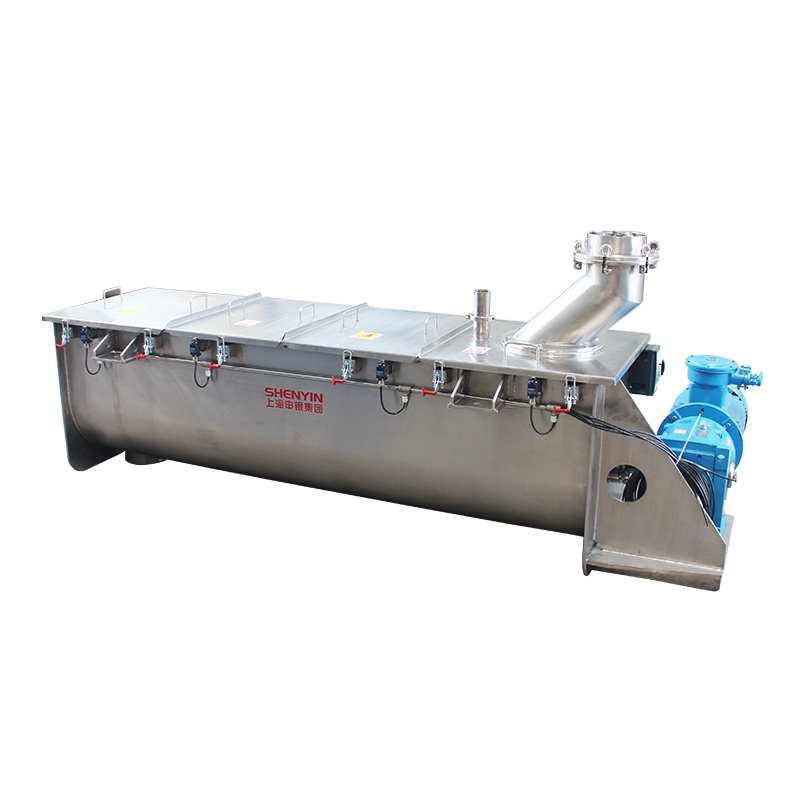
The CM-series continuous mixer is designed for production environments that require steady material flow and dependable blending performance. Its simultaneous feeding and discharging function allows materials to move through the system continuously, reducing interruptions and supporting high-volume manufacturing. This operating method is especially suitable for production lines where consistent output, efficient space utilization, and stable processing conditions are important.

Available from experienced suppliers in China, CM-series mixers can be customized to match different material characteristics and process requirements. Configuration options may include mixing capacity, contact materials, inlet and outlet arrangements, drive specifications, control systems, and safety features. These adjustments help manufacturers select equipment that fits their existing layout and production targets without unnecessary modifications.

During operation, the mixer promotes thorough and even distribution of materials while maintaining a controlled flow rate. A robust structure and carefully selected components support reliable performance during extended working cycles, while accessible maintenance points can simplify inspection and routine servicing. With practical engineering support and factory-based customization, this type of continuous mixer can provide a stable solution for large-scale applications that demand repeatable blending quality and efficient production management.

FAQS

What is a resin paddle mixer?

It is an industrial machine for blending thick resin materials with controlled movement. A broad paddle circulates material through the chamber.

How does the paddle move resin?

The paddle pushes resin from the wall toward the center. Nearby material rises, folds, and moves downward. This reduces unmixed pockets.

Why is slow mixing often preferred?

Slow rotation limits splashing, trapped air, and unnecessary heat. It also protects delicate formulations. Faster is not automatically better.

Can a smooth resin surface prove complete mixing?

No. Denser material may remain near the bottom or along the wall. A smooth surface can mislead.

How do temperature and viscosity affect mixing?

Cold resin may cling to the wall like thick syrup. Moderate heating can improve flow. Excessive heat may shorten working time.

What should operators check during production?

Check the mixture visually and measure temperature. Torque readings and sample testing reveal hidden problems. Appearance alone is insufficient.

What fill level and maintenance practices are useful?

Use the recommended fill level and scrape the vessel wall before mixing. Inspect the paddle for buildup after every batch.

How can operators improve future batches?

Record mixing time, speed, temperature, and observations. Run a small trial batch before full production. The first setting may be wrong.

Does a larger mixer always improve production?

No. An oversized mixer may waste energy and still mix poorly. Paddle speed should match the resin’s flow behavior.

Conclusion

A Resin Paddle Mixer is an industrial mixing machine designed to blend resin-based materials into a consistent, uniform mixture. Its main components typically include a mixing chamber, paddle shaft, paddles, drive system, inlet, and discharge outlet. As the shaft rotates, the paddles gently lift, fold, and move the materials through the chamber, promoting thorough contact while reducing dead zones and excessive friction. This controlled movement makes the mixer suitable for handling powders, granules, fibers, and other resin-related ingredients.

The mixing process generally begins with accurate material loading, followed by paddle rotation at a selected speed and mixing time. During operation, materials are redistributed repeatedly until the desired uniformity is achieved, after which the mixture is discharged efficiently. Mixing quality depends on factors such as ingredient properties, fill level, moisture, paddle design, rotation speed, and processing time. Resin Paddle Mixer systems are commonly used in composite material preparation, plastic processing, construction products, chemical production, and other applications requiring reliable and even blending.

Jackson

Jackson

Jackson is a dedicated marketing professional at Shanghai Shenyin Machinery (Group) Co., Ltd., where he leverages his extensive expertise in the machinery industry to promote the company’s innovative products. With a deep understanding of the market dynamics and customer needs, Jackson plays a......
Previous Top Conical Ribbon Mixer Manufacturers and Suppliers?