Leave Your Message
0%

Picking the right Ribbon Agitator really starts with understanding your material, not just flipping through a catalog. For instance, a dry, free-flowing powder acts totally different from a damp mix or a thick paste. You’ve gotta think about things like how big your batch is, how dense the bulk material feels, how easily it flows, and whether it tends to clump up. Little details actually make a big difference. Sometimes, a powder in a jar looks pretty loose, but once you load it into the equipment, it can compact and change how much torque you'll need to mix it properly.

Then, move on to the vessel and your process setup. Make sure to note down its diameter, working capacity, wall clearance, and where the outlet's located. These points are crucial—they influence the shape of the ribbon, how the shaft is arranged, and what kind of drive system you'll need. Think about your end goal too: do you want a really even mix, gentle handling, or maybe help in transferring heat through the batch? Remember, not every material will fit into a one-size-fits-all setup. A spec sheet might look great on paper, but it can still miss those tricky spots—like a discharge point that’s hard to get material out or stubborn residues hiding near the vessel wall.

This guide is here to help you weigh your options, ask the right questions, and choose the equipment that fits your needs. Make sure to check that the motor and gearbox are sized correctly for your specific load, and talk things over with a knowledgeable supplier about operating speeds. If your material is sensitive to heat or shear, flag that early in the process. Whenever possible, it's a good idea to run a quick trial with actual material and real-world batch conditions. Sometimes, a short test can uncover issues like uneven mixing, buildup, or cleaning headaches that specs alone can't reveal. It’s not going to answer everything, sure—nothing does—but use what you learn from these trials, your process data, and your team’s hands-on experience to make the best decision. And don’t forget to revisit and reassess after the equipment is installed—that’s when things really become clear.
How to Choose the Right Ribbon Agitator for Your Needs

Identify the Mixing Requirements and Desired Results

How to Choose the Right Ribbon Agitator for Your Needs

Identify the Mixing Requirements and Desired Results

Start by defining what the mixer must handle. Note the ingredients’ bulk density, particle size, moisture level, and flow behavior. A dry powder that pours freely behaves differently from a damp blend that clumps against the vessel wall. Record the batch size and target mixing time, too. These details help determine the agitator’s dimensions, operating speed, and motor requirements. Small details matter.

Next, describe the result you need. Are you blending similar powders evenly, distributing a small amount of an additive, or gently combining fragile particles? Each goal can call for different mixing intensity and fill levels. A Custom Ribbon Agitator should be selected around the material and process, not just vessel capacity. If possible, test a representative sample and check several points in the batch for consistency. Results can vary, and one test may not capture every production condition. That deserves a second look.

Tips: Share material data and batch targets with the equipment supplier. Ask how mixing time and fill level affect uniformity. Keep a sample of the finished blend for comparison during trials.

Assess the Material’s Properties and Flow Behavior

Ribbon agitator selection should start with the material, not the mixer’s advertised capacity. Record bulk density, particle size, moisture, abrasiveness, and temperature. Then observe how the material behaves: Does it bridge, settle, cling to the wall, or move freely? Small differences matter. A slightly damp powder may form lumps, while a free-flowing granule may segregate when particle sizes vary.

Measure flow rather than relying on appearance. The United States Pharmacopeia’s General Chapter , Powder Flow, classifies Hausner ratios of 1.19–1.25 as “fair” and 1.26–1.34 as “passable.” These values compare tapped and loose bulk density; they help flag flow challenges, but cannot predict every blend’s behavior inside a mixer. Test the real blend. A practical trial should check whether material circulates across the trough, leaves stagnant corners, or heats during mixing. Cohesive powders may need closer attention to ribbon clearances and operating speed; abrasive solids can increase wear. Still, a tidy laboratory result can mislead. Moisture, scale, and loading sequence may change flow, so document test conditions and reassess them at production scale.

Match the Ribbon Agitator to the Vessel and Batch Size

Choose the vessel from the batch mass and the material’s measured bulk density, not its settled volume. Divide mass by density to estimate the solids volume, then leave headspace for circulation. For example, 500 kg of powder at 650 kg/m³ occupies about 0.77 m³; at a 50% working fill, that points to a vessel near 1.54 m³. Perry’s Chemical Engineers’ Handbook recommends using material properties relevant to the actual process, since bulk density changes with handling and compaction. A lab measurement beats a catalog estimate.

Vessel shape matters, too. A long, shallow trough can leave material beyond the ribbon’s effective sweep, while an overly full vessel restricts turnover. Powder-handling design guidance commonly uses roughly 40–60% of gross volume as an initial ribbon-blender working range; confirm the range through supplier calculations and trials with the real powder. Check ribbon-to-wall clearance, shaft position, and outlet location against the batch’s smallest and largest sizes. A 100 kg trial may mix well, yet a 500 kg batch can expose dead zones. Measurements can mislead. Recheck bulk density after transport, and record mixing time, fill level, and sample variation before scaling up.

Compare Ribbon Designs, Clearances, and Construction Materials

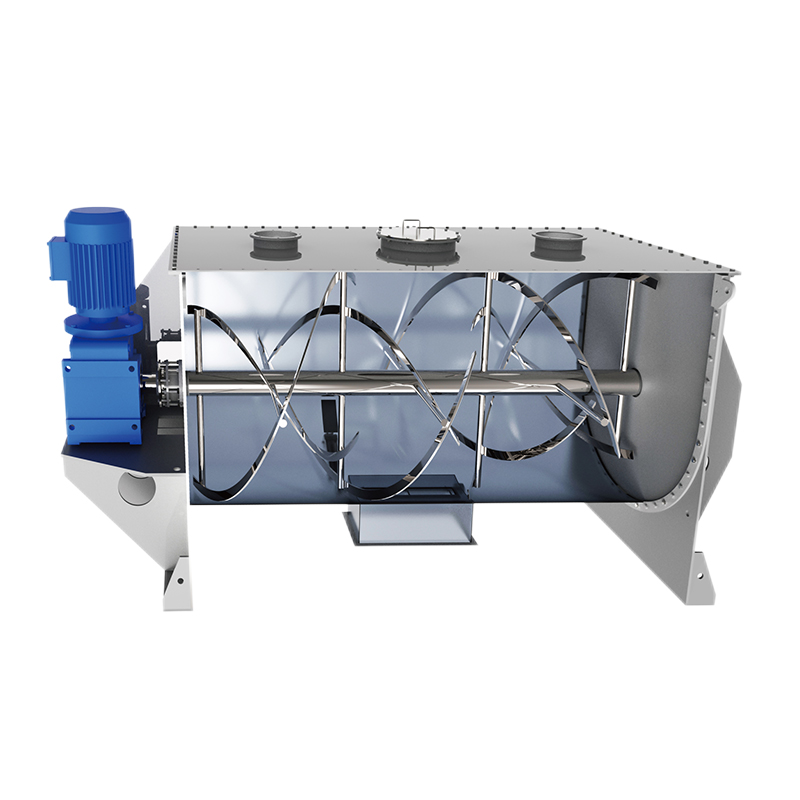
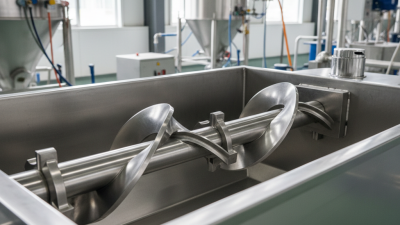
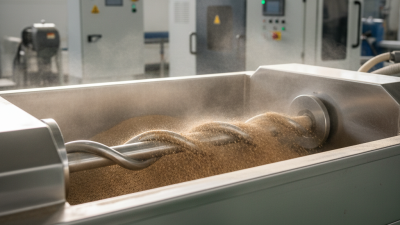
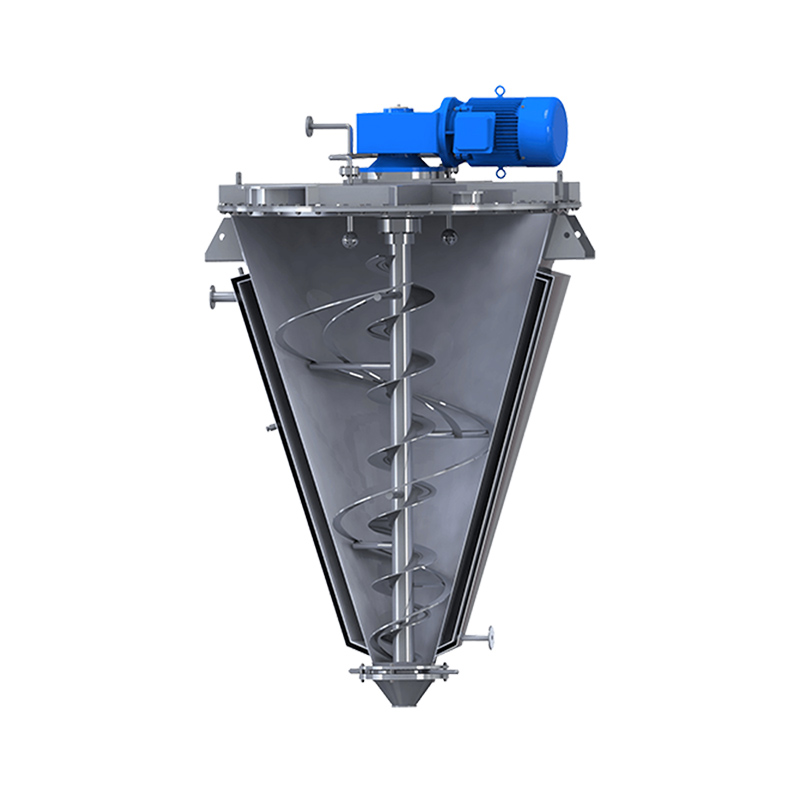
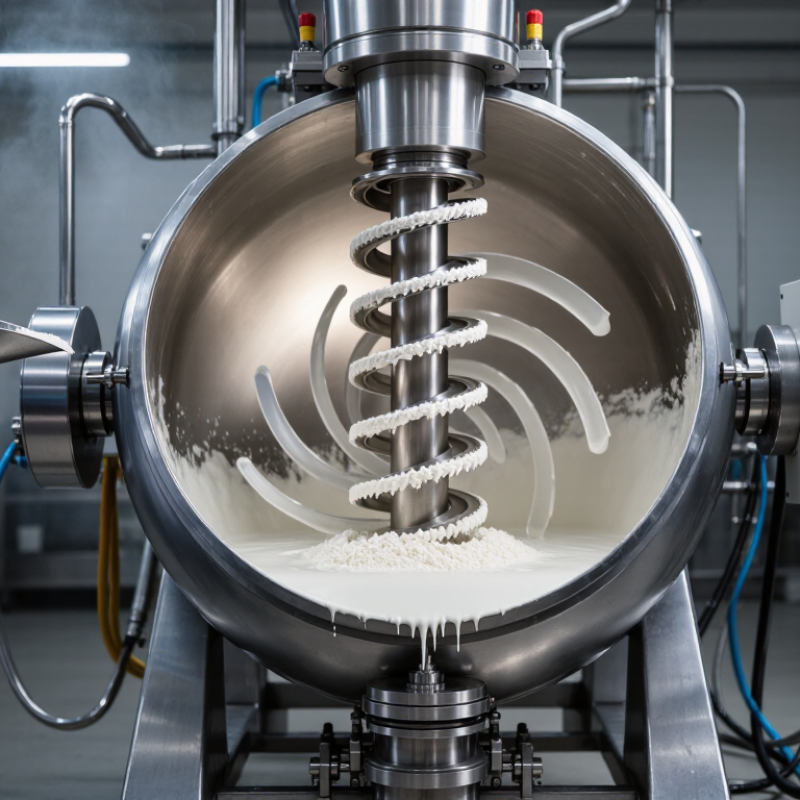
Ribbon agitators use inner and outer helical blades to move material in opposing directions. This creates a steady turnover across the vessel. For free-flowing powders, a standard ribbon may be sufficient. Cohesive or damp mixes can leave slow-moving pockets near the wall or shaft. Watch the discharge area, too. A mixer that blends well at one fill level may behave differently when nearly full.

Clearance matters. Small gaps between the ribbon and vessel wall can reduce stagnant zones, but they must suit the vessel’s shape and operating conditions. Ask for measured clearances, not just a general claim of close fit. Check shaft support and end clearances as well. These details are easy to overlook. They can affect cleaning and wear. There is no single ideal dimension for every powder.

Choose construction materials based on ingredients, cleaning routines, and abrasion. Stainless steel is common, but grade selection should reflect moisture, salts, and washdown exposure. Abrasive particles may wear blades faster than expected. Request material specifications and inspect welds, corners, and polished surfaces. When evaluating a CE Certification Ribbon Agitator listing, verify that its conformity documents match the supplied configuration. A label alone tells you little about suitability. Sometimes the practical choice is less obvious. Test with representative material when possible.

Select Drive Power, Speed, and Control Features

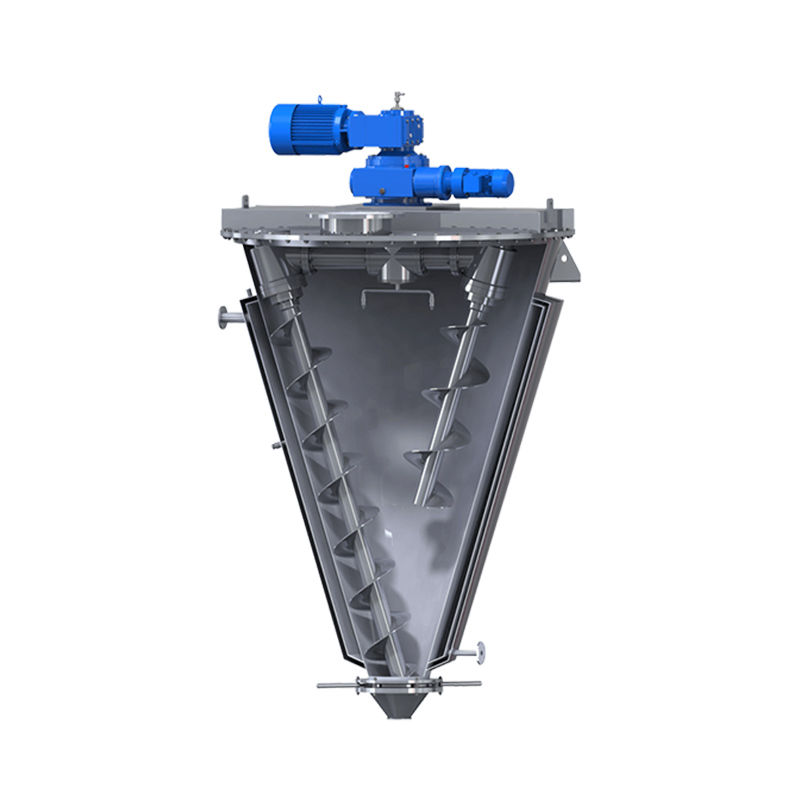
Choosing drive power for a ribbon agitator starts with the material, not just the vessel size. A light powder may flow easily, while a damp blend can resist movement and demand more starting torque. Start with the load. Consider batch weight, fill level, bulk density, and whether the material changes consistency during mixing. Ask the supplier for torque requirements at startup and under normal operation. A motor sized only for steady running may struggle when a full vessel starts cold. That detail is easy to overlook. If you are comparing a Ribbon Agitator with a Screw Agitator, check how each design handles your material and mixing goals; the equipment name alone does not determine the right drive.

Speed should match the process, not simply reach the highest available setting. Gentle blending may need a slower range to limit segregation or dust, while some applications benefit from faster circulation. A variable-frequency drive can help operators adjust speed as batches change. Useful controls may include motor overload protection, a clear emergency stop, and a speed display that can be checked from the operating position. For repeat batches, record the settings that produce an even blend, then verify them with samples from different parts of the vessel. Controls are not a substitute for observation. And settings may need revision when moisture, particle size, or batch volume shifts. I would leave room for trial runs; real materials sometimes behave less neatly than specifications suggest.

Check Cleaning, Safety, Maintenance, and Operating Costs

A ribbon agitator should be easy to clean with the materials and cleaning methods your process actually uses. Check whether operators can reach the trough, discharge area, and shaft seals without awkward dismantling. Ask for a cleaning demonstration using a representative powder, not just an empty machine. Fine residue can cling beneath the ribbons. That matters. Product changes, moisture, and sticky ingredients may all affect cleaning time, so a Powder Agitator that works well for one recipe may need extra attention in another.

Safety depends on the design and the way the machine is operated. Look for fixed guards, accessible emergency stops, and clear procedures for isolating power before inspection. Confirm that covers cannot be opened while moving parts are running. Maintenance access also deserves a close look: bearings, seals, and drive components should be inspectable without excessive disassembly. Request service intervals and typical replacement-part details. Real conditions vary, though, and supplier estimates may not reflect your dust levels or operating hours.

Compare operating costs across the expected service life, not just the purchase price. Motor size, batch time, cleaning labor, spare parts, and production downtime all contribute. Ask how the agitator performs at your normal fill level; oversized equipment can waste energy, while an undersized unit may extend mixing cycles. Record a trial batch’s power use and cleaning time if possible. Those figures may be imperfect, but they are more useful than assumptions.

FAQS

How do I estimate the right vessel size?

Divide batch mass by measured bulk density to estimate solids volume. For 500 kg at 650 kg/m³, that is about 0.77 m³. Leave room for circulation.

What working fill level should I consider?

Roughly 40–60% of the vessel’s gross volume is a useful starting range. Confirm it with supplier calculations and trials using your actual powder. It can vary.

Why does vessel shape matter?

A long, shallow trough may leave material beyond the ribbons’ effective sweep. Check ribbon clearance, shaft position, and outlet location at both small and large batch sizes.

How should I choose drive power?

Consider batch weight, fill level, density, and changes in consistency. Ask about startup torque as well as normal running torque. Cold starts can be harder.

What speed and controls are useful?

Match speed to the blend. Slower movement may limit segregation or dust; a variable-frequency drive allows adjustments. Use overload protection, an emergency stop, and a visible speed display.

How can I check whether a larger batch will mix evenly?

Do not rely only on a successful small trial. Record fill level, mixing time, and samples from different vessel areas. Dead zones can appear at larger volumes.

What should I check before choosing a cleaning setup?

Ask for a cleaning demonstration with a representative powder. Check access to the trough, discharge area, and shaft seals. Fine residue may cling beneath the ribbons.

What costs and safety details should I compare?

Check guards, emergency stops, and power-isolation procedures. Compare energy use, cleaning labor, spare parts, and downtime over the equipment’s service life. Trial figures may be imperfect, but useful.

Conclusion

Choosing the right Ribbon Agitator begins with defining the mixing goals, such as achieving a consistent blend, dispersing ingredients, or handling a particular batch size. Consider the material’s properties and flow behavior, including its density, particle size, moisture, and tendency to clump or stick. These factors help determine the agitator design and operating conditions needed for reliable results.

Next, match the equipment to the vessel’s dimensions and batch volume, then compare ribbon configurations, operating clearances, and construction materials for compatibility with the process. Evaluate the drive power, speed range, and control features to ensure they suit the workload and desired level of precision. Finally, account for cleaning requirements, operator safety, routine maintenance, and ongoing operating costs. Assessing these considerations together can help you select a practical agitator that performs consistently and fits your production needs.
Jackson

Jackson

Jackson is a dedicated marketing professional at Shanghai Shenyin Machinery (Group) Co., Ltd., where he leverages his extensive expertise in the machinery industry to promote the company’s innovative products. With a deep understanding of the market dynamics and customer needs, Jackson plays a......
Previous 7 Tips for Choosing the Right Solid Mixer?