
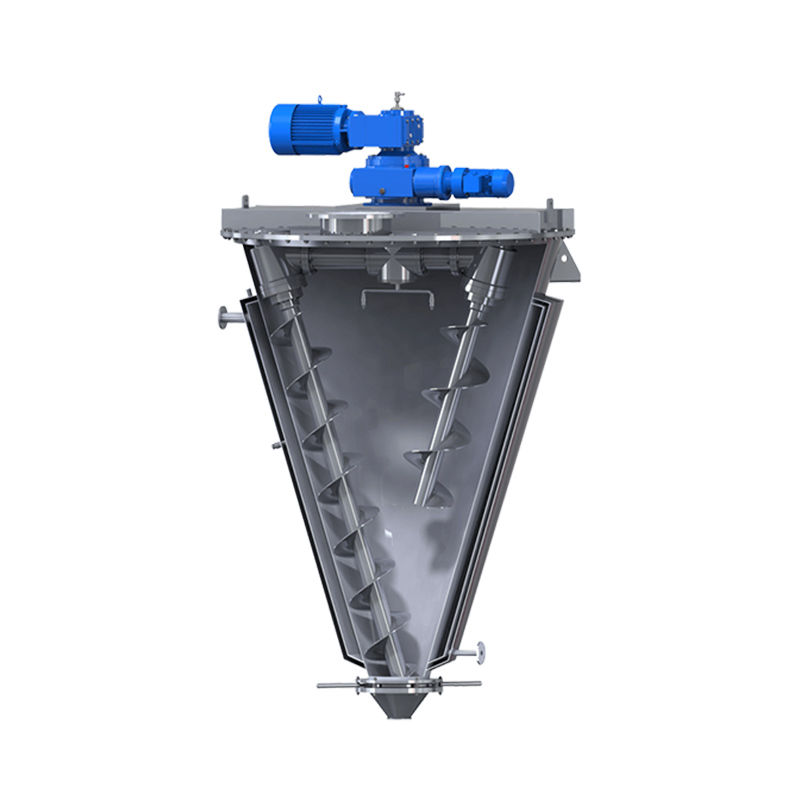
 Conical Screw Mixer
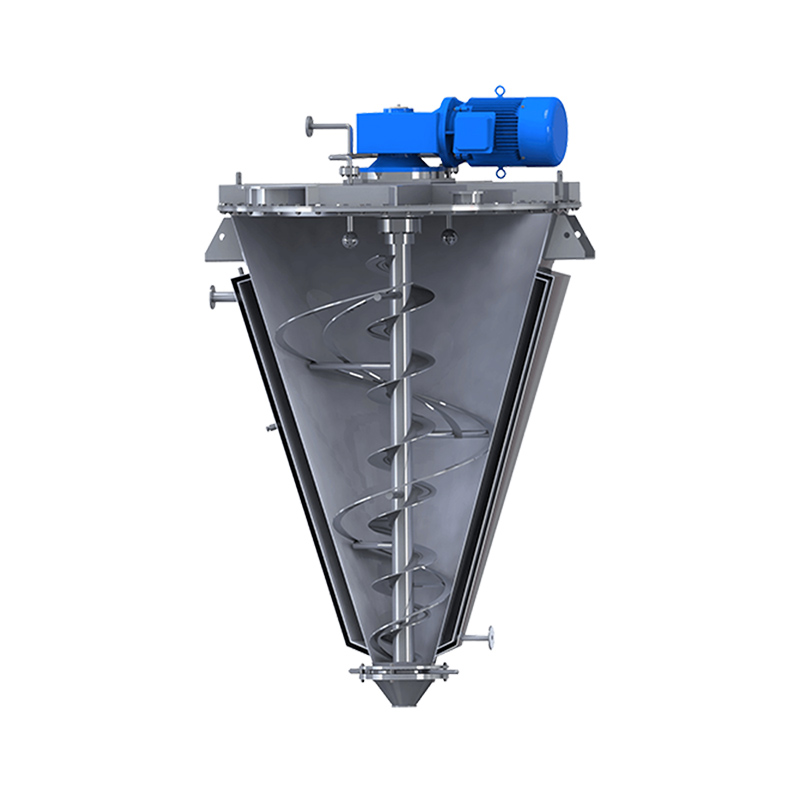 Conical Screw Belt Mixer
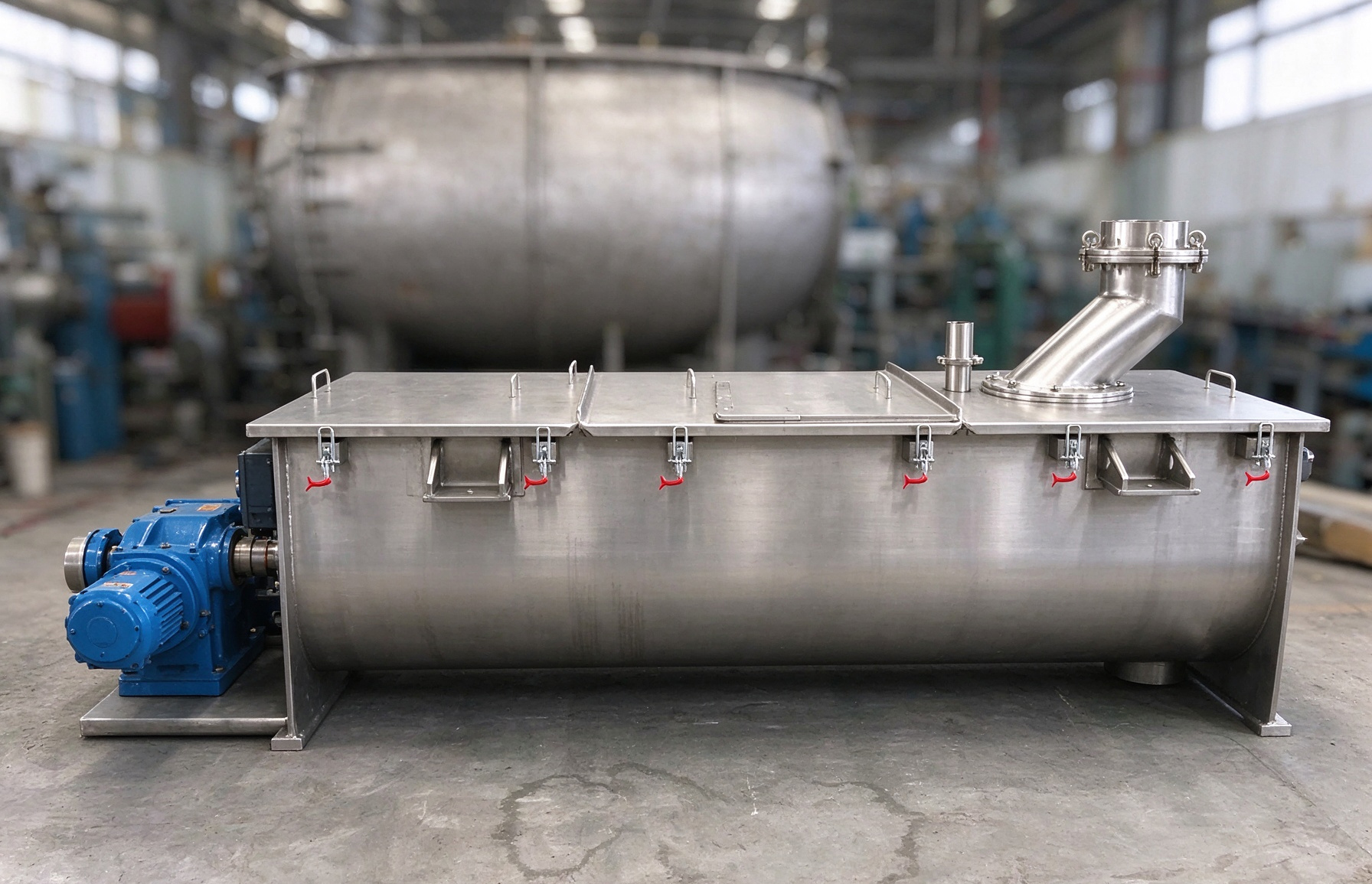
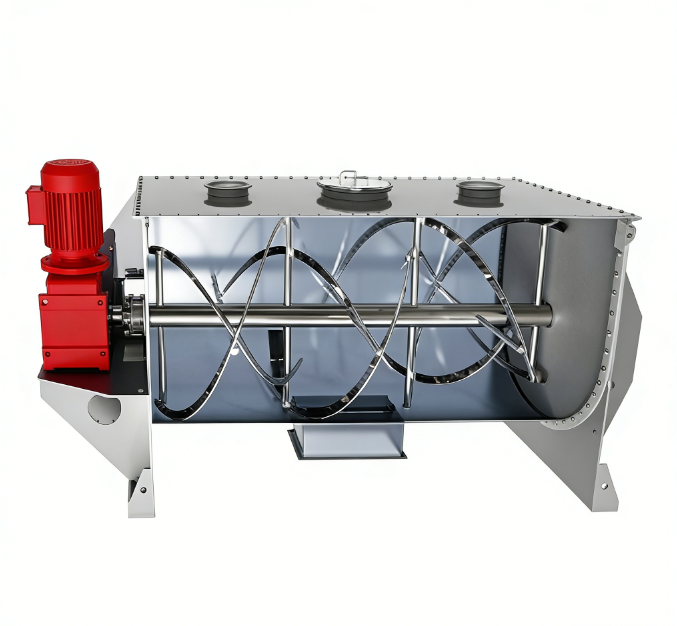
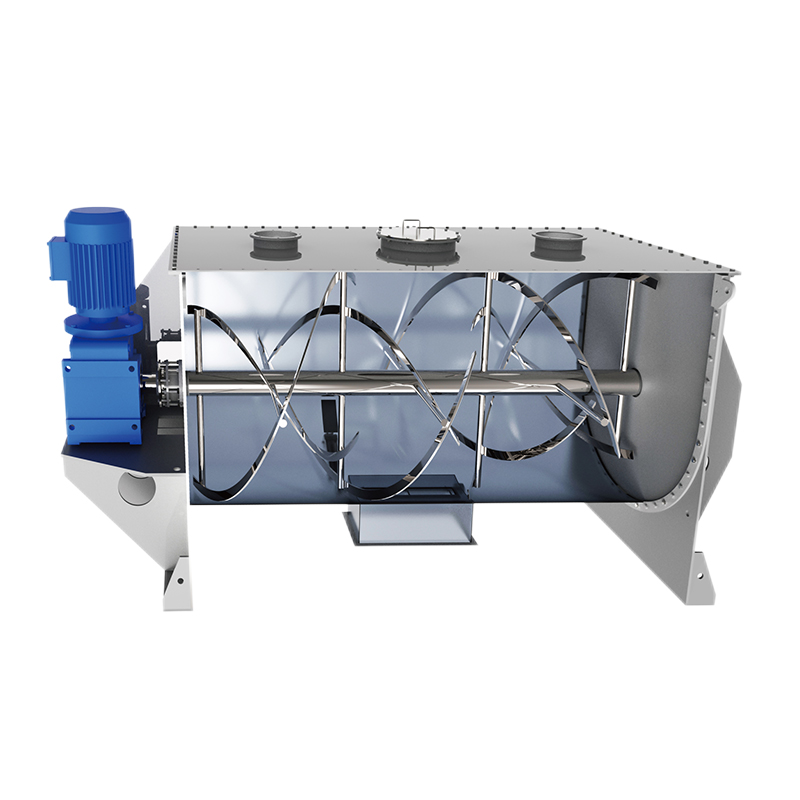 Ribbon Blender
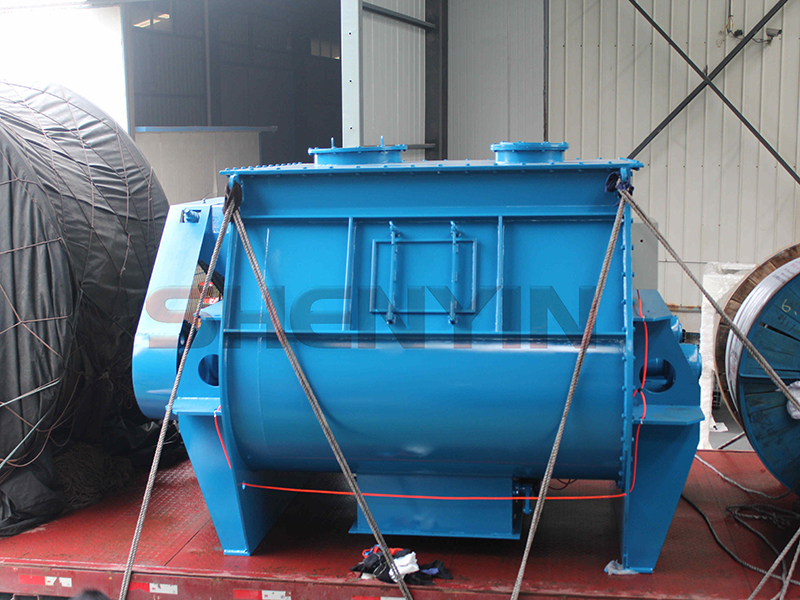
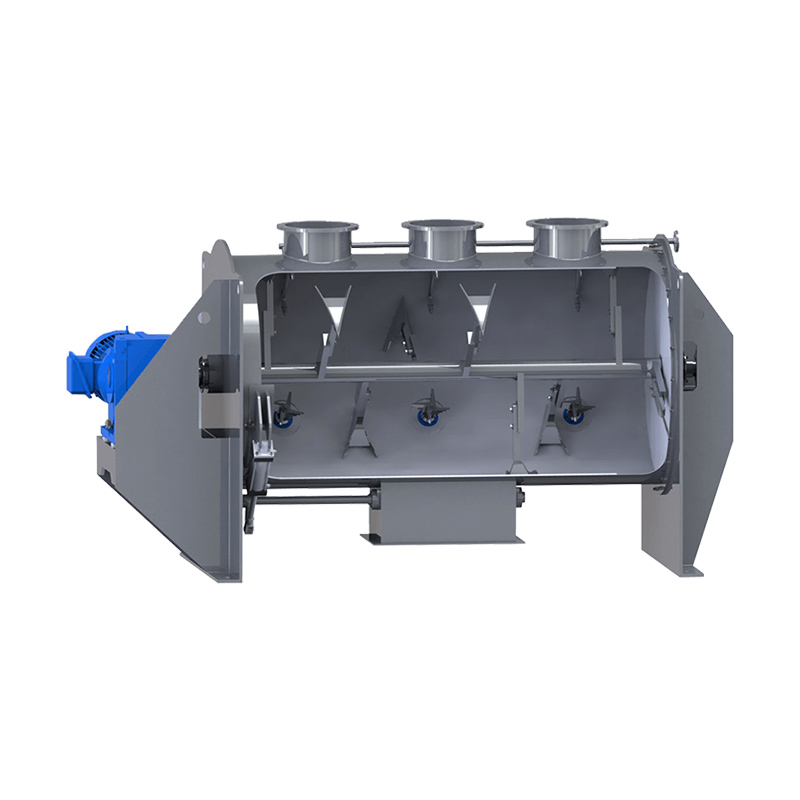 Plough-shear Mixer
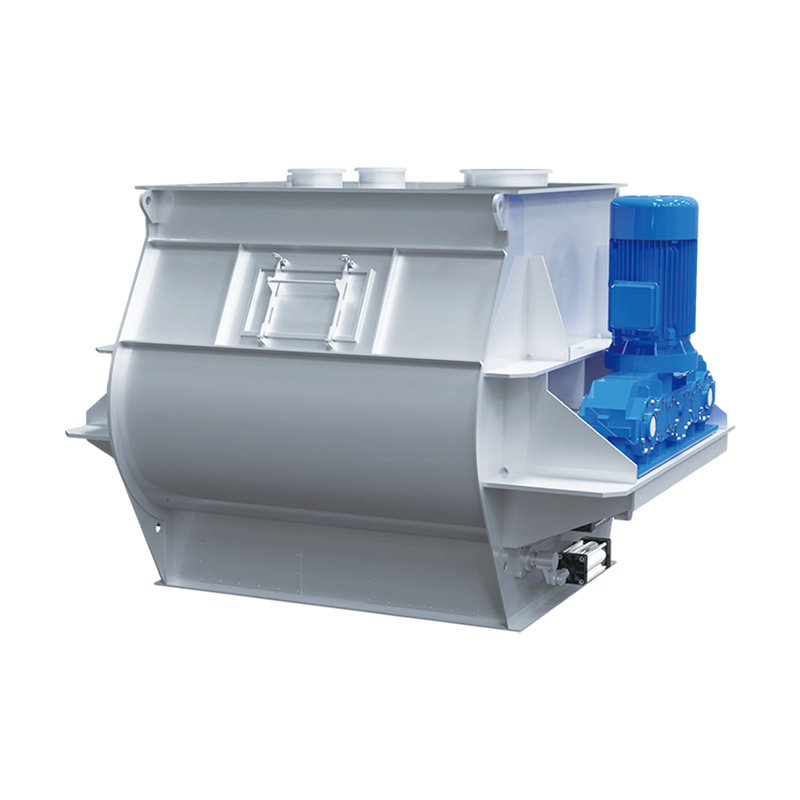 Double Shaft Paddle Mixer
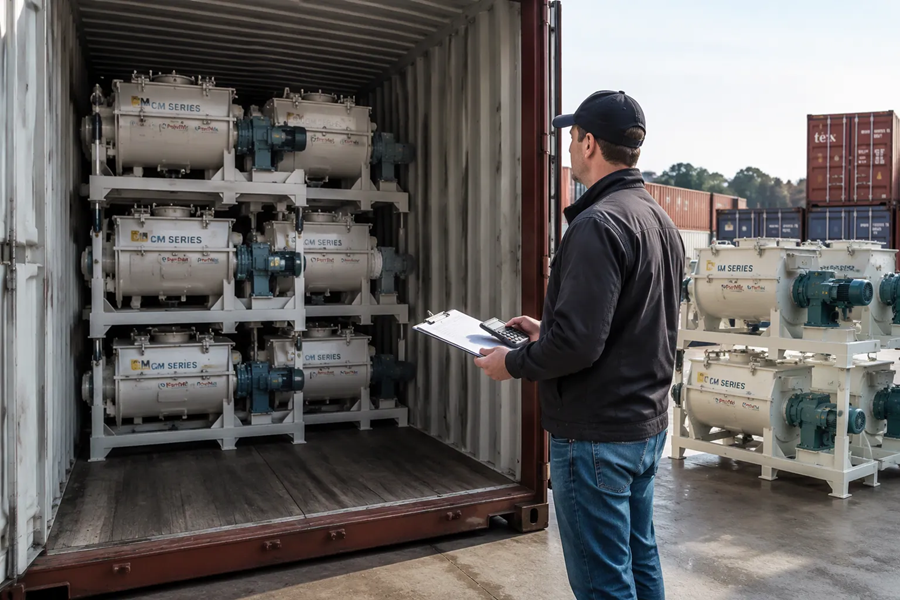
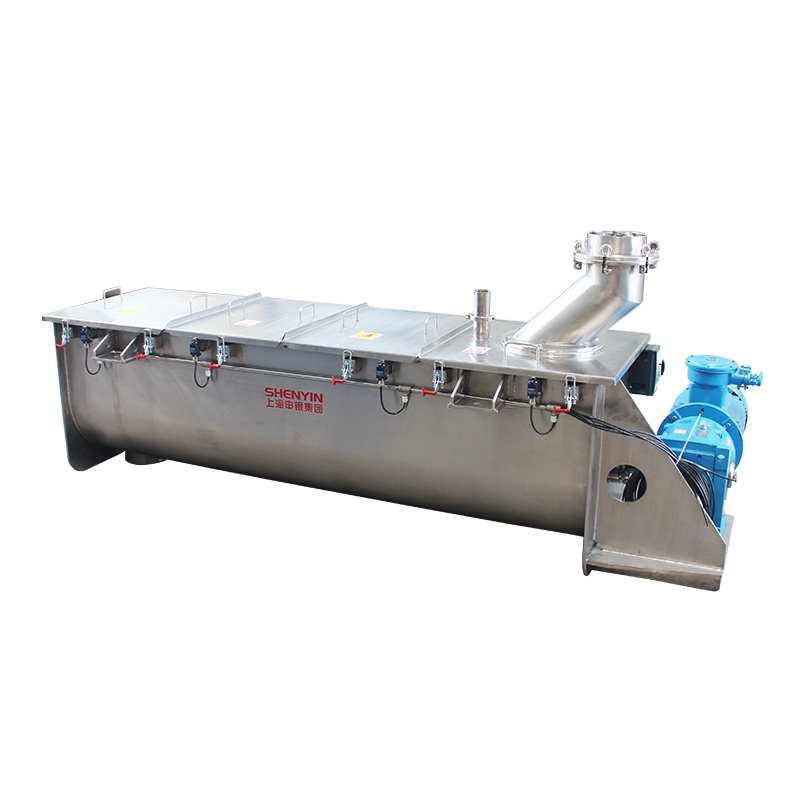 CM Series Mixer


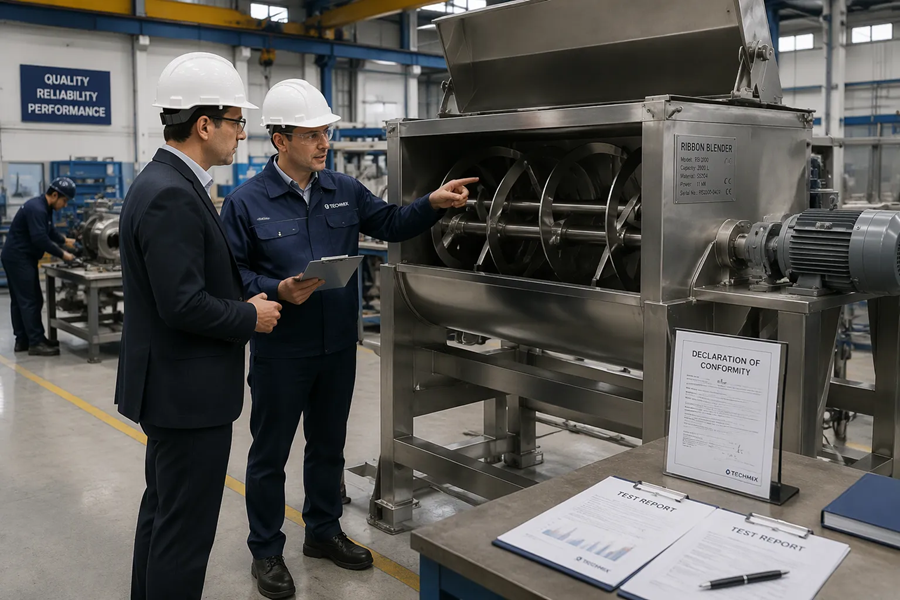

How to Choose the Right Model of CM Series Mixer to Match Your Production Output Requirements?
 Quick Answer:
To match a CM Series mixer to your production output, you must first convert your required hourly output into a volumetric feed rate, then verify that the mixer’s capacity range (5–200 m³/h) covers that rate with adequate residence time for homogeneity. The decisive step is recognizing that a Continuous Mixer’s output is governed by the feeding system, not the mixer alone: an undersized feeder caps throughput regardless of mixer size, while an oversized feeder floods the mixing chamber and shortens residence time below the minimum required for uniform blending. Select the CMS single-shaft plough variant for mixing-plus-conveying duty and the CMD twin-shaft paddle variant when maximum throughput on fibrous or granular materials is the priority.[9]
- Output is a system property: The CM Series mixer’s hourly capacity (5–200 m³/h) is only achievable when the feeding equipment delivers material at the matching rate; the mixer cannot outproduce its feed. [9]
- Volumetric rate, not weight, drives sizing: Convert your required kg/h or tons/h into m³/h using the material’s loose bulk density before comparing against catalog capacity.
- Residence time is the hidden constraint: Higher throughput shortens residence time; confirm that the selected model still achieves your required homogeneity at the target feed rate.
- CMS vs. CMD changes the output ceiling:The CMD twin-shaft paddle mixer is engineered for maximum productivity on fiber and granules, while the CMS single-shaft Plough Mixer prioritizes mixing with conveying adaptability.
- Pilot testing resolves the uncertainty: Catalog specifications cannot predict how a specific formulation behaves at production scale; test with actual material before finalizing the model.
Why “Capacity Per Hour” Is Not the Number You Should Start With
The CM Series specification sheet lists capacity per hour from 5 to 200 m³/h, which appears to offer a straightforward selection range. In practice, this figure describes the maximum volumetric throughput achievable under ideal feeding conditions, not a guaranteed output for your material. A continuous mixer operates as a flow-through device: material enters continuously, passes through the mixing zone over a residence time determined by feed rate and mixer geometry, and discharges continuously. If the feeding system delivers material faster than the mixer can process it, the mixing chamber floods and residence time collapses. If the feeding system delivers material more slowly than the mixer’s design capacity, the mixer runs partially filled and the nameplate capacity is never reached. [9]
The procurement implication is direct: before comparing CM Series models against your production target, calculate the volumetric feed rate your process requires. Take your required output in kg/h or tons/h and divide by the material’s loose bulk density in kg/m³.
The CMS vs. CMD Decision: Which Output Profile Matches Your Material?
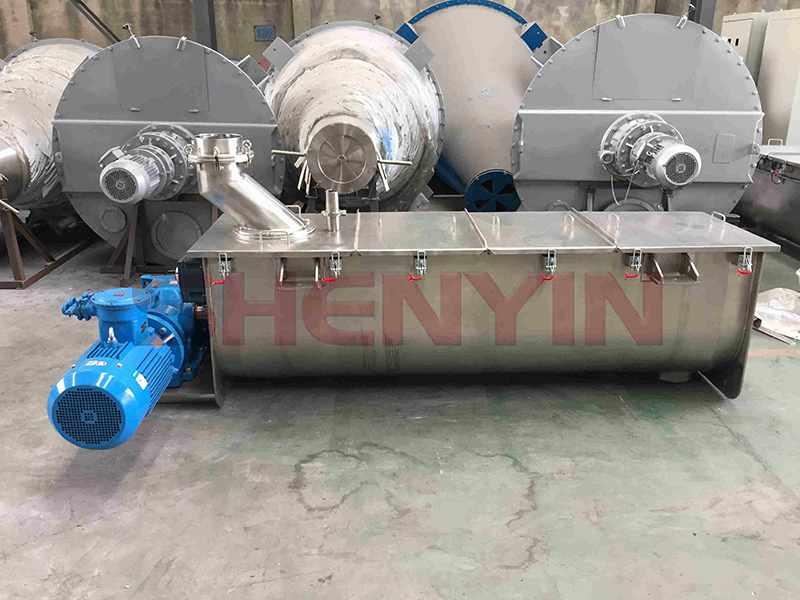
The CM Series encompasses two continuous mixing architectures, and the choice between them determines the achievable output profile for a given material. The CMS (Continuous Single Shaft Plough Mixer) uses a single shaft with plough-shaped tools that fluidize the material bed, creating a mixing action that also conveys material along the cylinder. The CMS adapts to a range of feeding speeds, making it suitable for processes where the feed rate may vary within a defined band.
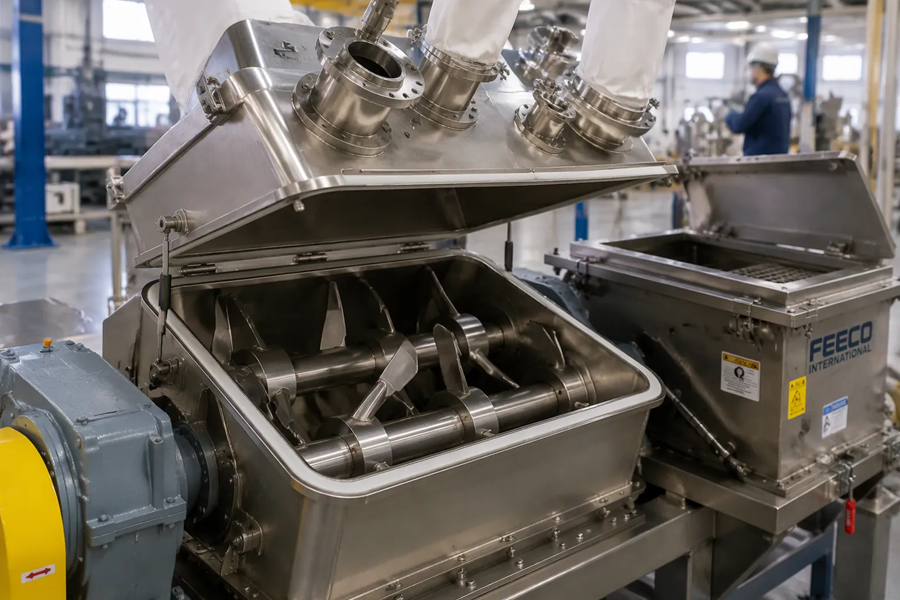
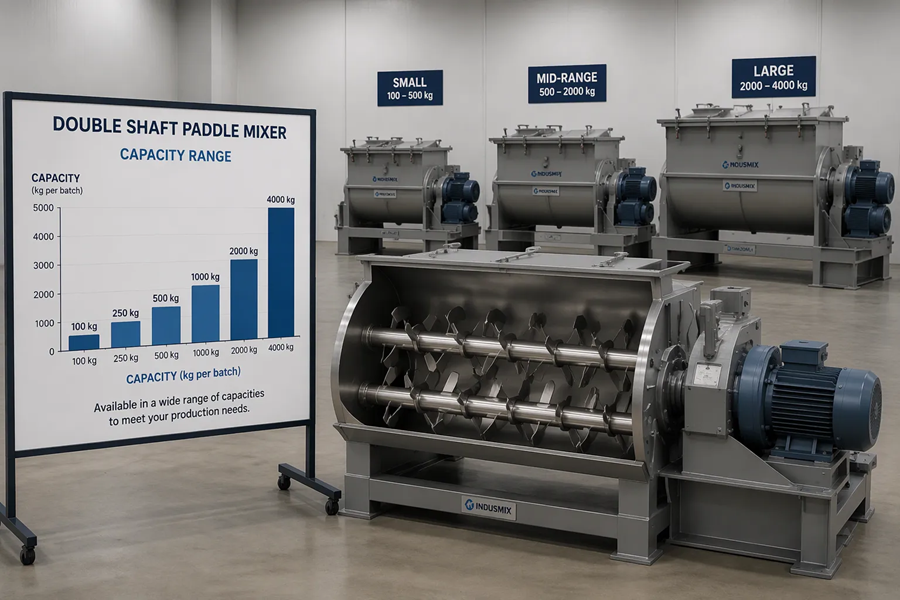
The CMD (Continuous Double Shaft Paddle Mixer) uses two intermeshing paddle shafts that scatter, diffuse, and knead material in the gap between the shafts. The CMD is characterized by maximizing productivity and is specifically suited to fiber and granular materials, where the aggressive mechanical action breaks up agglomerates and distributes fibrous components.
| Output Scenario | Recommended Variant | Rationale |
|---|---|---|
| High-volume fiber or granule blending | CMD (Double Shaft Paddle) | Aggressive intermeshing action de-agglomerates and distributes fibers at maximum throughput |
| Mixing plus conveying in one step | CMS (Single Shaft Plough) | Plough action fluidizes and moves material; adapts to variable feed speeds |
| Free-flowing powder, moderate output | CMS | Adequate mixing intensity without unnecessary energy expenditure |
| Agglomerating material requiring de-lumping | CMD, with flying knife option | Paddle action plus optional high-speed knives break up lumps |
Sizing by Residence Time: The Constraint That Catalog Capacity Hides
Residence time—the average duration a particle spends inside the mixing chamber—determines whether the CM Series mixer achieves the homogeneity your process requires. For any given mixer model, residence time is inversely proportional to throughput: doubling the feed rate halves the time material spends in the mixing zone.
The practical selection procedure is therefore:
- Establish the homogeneity target. What coefficient of variation (CV) or standard deviation across samples is acceptable? A CV of ≤5% is common. [11]
- Determine the minimum residence time required to achieve that homogeneity for your specific formulation.
- Calculate the maximum throughput that the mixer can sustain: throughput = working volume / minimum residence time.
- Compare this calculated maximum throughput against your production requirement.
Aligning Feeding Equipment and Downstream Handling
A CM Series mixer cannot compensate for upstream or downstream bottlenecks. The feeding system must deliver material at the target volumetric rate; the discharge handling must remove material as fast as the mixer discharges it.
| System Component | Specification to Verify | Consequence of Mismatch |
|---|---|---|
| Upstream feeder | Volumetric rate ≥ target throughput | Mixer starves (underfed) or floods (overfed) |
| Mixer working volume | Working volume / target throughput ≥ min residence time | Homogeneity fails at required output |
| Discharge handling | Removal capacity ≥ mixer output rate | Backflow, chamber flooding, unstable residence time |
| Motor power | Sufficient for bulk density and load | Overload, stalling, or insufficient mixing energy |
Pilot Testing: The Only Way to Confirm the Model Before Purchase
Catalog specifications and theoretical calculations provide a shortlist, not a final answer. Material behavior at production scale is shaped by flowability, cohesiveness, moisture content, and particle size distribution. [9]
Request pilot testing with your actual material to measure:
- Homogeneity achieved at target throughput
- Residence time distribution
- Feeder performance with your specific material
- Discharge behavior at the selected throughput