
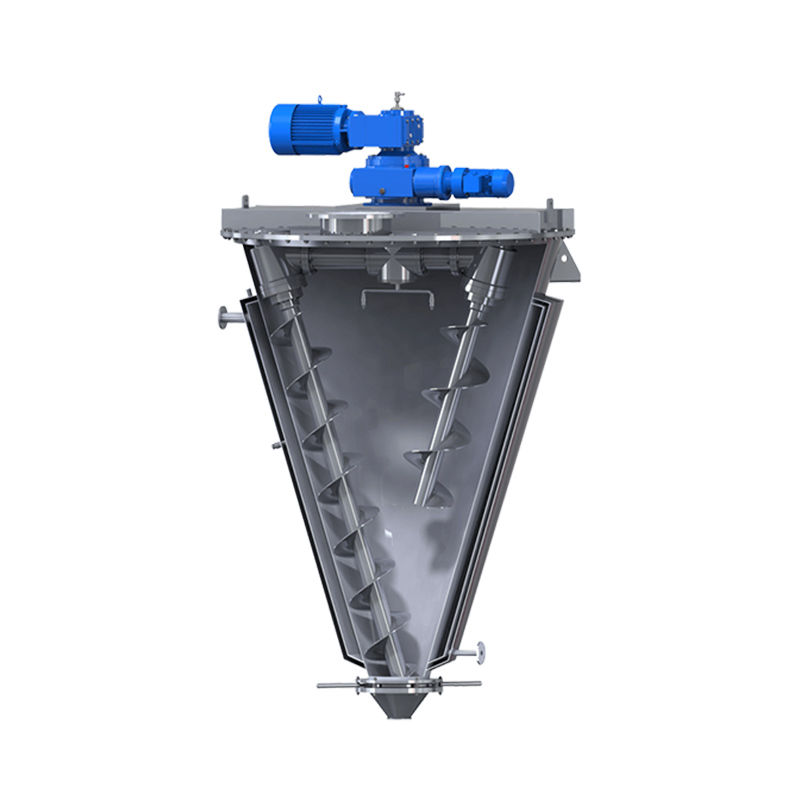
 Conical Screw Mixer
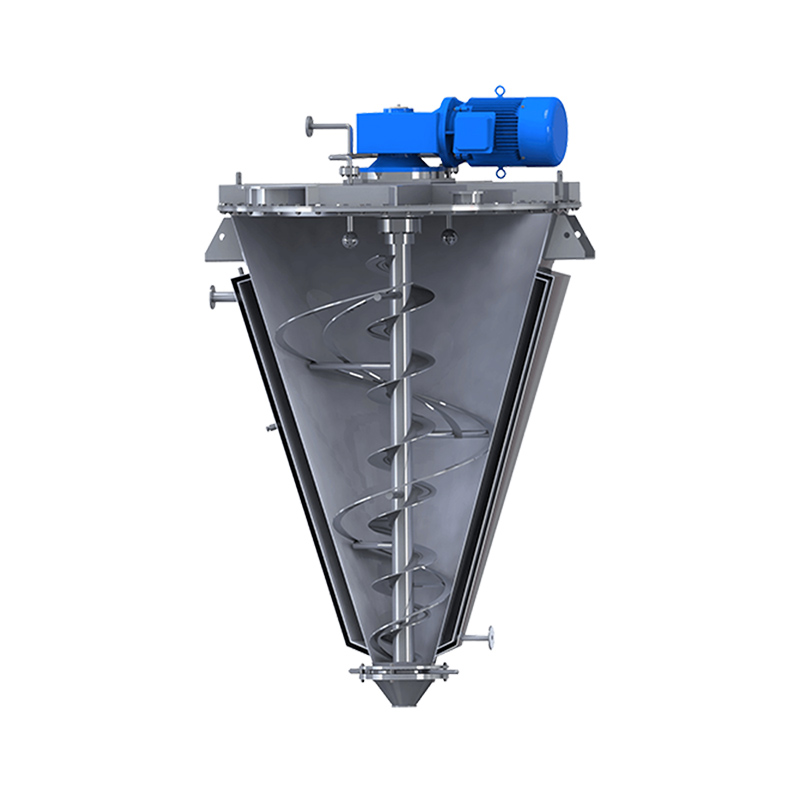 Conical Screw Belt Mixer
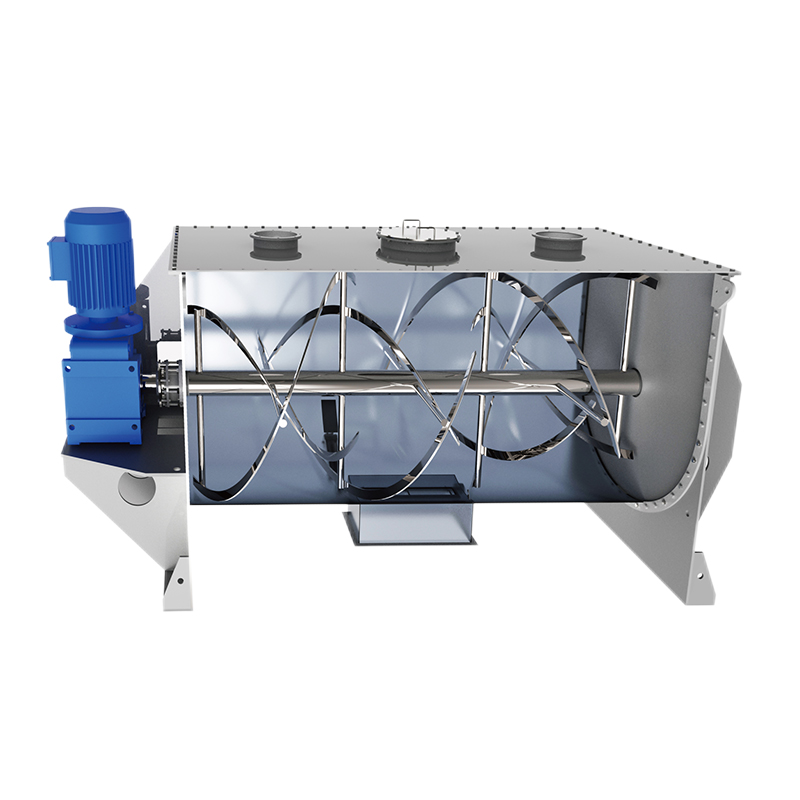 Ribbon Blender
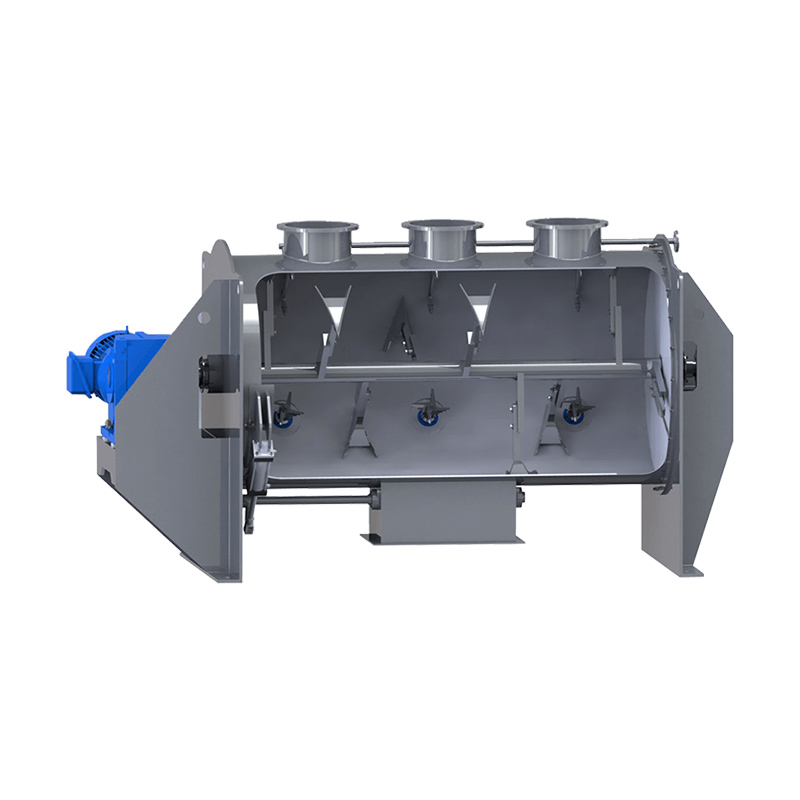 Plough-shear Mixer
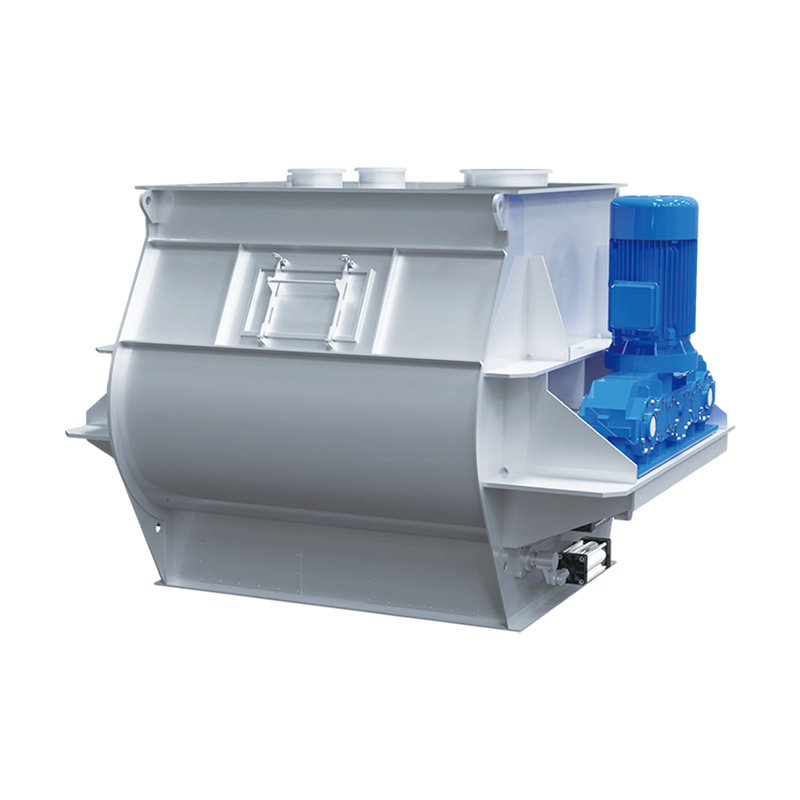 Double Shaft Paddle Mixer
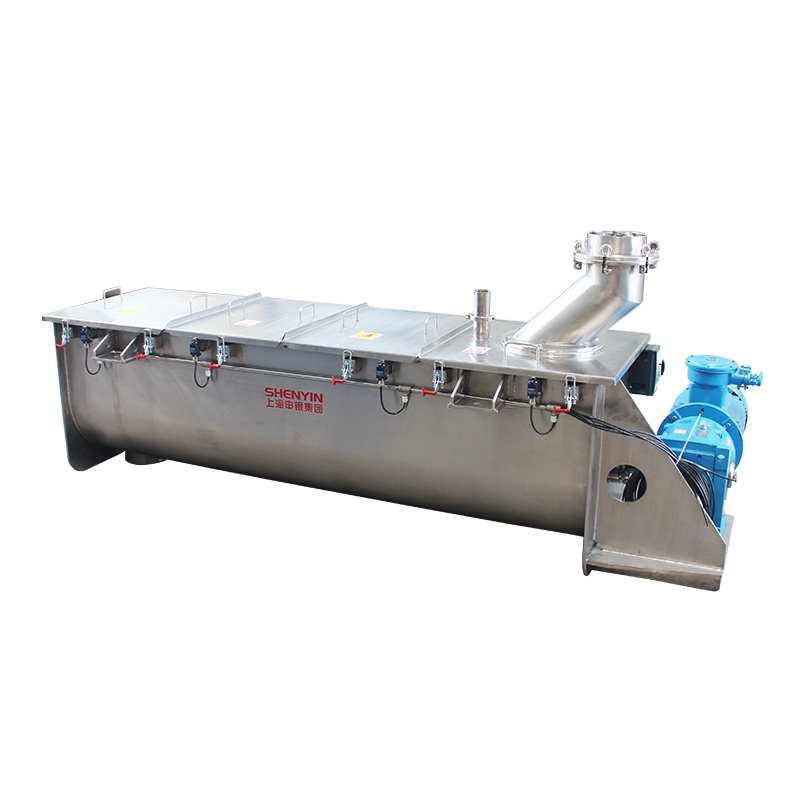 CM Series Mixer




What Customized Configurations and Optional Accessories Are Available for CM Series Mixer?
Quick Answer: The CM Series mixer offers customization across four core dimensions: agitator configuration, material of construction, discharge method, and auxiliary accessories. The SYCM series provides four standard agitator options—plough type, ribbon type, paddle type, and double-shaft paddle type—with high-speed flying knives available for materials prone to agglomeration. Construction materials include 316L stainless steel, 304 stainless steel, and mild steel, covering corrosive, hygienic, and general-duty applications. Beyond the mixer itself, buyers can specify feeding systems, discharge handling equipment, and weighing modules to complete the continuous mixing line. The customization process begins with material testing: the correct configuration depends on whether the powder is cohesive, abrasive, hygroscopic, or prone to bridging, not on a standard catalog selection.
- Four agitator types, one purpose: Plough, ribbon, paddle, and double-shaft paddle configurations address different material flow behaviors; the wrong choice cannot be corrected by adjusting operating parameters.
- Flying knives solve agglomeration: High-speed knives break up lumps that the primary agitator cannot disperse, extending the CM Series to cohesive and moisture-sensitive materials.
- Material construction is a specification, not an afterthought: 316L for corrosive or cGMP applications, 304 for general food/chemical use, mild steel only where iron contamination is acceptable.
- Accessories complete the system: Feeding equipment, discharge handling, and weighing modules determine whether the mixer achieves its rated capacity in practice.
- Minor additives require pre-treatment:Ingredients below 5% of the formulation must be premixed before entering the Continuous Mixer, regardless of accessory configuration.
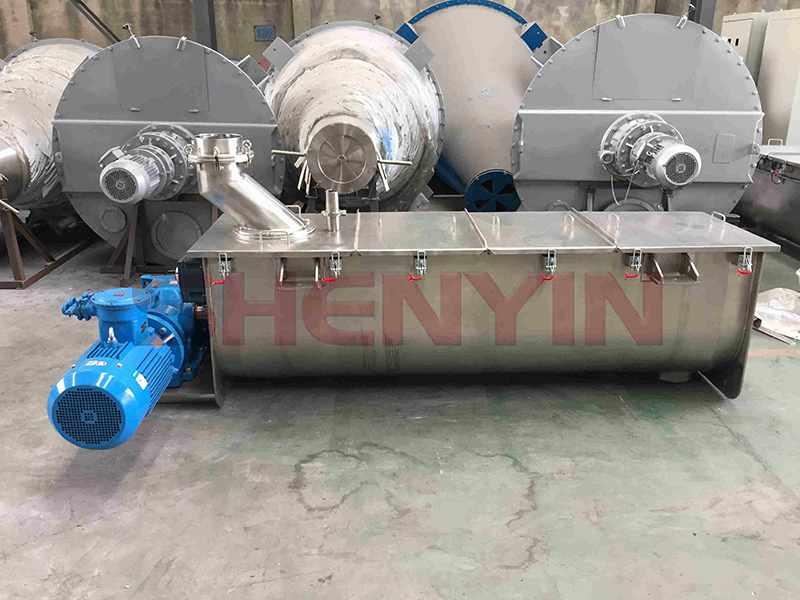
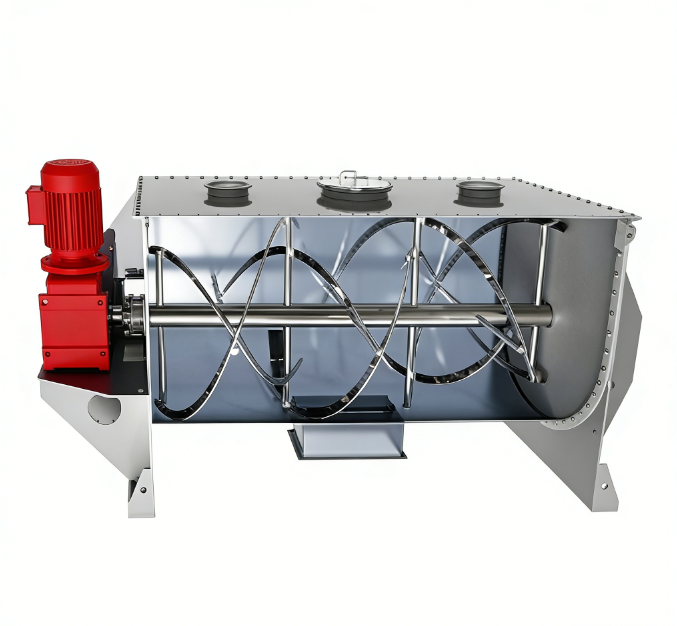
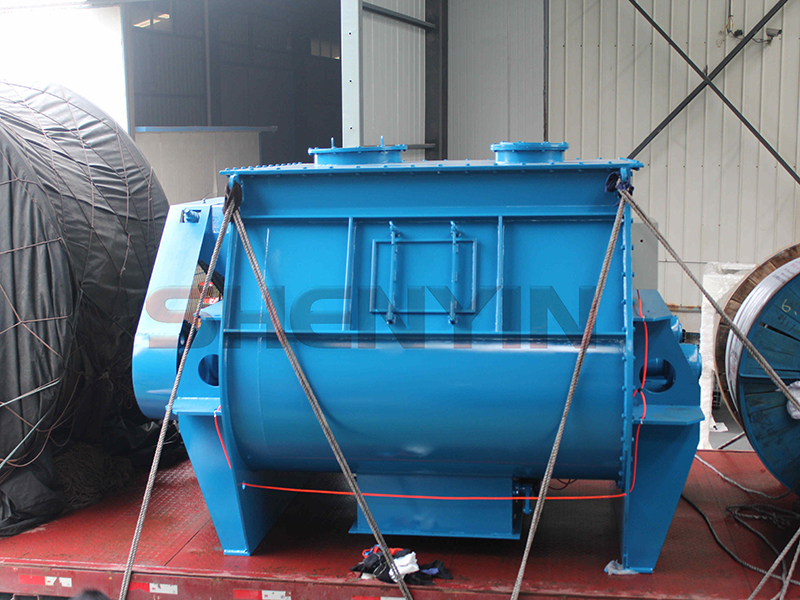
The CM Series’ primary customization decision is the agitator type. The SYCM series offers four configurations: plough type, ribbon type, paddle type, and double-shaft paddle type. Each configuration creates a different material flow pattern within the mixing cylinder, and the selection must match the material’s physical behavior under shear.
Plough type (CMS) uses a single shaft with plough-shaped tools that fluidize the material bed. The plough action creates a mixing environment that also conveys material along the cylinder, making the CMS suitable for processes where mixing and transport occur in one step. The CMS adapts to a range of feeding speeds, providing flexibility when upstream feed rate fluctuates within a defined band.
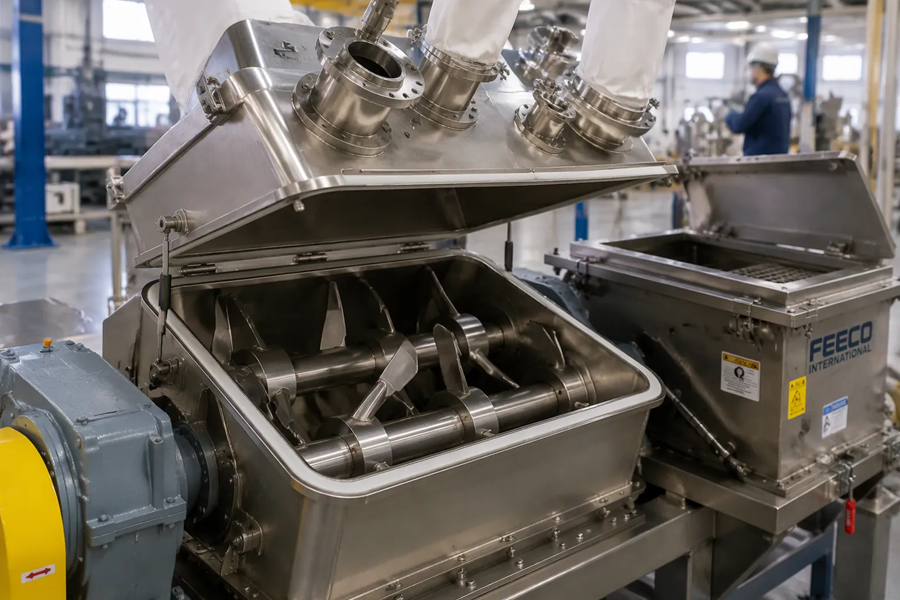
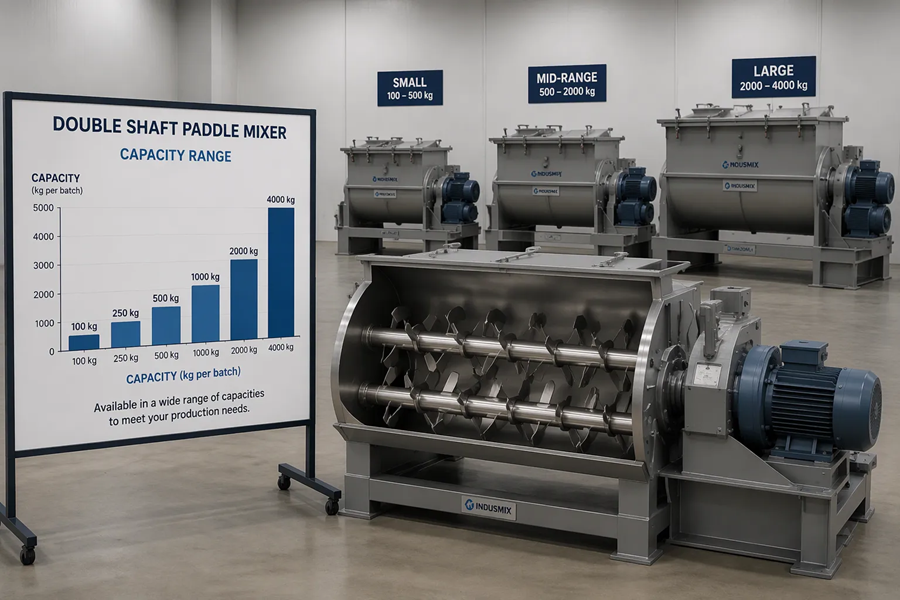
Double-shaft paddle type (CMD) uses two intermeshing paddle shafts that scatter, diffuse, and knead material in the gap between the shafts. The CMD is engineered for maximum productivity and is specifically suited to fiber and granular materials, where the aggressive mechanical action breaks up agglomerates and distributes fibrous components.
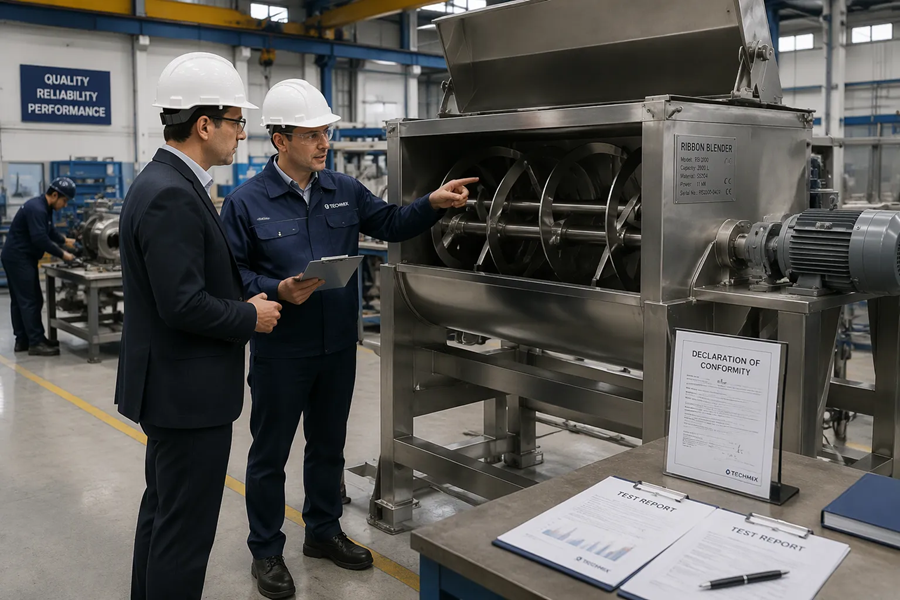
Ribbon type uses inner and outer helical ribbons that move material in counter-current flow. This configuration is common in batch mixing and is available on the CM Series for applications where the ribbon’s gentle convective action suits the material. Paddle type provides an intermediate mixing intensity between the plough and the double-shaft paddle designs.
| Agitator Type | Best Suited Materials | Mixing Mechanism | When to Specify |
|---|---|---|---|
| Plough (CMS) | Free-flowing powders, general blends | Single-shaft fluidization plus conveying | Mixing and transport in one step; variable feed conditions |
| Ribbon | General powders, gentle blending | Counter-current helical ribbon flow | Material requires low-shear convective mixing |
| Paddle | Intermediate applications | Paddle-induced material circulation | Between plough and double-shaft intensity |
| Double-Shaft Paddle (CMD) | Fibers, granules, agglomerates | Intermeshing twin-shaft scatter and knead | Maximum productivity; de-agglomeration duty |
High-speed flying knives are the most consequential optional accessory for the CM Series. These knives, mounted in the mixing chamber and operating independently of the primary agitator, break up lumps and agglomerates that the main mixing action cannot disperse. The supplier specifies flying knives for “materials that are easy to agglomerate and agglomerate”.
The practical implication is that a CM Series mixer without flying knives may fail on materials that clump due to moisture, cohesive forces, or liquid addition. A powder that flows freely in laboratory testing can form stable agglomerates under production-scale mixing, and the primary agitator—whether plough, ribbon, or paddle—will circulate the agglomerates without reducing their size. Flying knives address this failure mode directly.
The CM Series is available in three construction materials: 316L stainless steel, 304 stainless steel, and mild steel. The selection is driven by the chemical aggressiveness of the material, hygiene requirements, and budget.
316L stainless steel contains molybdenum for improved resistance to chlorides and reducing acids. It is the appropriate choice for chemical processing involving corrosive additives, pharmaceutical applications requiring cleanability and corrosion resistance, and any process where iron contamination would degrade the product.
304 stainless steel provides good general corrosion resistance at lower cost than 316L. It is suitable for many food and building material applications where the material is non-corrosive and hygiene requirements are moderate.
Mild steel is the lowest-cost option and is appropriate only for applications where contamination from iron or rust is acceptable—for example, certain building material mixes or mining applications where the product specification does not include metal content limits.
The CM Series mixer does not operate in isolation. The supplier’s operating notice is explicit: Mixer Productivity is determined by the feeding system’s speed, and the equipment under the discharge must handle material in time to prevent blockage. Customization therefore extends to the auxiliary systems that surround the mixer.
Feeding equipment must deliver material at the target volumetric rate with sufficient accuracy to maintain the formulation ratio. The supplier specifies that stable and continuous feeding is a precondition for satisfactory operation, and that the correct feeding speed ratio according to the material formula must be maintained. For formulations containing minor additives below 5%, the supplier requires premixing before the material enters the continuous mixer, regardless of feeder accuracy.
| Auxiliary System | Function | Consequence of Under-Specification |
|---|---|---|
| Feeding equipment | Delivers material at target rate and ratio | Mixer starves or floods; residence time deviates from target |
| Discharge handling | Removes material at mixer output rate | Backflow, chamber flooding, unstable operation |
| Weighing module | Monitors feed or output weight | Loss of gravimetric control and documentation capability |
| Flying knives | De-agglomerates cohesive materials | Lumps pass through to product |
The SYCM series offers four configurations: plough type, ribbon type, paddle type, and double-shaft paddle type. The plough type (CMS) prioritizes mixing with conveying capability; the double-shaft paddle type (CMD) maximizes productivity for fibers and granules.
Flying knives should be specified when the material is prone to agglomeration, clumping, or bridging. The knives break up lumps that the primary agitator cannot disperse, extending the mixer’s capability to cohesive and moisture-sensitive powders.
316L stainless steel, 304 stainless steel, and mild steel are available. Choose 316L for corrosive or pharmaceutical applications, 304 for general food and chemical use, and mild steel only where iron contamination is acceptable.
Yes. Abrasive materials such as metal oxides cause wear on Mixer Components. Buyers should confirm whether wear-resistant coatings or replaceable wear parts are available for the specific agitator configuration.
A complete system requires feeding equipment sized to the target volumetric rate, discharge handling capable of removing material at the mixer’s output rate, and optional weighing modules for gravimetric control or documentation.
Minor ingredients below 5% must be premixed before entering the continuous mixer. This requirement applies regardless of the mixer configuration or accessory package, because the continuous mixer’s residence time is typically too short to distribute trace components uniformly if fed separately.