
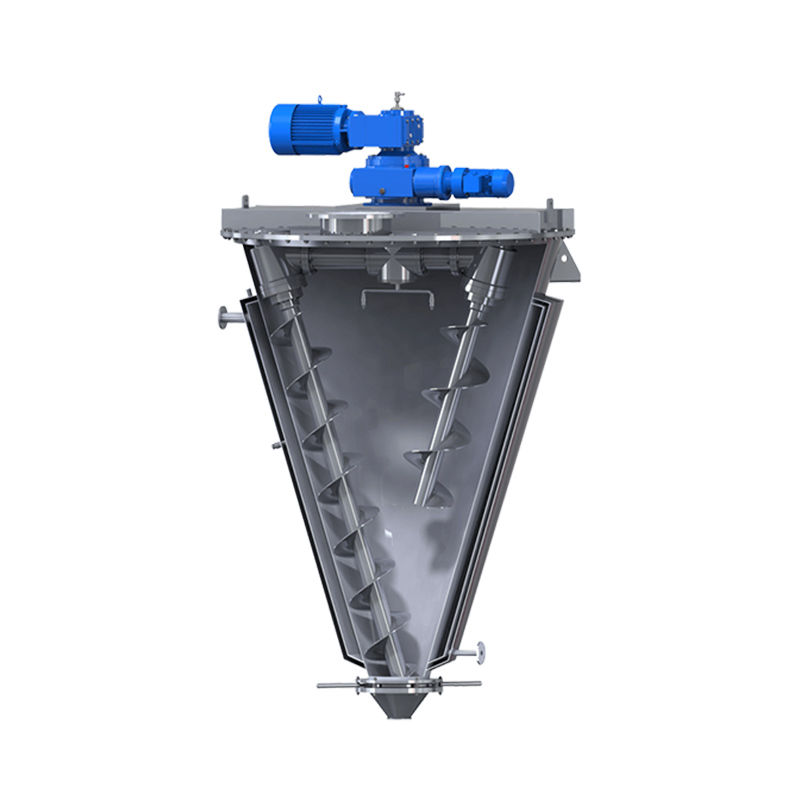
 Conical Screw Mixer
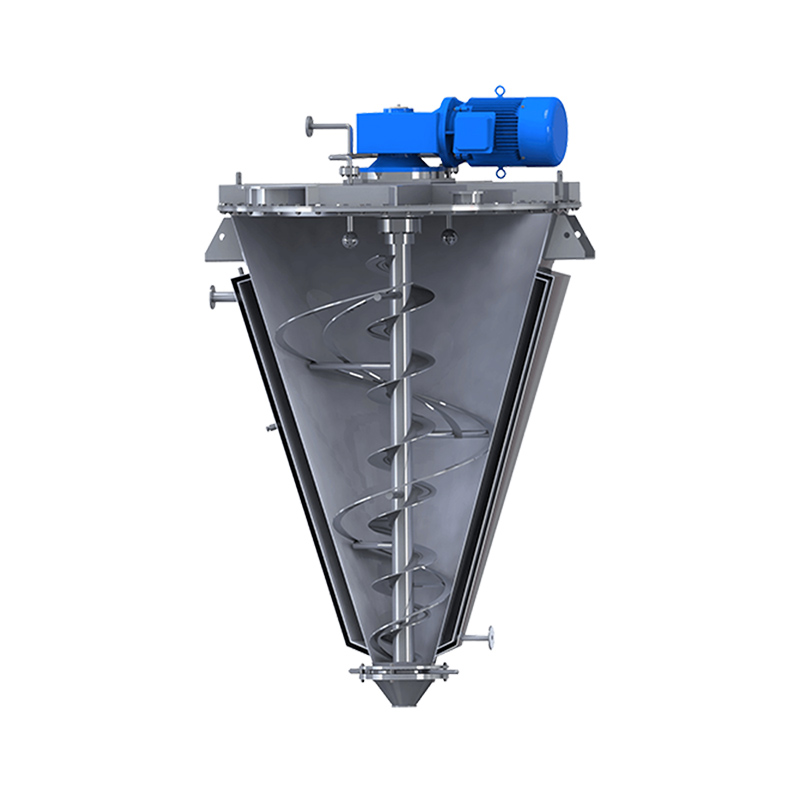 Conical Screw Belt Mixer
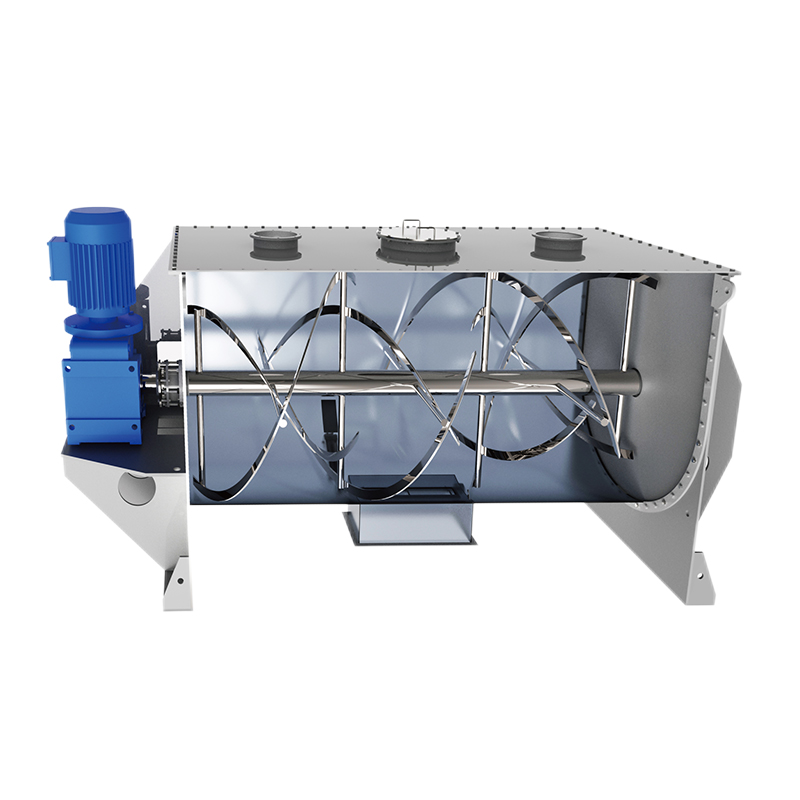 Ribbon Blender
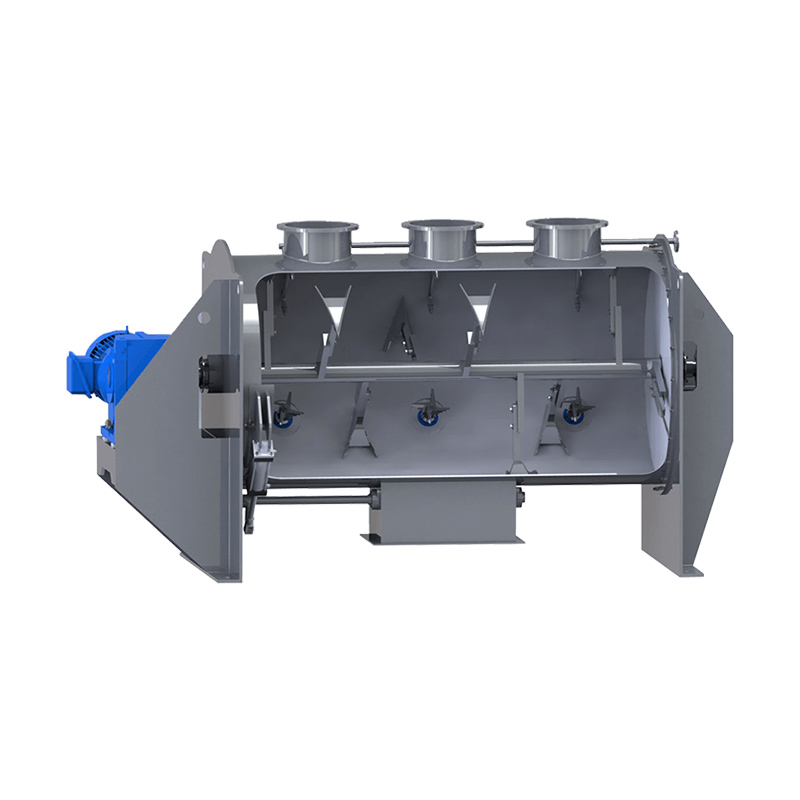 Plough-shear Mixer
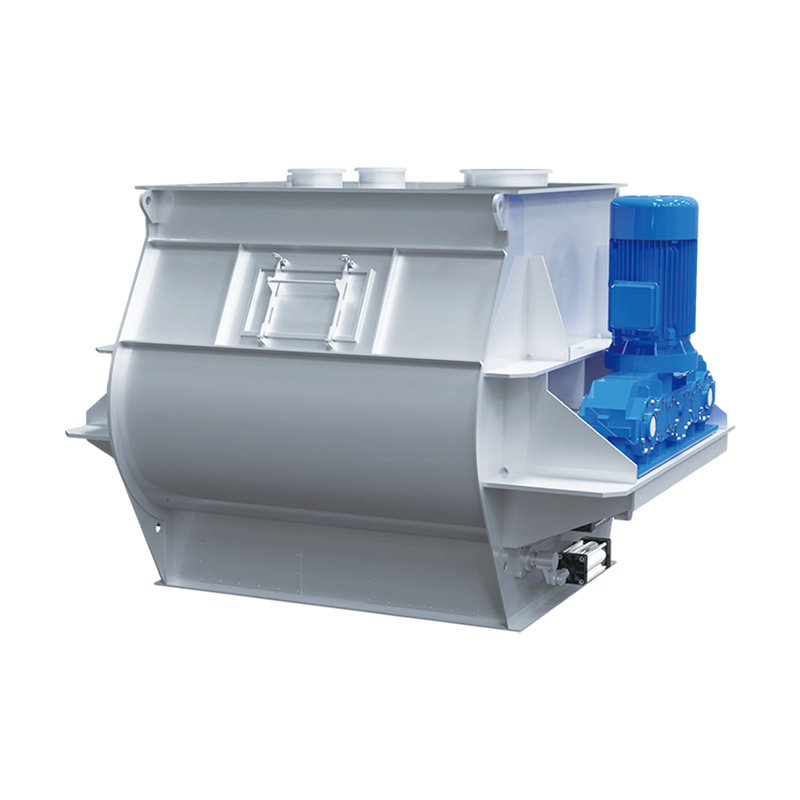 Double Shaft Paddle Mixer
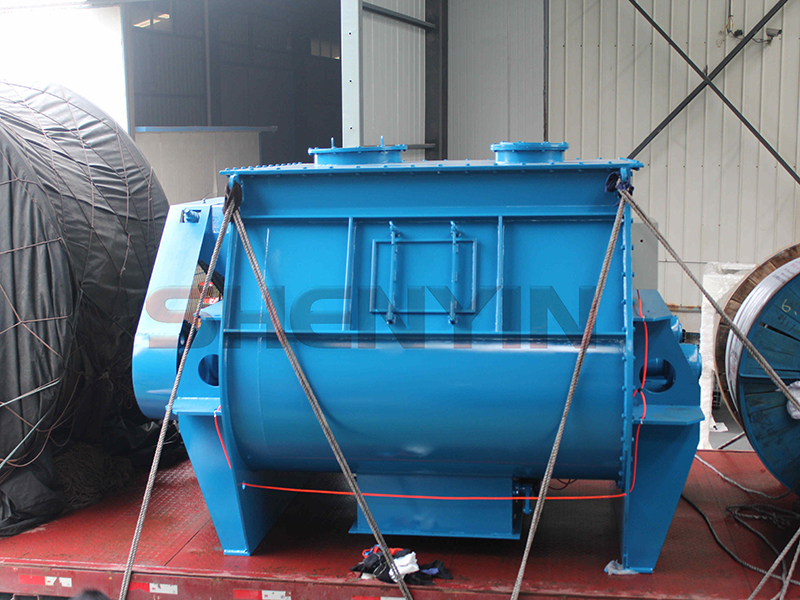
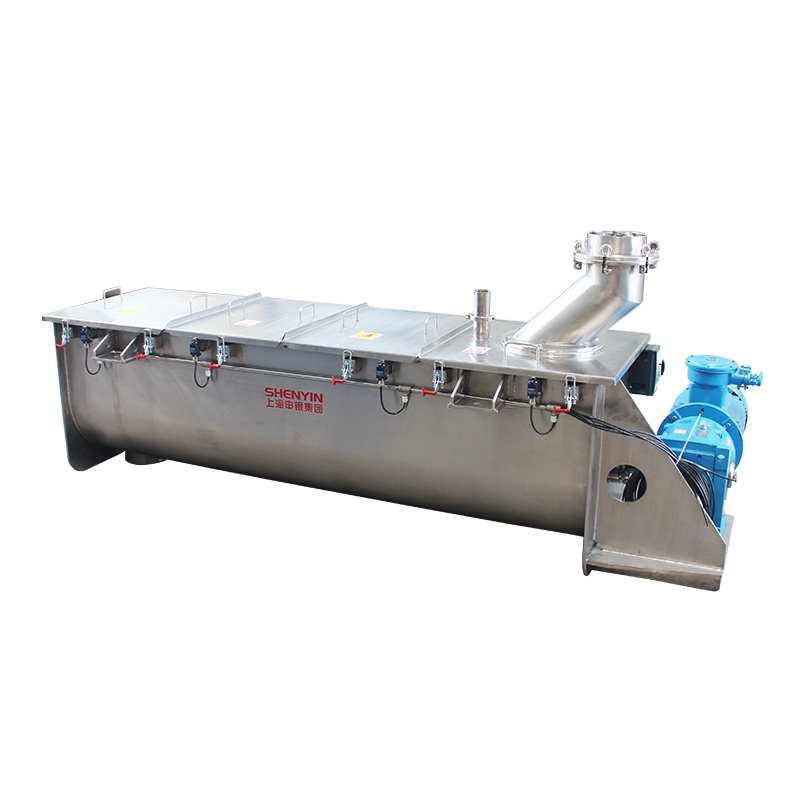 CM Series Mixer




What Key Technical Specifications Should You Evaluate When Selecting a CM Series Mixer?
Quick Answer:When selecting a CM Series mixer, the technical specifications that matter most are total volume (0.3–30 m³), hourly capacity (5–200 m³/h), motor power (3–200 kW), and construction material (316L, 304, or mild steel). However, the decisive specification is often the mixer subtype: the CMS single-shaft Plough Mixer prioritizes mixing with conveying capability, while the CMD twin-shaft paddle mixer maximizes throughput for fibrous and granular materials. Beyond catalog numbers, buyers must verify whether the feeder system can sustain the continuous mixing rate, confirm the material’s behavior under shear, and test homogeneity with actual formulations before committing to a configuration. [1] [8]
Key Takeaways:
Why the Mixer Subtype Is the First Specification to Resolve
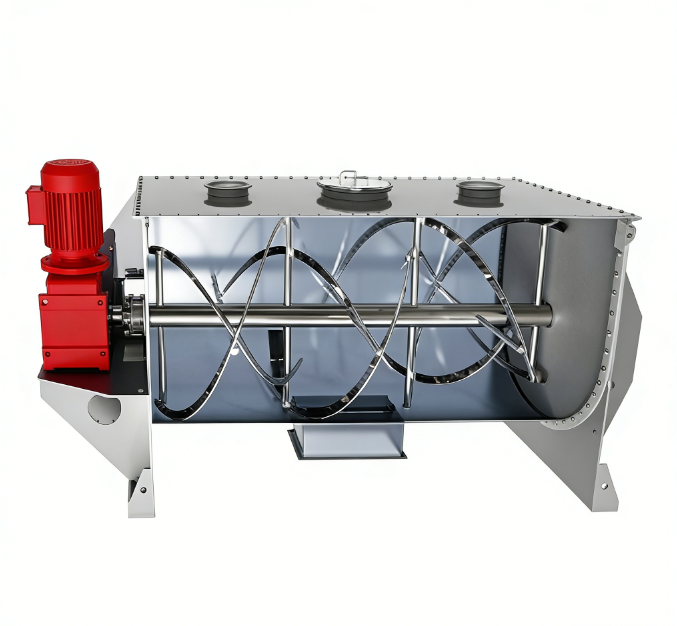
The CM Series encompasses two distinct continuous mixing architectures, and choosing the wrong one cannot be corrected by adjusting volume or motor power later. The CMS (Continuous Single Shaft Plough Mixer) uses a single shaft with plough-shaped tools that fluidize the material bed, creating a mixing action that also conveys material along the cylinder. This design adapts to a range of feeding speeds and is suited to applications where mixing and transport occur in one step. [1]
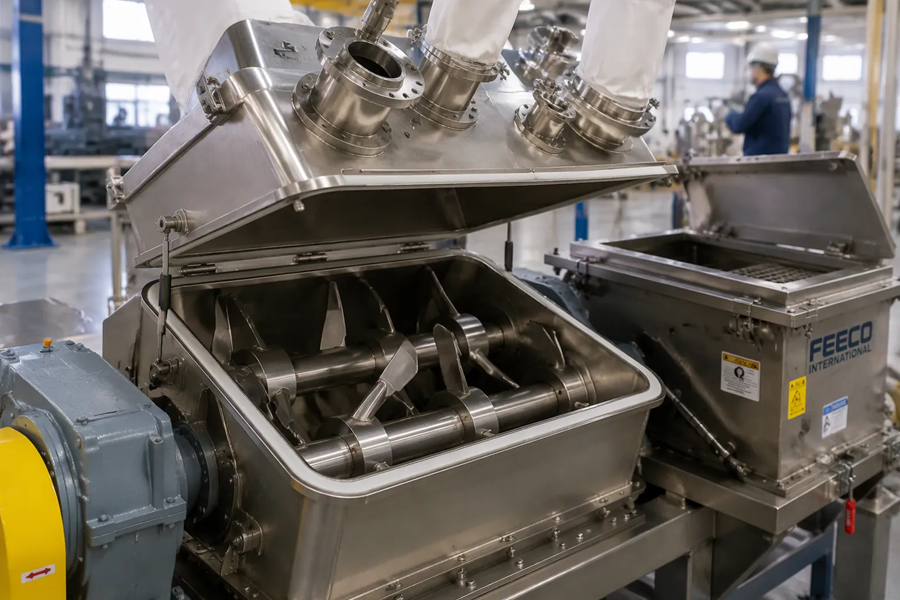
The CMD (Continuous Double Shaft Paddle Mixer) uses two intermeshing paddle shafts that violently scatter, diffuse, and knead material in the gap between the shafts. The CMD is engineered for maximum throughput and is specifically recommended for fiber and granule mixing, where the aggressive mechanical action breaks up agglomerates and distributes fibrous components. [1][8]
A procurement team that specifies “CM Series, 10 m³/h” without resolving CMS versus CMD may receive a mixer that technically meets the volumetric requirement but performs poorly on the actual material. For a formulation containing fibrous ingredients, the CMS’s gentler plough action may leave fiber bundles intact. For a simple free-flowing powder blend where conveying is desired, the CMD’s aggressive mixing is unnecessary energy expenditure.
| Specification | CMS (Single Shaft Plough) | CMD (Double Shaft Paddle) |
|---|---|---|
| Primary function | Mixing with conveying capability | Maximum mixing intensity and throughput |
| Shaft configuration | Single shaft, plough tools | Twin intermeshing paddle shafts |
| Best suited materials | General powders, free-flowing blends | Fibers, granules, materials requiring de-agglomeration |
| Feed speed adaptability | Adapts to a range of feeding speeds | Optimized for high-volume, consistent feed |
| When to choose | Mixing and transport in one step; variable feed conditions | Maximum productivity; fibrous or granular formulations |
Capacity, Volume, and the Feeding System Trap
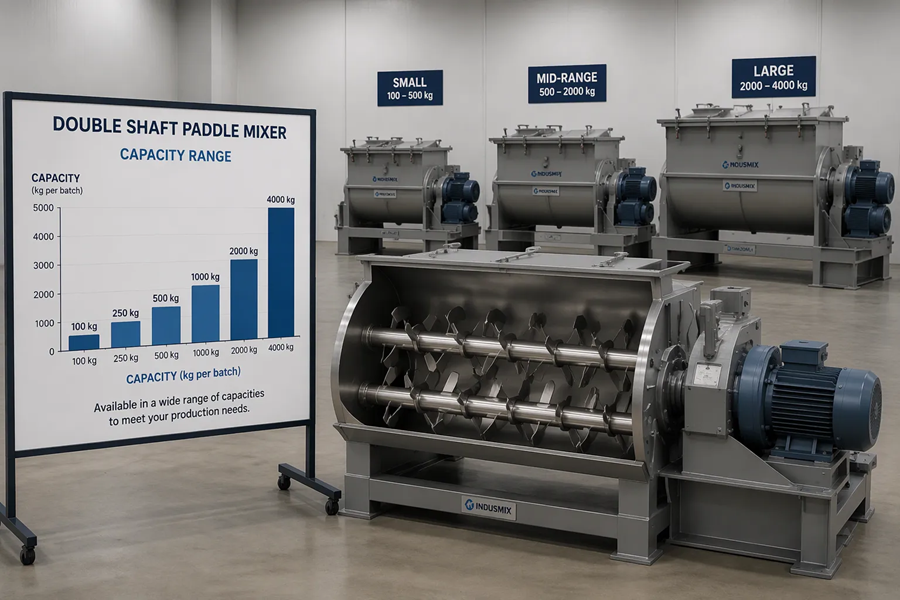
The CM Series catalog lists total volume from 0.3 to 30 m³ and capacity per hour from 5 to 200 m³/h. These ranges describe the envelope of available models, not the performance of any single unit. The critical distinction is between total volume (the physical size of the mixing cylinder) and working capacity (the actual throughput achieved under production conditions). [1]
Continuous mixers operate on a fundamentally different principle from batch mixers. Material flows through the vessel continuously, and the residence time—the average duration a particle spends inside the mixer—determines whether adequate homogeneity is achieved. Residence time is controlled by three variables: the speed of the conveying equipment feeding the mixer, the rotation speed of the mixing shaft, and the discharge speed. The mixer’s productivity is therefore determined by the feeding system’s speed, not by the mixer’s motor power or cylinder volume alone. [1][8]
This has a direct procurement implication. A buyer who specifies a 100 m³/h mixer but installs a feeding system capable of only 60 m³/h has purchased capacity that cannot be used. Conversely, a mixer sized for 50 m³/h paired with an oversized feeder will be flooded, reducing residence time below the minimum required for homogeneity. The specifications that must be evaluated together are:
- Feeder accuracy and turndown ratio: Can the feeding equipment deliver the formulation ratio consistently across the production rate range?
- Discharge handling capacity: Downstream equipment must remove material as fast as the mixer discharges it; blockage at discharge backs up the entire line. [8]
- Residence time at target throughput: Confirm the mixer geometry and shaft speed produce adequate blending at the intended feed rate.
The supplier’s notice explicitly states that stable and continuous feeding must be ensured, and that the correct feeding speed ratio according to the material formula is a precondition for satisfactory operation. This is not a minor caveat; it is the operating principle of continuous mixing. [1]
Material Construction and Contact-Part Specifications
The CM Series offers three construction materials: 316L stainless steel, 304 stainless steel, and mild steel. The selection is driven by the chemical aggressiveness of the material being mixed, hygiene requirements, and budget. [1]
316L stainless steel contains molybdenum, which improves resistance to chlorides and reducing acids. It is the appropriate choice for chemical processing involving corrosive additives, food and pharmaceutical applications requiring cleanability and corrosion resistance, and any process where iron contamination would degrade the product.
304 stainless steel provides good general corrosion resistance at lower cost than 316L. It is suitable for many food and building material applications where the material is non-corrosive and hygiene requirements are moderate.
Mild steel is the lowest-cost option and is appropriate only for applications where contamination from iron or rust is acceptable—for example, certain building material mixes or mining applications where the product specification does not include metal content limits.
The construction material affects not only the wetted surfaces but also the service life of the plough or paddle tools. Abrasive materials accelerate wear on mild steel components; 316L or 304 with appropriate surface treatment may be specified when abrasion resistance is a concern. Buyers should confirm whether the supplier offers wear-resistant coatings or replaceable wear plates for the specific material being processed.
The Material Behavior Test That Catalog Specifications Cannot Replace
Continuous mixer selection based on bulk density and particle size alone is insufficient. Real-world mixing performance is shaped by how materials flow, compact, smear, segregate, absorb liquids, and respond to shear forces. A material that flows freely in a laboratory beaker may compact and bridge in a production-scale hopper. A formulation that mixes homogeneously in a bench-scale blender may segregate in a continuous mixer if the residence time distribution is too broad. [3]
The reliable approach is pilot testing with the actual formulation under representative conditions. The supplier’s process knowledge and testing capability matter more than any single specification number. Questions to ask during evaluation include:
- Has the supplier tested this material or a similar one in a CM Series mixer?
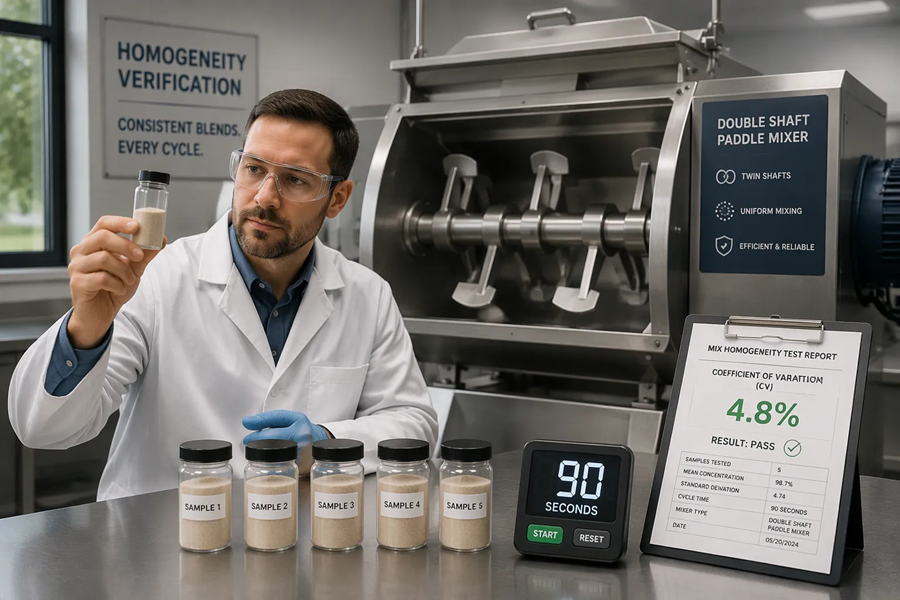
- What homogeneity was achieved, and how was it measured? (Coefficient of variation, standard deviation across samples, or another metric)
- What residence time was required to achieve that homogeneity?
- What feeding equipment configuration was used in the test?
For formulations containing minor ingredients below 5%, the supplier’s guidance is unambiguous: these additives should be premixed before loading into the continuous mixer. A continuous mixer’s residence time is typically too short to distribute trace components uniformly if they are fed separately. Pre-blending the minor ingredients into a master batch—a practice established in batch mixing as well—ensures that the small component is already dispersed before entering the continuous mixer’s short-residence environment. [1][8][10]
Optional Configurations and Their Specification Impact
The SYCM series offers four primary agitation configurations: plough type, ribbon type, paddle type, and double-shaft paddle type. The availability of these options means that “CM Series” is not a single specification but a family of related designs. Each configuration creates different material flow patterns and mixing mechanisms. [1][3][8]
For materials prone to agglomeration or clumping, high-speed flying knives can be added to the mixing chamber. These knives break up lumps that the primary agitator cannot disperse, extending the mixer’s capability to cohesive materials. [1][8]
The specification evaluation should therefore include a question about the material’s tendency to agglomerate. If the answer is “yes” or “sometimes, depending on moisture,” the flying knife option should be priced and included in the technical comparison. A mixer specified without the de-agglomeration capability that the material requires will produce inconsistent output regardless of how well the volume and motor power match the production target.
| Configuration Decision | Specification to Verify | Consequence of Getting It Wrong |
|---|---|---|
| Agitator type (plough/ribbon/paddle/dual-shaft) | Match to material flow behavior and mixing objective | Poor homogeneity, excessive residence time, or dead zones |
| Flying knives for agglomerates | Confirm necessity with material testing | Lumps pass through to product; downstream rejects |
| Wear protection for abrasives | Tool material and replaceable wear parts | Accelerated wear, metal contamination, frequent shutdowns |
| Discharge configuration | Downstream handling capacity matches mixer output | Backflow, blockage, line stoppage |