
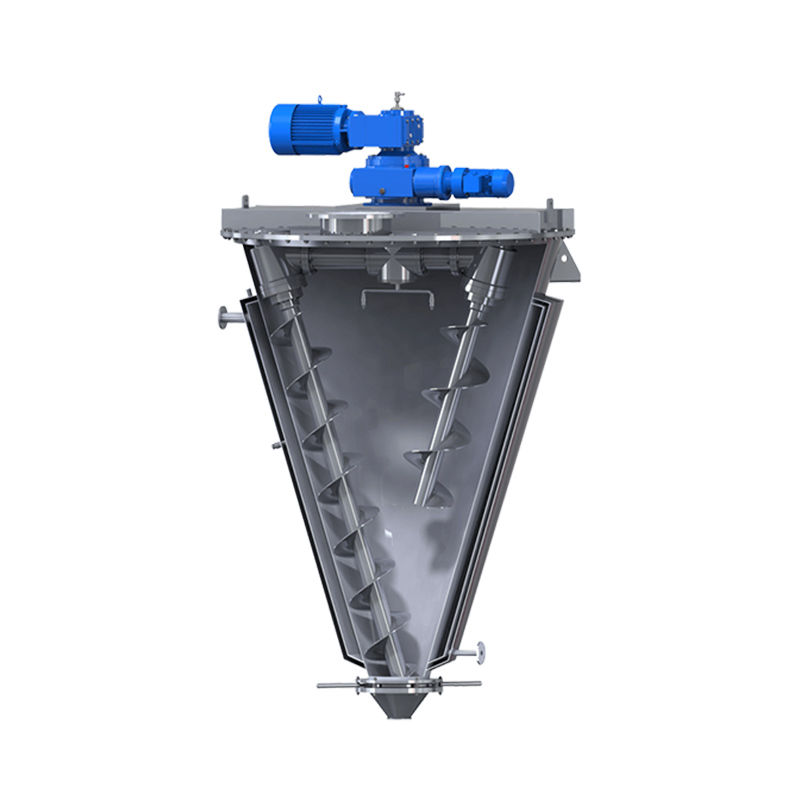
 Conical Screw Mixer
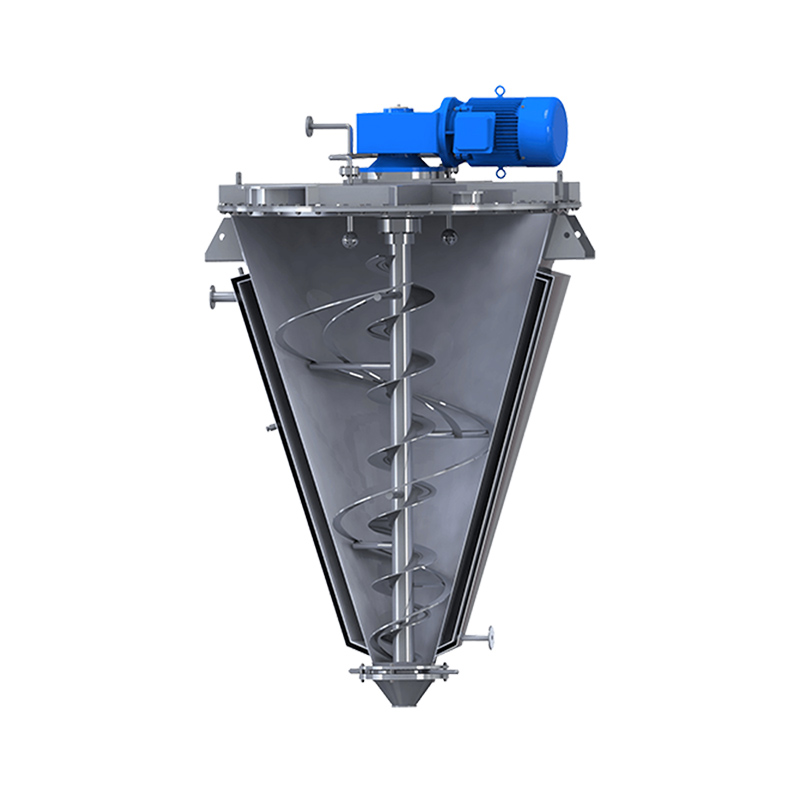 Conical Screw Belt Mixer
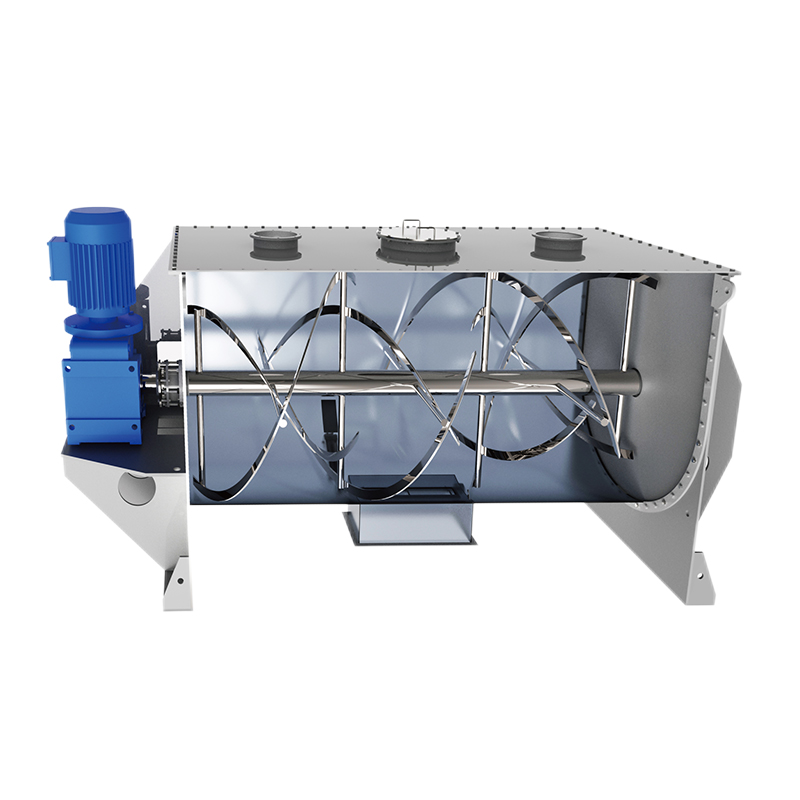 Ribbon Blender
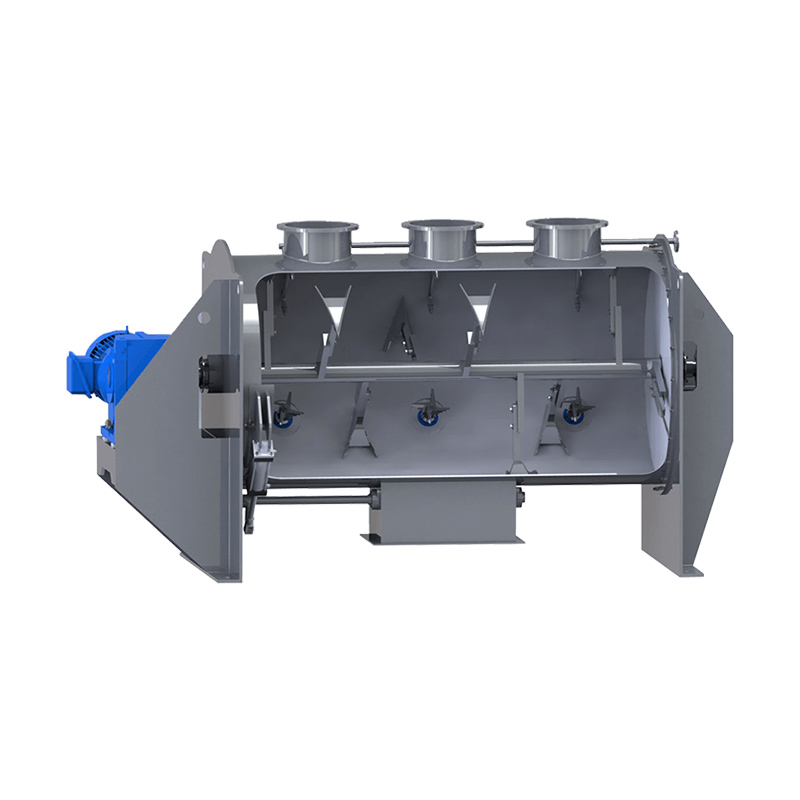 Plough-shear Mixer
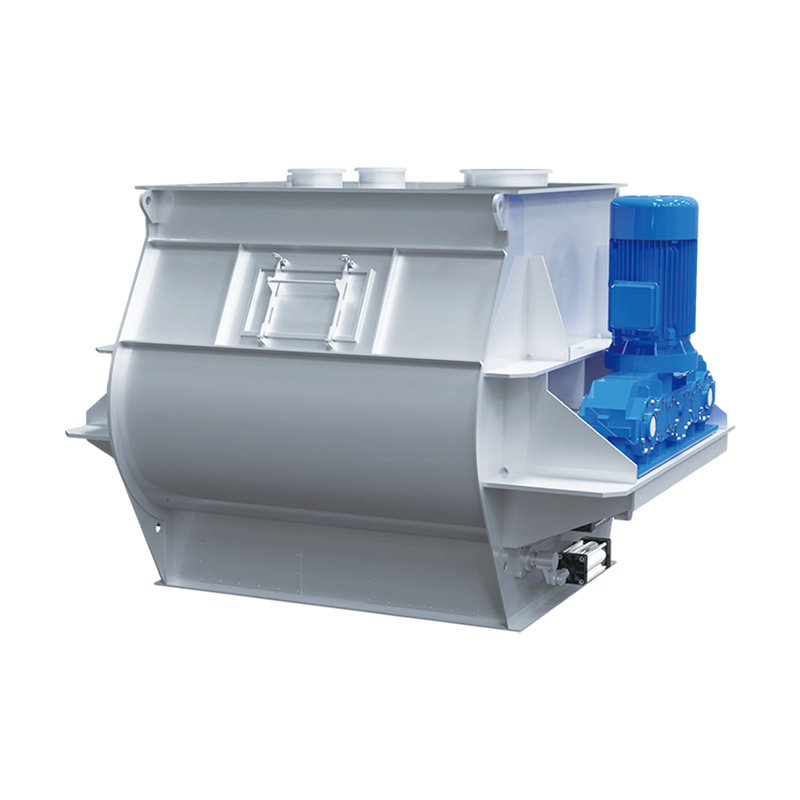 Double Shaft Paddle Mixer
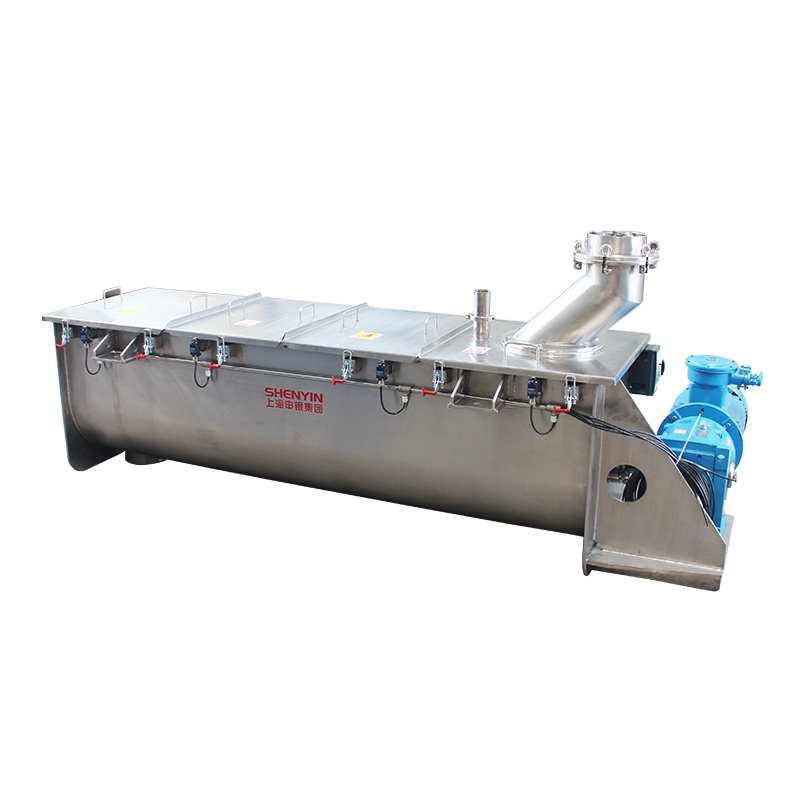 CM Series Mixer




What Common Sourcing Mistakes Should You Avoid When Importing an Industrial Ribbon Blender?
Quick Answer:The most costly sourcing mistakes when importing an industrial Ribbon Blender are not about price—they are about specification gaps, documentation failures, and supplier verification shortcuts. Buyers routinely under-specify material bulk density and working volume, accept CE certificates that do not match the actual machine, and pay in full before a pre-shipment inspection. A 2026 Austrian trade authority checklist for machinery imports from China identifies ten verification points, including manufacturer identity confirmation and EU Declaration of Conformity review at the quotation stage. For a ribbon blender, add process-specific risks: ribbon geometry mismatched to product flow behavior, discharge systems that do not suit the material, and cleaning access that fails a GMP audit. Avoiding these mistakes protects both capital and compliance.
Key Takeaways:
-
Sizing by total volume rather than working volume and bulk density is the most common technical error; a 500-cubic-foot machine does not deliver 500 cubic feet of usable batch capacity .
-
Accepting a CE certificate without verifying the Declaration of Conformity leaves the importer legally responsible for compliance in most jurisdictions .
-
Skipping a pre-shipment inspection means discovering missing documentation, incorrect voltage, or material certificate gaps after the machine has crossed an ocean.
-
Paying 100% in advance eliminates all leverage if the delivered machine does not match the specification .
-
Ignoring ribbon geometry and discharge design creates cleaning and segregation problems that cost more to retrofit than to specify correctly upfront.
Mistake 1: Sizing the Ribbon Blender by Total Volume Instead of Working Volume
The single most common technical sourcing error is selecting a ribbon blender based on its total geometric volume rather than its effective working capacity for the specific product. A ribbon blender rated at 2,000 liters total volume may have an optimal working range of only 1,200 to 1,500 liters for a free-flowing powder at typical bulk density . Fill level directly affects mixing performance: underfilling prevents the ribbons from engaging the product mass properly, while overfilling reduces circulation efficiency and can overload the drive motor .
Bulk density is the variable that connects volume to mass. A blender sized for a light powder at 0.3 kg/L will be severely undersized if the same volume is used for a dense mineral at 1.2 kg/L. Buyers who begin with “I need 500 kg per batch” and work backward through density to required volume avoid this trap. Buyers who begin with “I need a 1,000-liter blender” without checking density may discover the machine cannot handle the batch weight their production plan requires .
Practical benchmark:Ribbon Blenders typically operate best at 60–75% of vessel volume for dry powder blending. Specify the working volume range in the purchase contract, not just the total volume on the nameplate.
Mistake 2: Treating CE Certification as a Box to Check Rather Than a Document to Verify
A CE mark on a brochure or a certificate PDF is not evidence that the specific machine offered meets European requirements. The Austrian Federal Economic Chamber’s 2026 import checklist states explicitly that “the presence of a CE mark alone is not proof that all European requirements are fulfilled” and that individual test reports or certificates do not automatically replace the manufacturer’s required documentation . The legally operative document is the EU Declaration of Conformity, which must name the manufacturer, identify the specific product and model, cite the applicable directives, and bear a signature and date .
The importer bears responsibility for compliance in most jurisdictions, not the Chinese manufacturer . If the Declaration of Conformity references a different model than the one shipped, or if the manufacturer’s name on the declaration does not match the entity on the commercial invoice, the importer has a compliance problem that customs authorities may not catch—but a notified body audit will.
Verification step: Request the Declaration of Conformity at the quotation stage, not after the order is placed. Cross-check the model number against the technical proposal, the nameplate photo, and the operating manual .
Mistake 3: Under-Specifying the Ribbon Geometry and Discharge System
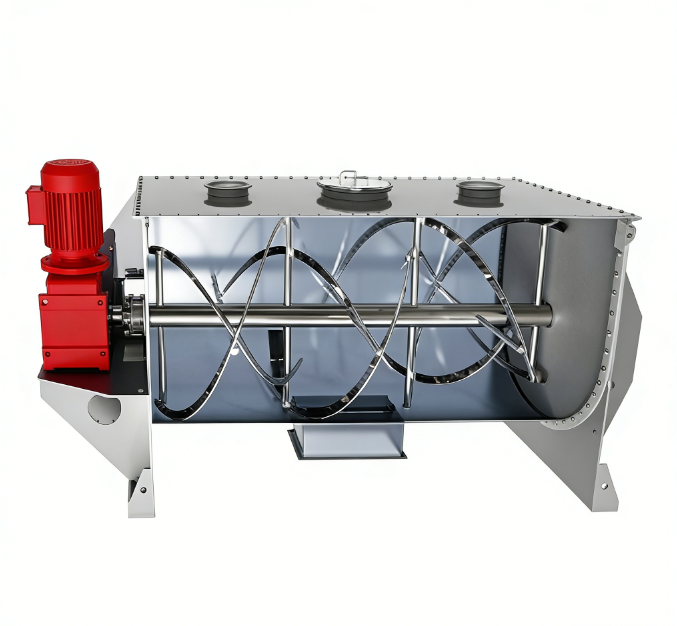
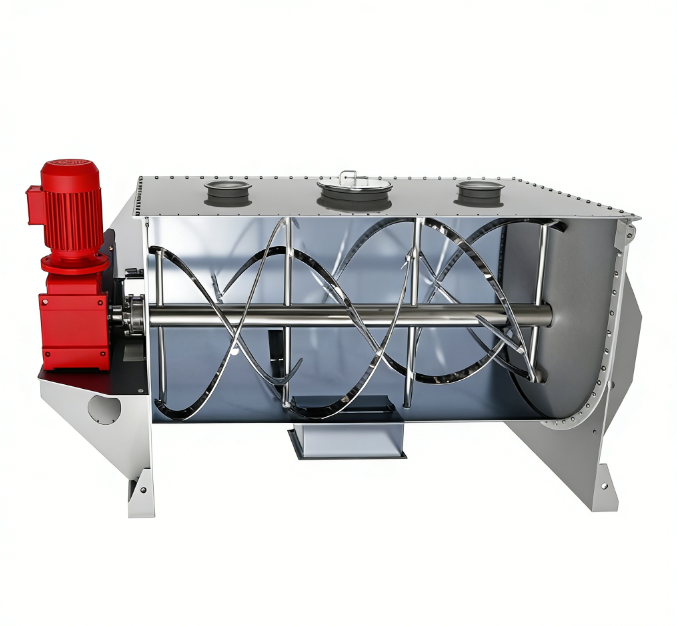
Ribbon geometry and discharge valve selection are application-specific decisions that cannot be left to the supplier’s default configuration. The standard double-ribbon design works well for free-flowing powders with consistent particle size, but formulations with wide particle size distribution, low-density ingredients, or sticky components require modifications that a generic quotation will not include .
For products prone to segregation, the discharge system matters as much as the mixing action. A full-length knife gate valve discharges the entire trough simultaneously, minimizing the chance for segregated material to stratify during emptying. A center discharge or a small outlet valve may leave material in the trough ends where the ribbons cannot sweep efficiently. Shenyin’s SYLW series addresses this with a patented scraper structure at both ends of the spindle, designed to eliminate dead zones common in conventional horizontal ribbon blenders . Whether that feature is necessary depends on the product’s flow behavior—but the buyer must ask the question, not assume the standard design covers it.
Liquid addition is another commonly under-specified capability. Many ribbon blenders can incorporate liquids via spray nozzles, but the threshold at which a formulation shifts from free-flowing to sticky—coating the ribbons and trough walls—varies by product . Buyers planning liquid addition must specify the maximum liquid percentage and request the supplier’s experience with similar formulations.
Mistake 4: Accepting Payment Terms That Eliminate Buyer Leverage
Full advance payment before shipment transfers all risk to the buyer and is explicitly identified as a risk factor in machinery import guidance. The Austrian trade chamber checklist advises avoiding 100% prepayment where possible and structuring payment in stages tied to documented milestones: order confirmation, pre-shipment inspection, and delivery .
A staged payment structure for a ribbon blender import might look like:
-
30% deposit upon order confirmation and receipt of approved technical drawings
-
60% before shipment after successful pre-shipment inspection and document review
-
10% after installation and commissioning at the buyer’s site
The pre-shipment inspection is the critical leverage point. Without it, the buyer is paying for a machine they have not seen, built to a specification that may have drifted during fabrication.
Mistake 5: Skipping the Pre-Shipment Inspection and Document Audit
A pre-shipment inspection catches the errors that are cheap to fix before the machine leaves the factory and expensive to resolve after it arrives. For a ribbon blender, the inspection should verify four categories: physical configuration against the approved drawings, material certificates for product-contact surfaces, electrical configuration for the destination country’s voltage and frequency, and the documentation package required for customs clearance and compliance .
The documentation audit is where many imports fail. The Austrian checklist requires verification that model designations match across the quotation, Declaration of Conformity, nameplate, and technical documents, and that photos show the actual model offered, not a stock image . For a ribbon blender, the nameplate should show the manufacturer name and address, model designation, year of construction, and CE mark where applicable. Missing or mismatched nameplate information is a warning sign that the documentation does not correspond to the physical machine .
Material certificates for the trough, ribbons, and discharge valve are equally important. A supplier may specify 304 stainless steel in the quotation but fabricate the agitator from a lower grade. The material certificate (EN 10204 3.1 or equivalent) links the actual heat of steel used to the finished component.
Mistake 6: Neglecting After-Sales Support and Spare Parts Logistics
The landed cost of an imported ribbon blender includes the cost of every future spare part shipment, and buyers who do not plan for this pay a premium in downtime. A failed bearing or shaft seal that costs $200 in China can become a two-to-four-week production interruption when international shipping, customs clearance, and factory response time are added .
The sourcing decision should include a spare parts strategy before the order is placed. Critical wear components for a ribbon blender include shaft seals, discharge valve seats, drive belts or couplings, and bearing assemblies. Buyers should request a recommended spare parts list with pricing and lead times, and consider ordering a first-year spares kit with the machine to avoid separate international shipments later.
Service capability is equally important. Does the supplier have engineers who can support installation and commissioning remotely, or provide on-site support if needed? Shenyin’s product pages reference overseas engineering support as an available service, but the terms—who pays travel costs, what response time is guaranteed—should be negotiated into the contract, not assumed .
Sourcing Verification Checklist for Ribbon Blender Import
FAQ
What is the biggest mistake buyers make when importing a ribbon blender from China?
Sizing the machine by total volume instead of working volume and bulk density. A blender that looks large enough on paper may be unable to process the batch weight required because the product density was never verified. Specify working volume and density in the technical proposal, not just total liters .
Do I need a CE certificate for a ribbon blender imported into the EU?
Yes, but the legally required document is the EU Declaration of Conformity, not a certificate. The Declaration must name the manufacturer, identify the specific model, and cite the applicable Machinery Directive. A CE mark alone does not demonstrate compliance .
How can I verify the stainless steel grade before the machine ships?
Request EN 10204 3.1 material certificates for the trough, ribbons, and discharge valve. These certificates trace the steel to the original mill heat and state the actual grade. A supplier who cannot provide mill certificates for product-contact surfaces is a risk.
What payment terms are reasonable for a ribbon blender import?
A staged structure with 30% deposit, 60% before shipment after inspection, and 10% after commissioning is reasonable. Avoid 100% advance payment, which eliminates your leverage if the machine does not match the specification .
Should I visit the factory or hire an inspector?
A third-party pre-shipment inspection is the minimum. A factory visit is valuable for assessing fabrication capability and quality control, but it does not replace an inspection of the finished machine against your specification before shipment .
What spare parts should I order with the ribbon blender?
Request a recommended first-year spares kit including shaft seals, discharge valve seats, drive belts or couplings, and bearing assemblies. Ordering these with the machine avoids separate international shipments when a component fails.
How do I know if the ribbon blender will handle my product without segregation?
The supplier should ask for your product’s particle size distribution and density range, and should be able to describe experience with similar materials. If the supplier does not ask about product characteristics before quoting, the configuration is likely a generic default, not an application-specific design .
For specifications on Shenyin’s ribbon blender configurations, including the SYLW series with end-scraper design and CE-certified models, visit the high-quality ribbon blender product page. Related equipment includes the small ribbon mixer for laboratory and small-batch production and the CE certification ribbon mixer.