
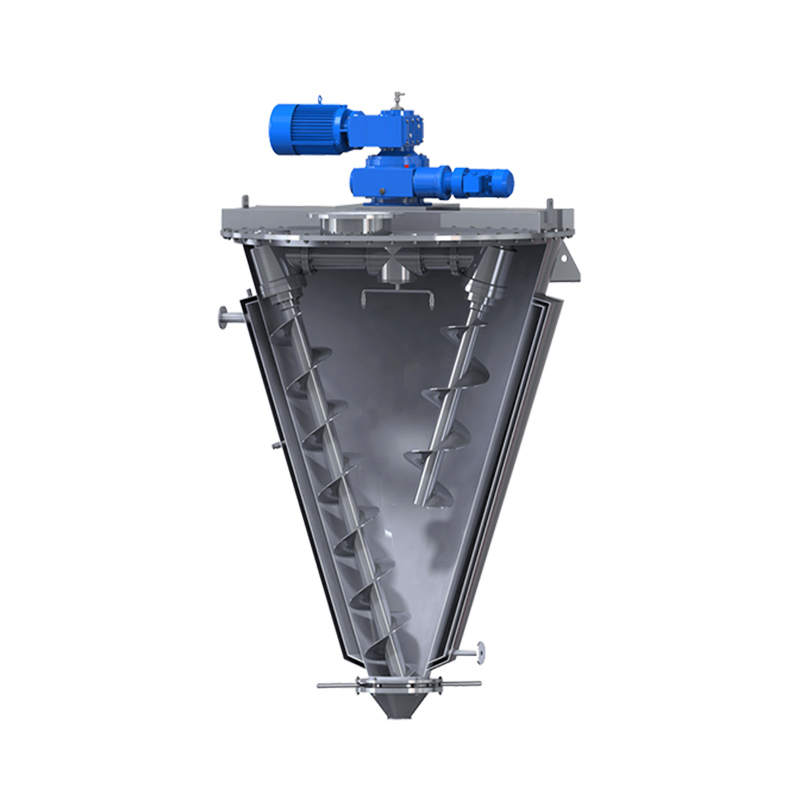
 Conical Screw Mixer
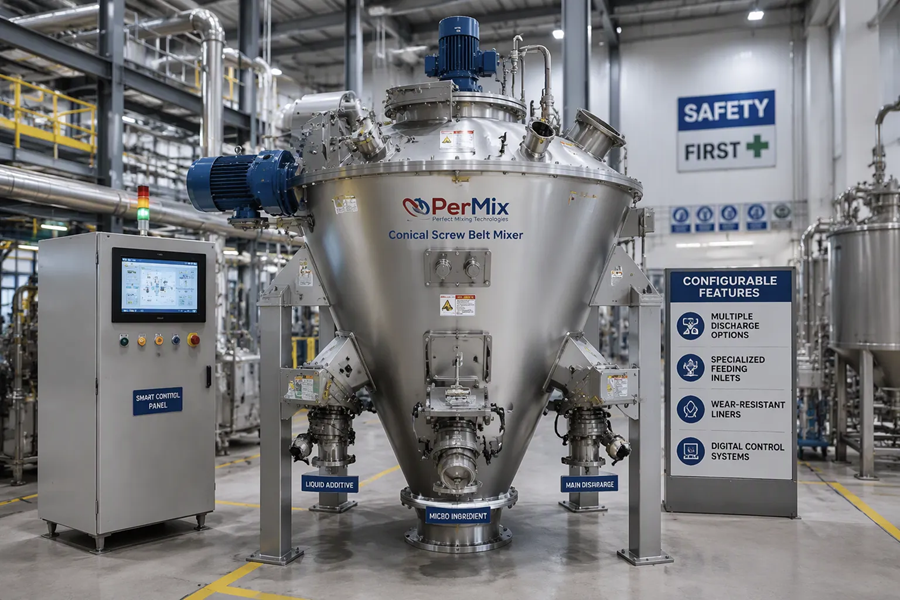
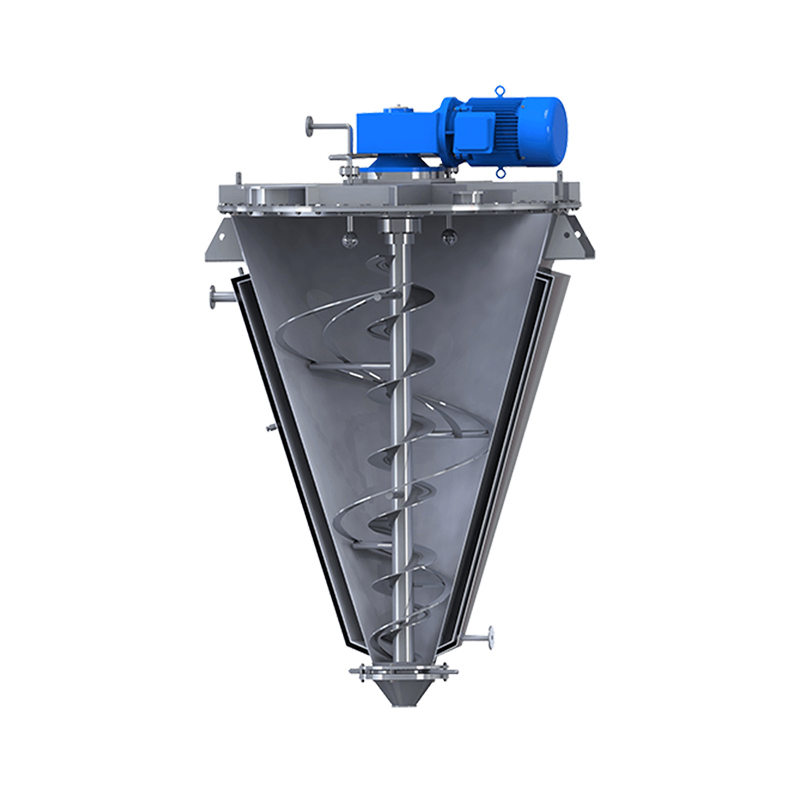 Conical Screw Belt Mixer
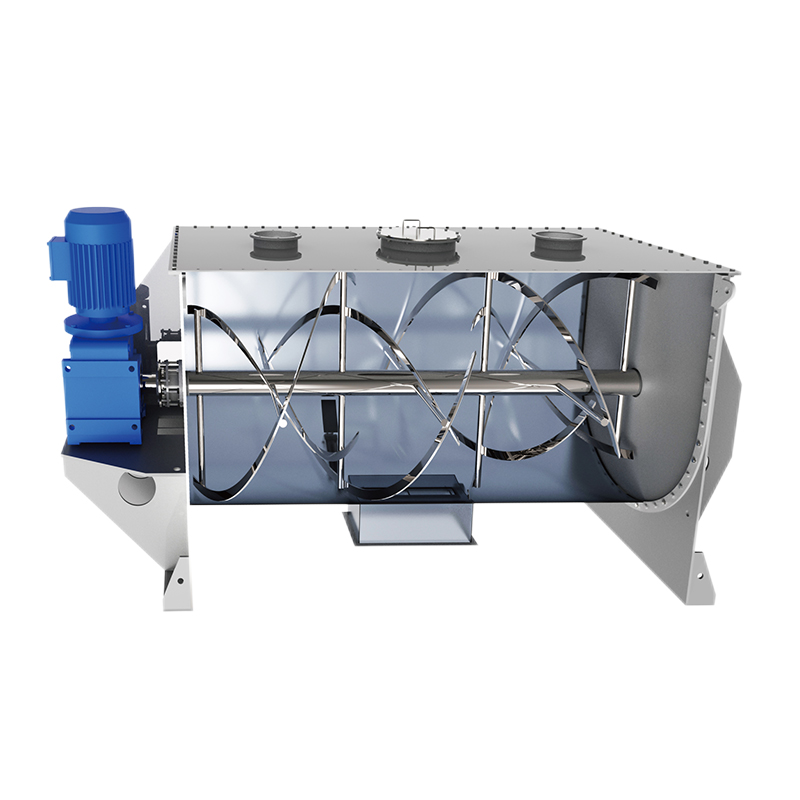 Ribbon Blender
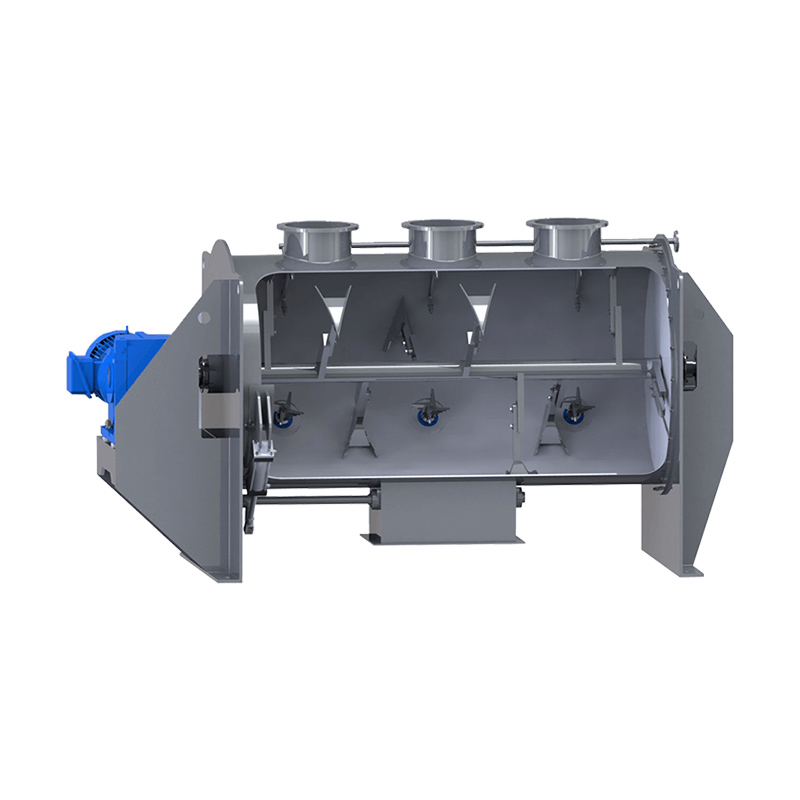 Plough-shear Mixer
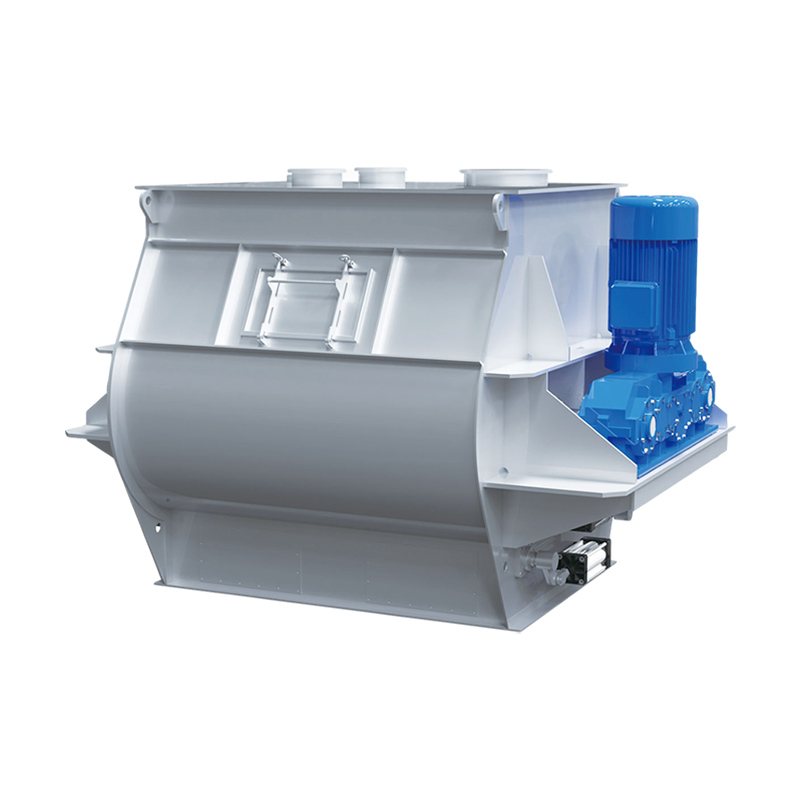 Double Shaft Paddle Mixer
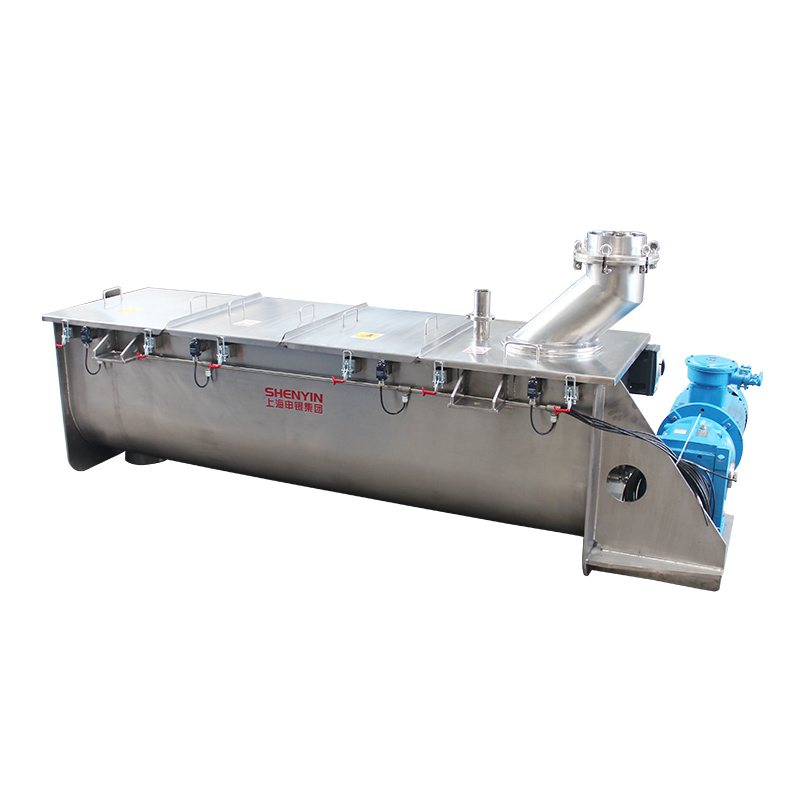 CM Series Mixer


How to Select Proper Ribbon Blender Volume to Match Your Batch Production Throughput?
Quick Answer:To select the proper ribbon blender volume, work backward from your required batch weight and product bulk density to calculate the working volume—not the total vessel volume. Ribbon Blenders perform optimally when filled to40–80% of total geometric capacity, with 60–70% being the practical target for most formulations.
Key Takeaways
- Total volume ≠ working volume: A 1,000-liter vessel typically processes only 400–800 liters of actual product per batch.
- Bulk density is the critical conversion factor: Low-density powders may require vessels twice the size that weight-based estimates suggest.
- The 30–40% fill floor matters:Below 30% of rated capacity, Ribbon Agitators fail to generate adequate product contact and mixing action.
- Optimal fill range is 40–80%, with 60% often cited as the maximum for heavy bulk-density materials.
- Throughput planning must account for real cycle times: A 15-minute blend cycle actually consumes 20–25 minutes when loading, discharge, and cleaning are included.
The Fundamental Sizing Principle: Volume, Not Weight
Ribbon blenders are sized by working volume, not by batch weight—but weight is what production schedules track. The bridge between these two numbers is bulk density, and this is where most sizing errors originate. A blender that appears correctly sized for 2,000 kg of dense mineral powder will be dramatically undersized for 2,000 kg of lightweight aerated flour.
- Define the target batch weight: (in kg or lbs).
- Determine the bulk density: (kg/m³ or lb/ft³) of the material in its blended, settled state.
- Calculate required working volume: Batch weight ÷ Bulk density = Working volume.
- Apply the fill ratio: Working volume ÷ Target fill ratio (0.6–0.7) = Required total vessel volume.
- Select the nearest standard model that accommodates this volume.
Why the 40–80% Fill Range Governs Everything
The 40–80% fill range is the operating envelope within which ribbon agitators generate effective convective mixing. Below 30–40% fill, the ribbons spin in air; above 80% fill, material restricts circulation and creates dead zones.
Table 1: Ribbon Blender Volume Selection Reference (Shenyin Standard Models)
| Model | Total Volume (m³) | Working Volume (L) | Batch Weight (500kg/m³) | Motor (kW) |
|---|---|---|---|---|
| SYLW-0.1 | 0.1 | 30–60 | 15–30 kg | 2.2 |
| SYLW-1 | 1.0 | 300–600 | 150–300 kg | 11 |
| SYLW-5 | 5.0 | 1,500–3,000 | 750–1,500 kg | 37 |
| SYLW-10 | 10.0 | 3,000–6,000 | 1,500–3,000 kg | 55 |
Matching Volume to Throughput: The Cycle Time Reality
Production throughput in kg/hour cannot be converted to batch size without accounting for realistic cycle times (Loading, Mixing, Discharge, Cleaning). For a 15-minute blend time, the total cycle may realistically consume 25–35 minutes.
Table 2: Volume Selection Decision Matrix
| Production Scenario | Fill Ratio | Priority |
|---|---|---|
| Single product, consistent density | 60–70% | Efficiency |
| Frequent partial batches | 40–60% | Low-end capability |
| Low-density, aerated powders | 60–75% | Larger vessel |
FAQ
Can I use a ribbon blender at 100% capacity?
No. Ribbon blenders should not exceed 80% of total vessel volume. Operating at 100% fill effectively turns the blender into a storage vessel with minimal mixing action.