
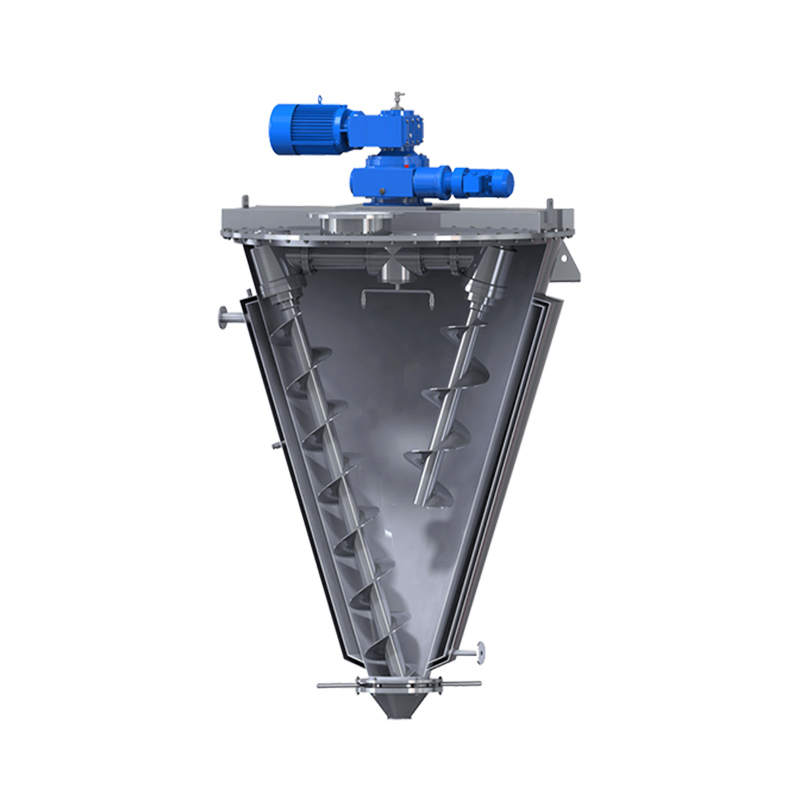
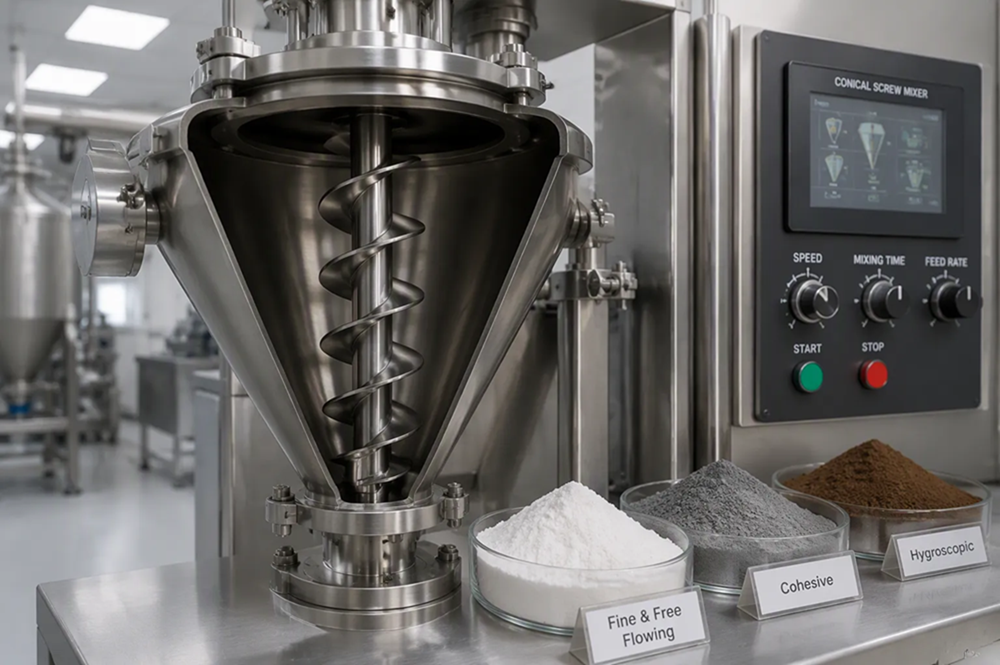
 Conical Screw Mixer
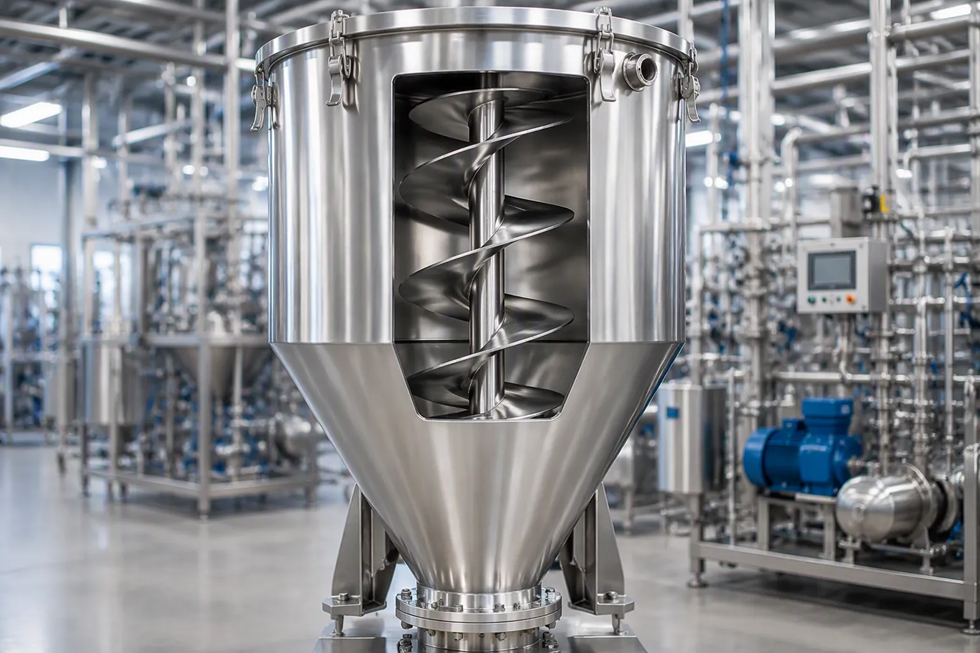
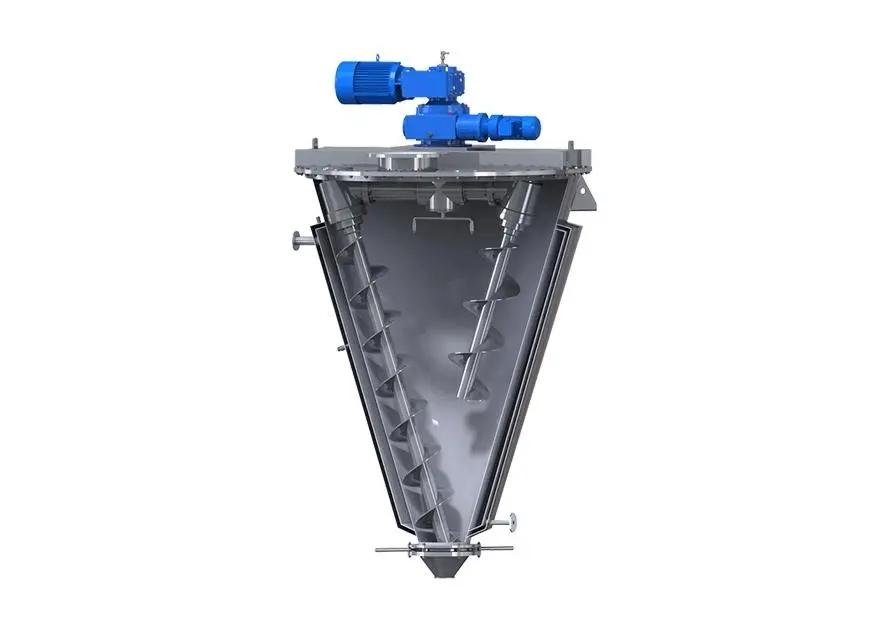
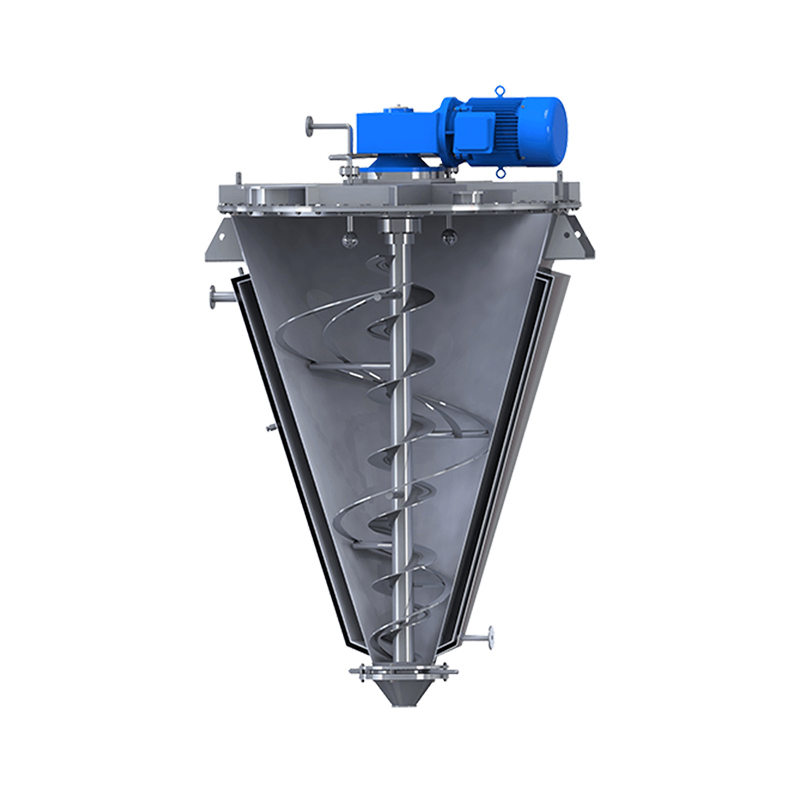 Conical Screw Belt Mixer
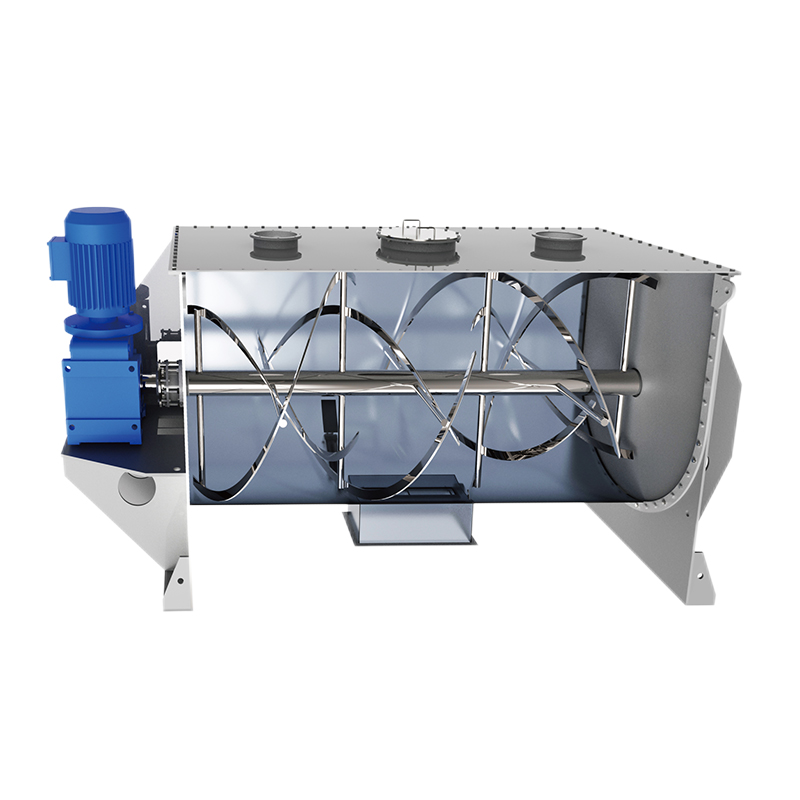 Ribbon Blender
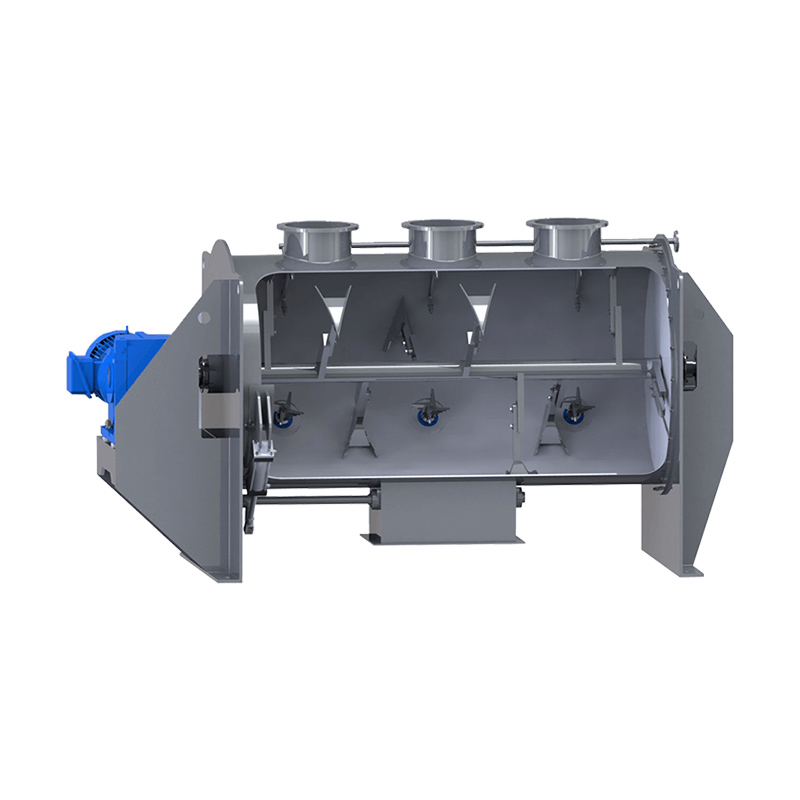 Plough-shear Mixer
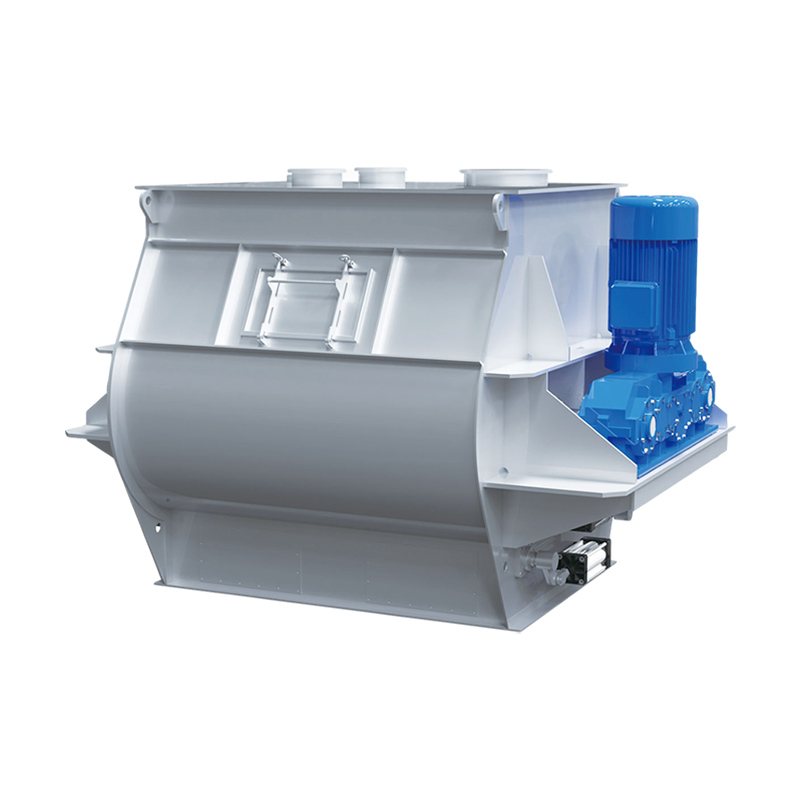 Double Shaft Paddle Mixer
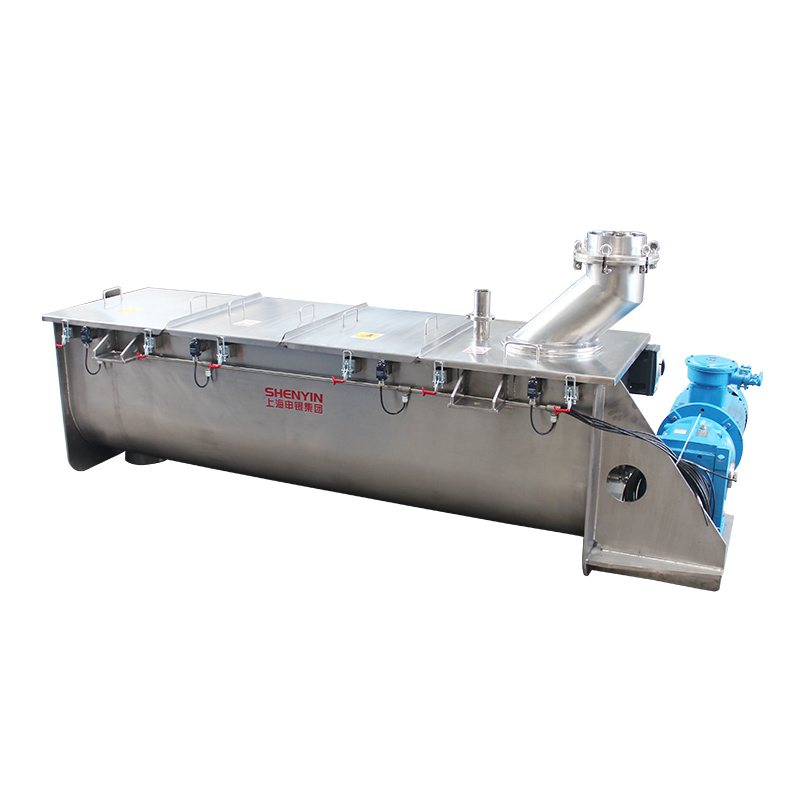 CM Series Mixer



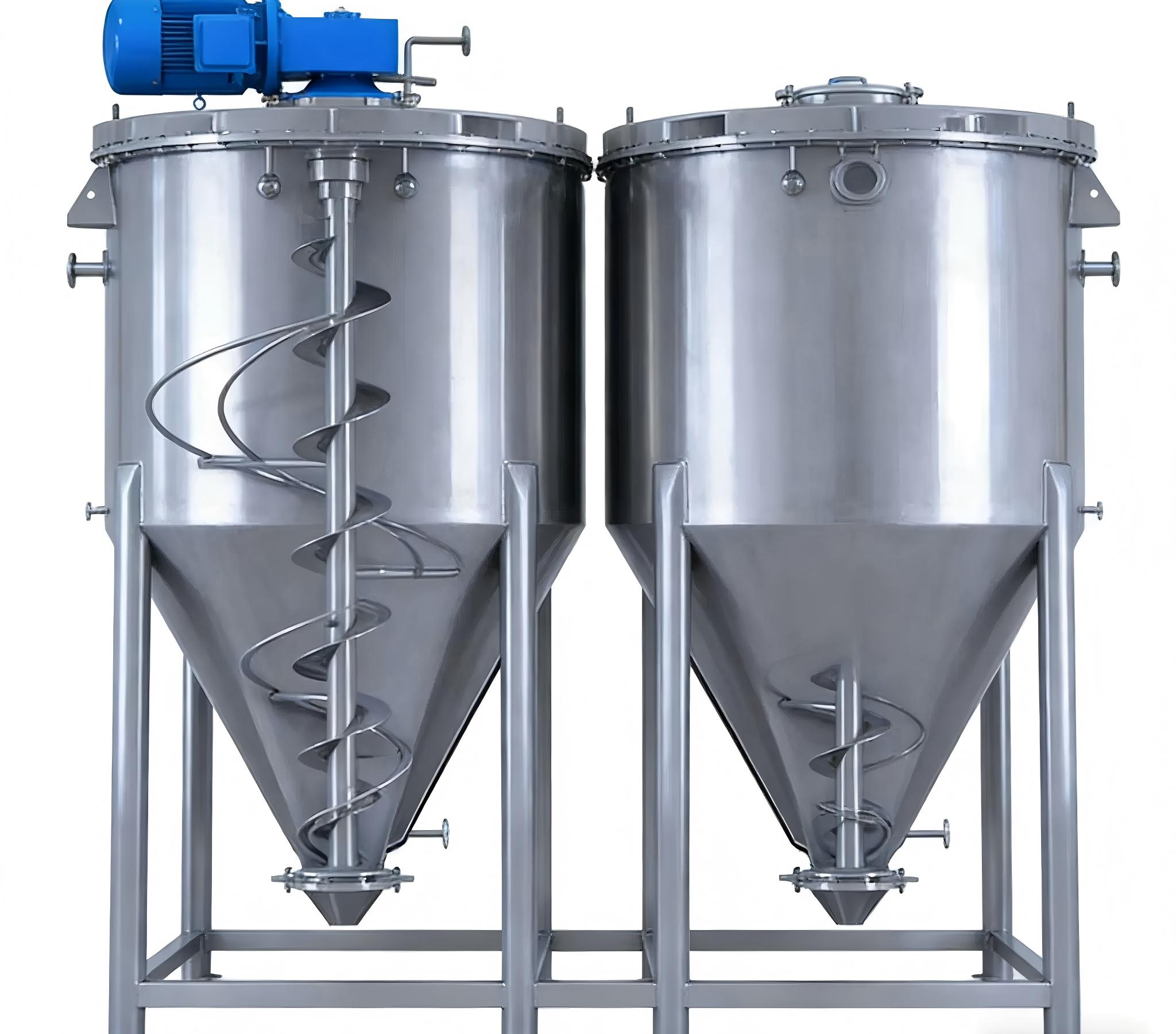
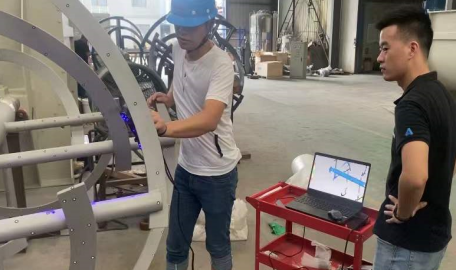
What Key Technical Parameters Should You Assess When Procuring a Conical Screw Belt Mixer?
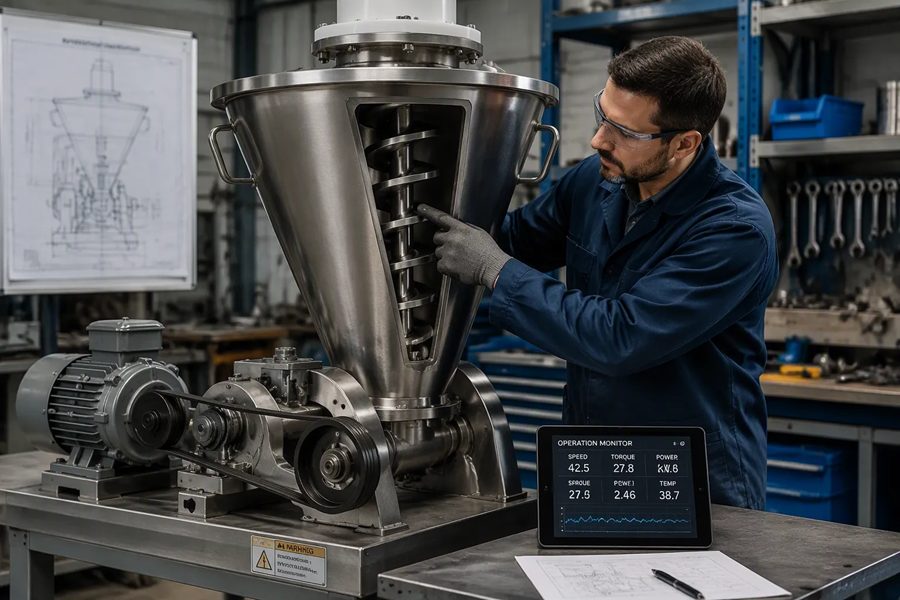
I assess five technical parameters when procuring a Conical Screw Belt Mixer: capacity, drive mechanics, material compatibility, thermal management, and discharge mechanisms. Each parameter directly affects blend quality, cycle time, and total cost of ownership. I verify these before comparing quotes. I explain each parameter below and close with a practical selection checklist.
Key Takeaways
- Check the mixer's capacity and drive first. This ensures it meets your production needs without wasting space or energy.
- Choose materials and thermal controls that match your product. This prevents contamination and equipment failure.
- Evaluate discharge, seals, and performance data. This guarantees efficient operation and high-quality mixing.
Capacity And Drive Of A Conical Screw Belt Mixer
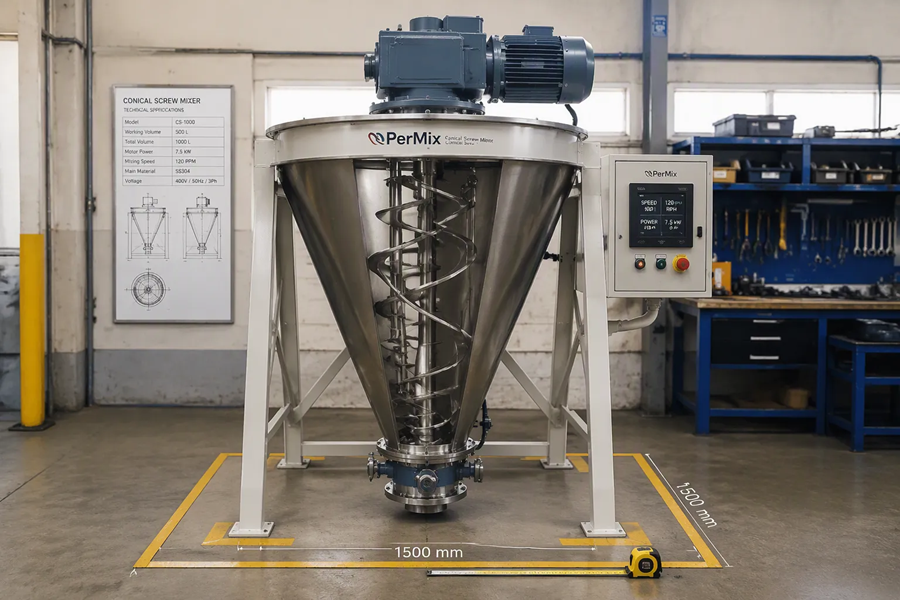
When I evaluate a Conical Screw Belt Mixer, capacity and drive mechanics form the foundation of my assessment. These two factors directly control whether the machine can meet my production targets without wasting floor space or energy. Getting both right prevents costly redesigns during installation and daily operation.
Working Volume And Footprint
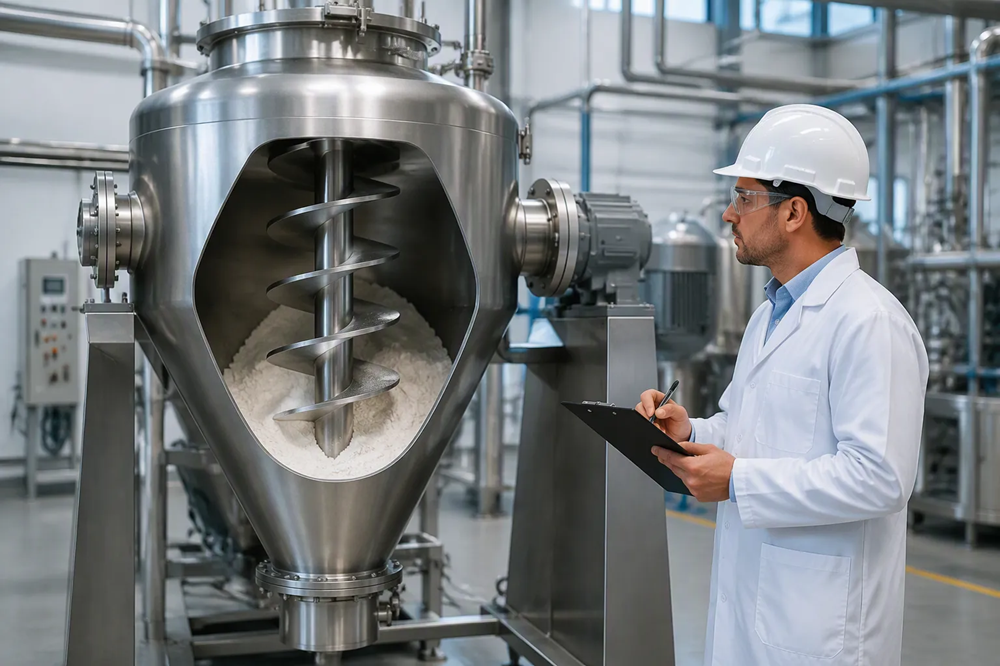
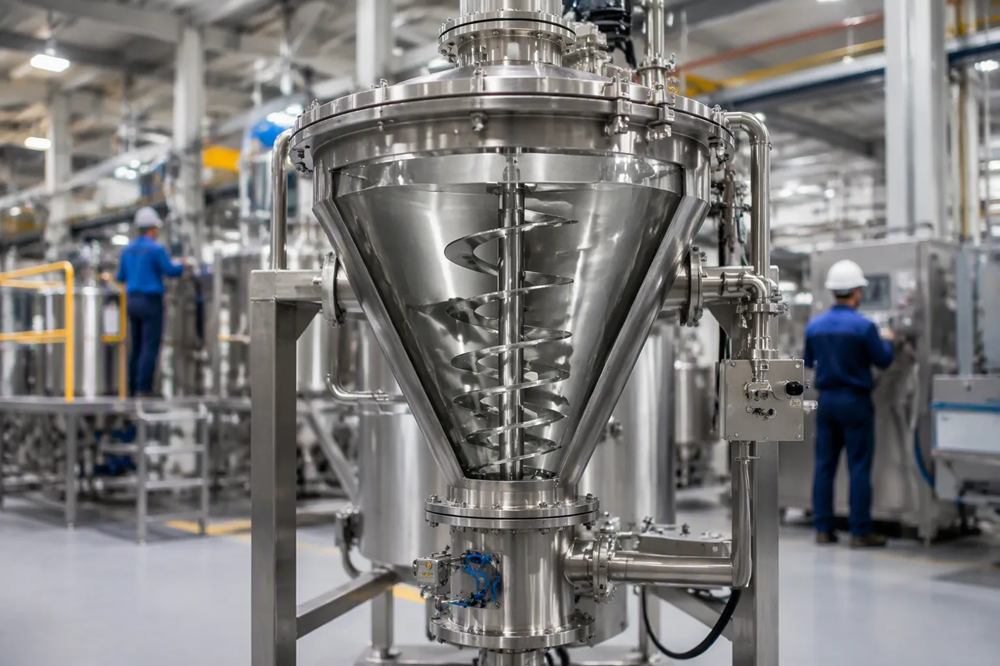
Total vessel volume and working volume are not interchangeable. Working volume represents the usable batch size inside the mixer. The remaining headspace allows material movement and prevents overfilling. I always confirm the working volume range from the supplier. Laboratory-scale mixers handle 5 to 50 liters. Pilot-scale units range from 50 to 500 liters. For small production runs, I look at models in the 300 to 1,000 liter range. Medium production units handle 1,500 to 5,000 liters. Large production systems manage 6,000 to 20,000 liters. Custom industrial designs can reach 60,000 liters or more. The footprint grows with capacity. A 100-liter lab unit fits on a compact frame with modest floor space. A 5,000-liter production mixer requires substantial floor area and overhead clearance. I measure ceiling height for loading ports and the screw's planetary orbit. The mixing principle relies on screw rotation combined with orbital movement around the vessel wall. This dual action creates efficient circulation through the conical shape. Some designs use one long screw and one short screw to improve blending. I verify this arrangement for my application. I also plan space for maintenance access around the gearbox, seals, and drive motor connections.
Screw Speed And Motor Power
Bulk density sets the load on the drive train. Dense materials like titanium dioxide require a sturdier screw and more powerful motor to lift and circulate each batch. Light powders like aerosil need gentler handling to prevent dust hazards or excessive aeration. Motor power scales with the torque required for that specific media. For a 100-liter Laboratory Mixer, I expect around 5.5 kW installed power. For a 5,000-liter production unit, the upper bound reaches 37 kW. The relationship between batch volume and drive cost is not linear. A 500-liter mixer costs substantially less per liter than a 5,000-liter machine. Larger vessels need thicker steel plates, heavier drive trains, and stronger support structures. Oversized motors waste electrical power during continuous runs. Undersized drives suffer excessive mechanical stress when turning dense batches. I specify a variable frequency drive to adjust screw rotational speed and orbital arm speed for different formulations. This flexibility reduces mechanical stress on the screw and motor during start-up and changeover. Gearbox torque must match the full load of the heaviest batch. Throughput matters too: discharging 10 tons per hour demands a larger discharge valve and stronger screw drive than processing 2 tons per hour. Motor size, gearbox rating, and valve diameter all increase with throughput requirements. Matching all these parameters ensures reliable operation and energy efficiency.
Material Compatibility And Thermal Control
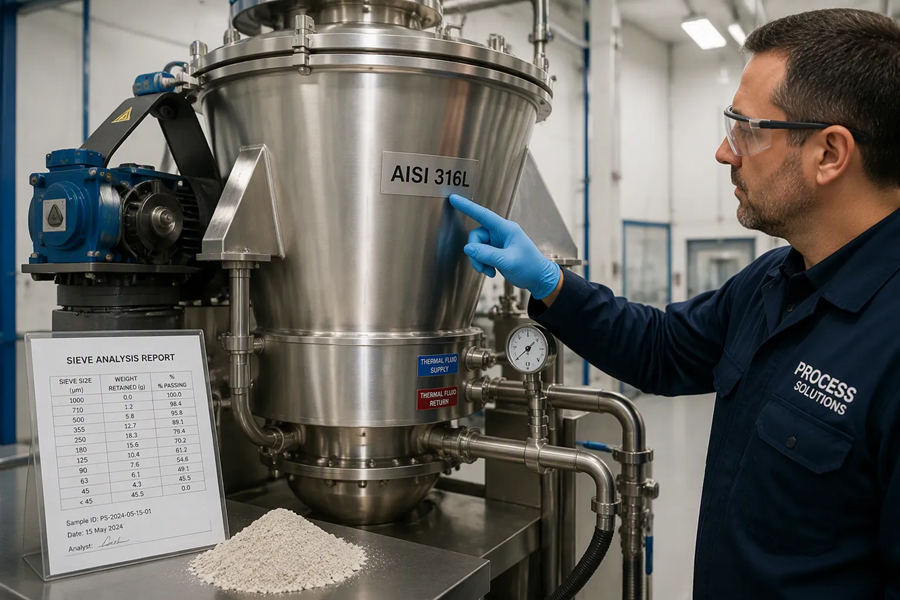
Material compatibility and thermal control determine whether a Conical Screw Belt Mixer handles my product safely across thousands of batches. I treat these two factors as a paired decision because the wrong metallurgy or a poorly rated jacket creates contamination risks and premature equipment failure.
Bulk Density And Metallurgy
Bulk density and particle size distribution set the mechanical load on the screw and belt. A dense, fine powder pushes back against the screw with greater resistance than a light, coarse granule. I request a sieve analysis and tapped density report from my supplier before selecting a drive. Friable products — those that crumble or break apart easily — demand low-shear geometry. A gentle screw profile preserves particle integrity and prevents fines generation.
Wetted metallurgy choices matter for corrosion resistance and hygiene. Common grades include:
- AISI 304
- AISI 316L
- AISI 316
- AISI 904L
- Hastelloy C22
Jackets And Pressure Ratings
Heating and cooling jackets manage temperature-sensitive products. I check jacket design for uniform thermal fluid flow and compatibility with my chosen medium — steam, hot oil, or chilled water. Internal coils offer faster heat transfer but reduce working volume. The table below shows typical jacket ratings I have seen across different manufacturers:
| Equipment | Jacket Pressure | Jacket Temperature |
|---|---|---|
| Alloy C276 Vacuum Conical Screw Dryer | 150 psi | 392 °F |
| Nauta Krauss Maffei MT 2/300 (SS316) | 7 bar | 170 °F |
| Nauta Andritz GHD3000S (SS316) | 50 psi | 130 °F |
| Engelsmann AG Nauta / Conical (SS316 Clad) | 3 bar | 165 °F |
Discharge, Sealing, And Performance Validation
Shaft Seals And Discharge Valves
I examine shaft seals first because they control leakage and contamination risk. Packing seals cost less upfront. They need regular tightening and replacement. Mechanical seals offer better containment for fine powders and vacuum service. Gas-purged seals protect against oxygen ingress during inert atmosphere processing. I match the seal type to my pressure and vacuum requirements.
Discharge valve selection affects cycle time and product recovery. I compare three common options:
| Valve Type | Discharge Speed | Residual Heel | Cleanability |
|---|---|---|---|
| Butterfly | Fast | Low | Good |
| Slide Gate | Moderate | Moderate | Fair |
| Spherical | Controlled | Very Low | Excellent |
Mixing Performance Of The Conical Screw Belt Mixer
I request uniformity test data before purchase. The Conical Screw Belt Mixer achieves high uniformity through gentle, low-shear mixing action. One supplier reports mixing an additive at a ratio of 1/100,000 within 10 minutes, reaching uniformity above 98.5%. I ask for mixing time data across different batch sizes. Typical cycles range from 5 to 25 minutes. I also confirm minimum batch capacity as a percentage of working volume.
I confirm five parameters in writing before buying a Conical Screw Belt Mixer: capacity, drive, material compatibility, thermal control, and discharge design. My checklist covers batch size, screw speed, motor torque, metallurgy, finishes, jacket ratings, seals, and valves. I also request uniformity data, mixing times, references, and warranty terms.
FAQ
What is the minimum batch size a conical screw belt mixer can handle?
I confirm the minimum batch as a percentage of working volume. Many suppliers rate it at 10 percent of working volume. I always verify this figure in writing before purchase.
How long does one mixing cycle take?
Typical cycles run from 5 to 25 minutes per batch. The exact time depends on batch size, material flowability, and the uniformity target. I request test data for my specific formulation.
Which shaft seal should I choose for vacuum service?
I choose mechanical or gas-purged seals for vacuum and inert atmosphere processing. Packing seals suit simpler, lower-containment applications. I match the seal to my pressure and vacuum ratings.