
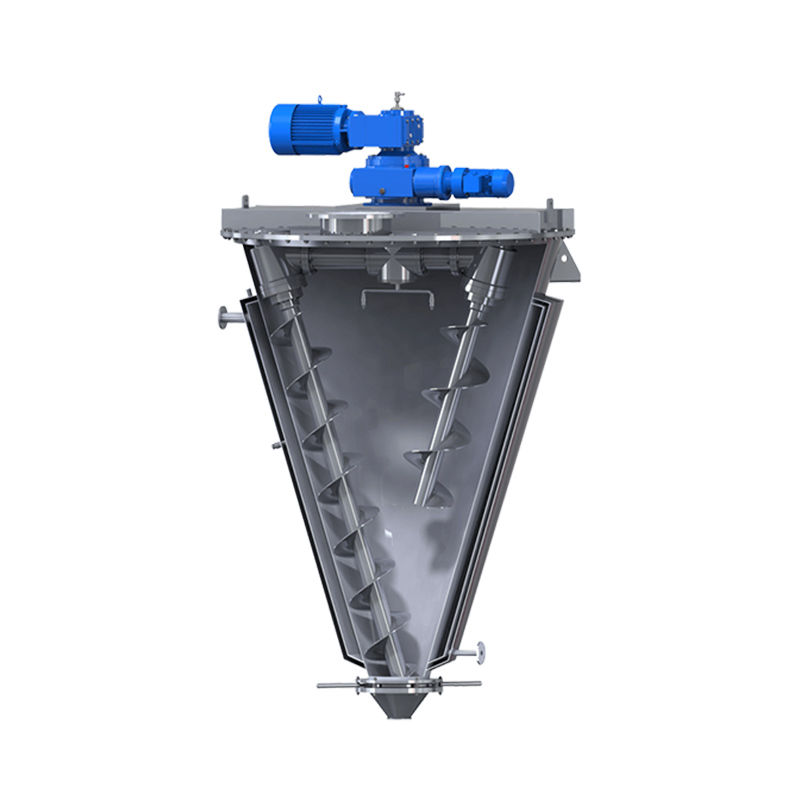
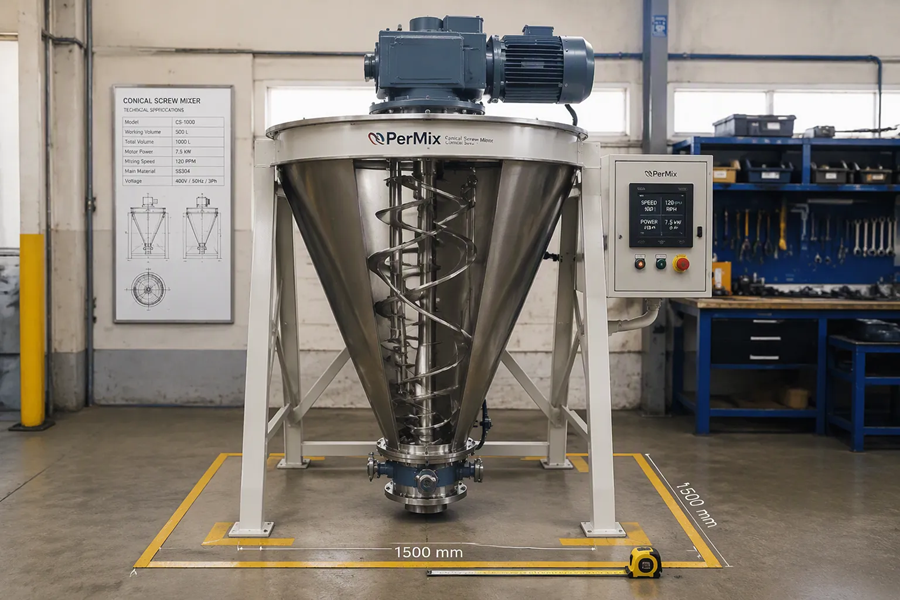
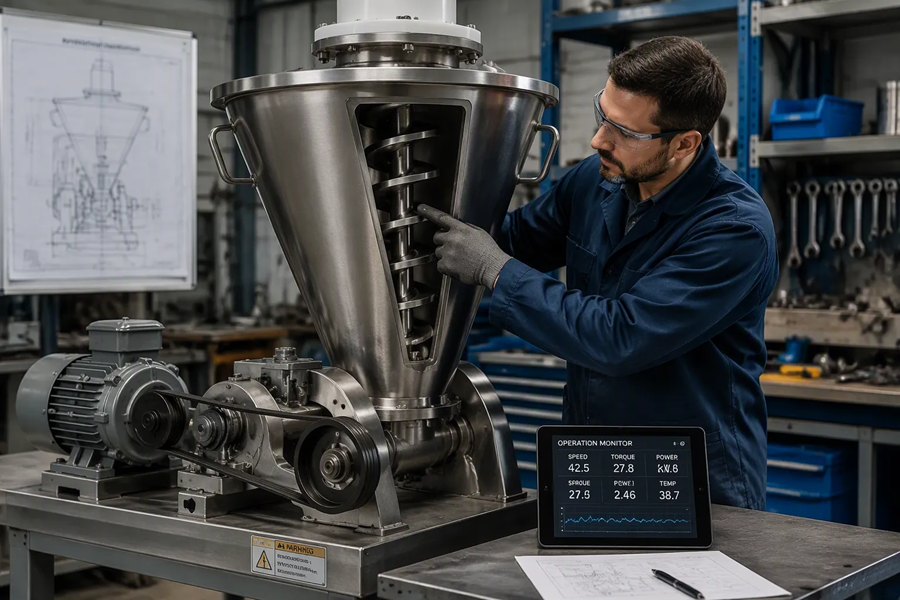
 Conical Screw Mixer
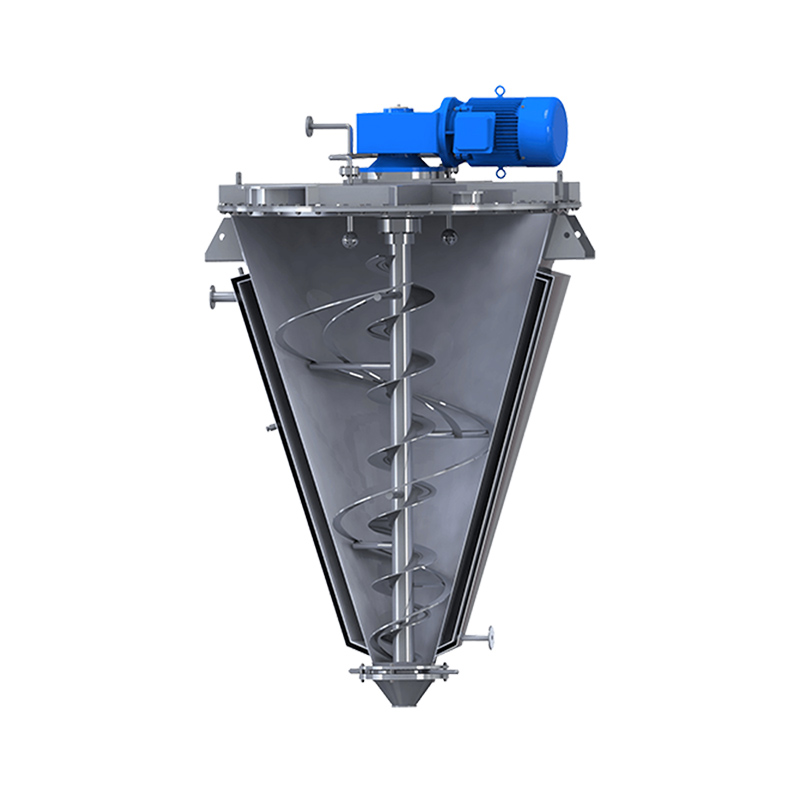 Conical Screw Belt Mixer
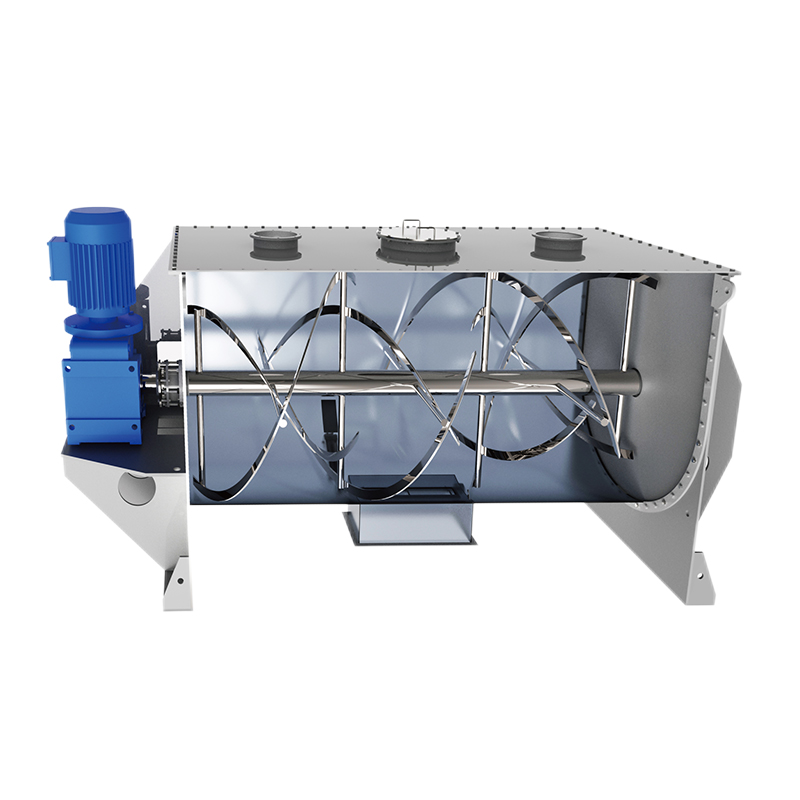 Ribbon Blender
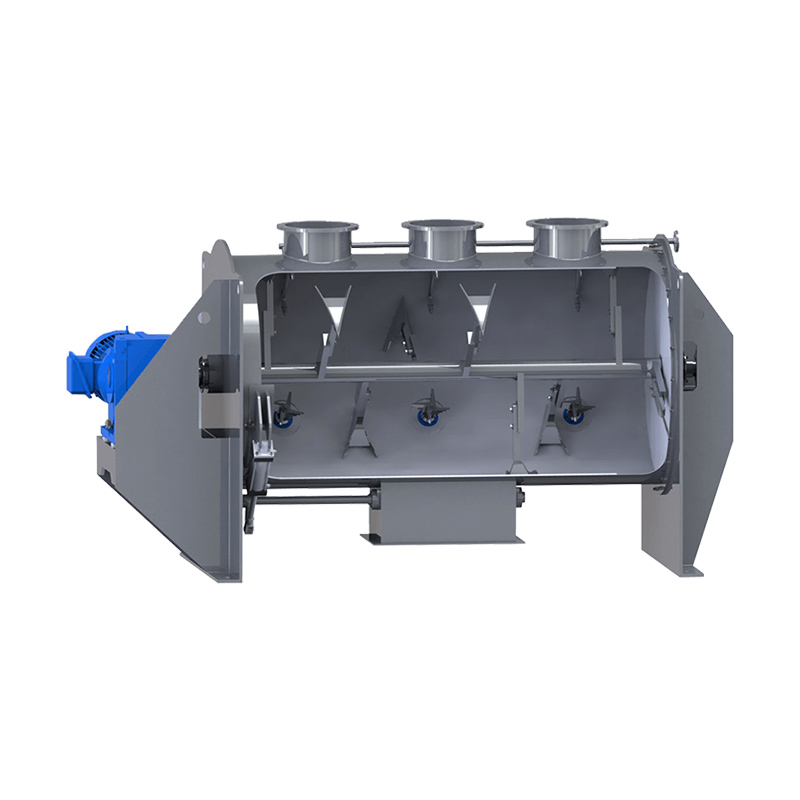 Plough-shear Mixer
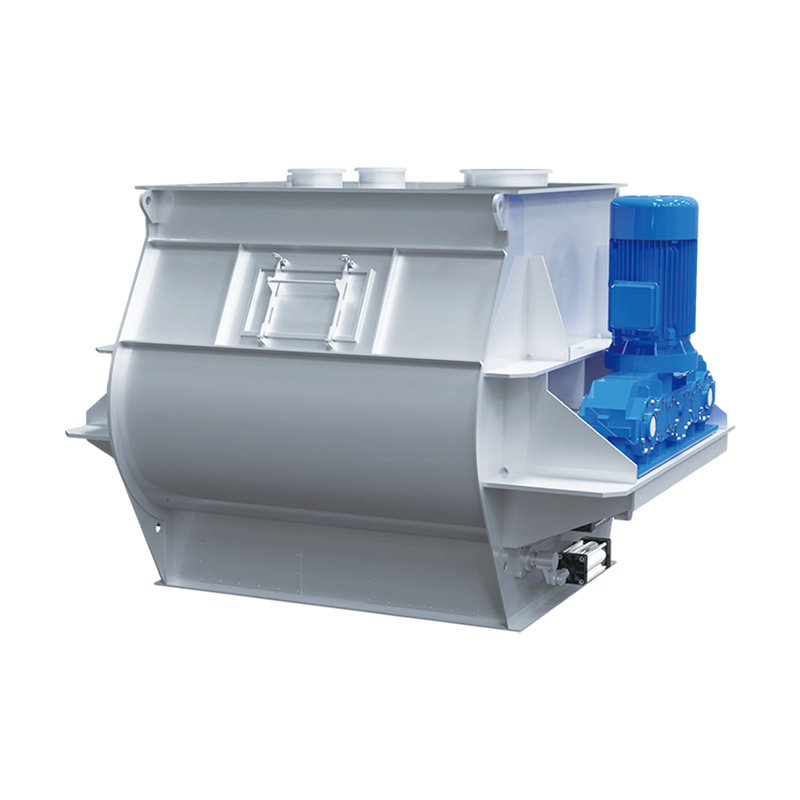 Double Shaft Paddle Mixer
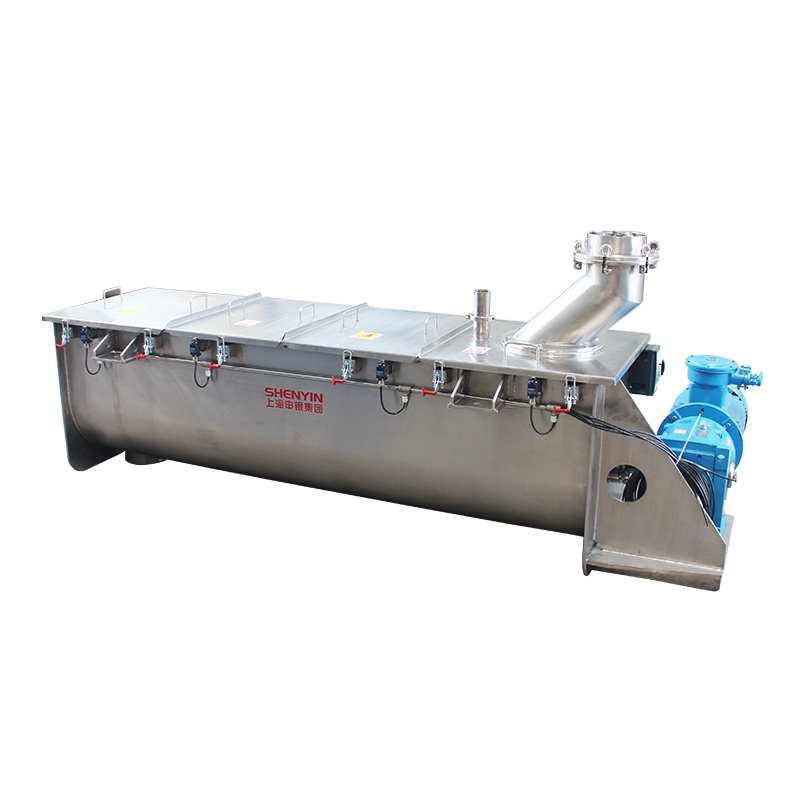 CM Series Mixer



What Custom Options and Auxiliary Parts Can Be Equipped for a Ribbon Blender for Special Powder Applications?
Quick Answer
A standard Ribbon Blender handles free-flowing dry powders well, but special powder applications—hygroscopic, sticky, heat-sensitive, explosive, or requiring liquid addition—demandcustom options and auxiliary parts. The most impactful customizations fall into five categories: jacketed vessels for heating/cooling/drying, liquid spray systems for controlled minor-liquid addition, chopper blades or lump breakers for agglomerate reduction, explosion-proof and gas-purge configurations for reactive or flammable powders, and discharge valve upgrades for difficult-flow materials. Shenyin’s ribbon blender range spans 0.1m³ to 60m³ and supports comprehensive non-standard customization, including material selection (304/316L stainless, carbon steel) and module configuration (heating, dehumidification, dust removal, automatic feeding) . The selection principle is straightforward: match the auxiliary part to the specific failure mode of the powder, not to the blender’s capacity rating.
Key Takeaways
-
Jacketed vessels enable simultaneous mixing and heat transfer, critical for heat-sensitive or moisture-sensitive powders .
-
Liquid spray systems with metering pumps and nozzles outperform direct pouring for minor liquid addition, reducing localized over-wetting .
-
Chopper bladesbreak wet agglomerates that form during liquid addition, a function the Ribbon Agitator alone cannot provide.
-
Explosion-proof motors and gas-purge seals are non-negotiable for flammable or reactive powders .
-
Discharge valve selection (knife gate, flush plug, spherical, pneumatic) directly affects residual material and cleaning time .
The Constraint: Why Standard Ribbon Blenders Fail on Special Powders
A ribbon blender’s mixing mechanism is well-suited to dry powder blending. The outer ribbon moves material inward along the trough wall; the inner ribbon moves material outward through the center. This counter-current flow produces uniform blending at relatively low RPM, typically 40–60 RPM for standard configurations, minimizing heat generation and particle attrition .
But this gentle, low-shear action becomes a limitation when the powder requires more than passive blending. Three failure modes recur:
Agglomeration during liquid addition. When liquid is poured directly into a ribbon blender, it contacts a concentrated powder zone, forming wet clumps that the ribbon agitator cannot disperse. The result is inconsistent batch quality and visible lumps in the finished product .
Thermal degradation. Powders containing heat-sensitive actives or volatile components cannot tolerate the temperature rise from prolonged mixing. Without a jacketed vessel, the blender cannot remove heat generated by the agitator .
Flow failure at discharge. Cohesive or sticky powders bridge over standard discharge openings, leaving residual material that contaminates subsequent batches and extends cleaning time.
Each custom option addresses one of these failure modes. The table below maps powder problems to their corresponding auxiliary parts.
Jacketed Vessels: Heating, Cooling, and Vacuum Drying
A jacketed ribbon blender circulates a heat-transfer fluid through a dimpled or baffled jacket surrounding the mixing trough. The jacket enables indirect heat exchange without introducing steam or fluid into the powder, preserving product purity .
Practical applications:
-
Cooling after a high-energy mixing step, preventing thermal degradation of actives.
-
Heating to drive off surface moisture from hygroscopic powders.
-
Vacuum drying when combined with a vacuum-rated cover and seals. The reduced pressure lowers the boiling point of moisture, enabling low-temperature drying for heat-sensitive materials .
Ross specifies dimpled or baffled jackets as an optional feature on its Model 42N ribbon blenders, with vacuum or internal pressure capability available . PerMix’s vacuum ribbon mixers use jacketed vessels for precision temperature control in nanomaterial processing, where thermal stability is critical .
Selection note: A jacketed vessel adds cost and requires utility connections (hot water, chilled water, or steam). For powders that do not generate heat during mixing and are not moisture-sensitive, the jacket provides no benefit.
Liquid Spray Systems: Controlled Addition Without Lumps
A liquid spray system distributes small amounts of liquid—flavors, oils, binders, or actives—through atomizing nozzles mounted in the blender cover. A metering pump controls the feed rate, and the nozzles disperse the liquid across the powder surface rather than concentrating it in one zone .
Why spray beats pouring: Direct liquid pouring creates localized over-wetting, where a portion of the powder becomes saturated and forms clumps while the remainder stays dry. A correctly designed spray system distributes the liquid more uniformly, reducing agglomerate formation and improving batch-to-batch repeatability .
Configuration elements (from Yinda’s recommended setup):
-
Spray nozzle or spray bar in the cover
-
Metering pump for controlled feed rate
-
Liquid tank for the additive
-
PLC integration for sequencing liquid addition with mixing cycles
Limitation: A ribbon blender with spray capability is appropriate for minor liquid addition—typically coating applications where the liquid is a small fraction of the batch. As liquid loading increases, the powder becomes sticky, agglomerates form faster than the ribbon can disperse them, and a plough shear mixer with choppers becomes the more capable choice .
Chopper Blades and Lump Breakers: Deagglomeration at High Shear
Chopper blades are high-speed rotating blades mounted on the trough side walls, operating independently of the main ribbon agitator. Their function is size reduction of agglomerates that form during liquid addition or from cohesive powders .
The ribbon agitator provides convective mixing—large-scale circulation of material. The chopper provides localized shear—intense mechanical action that breaks apart wet clumps. The combination allows a ribbon blender to handle formulations that would otherwise require a different mixer type .
When choppers are specified: The powder forms lumps during liquid addition, or the incoming powder contains coarse agglomerates that must be reduced. Without choppers, these lumps persist through the mixing cycle and appear in the finished product.
NSI Equipments notes that chopper blades are provided diagonally on opposite sides of the trough, rotating at cutting speed to break lumps and coarse particles . This configuration ensures that material circulating through the ribbon’s flow pattern repeatedly passes through the chopper’s active zone.
Explosion-Proof and Gas-Purge Configurations
Powders with low minimum ignition energy or those that react with oxygen require explosion-proof electrical components and, in some cases, inert gas purging.
Explosion-proof motor: Ross specifies explosion-proof or washdown motors as optional features on its ribbon blenders . The motor and electrical components are enclosed to prevent ignition of flammable dust clouds.
Air-purged shaft seals: A seal cavity pressurized with air or inert gas creates a barrier that prevents powder from entering the seal area. This serves two purposes: it extends seal life by excluding abrasive particles, and it prevents leakage of reactive or hazardous powders into the bearing housing .
Gas purge for reactive powders: PerMix describes gas purge capability on vacuum ribbon mixers, allowing introduction of nitrogen or argon to prevent oxidation of reactive nanomaterials . For pharmaceutical or chemical powders prone to oxidation, this configuration extends the blender’s applicability to oxygen-sensitive formulations.
Discharge Valve Options: Solving Residual Material and Flow Problems
The discharge valve is a small component with outsized impact on cleaning time, cross-contamination risk, and product yield. Standard ribbon blenders typically use a manual or pneumatic flap valve, but special powders often require alternatives.
Knife gate valve: A sliding blade shears through the material column, making it suitable for cohesive powders that bridge over flap valves. Ross offers knife gate discharge as an option, with liquid-tight and dust-tight variants .
Flush plug valve: The plug sits flush with the trough bottom when closed, eliminating the dead space where material accumulates and resists discharge. Ross specifies manual or pneumatic flush plug valves as options .
Spherical valve: A pneumatically operated spherical disc provides a large opening and minimizes dead space, suitable for vacuum/pressure operation and liquid-solid blending .
Selection logic: For free-flowing powders, a standard flap or butterfly valve suffices. For cohesive, sticky, or high-value powders where residual material is unacceptable, the flush plug or spherical valve reduces cleaning burden and product loss.
Additional Custom Options Relevant to Special Applications
Beyond the five primary categories, several secondary options address specific production requirements:
Variable frequency drives (VFD): Adjusting agitator speed allows optimization for different powder bulk densities. A VFD is useful when the blender handles multiple products with different flow characteristics .
Load cells: Weighing the batch in the blender eliminates a separate weighing step and improves batch accuracy. NSI Equipments lists load cells as an available feature for accurate mass measurement .
End wall scrapers: Close-tolerance scrapers (approximately 1/8 inch clearance) reduce material packing on the trough end walls, a common issue with cohesive powders .
Custom material of construction: Shenyin offers 304, 316L, 321 stainless steel, carbon steel, manganese steel, Hardox450, and JFE450 for the mixing chamber, enabling selection based on abrasiveness and corrosion resistance .
FAQ
What is the most important custom option for a ribbon blender handling heat-sensitive powders?
A jacketed vessel is the primary option. It circulates heating or cooling fluid through a jacket surrounding the trough, enabling indirect heat exchange without introducing fluid into the powder. Combined with a vacuum-rated cover, the jacket supports low-temperature vacuum drying for materials prone to thermal degradation .
Can a ribbon blender add liquid to powder without forming lumps?
Yes, with a liquid spray system using atomizing nozzles and a metering pump. The spray disperses liquid across the powder surface rather than concentrating it in one zone, reducing localized over-wetting and agglomerate formation. However, this works best for minor liquid addition; higher liquid loads may require a plough shear mixer with choppers .
When are chopper blades necessary on a ribbon blender?
Chopper blades are specified when wet agglomerates form during liquid addition or when the powder contains coarse lumps that must be reduced. The ribbon agitator provides convective mixing but limited shear; the chopper provides the localized high-speed shear needed to break clumps .
What discharge valve is best for sticky or cohesive powders?
A flush plug valve or spherical valve reduces dead space where material accumulates and resists discharge. A knife gate valve may also be specified for cohesive powders because its sliding blade shears through the material column .
How does explosion-proof configuration work on a ribbon blender?
Explosion-proof motors and electrical components prevent ignition of flammable dust clouds. Air-purged shaft seals create a pressurized barrier that excludes powder from the seal area. For reactive powders, gas purge with nitrogen or argon prevents oxidation during mixing .
Can a ribbon blender be customized for vacuum drying?
Yes. A vacuum-rated ribbon blender uses a heavy-duty cover, clamps, and vacuum-tight seals. The combination of reduced pressure and continuous agitation accelerates drying at low temperatures, which is ideal for heat-sensitive materials. Solvent recovery is also possible .
What material options are available for the mixing chamber?
Shenyin offers 304 stainless steel, 316L stainless steel, 321 stainless steel, carbon steel, manganese steel, Hardox450, and JFE450. Material selection depends on the powder’s abrasiveness, corrosiveness, and contamination requirements. For pharmaceutical or food applications, 316L is the standard choice .