
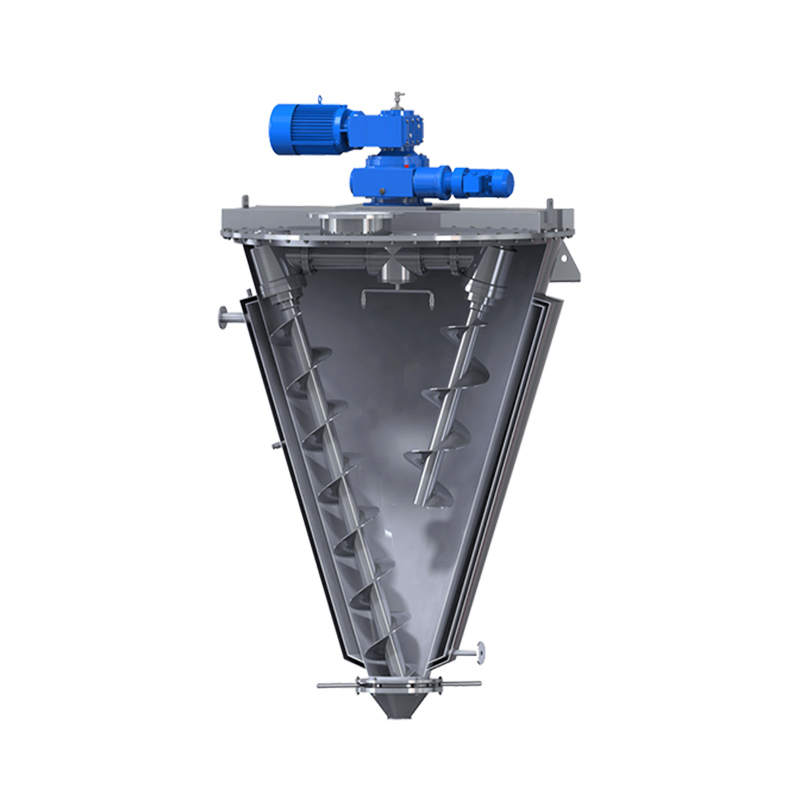
 Conical Screw Mixer
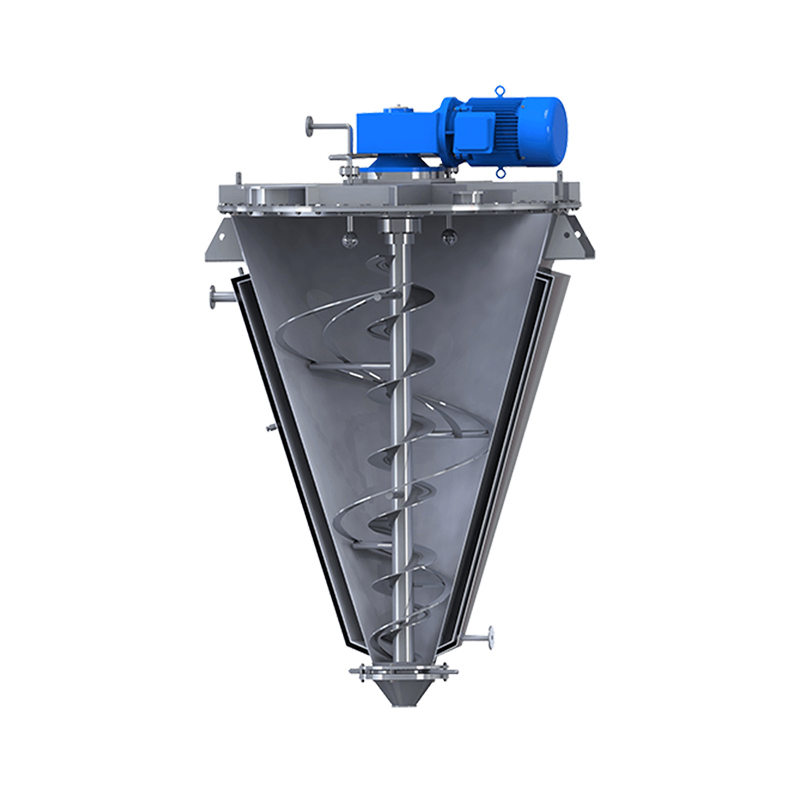 Conical Screw Belt Mixer
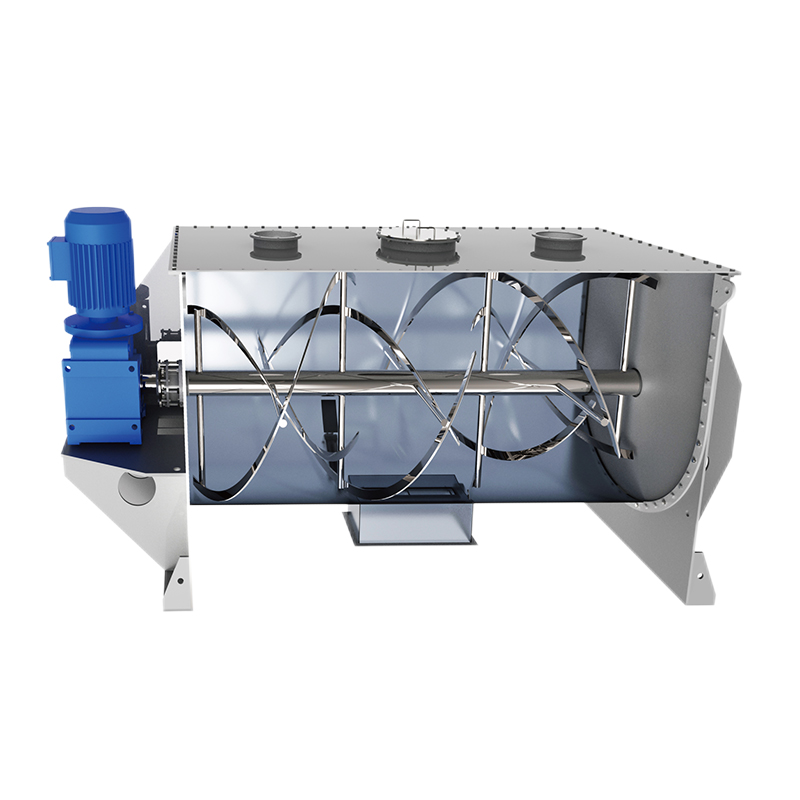 Ribbon Blender
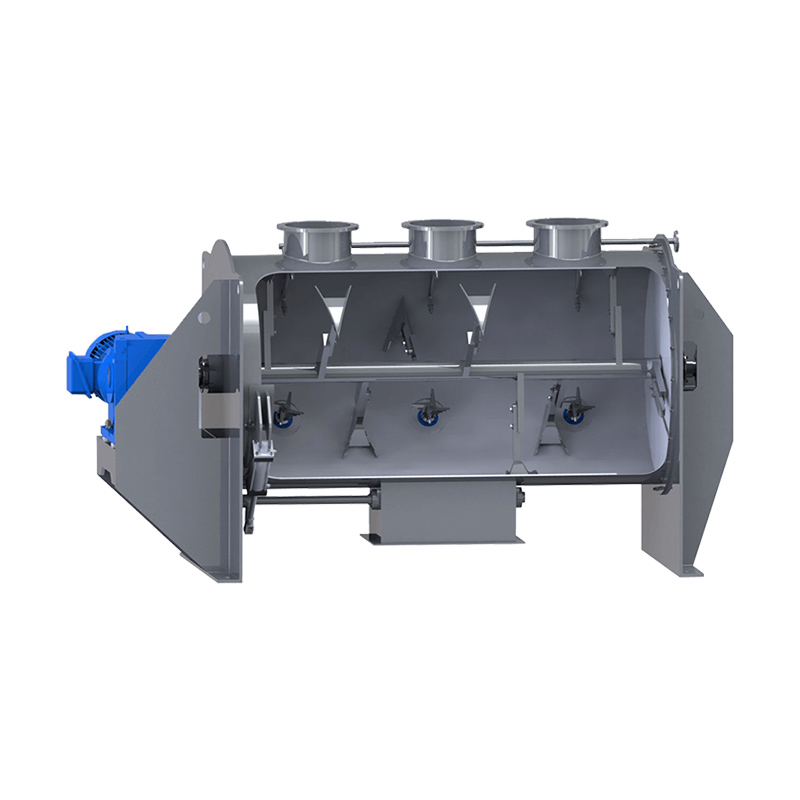 Plough-shear Mixer
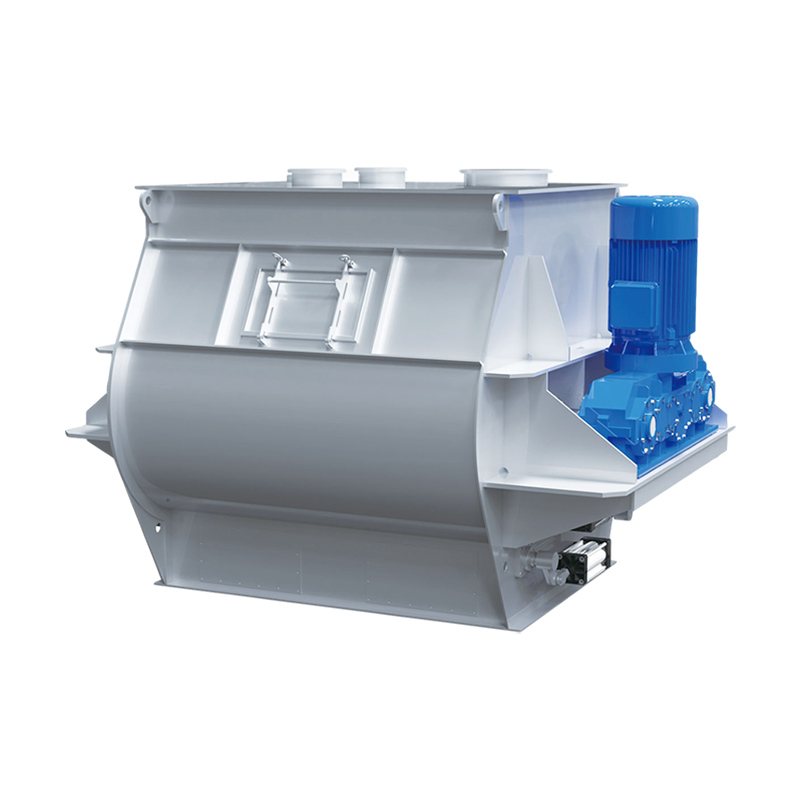 Double Shaft Paddle Mixer
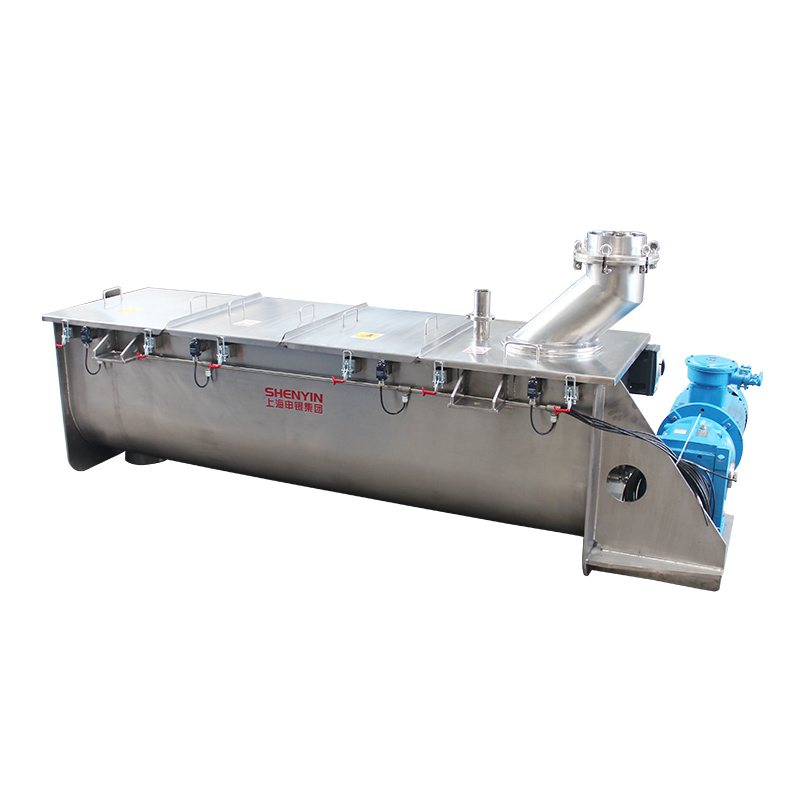 CM Series Mixer


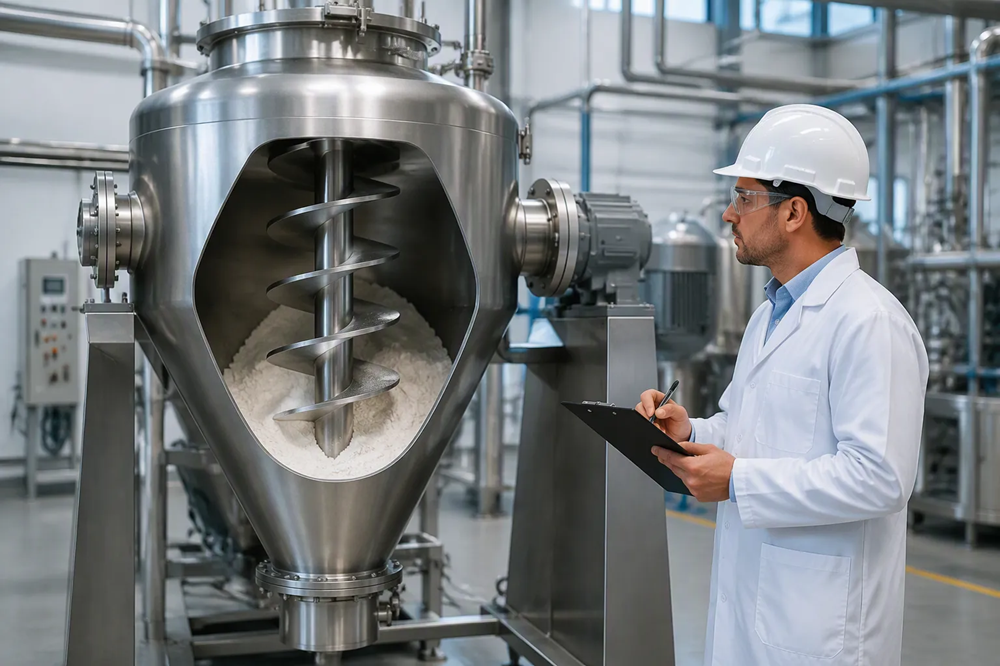
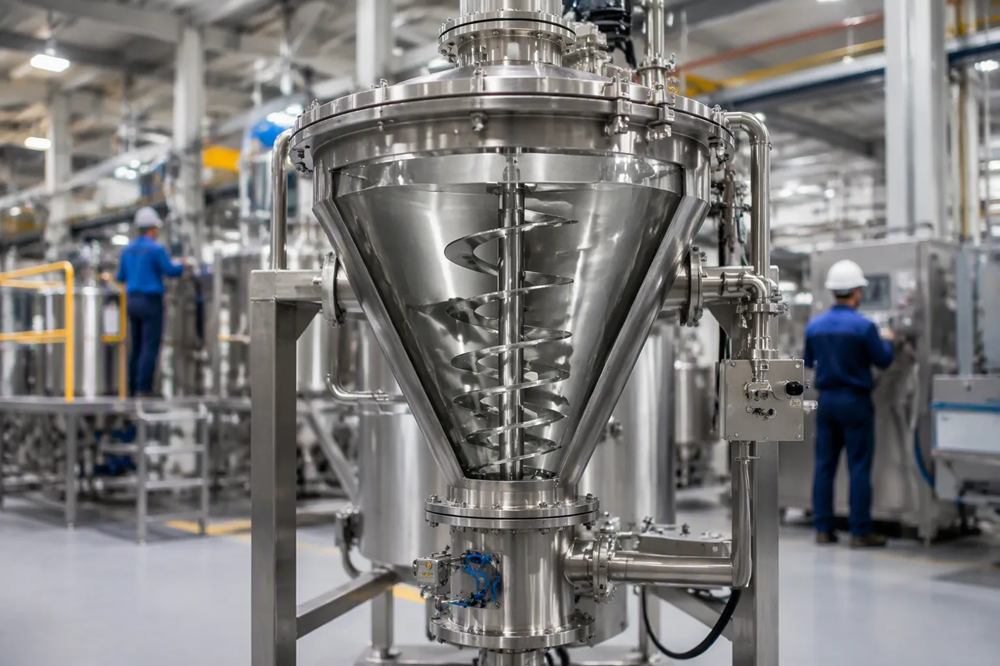
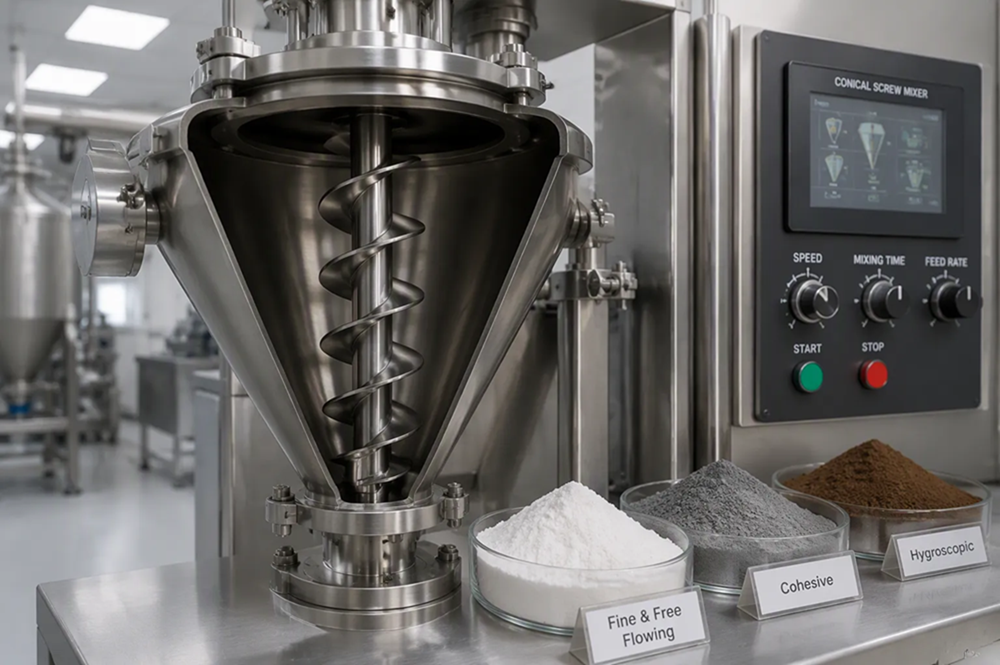
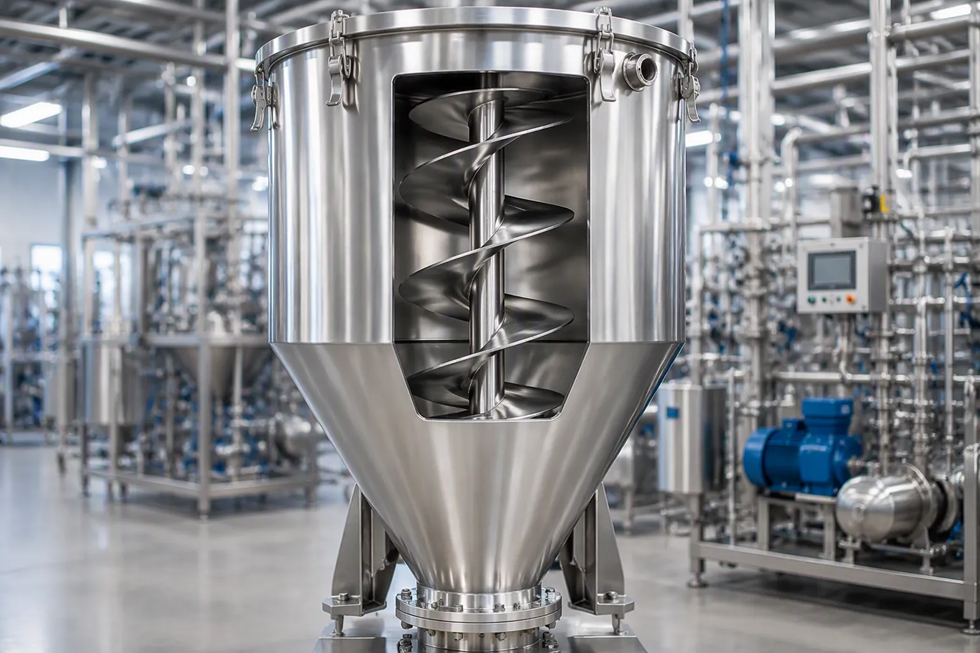
What Custom Accessories and Configurations Are Available for Conical Screw Belt Mixer Special ondition Production?
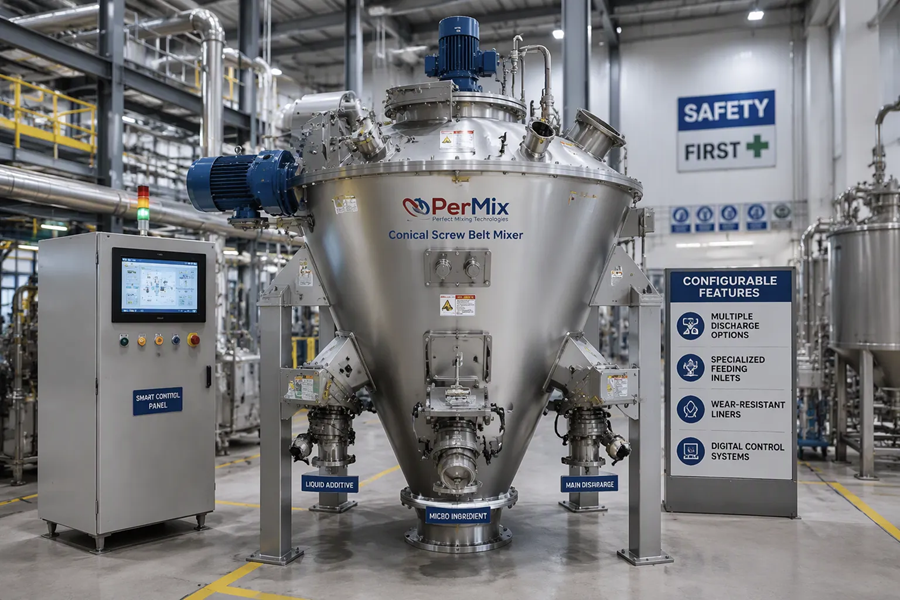
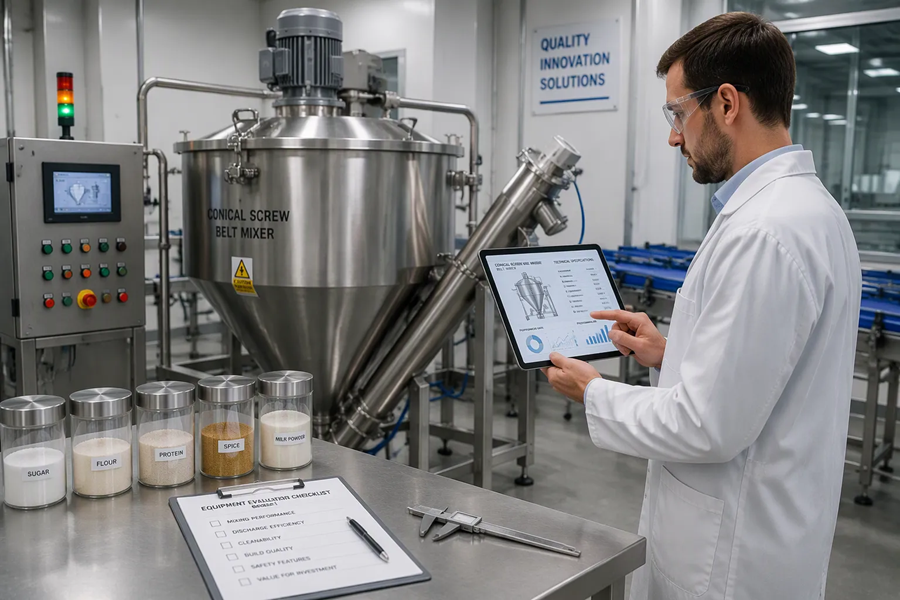
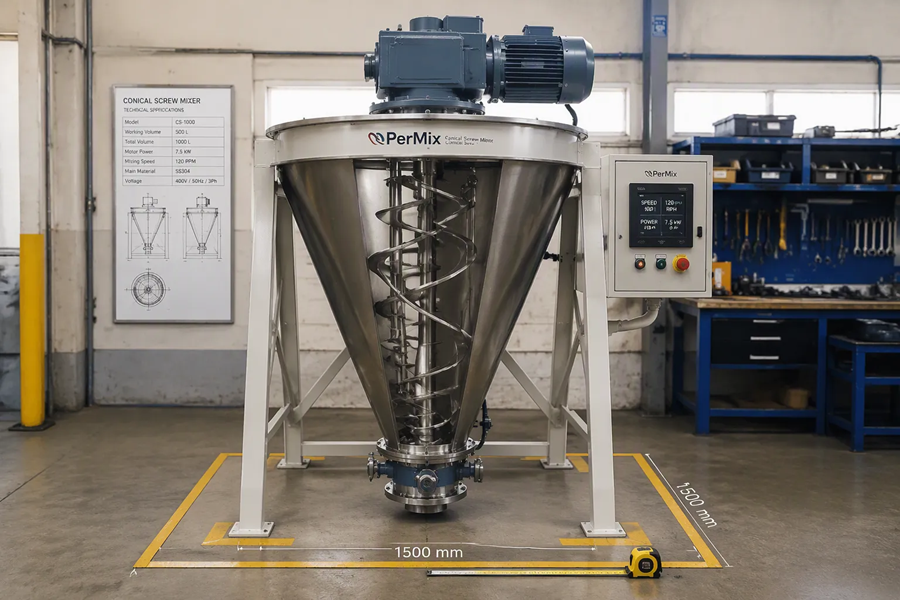
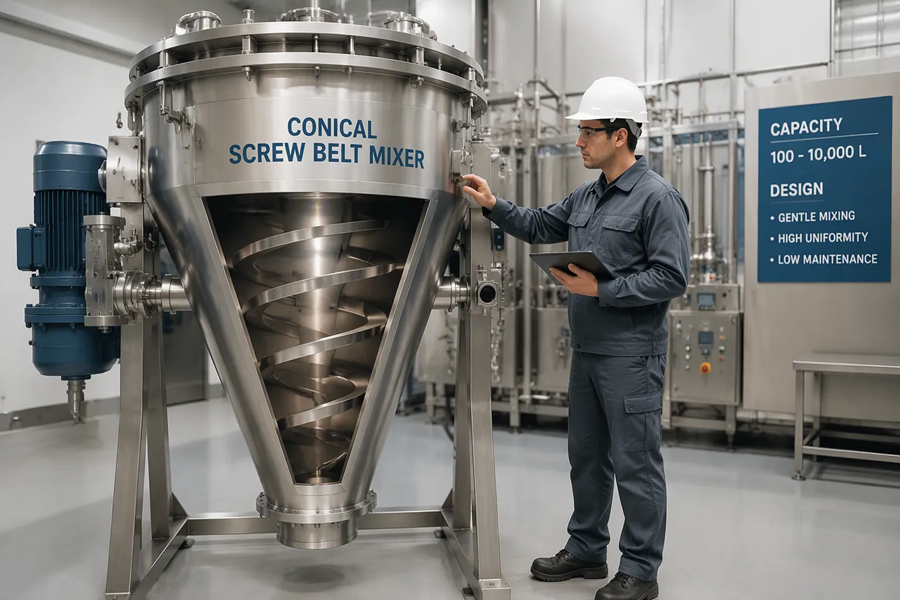
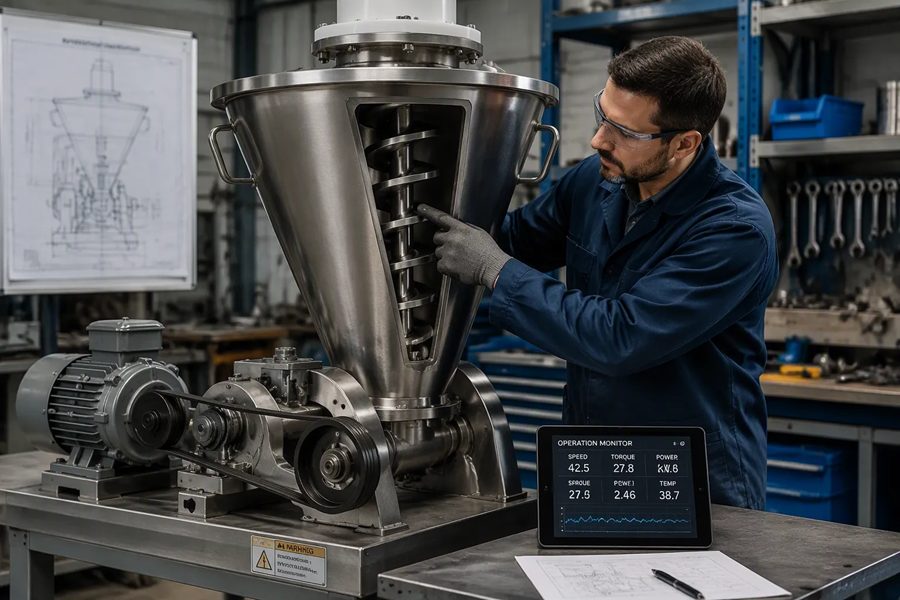
Conical screw belt mixers accommodate a wide range of custom accessories and configurations for special production conditions. Operators can add volumetric or gravimetric feeders, discharge valves, spray nozzles, and wear-resistant liners. Process-specific configurations include heating, cooling, vacuum drying, hygienic CIP designs, and explosion-proof electrical systems. These options support abrasive, high-temperature, corrosive, hygienic, and explosive environments. Choosing the right mix requires assessing material properties, process goals, and performance requirements. Custom designs can also adapt to existing plant layouts and automation systems. A properly matched Conical Screw Mixer improves durability, safety, and efficiency in every mixing process. Manufacturers offer tailored solutions, but the selection factors determine long-term reliability and productivity.
Key Takeaways
- Customize your conical screw mixer with feeders, valves, and spray nozzles to match your material flow.
- Protect against wear and corrosion with hardened stainless steel screws and polished surfaces.
- Control temperature and pressure with heating, cooling, or vacuum systems for sensitive powders.
- Ensure safety in hazardous areas with explosion-proof certifications like ATEX, IECEx, or NFPA 70 NEC.
- Maintain hygiene with clean-in-place designs and smooth surfaces to prevent contamination.
Custom Accessories for Conical Screw Belt Mixers
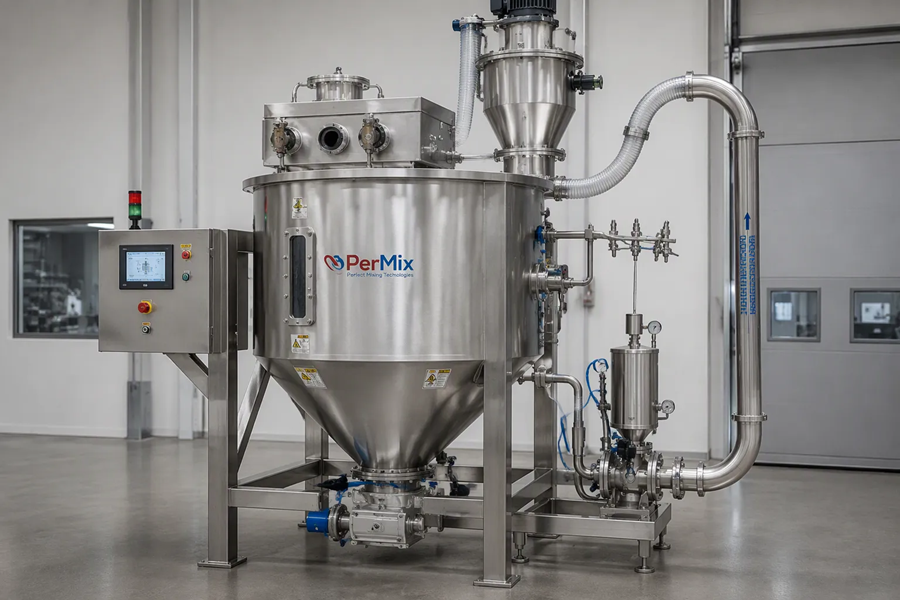
A conical screw belt mixer rarely operates as a standalone unit. Manufacturers build a wide accessory ecosystem around the core mixing vessel. These add-ons handle material feeding, discharge, liquid addition, and surface protection. Each accessory addresses a specific production challenge. Buyers who understand these options can specify a custom conical screw mixer that fits their exact workflow.
Feeders, Discharge Valves, and Spray Nozzles
Feeding systems determine how raw materials enter the conical screw belt mixer. Single screw feeders suit simple, free-flowing powders. Twin screw feeders handle floodable or poorly flowing ingredients with greater precision. BSP feeders offer a compact alternative for tight plant layouts. Fully integrated vacuum conveying moves powders pneumatically from storage to the mixer inlet. This setup supports automated operation and reduces manual handling.
Discharge design deserves equal attention. Low-cohesion powders in classes 1–2 work well with gravity chutes, simple rotary valves, screw feeders, and belts. These materials need minimal agitation. Cohesive powders in classes 3–4 demand more careful engineering. Operators often require screws with proper pitch, flight clearance, and venting. Agitated hoppers or live bottoms above feeders prevent arching and surging. Carefully tuned vibratory conveyors and controlled aeration in hoppers also help. Random compressed-air blasts tend to cause problems rather than solve them.
Valve selection affects labor and cleanliness. Manual slide valves cost less upfront. They are slower and more labor-intensive during production. Pneumatic or hydraulic discharge gates enable fast, clean dumping. They integrate easily into automated workflows. A lobe valve mounted close to the bottom of the long screw helps minimize dead corners during mixing. Alternative discharge designs include butterfly valves, ball valves, star-shaped discharge, and side outlets. The discharge type should match the powder's flow behavior to avoid batch-to-batch variability.
Spray atomization and liquid addition options expand processing flexibility. These accessories introduce binders, flavors, or solvents directly into the mixing zone. They support granulation, coating, and reactive processes without separate equipment.
Shenying Group's high-performance conical screw belt mixer product page illustrates many of these accessory options in a real-world catalog. The page shows how feeders, valves, and spray systems combine into a single configured unit.
Wear-Resistant Liners and Surface Treatments
Abrasive and corrosive materials attack mixer surfaces over time. Hardened stainless steel screws, such as SS316, with polished surfaces reduce residue buildup and corrosion risk. Variable frequency drives adjust screw speed, typically 5–60 rpm. Higher torque motors are needed for dense or sticky materials. These measures extend service life and maintain consistent material control across many batches.
Surface treatments further protect the conical screw mixer. Polished finishes, coatings, and hardened contact parts address specific wear patterns. The right combination depends on the material's hardness, chemical reactivity, and temperature. A custom conical screw mixer built with these features delivers reliable performance in demanding production environments.
Configurations for Special Conditions
Special production conditions demand more than a standard mixing vessel. Manufacturers configure the conical screw mixer with heating, cooling, vacuum, explosion-proof, and hygienic systems. These configurations address temperature sensitivity, combustible dusts, and strict cleanliness rules. Buyers who match these options to their process gain better durability, safety, and efficiency.
Heating, Cooling, and Vacuum Systems
Temperature control is critical for sensitive powders. A conical screw mixer with heating jacket handles materials that need warmth during blending. A conical screw mixer with cooling jacket manages exothermic reactions or heat-sensitive ingredients. The operating temperature range for these systems spans 40 to 140 degrees Celsius. Jacket design pressure reaches 0.3 MPa. Heating media include hot water, heat transfer oil, or low-pressure steam. Cooling media include chilled water or glycol. These systems also support drying and humidification. A conical screw vacuum dryer, a type of conical screw belt mixer, removes moisture under reduced pressure.
Design variations matter for specialized tasks. Single-cone and double-cone designs serve different mixing goals. Rotating spiral belt options improve movement for cohesive or fibrous materials. The helical screw flight lifts material from the bottom to the top of the cone. This action creates a gentle, low-shear mix. Granular materials and fragile products benefit from this motion.
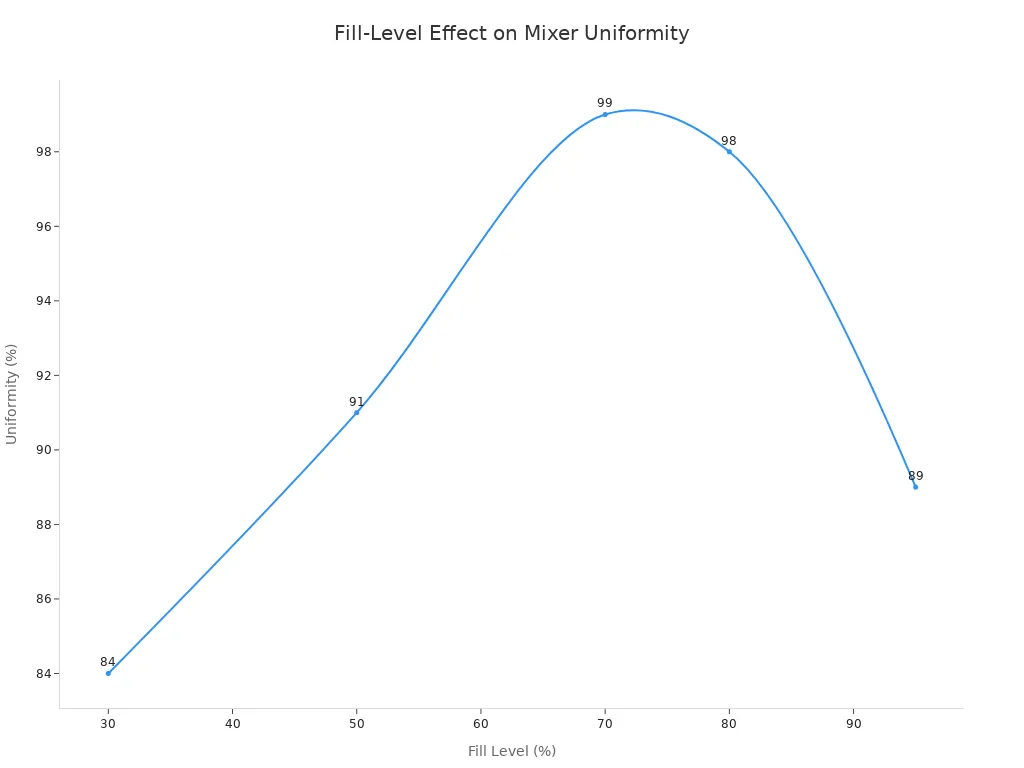
Size and capacity requirements drive the final configuration. Standard mixing capacity ranges from 50 to 5,000 liters. The batch must fill 30 to 80 percent of total vessel volume. Fill level affects uniformity. A 30 percent fill yields 84 percent uniformity. A 70 percent fill reaches 99 percent uniformity. A 95 percent fill drops to 89 percent uniformity. Buyers calculate batch volume by dividing the daily production target by bulk density and cycles per day. They then divide batch volume by 0.8 for minimum vessel volume and by 0.3 for maximum vessel volume. Pilot-scale trials confirm the final choice before full-scale purchase.
Explosion-Proof and Hygienic Designs
Combustible dusts create real hazards in chemical, food, and feed production. Explosion-proof configurations protect workers and equipment. ATEX, IECEx, and NFPA 70 NEC are the main certification systems. For dust atmospheres, ATEX uses zones 20, 21, and 22. IECEx uses protection levels Da, Db, and Dc. The NEC equivalent is Class II, Division 1 or 2. ATEX is mandatory in the EU. NFPA 70 NEC and OSHA NRTL apply in the U.S. IECEx is accepted internationally. These certifications ensure the conical screw mixer operates safely in hazardous locations.
Hygienic designs serve food, pharmaceutical, and feed applications. Clean-in-place systems, polished surfaces, and improved containment reduce contamination risk. A sanitary design also speeds changeover between batches. These features matter when the conical screw mixers handle multiple recipes per day.
Key Factors to Consider When Selecting a Conical Screw Mixer
Several key factors to consider when selecting a conical screw mixer include material behavior, process requirements, and discharge method. Engineers must also review production needs. A wrong match causes segregation or excessive wear.
Assessing Material and Process Needs
Material compatibility starts with particle size, bulk density, moisture, and flowability. A Carr Index above 25 signals poor flow. Moisture can create lumps on mixer walls, so testing after humidity exposure is essential. Shear testing per ASTM D6128 is best for cohesive powders.
| Condition | Key priority |
|---|---|
| Abrasive | Knife-gate valve; butterfly valves fail with fine powders |
| Corrosive | SUS316L contact surfaces; verify material certificates |
| High-temperature | Heating/cooling jacket with pressure-vessel review |
| Hygienic | Dead-space-free valves; Ra ≤ 0.6/0.4 μm surfaces |
| Explosive | Explosion-proof motor and controls with ATEX/UL ratings |
These priorities add 2–4 weeks for jackets and 80–110 days for explosion-proof controls. They are also key factors to consider when selecting a conical screw mixer.
Working with Manufacturers for Tailored Solutions
Buyers should ask detailed questions about screw movement, vacuum range, valve options, and CIP availability. The answers shape the customizable design and drive systems. Clear data on moisture, temperature limits, and batch time speeds up engineering.
Size and capacity requirements affect the right conical screw mixer. Standard working volumes range from 50 L to 5,000 L. Batch load should stay between 30% and 80% of vessel volume. A 70% fill reaches 99% uniformity, while a 30% fill reaches 84%. These size and capacity requirements determine the mixing capacity.
The unit must match downstream equipment. Homogeneity takes 5–15 minutes. Conical screw mixers handle granular and fragile materials gently. Operators choose conical screw mixers for food, chemical, and pharmaceutical settings. A side unloader or pneumatic outlet valve fits existing plant layouts.
Material Compatibility for Your Mixing Process
Material compatibility for your mixing process begins with a close look at the powder itself. Particle hardness, chemical reactivity, moisture content, and temperature sensitivity all shape the final equipment specification. These traits drive the choice of liners, surface treatments, and contact materials. A conical screw mixer that ignores these signals will wear faster, contaminate batches, or fail under load. Engineers who treat material compatibility as a design input rather than an afterthought protect both product quality and equipment life.
Selecting a Conical Screw Mixer for Abrasive or Corrosive Materials
Abrasive powders grind away at screws, flights, and vessel walls. Hardened stainless steel screws, such as SS316, resist this wear and hold their geometry across many batches. Polished surfaces further reduce residue buildup and cut corrosion risk. When selecting a conical screw mixer for corrosive duty, buyers should specify SUS316L contact surfaces and verify material certificates before shipment. These choices link directly to durability and mixing performance over the machine's service life.
Matching Configurations to Temperature and Hygiene Demands
Temperature and hygiene demands push configuration choices in different directions. A conical screw mixer with a heating or cooling jacket handles materials that need warmth or heat removal during blending. The operating range spans 40 to 140 degrees Celsius, and jacket design pressure reaches 0.3 MPa. Hygienic duty calls for dead-space-free valves and polished surfaces with roughness at or below Ra 0.6 or 0.4 micrometers. The table below pairs each demand with its key specification.
| Demand | Key specification |
|---|---|
| High temperature | Heating or cooling jacket, pressure-vessel review |
| Hygienic | Dead-space-free valves, Ra ≤ 0.6/0.4 μm surfaces |
| Corrosive | SUS316L contact surfaces, material certificates |
A conical screw belt mixer offers many accessory and configuration choices. Feeders, discharge valves, spray nozzles, and wear-resistant liners handle material flow and surface protection. Heating, cooling, vacuum, explosion-proof, and hygienic designs address special production conditions. These options improve durability, efficiency, and safety. Material compatibility guides every selection. A conical screw mixer with the right liners and finishes lasts longer and cleans faster. Choosing the right conical screw mixer means matching features to production needs.
FAQ
What accessories can improve feeding and discharge in a conical screw mixer?
Single screw, twin screw, and BSP feeders handle different powder flow behaviors. Vacuum conveying supports automated operation. Discharge options include manual slide valves, pneumatic gates, lobe valves, butterfly valves, and side outlets. These accessories match the material's flow class and reduce dead corners during mixing.
How do heating and cooling jackets support special production conditions?
Heating and cooling jackets maintain temperatures from 40 to 140 degrees Celsius. Jacket design pressure reaches 0.3 MPa. Hot water, heat transfer oil, or low-pressure steam provide heat. Chilled water or glycol provide cooling. These systems also support drying and humidification for sensitive powders.
What certifications apply to explosion-proof conical screw mixers?
ATEX, IECEx, and NFPA 70 NEC are the main certification systems. ATEX uses zones 20, 21, and 22 for dust atmospheres. IECEx uses protection levels Da, Db, and Dc. The NEC equivalent is Class II, Division 1 or 2. These ratings ensure safe operation in hazardous locations.
How does fill level affect mixing uniformity?
Fill level strongly affects uniformity. A 30 percent fill yields 84 percent uniformity. A 70 percent fill reaches 99 percent uniformity. A 95 percent fill drops to 89 percent uniformity. Operators should keep batch load between 30 and 80 percent of vessel volume for consistent results.
Why does material compatibility matter when choosing the right conical screw mixer?
Particle hardness, chemical reactivity, moisture, and temperature sensitivity drive equipment specifications. Abrasive powders need hardened stainless steel screws and polished surfaces. Corrosive duty requires SUS316L contact surfaces with verified certificates. Hygienic applications demand dead-space-free valves and surface roughness at or below Ra 0.6 or 0.4 micrometers. Proper material matching protects durability, efficiency, and safety.