
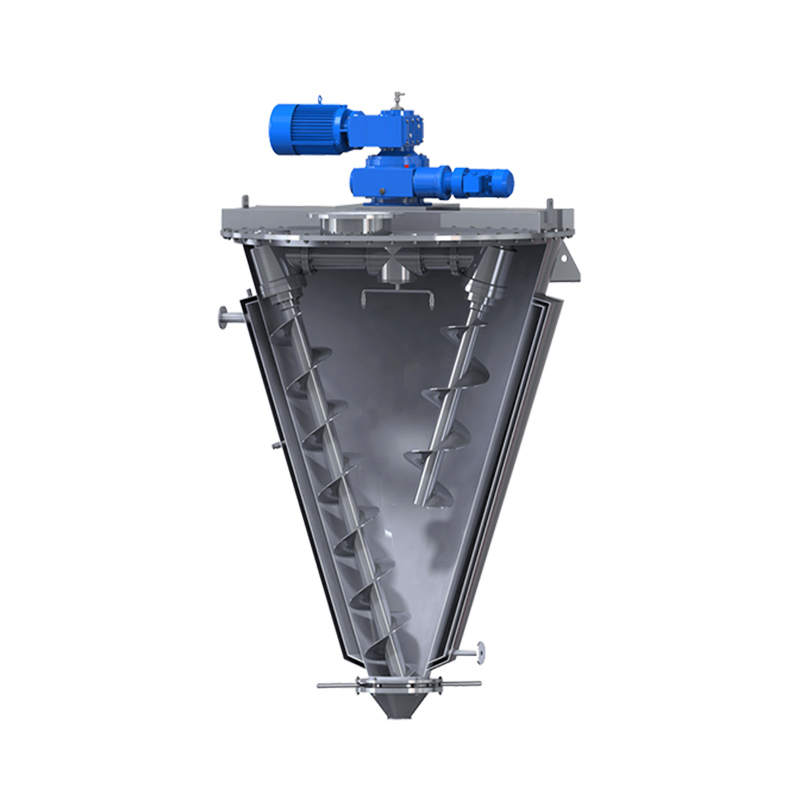
 Conical Screw Mixer
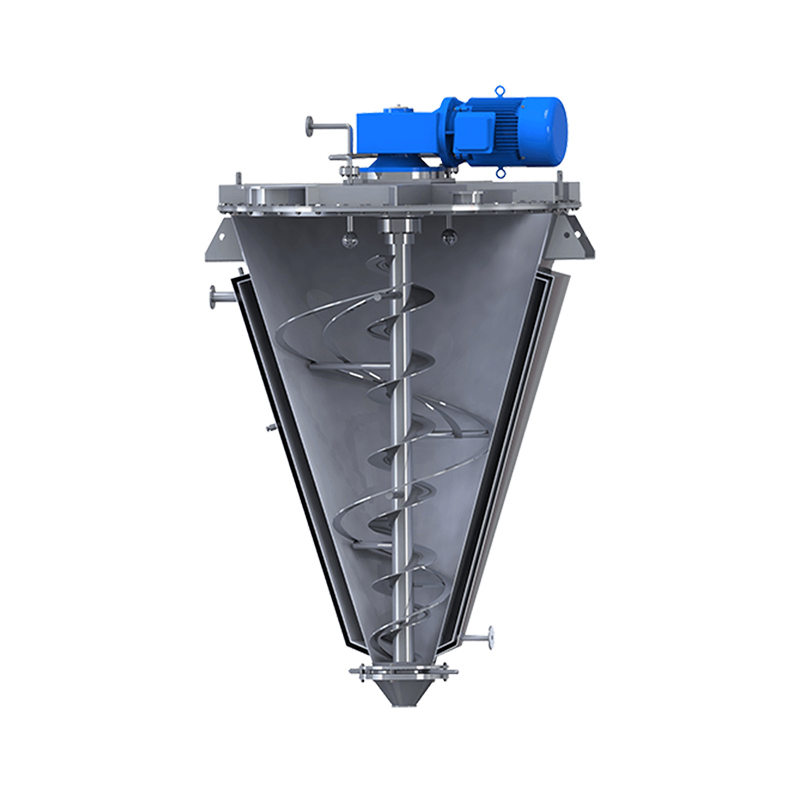 Conical Screw Belt Mixer
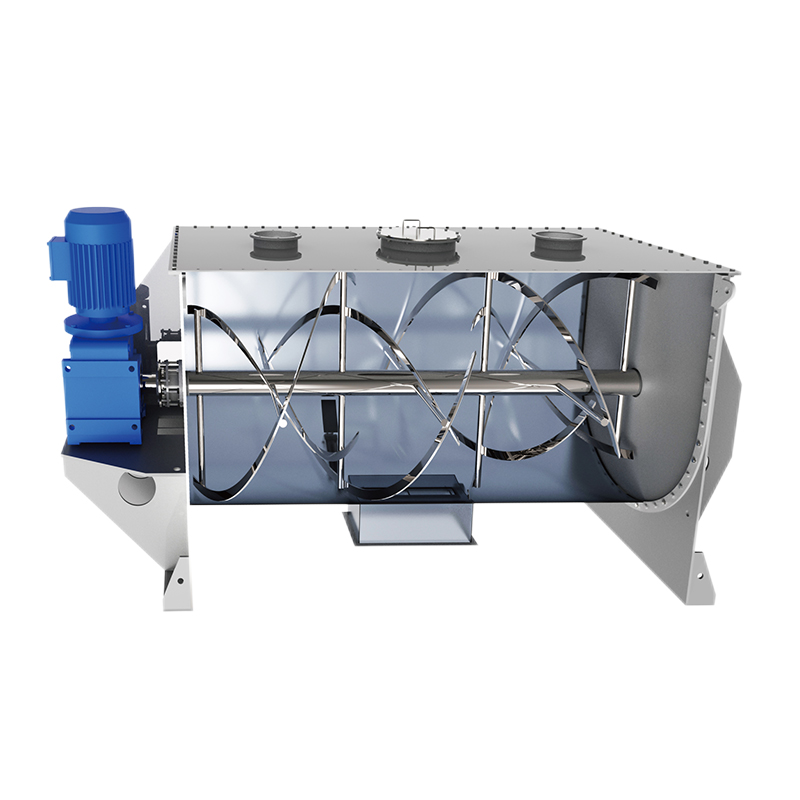 Ribbon Blender
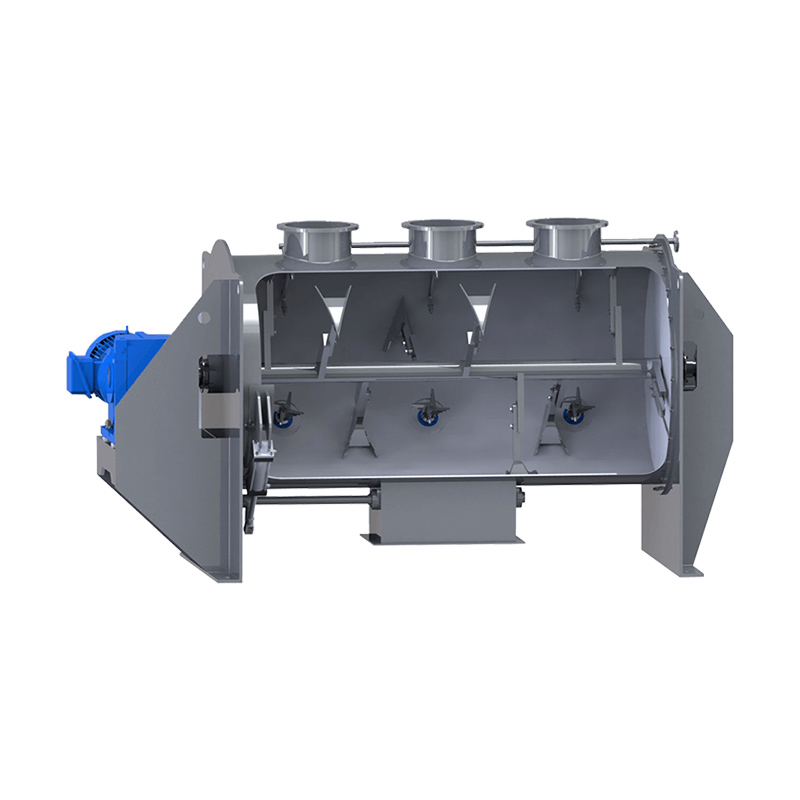 Plough-shear Mixer
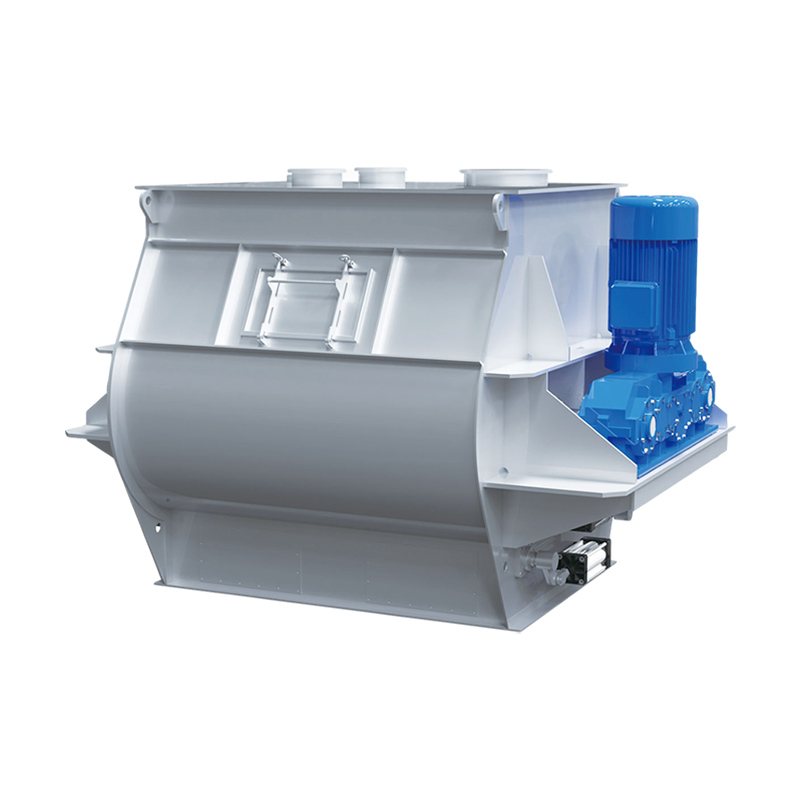 Double Shaft Paddle Mixer
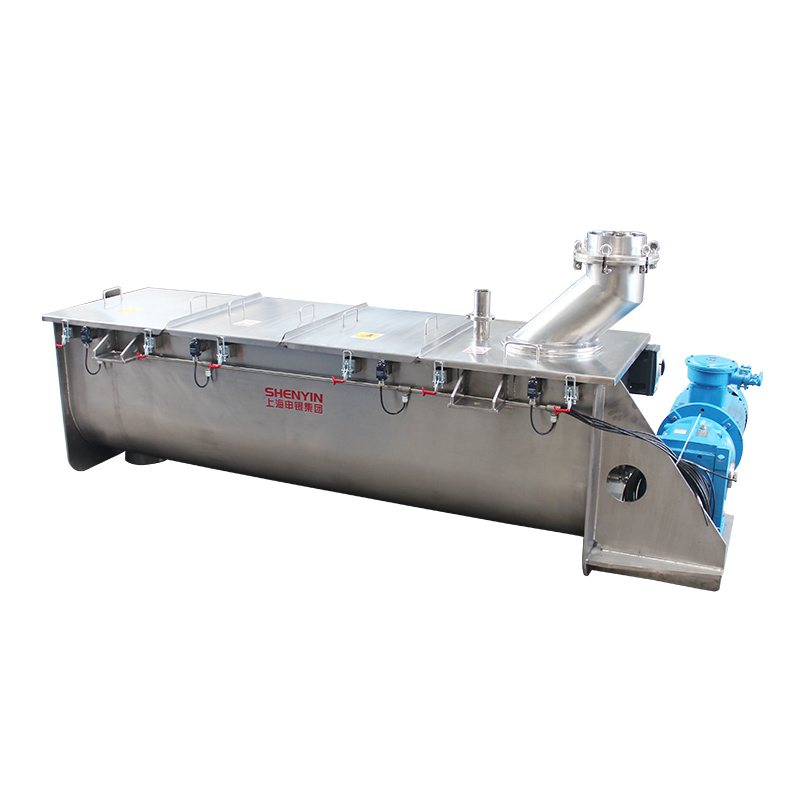 CM Series Mixer


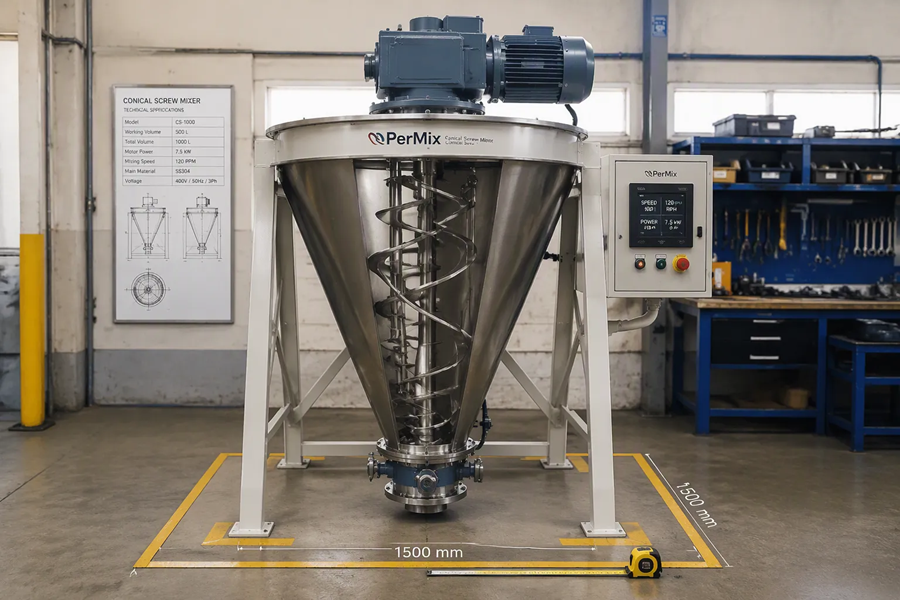
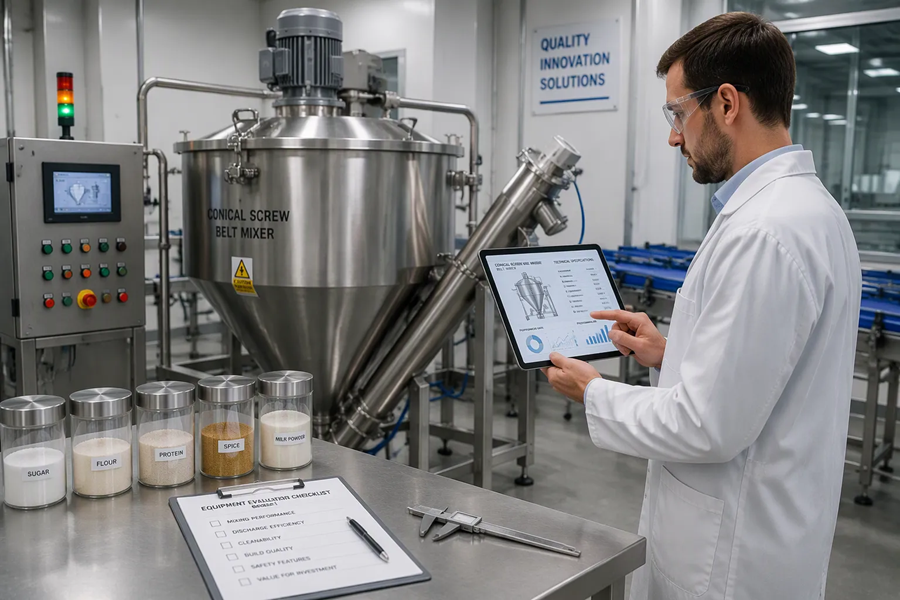
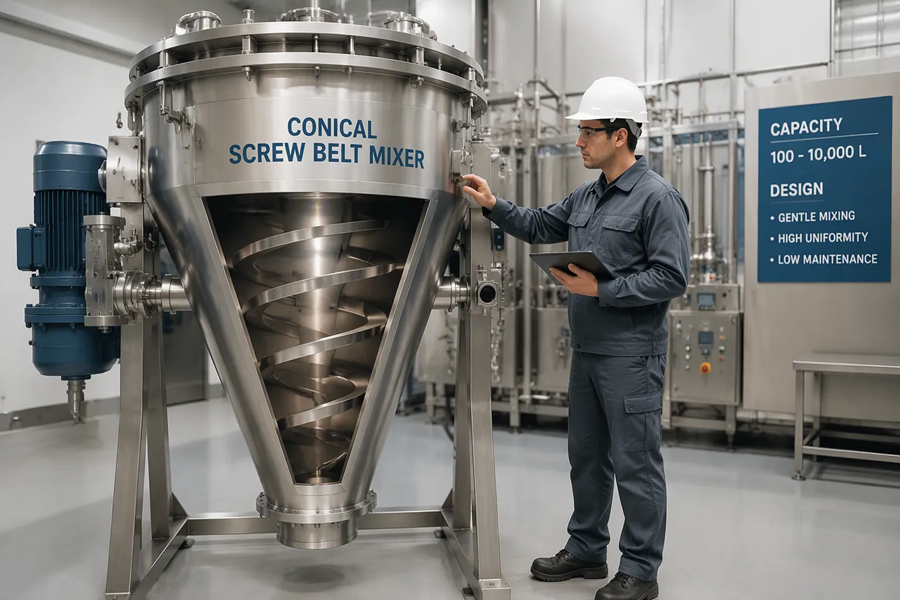
Customized Options for Conical Screw Mixer in Special Powder Processing Conditions
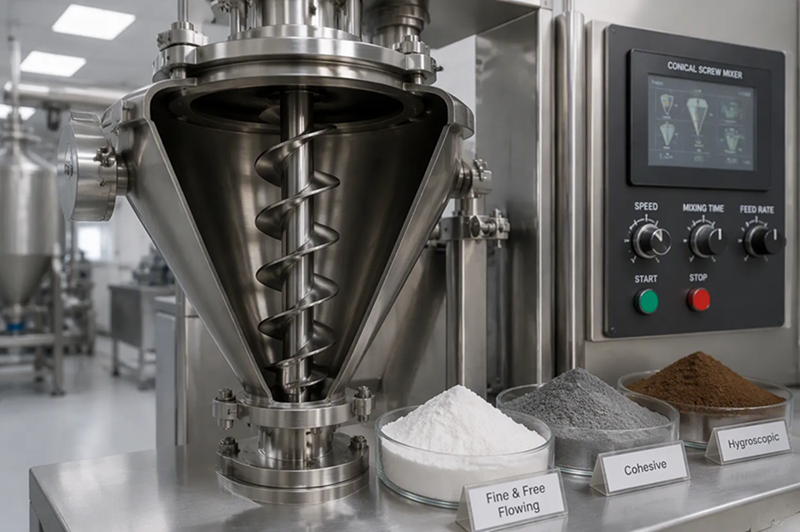
Standard Conical Screw Mixers handle many powders well, but sticky, abrasive, or moisture-sensitive materials demand tailored engineering. I'll explore four customization levers: material of construction, screw geometry, drive systems, and sealing solutions. This practical guide helps you identify the right modifications for your specific processing pain points.
Inconsistent product quality leads to high costs from safety risks and wasted resources, plus costly rework and recalls.
Real-world case studies will illustrate these customizations in action.
Key Takeaways
- Match your mixer's materials and coatings to your powder type for longer equipment life.
- Use custom screw and cone shapes to improve mixing and avoid clogs or waste.
- Choose proper seals and drives to keep sensitive powders safe and contamination free.
Special Powder Conditions: Key Challenges
Defining Cohesive, Abrasive, and Hygroscopic Powders
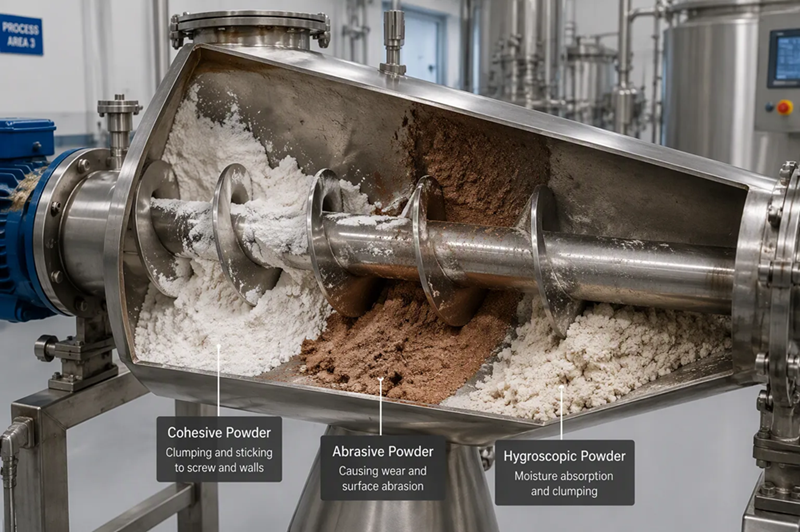
I encounter three powder types that strain standard Mixing Equipment. Cohesive powders stick to themselves and to vessel walls. Wet granulations in pharmaceutical processing behave this way. Lactose monohydrate serves as a model cohesive powder in flow studies. Ibuprofen, another cohesive drug, requires polymer coatings to improve its flow properties. These materials cling to screw flights and cone surfaces, leaving residue between batches.
Abrasive powders like metal oxides wear down equipment through friction. Their hard particles scratch stainless steel surfaces and erode screw edges over time. Hygroscopic powders absorb moisture from ambient air. Certain salts and some pharmaceutical excipients pull water vapor into their structure, causing clumping and chemical degradation.
| Powder Type | Example | Processing Challenge |
|---|---|---|
| Cohesive | Lactose monohydrate, Ibuprofen | Clings to surfaces, poor flow |
| Abrasive | Metal oxides | Wears equipment components |
| Hygroscopic | Certain salts | Absorbs moisture, clumps |
Each characteristic impacts a standard Conical Screw Mixer differently. Cohesive powders require polished surfaces and specialized screw designs. Abrasive materials demand hardened construction. Hygroscopic powders need sealed environments with moisture control.
Flowability Issues in Mixing and Discharge
Poor flowability creates two notorious problems: bridging and rat-holing. Bridging occurs when powder forms an arch above the discharge outlet, blocking material flow. Rat-holing happens when powder flows through a central channel while surrounding material remains stagnant. Both conditions cause incomplete discharge and inconsistent batch composition.
The consequences extend beyond inconvenience. Sluggish material flow directly causes production delays and compromises product quality. In food and pharmaceutical sectors, stagnant material risks cross-contamination. In chemical manufacturing, incorrect material proportions from flow issues destroy product integrity.
Manual agitation with rubber mallets requires stopping production entirely. This intervention lengthens processing times and reduces capacity. Repeated strikes damage hoppers not designed for such force, creating repair costs. Each stopped batch means fewer finished products per shift, translating to lost revenue.
The lifting action of the cone breaks up bridged powder and prevents rat-holing and material segregation. By using IBCs, manufacturers decouple processing stages so multiple steps run simultaneously without pausing production.
These flow problems represent the primary reasons I recommend customized mixing solutions. Understanding your powder's specific failure modes guides every subsequent engineering decision.
Customizing Your Conical Screw Mixer
Material Selection for Wear and Corrosion
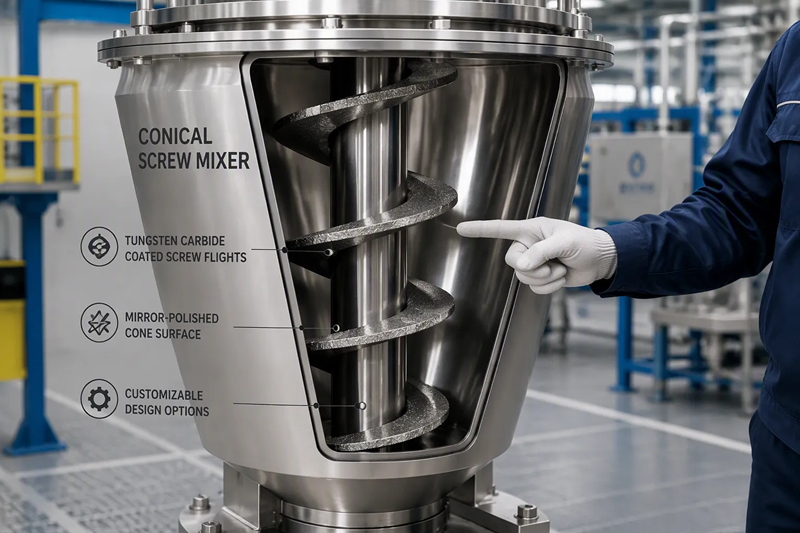
I start every customization project by examining the powder's physical and chemical attack on equipment. Abrasive materials like metal oxides demand hardened surfaces. I specify tungsten carbide coatings on screw flights and cone walls to resist erosion. These coatings extend equipment life considerably compared to standard stainless steel.
Corrosive powders require careful grade selection. Stainless steel 304 handles many general applications. I recommend 316L for chloride-containing materials or washdown environments. The low carbon content in 316L prevents sensitization during welding. This maintains corrosion resistance at weld joints.
Surface finish matters as much as base material. Mirror-polished surfaces reduce friction for cohesive powders. They also meet sanitary requirements in food and pharmaceutical production. A smoother surface gives powder fewer anchor points to cling to. This directly addresses the sticking problems I described earlier.
| Customization Option | Influence on Mixing Performance |
|---|---|
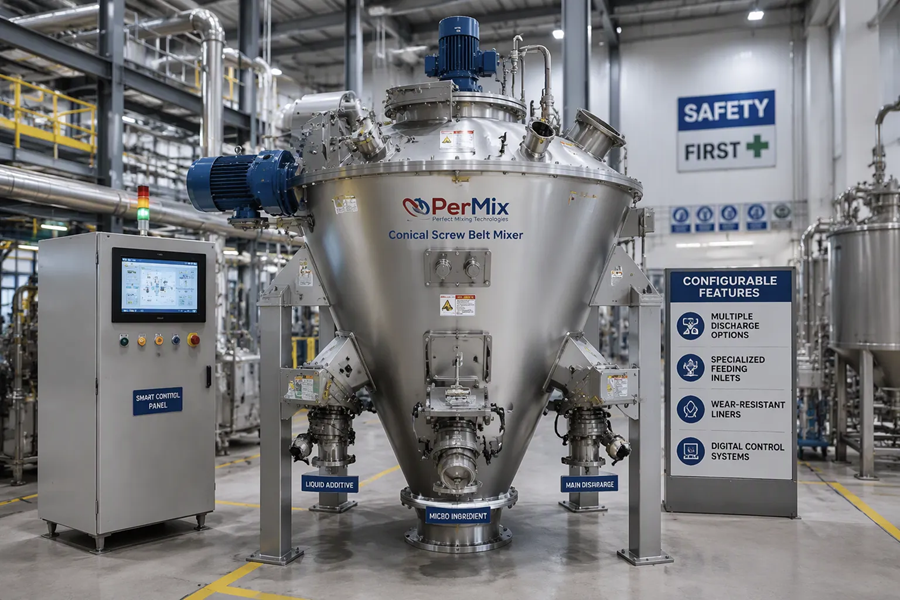
| Conical design | Improves mixing and flow properties, reduces batch time, ensures homogeneity |
| Adjustable speed settings | Allows matching speed to material, prevents damage to delicate powders |
| Heating jacket | Provides temperature control for sensitive materials, ideal for food/pharma |
| Built-in agitation systems | Prevents clumping of fine powders, ensures uniform mix |
Screw and Cone Geometry for Mixing Efficiency
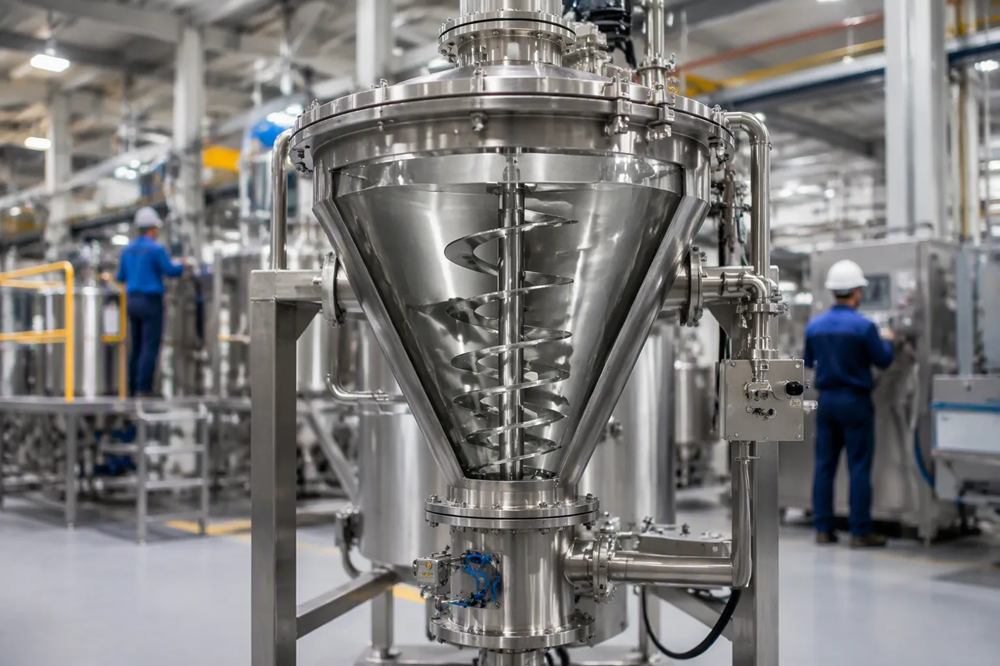
The screw design determines how effectively the Conical Screw Mixer moves material. Cantilevered screw designs eliminate the bottom bearing entirely. This configuration removes a common contamination source. No gear lubricants or bearing wear particles can enter the product stream. The top-driven design keeps drive components away from the product zone. This minimizes seal failure risk, which often causes contamination.
The conical shape enables nearly complete discharge. This reduces waste and cross-contamination risks between batches. Cleaning becomes faster and more efficient with less residue remaining.
Dual-screw configurations offer distinct advantages for segregation-prone materials. A satellite arrangement places a second screw orbiting opposite the standard screw. This reduces mixing times compared to single-screw setups. Materials with varying bulk densities or particle sizes homogenize more thoroughly. A twin-screw variant with a high-speed rotor handles pasty materials and disperses liquids into dry solids.
Custom flight pitches control mixing intensity. Gentle pitches suit fragile crystals that might fracture under aggressive action. Steeper pitches provide vigorous turnover for tough blending tasks. I match the pitch to the powder's rheology and fragility. My equipment ranges from 100L to 5000L capacity with customizable rotation speeds.
Drive Systems for Power and Precision
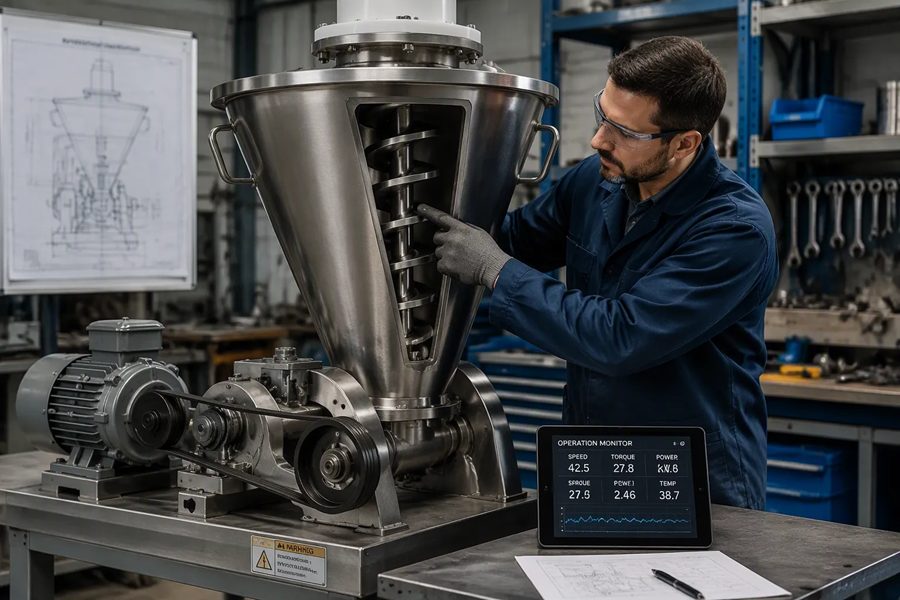
Belt-drive systems suit sanitary applications because they clean easily. Operators can remove and wash components without specialized tools. Direct drives deliver high torque for dense, resistant powders. These systems transmit power efficiently without belt slippage.
Variable speed drives give operators precise control over mixing intensity. Delicate powders require slow, gentle turnover. Robust materials benefit from faster agitation. Adjustable screw speed allows matching the mixing action to material requirements. This prevents damage to fragile particles while maintaining throughput.
Sealing and Venting for Product Integrity
Dynamic seals protect the mixing screw and orbital arm junctions. These seals prevent contamination from entering and dust from escaping. I specify high-quality seal materials compatible with the processed powder.
Moisture-sensitive powders demand specialized venting solutions. Vacuum-capable designs remove humid air before mixing begins. Inert gas purging replaces oxygen with nitrogen or argon. This maintains product integrity for hygroscopic materials. Heating or cooling jackets provide temperature control for sensitive formulations. These options prove essential in pharmaceutical and food processing environments.
Start with material characterization. Measure particle size, moisture content, and angle of repose. These data points dictate every customization choice for your Conical Screw Mixer. Abrasive powders demand hardened coatings. Cohesive materials require polished finishes. Hygroscopic products need sealed venting systems. No selection happens arbitrarily. Consult experienced engineers who test your powder firsthand. Their recommendations prevent costly downtime. Investing upfront in the right geometry, drives, and seals ensures consistent product quality for years.
FAQ
How do I know which customization my powder needs?
Start with material testing. Measure particle size, moisture content, and angle of repose. These numbers reveal whether your powder is cohesive, abrasive, or hygroscopic. Each characteristic points to specific modifications.
Can I retrofit my existing mixer with these customizations?
Yes. Most modifications work as retrofits. I can replace screw flights, add coatings, or upgrade seals on your current equipment. Consult an engineer first to assess compatibility with your machine's design.
What testing should I request before purchasing?
Ask for a trial run using your actual powder. Reputable manufacturers test samples in their lab. They document mixing time, homogeneity, and discharge behavior. This data confirms the right customization before you commit.