
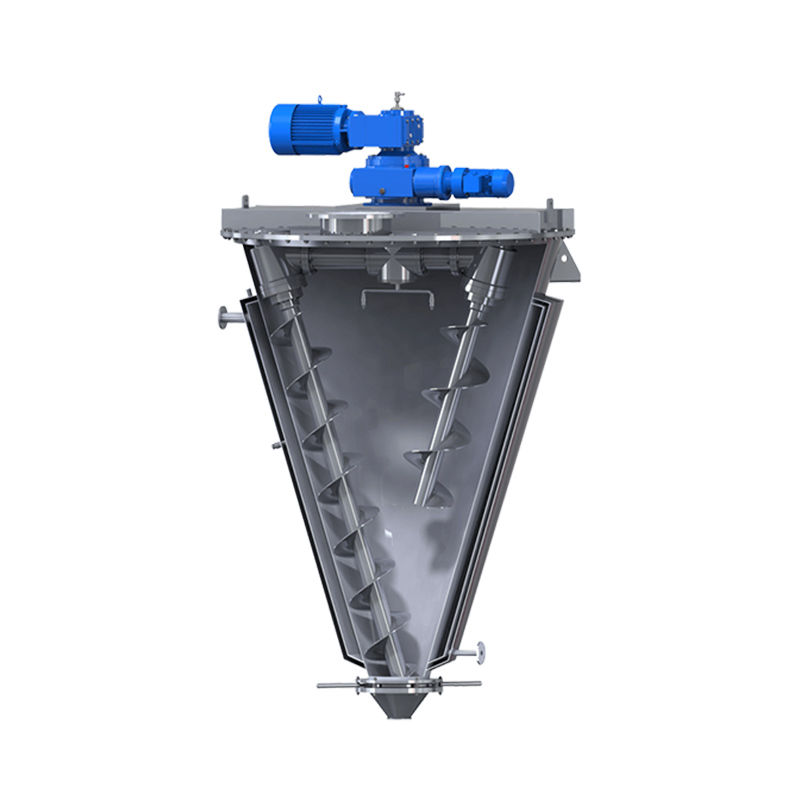
 Conical Screw Mixer
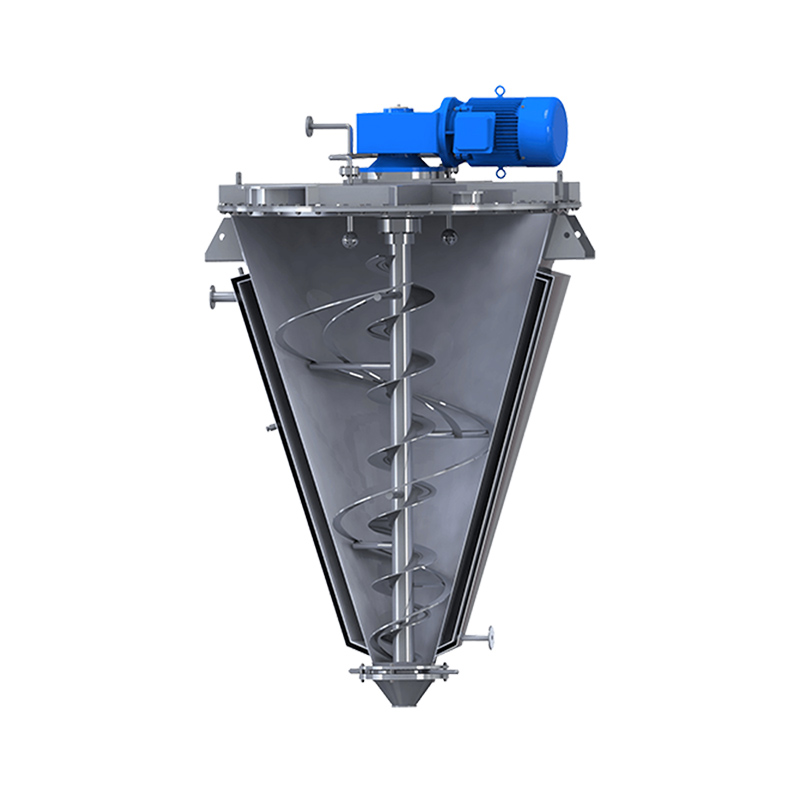 Conical Screw Belt Mixer
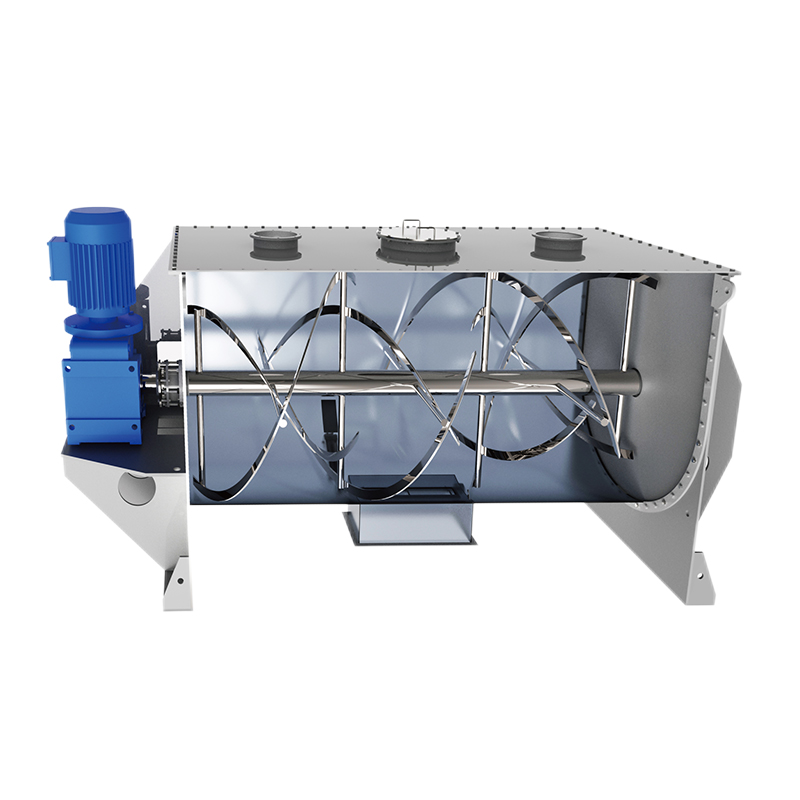 Ribbon Blender
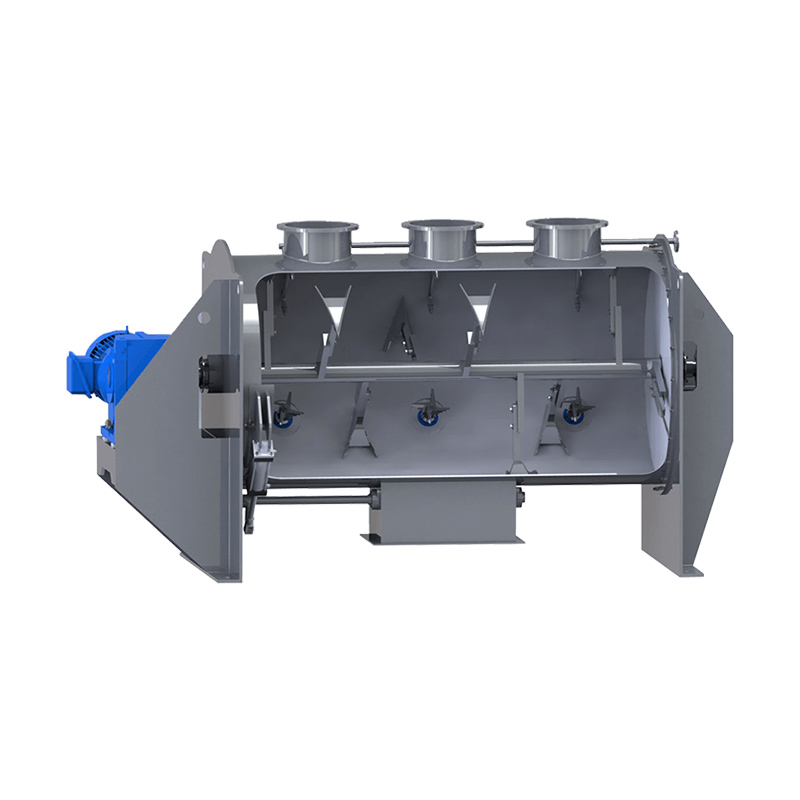 Plough-shear Mixer
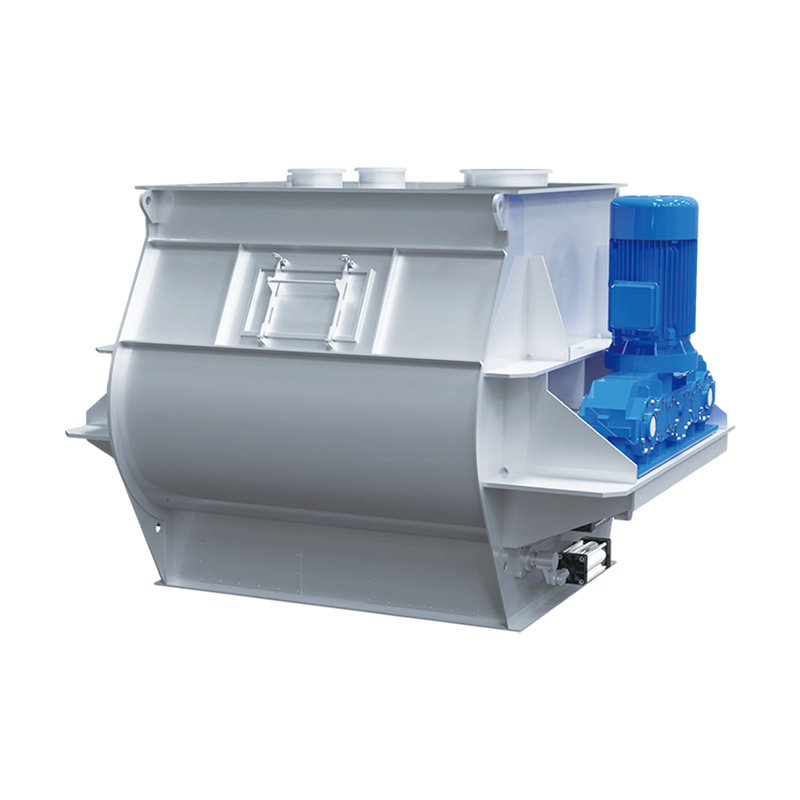 Double Shaft Paddle Mixer
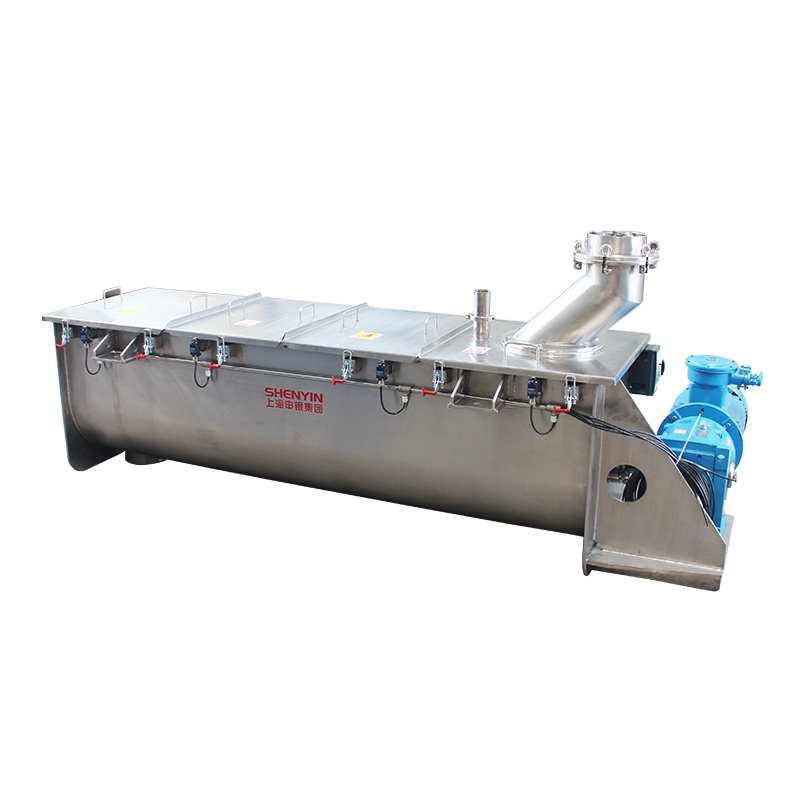 CM Series Mixer



What Major Factors Affect the Price Quotation of Ribbon Blender Supplied by Chinese Manufacturers?
Quick Answer
A Chinese manufacturer’s Ribbon Blender quotation is driven byfive primary cost variables: material of construction and surface finish (carbon steel vs. 316L stainless, sandblasting vs. mirror polishing), core mixing structure (ribbon configuration, shaft design, machining precision), electrical component brands (domestic vs. Siemens/ABB/SEW), sealing system complexity (packing vs. air-purge vs. mechanical seal), and custom auxiliary modules (jackets, spray systems, explosion-proof rating). A basic 40L carbon steel unit may start around USD 3,400, while a sanitary 316L pharmaceutical-grade blender with full automation can exceed USD 60,000 . Chinese mid-market suppliers are gaining share by offering comparable quality at 30–40% lower prices than European imports in the USD 20,000–60,000 segment .
Key Takeaways
-
Material grade is the largest single cost lever: 316L stainless carries a significant premium over 304, and mirror polishing (Ra ≤ 0.4μm) adds 2–3× the labor cost of sandblasting .
-
Sealing specification is the most frequently underestimated cost: an air-purge seal costs 2–3× a simple packing seal, and a mechanical seal can exceed the price of a small motor .
-
Electrical brand choice materially affects price: Siemens, ABB, SEW, and Schneider components cost substantially more than Chinese domestic equivalents .
-
Custom modules compound the quotation: heating/cooling jackets, liquid spray systems, and CIP cleaning each add to the base price .
-
Chinese mid-market pricing is 30–40% below European imports in the USD 20,000–60,000 range, but high-end sanitary segments still favor European brands for complex validation .
Why There Is No “Standard Price” for a Ribbon Blender
A procurement manager requesting quotes from three Chinese manufacturers for “a 2,000L ribbon blender” received quotations of USD 8,500, USD 14,200, and USD 26,800. All three suppliers were quoting real prices for real configurations. The differences lay entirely in what each quotation included: carbon steel versus 316L, packing seal versus air-purge seal, domestic contactors versus Siemens, and whether a heating jacket and spray system were specified.
This pattern is structural, not deceptive. A ribbon blender is a configurable capital equipment item, and the quotation reflects the sum of specification choices. Understanding the cost architecture allows buyers to compare quotations on equivalent terms rather than on headline numbers.
Factor 1: Material of Construction and Surface Finish
The material specification is the single largest determinant of base equipment cost for the mixing chamber, agitator, and cover.
Stainless Steel Grade
304 stainless steel is the baseline for food, pharmaceutical, and fine chemical applications with moderate corrosion resistance. 316L stainless steel is specified when the powder contains salts or has stronger acidic or alkaline properties . Shenyin’s ribbon blender range offers 304, 316L, 321 stainless, carbon steel, manganese steel, Hardox450, and JFE450 as material options, enabling selection based on abrasiveness and corrosiveness.
The price differential between carbon steel and 316L is substantial and reflects raw material cost. China is the world’s largest stainless steel producer, ensuring reliable access to 304 and 316L grades, but the alloying elements (molybdenum in 316L) carry a premium over carbon steel .
Surface Treatment
Surface finish is a labor-intensive cost driver that buyers frequently underestimate.
Sandblasting or pickling/passivation is the lower-cost option, producing a surface roughness suitable for non-sanitary applications. However, the rougher surface makes material adhesion and cleaning more difficult .
Mechanical polishing to a mirror finish (Ra ≤ 0.4μm) requires careful manual labor, with costs 2–3 times higher than sandblasting. The benefit is reduced material residue and easier cleaning—a basic requirement for pharmaceutical and food-grade equipment. The higher the polishing grade, the higher the price .
For a pharmaceutical-grade blender, the surface finish specification often separates a mid-range quotation from a high-end one more than any other single line item.
Factor 2: Core Mixing Structure
The Ribbon Agitator and shaft assembly are thefunctional heart of the blender, and their design complexity and machining precision directly affect both mixing performance and equipment price .
Ribbon configuration: The standard inner-and-outer double ribbon is the most widely used configuration for dry powder blending. Alternative configurations—paddle-plus-ribbon combinations or discontinuous/segmented ribbons—are specified for specific flow challenges but add design and fabrication cost .
Shaft design: The choice between solid and hollow shaft, shaft diameter, material grade, and heat treatment affects rigidity and durability. For large machines, a thicker solid shaft can add several thousand USD to the material cost alone . A 20m³ unit requires a substantially more robust shaft and bearing system than a 1m³ unit, and the price scales accordingly.
Shenyin’s product table illustrates this scaling: motor power rises from 2.2 kW for the 0.1m³ model to 110 kW for the 35m³ model, with spindle speed decreasing from 76 RPM to 11 RPM as capacity increases. These specifications reflect the mechanical demands of larger batch volumes and directly influence the quotation.
Factor 3: Electrical and Drive Components
The electrical and drive systems determine operating stability and service life, and the brand specification is a major price differentiator .
International brands such as Siemens, ABB, SEW, LENZE, Omron, and Schneider are significantly more expensive than Chinese domestic electrical components. For a buyer in a regulated industry where uptime and spare-part availability are critical, the premium may be justified. For a buyer in a price-sensitive market with acceptable local service infrastructure, domestic components reduce the quotation substantially .
The drive system also includes the reducer and motor-gearbox connection (direct, pulley, or hydraulic coupler), each with its own cost implications. Variable frequency drives (VFDs), while optional, add cost but enable speed adjustment for different powder bulk densities.
Factor 4: Sealing and Bearing Systems
The sealing system is a frequently overlooked cost factor that directly determines whether the equipment can operate reliably over its service life .
| Seal Type | Relative Cost | Application | Maintenance Implication |
|---|---|---|---|
| Packing seal (PTFE) | Baseline (lowest) | Standard dry powders | Requires periodic tightening/replacement |
| Air seal + packing | 2–3× packing | Fine powders, dusty materials | Compressed air supply required |
| Mechanical seal | Highest (can exceed small motor cost) | Liquid/slurry applications | Precision-machined surfaces; specialized repair |
The air-purge seal introduces compressed air outside the packing to form a barrier preventing powder escape. This configuration is specified for very fine or dusty powders where packing alone allows leakage .
Bearing selection—imported versus Chinese-made—adds another price variable. For high-load, continuous-duty applications, imported bearings may be specified for reliability; for intermittent operation, domestic bearings may suffice.
Factor 5: Custom Auxiliary Modules
Beyond the core machine, the quotation reflects the auxiliary modules specified for the application. Shenyin confirms that it supports comprehensive non-standard customization, including heating, dehumidification, dust removal, and automatic feeding modules.
The modules that most commonly appear in Chinese manufacturer quotations include:
-
Heating/cooling jacket: Enables indirect heat exchange during mixing. Essential for heat-sensitive powders or vacuum drying applications.
-
Liquid spray system: Nozzles, metering pump, and tank for controlled minor-liquid addition.
-
CIP cleaning system: Automated clean-in-place capability, increasingly specified for pharmaceutical and food applications.
-
Explosion-proof configuration: Explosion-proof motors and electrical components for flammable dust environments. Shenyin notes that explosion-proof structures and closed dust removal systems can be customized for flammable and explosive materials.
-
Discharge valve upgrades: Knife gate, flush plug, or spherical valves for cohesive or high-value powders where residual material is unacceptable.
Each module adds cost, and the cumulative effect can double the base machine price when multiple modules are specified.
Table: Quotation Cost Drivers and Their Relative Impact
| Cost Driver | Relative Price Impact | What Drives the Cost |
|---|---|---|
| Carbon steel → 316L stainless | High | Raw material alloy premium |
| Sandblast → mirror polish (Ra ≤ 0.4μm) | High (2–3× labor) | Manual polishing time |
| Packing seal → air-purge seal | Medium (2–3× seal cost) | Compressed air integration, machining |
| Domestic → international electrical brands | Medium–High | Component brand premium |
| Standard ribbon → customized configuration | Medium | Design and fabrication complexity |
| Adding heating/cooling jacket | Medium | Jacket fabrication, utility connections |
| Adding spray system | Medium | Nozzles, pump, tank, PLC integration |
| Explosion-proof configuration | Medium–High | Motor and electrical enclosure certification |
Market Context: Why Chinese Quotations Are Competitive
China’s domestic ribbon blender production capacity is estimated at 12,000–15,000 units per year, representing roughly 35–40% of global production capacity . This scale supports competitive pricing, particularly in the mid-market segment.
Chinese manufacturers are gaining share from imports in the USD 20,000–60,000 range by offering comparable quality at 30–40% lower prices. In export markets, Chinese blenders are price-competitive at 30–50% lower cost than European or Japanese alternatives .
However, the high-end sanitary segment—where complex validation requirements, consistent weld quality, and electro-polished surfaces are mandatory—still favors European brands such as amixon, GEA, and Hosokawa . Buyers in pharmaceutical applications requiring full validation documentation should factor this into their sourcing strategy: a lower Chinese quotation may require additional verification and documentation effort to meet regulatory expectations.
FAQ
What is the biggest factor affecting a Chinese ribbon blender quotation?
Material of construction and surface finish typically account for the largest price variation. The choice between carbon steel and 316L stainless, combined with sandblasting versus mirror polishing (Ra ≤ 0.4μm), can shift the quotation by a factor of two or more before any auxiliary modules are added .
Why do two quotations for the same capacity differ so much?
Quotations for “a 2,000L blender” may include entirely different specifications. One may specify carbon steel with a packing seal and domestic electrical components; another may specify 316L with air-purge seals, Siemens components, and a heating jacket. Buyers should request itemized quotations that separate base machine, material, electrical, sealing, and auxiliary module costs.
How much does a sealing system add to the price?
A simple PTFE packing seal is the baseline. An air-purge seal costs 2–3 times the packing seal due to the compressed air integration and additional machining. A mechanical seal is the most expensive option and can exceed the cost of a small motor . The seal specification should match the powder’s fineness and the required maintenance interval.
Does mirror polishing significantly increase the price?
Yes. Mechanical polishing to Ra ≤ 0.4μm requires manual labor and costs 2–3 times more than sandblasting . For pharmaceutical or food applications where cleaning validation is required, this cost is typically non-negotiable. For non-sanitary applications, sandblasting or pickling may be sufficient.
How do electrical component brands affect the quotation?
International brands such as Siemens, ABB, SEW, and Schneider are significantly more expensive than Chinese domestic components . The premium reflects reliability, spare-part availability, and compatibility with plant-wide control systems. Buyers should specify the brand requirement in the inquiry to ensure comparable quotations.
What auxiliary modules most commonly increase the quotation?
Heating/cooling jackets, liquid spray systems, CIP cleaning, and explosion-proof configurations are the most common cost-adding modules. Shenyin confirms that heating, dehumidification, dust removal, and automatic feeding modules are available as custom options. Each module should be justified by a specific process requirement rather than specified by default.
Are Chinese ribbon blender quotations negotiable?
Yes, particularly for bulk orders and long-term partnerships. Shenyin offers tiered discounts for bulk purchases, with long-term partners receiving priority production and free wearing parts. The formal quotation validity period is 30 days. Buyers should clarify whether the quotation includes installation guidance, training, and warranty terms, as these affect the total cost of ownership.