
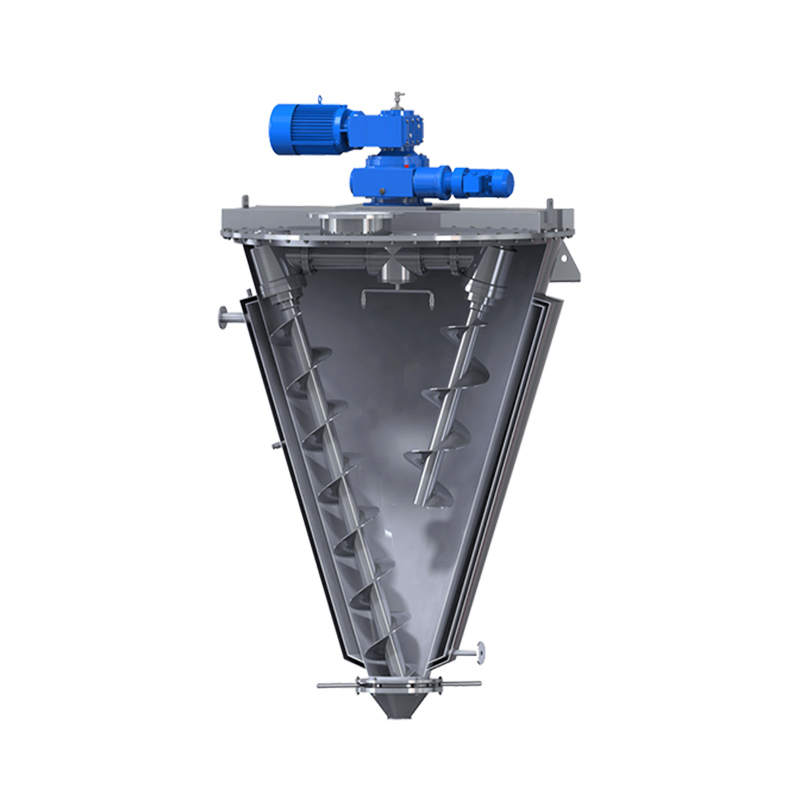
 Conical Screw Mixer
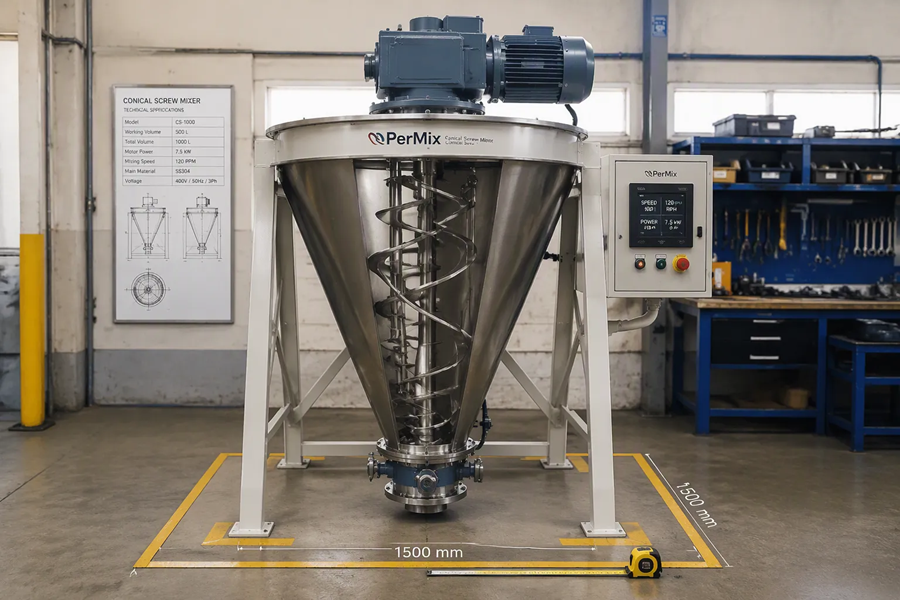
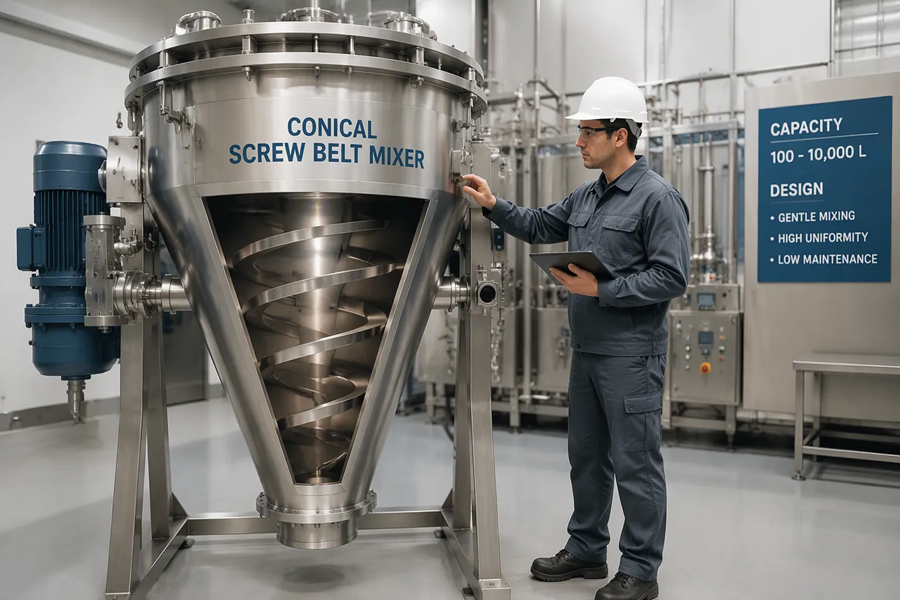
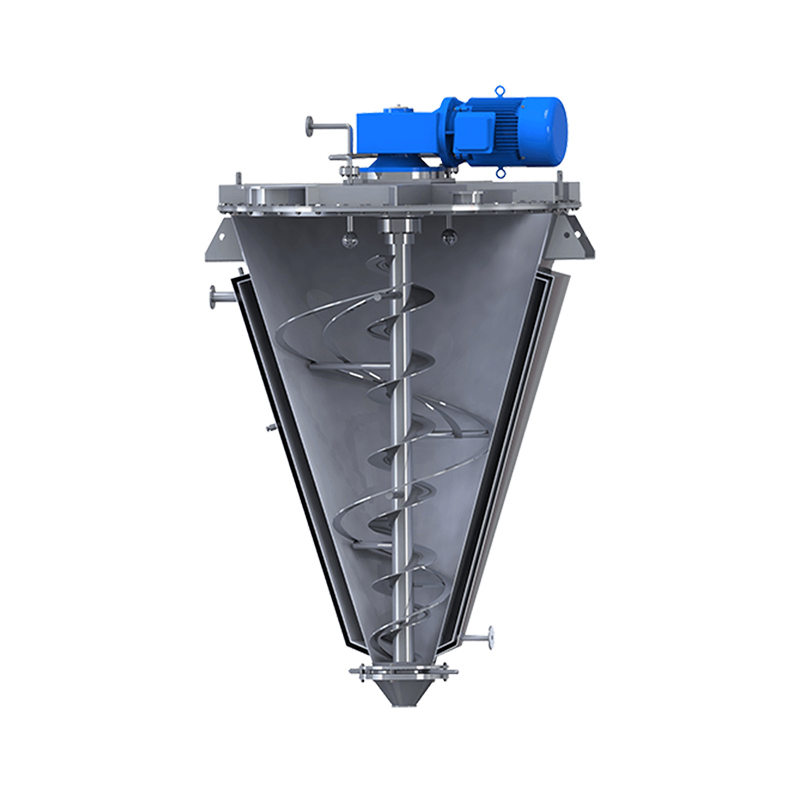 Conical Screw Belt Mixer
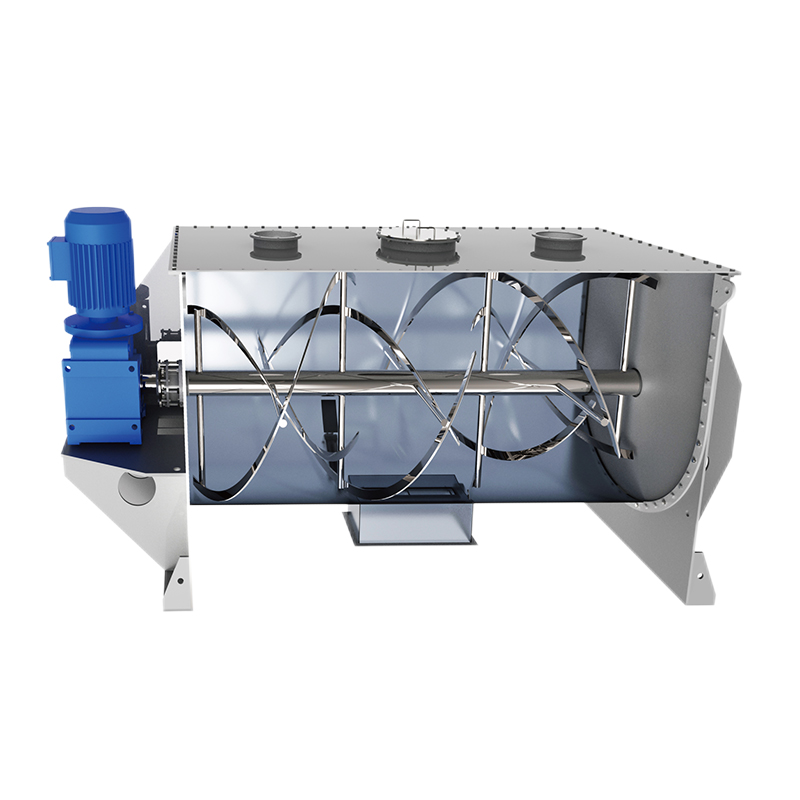 Ribbon Blender
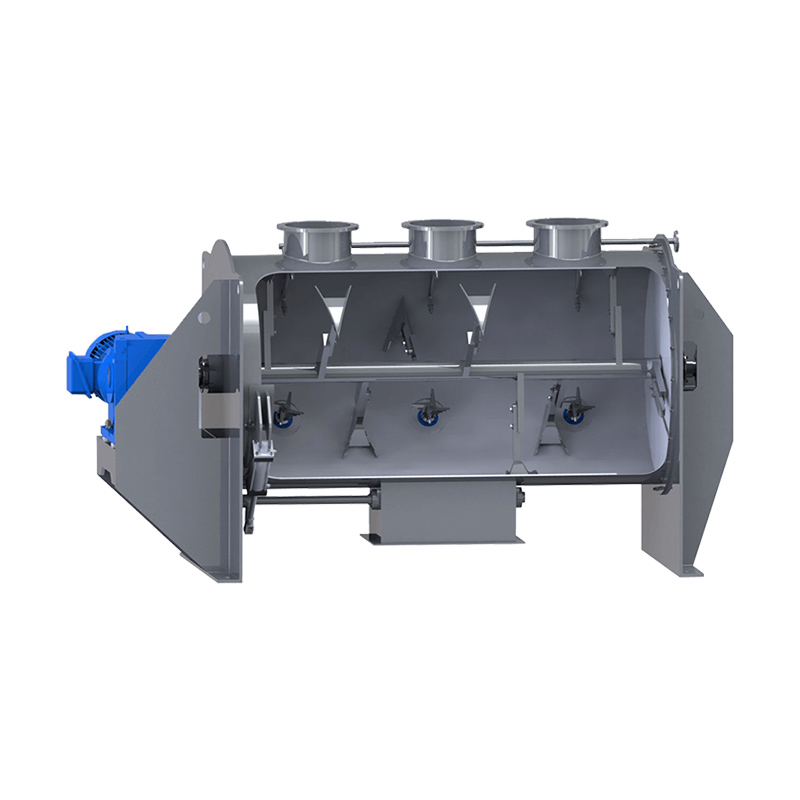 Plough-shear Mixer
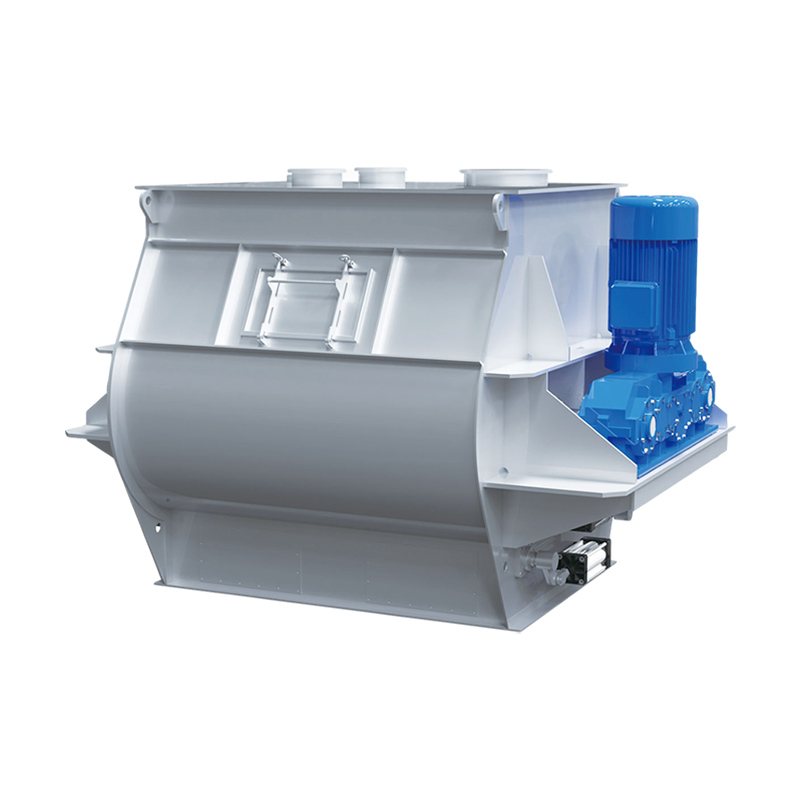 Double Shaft Paddle Mixer
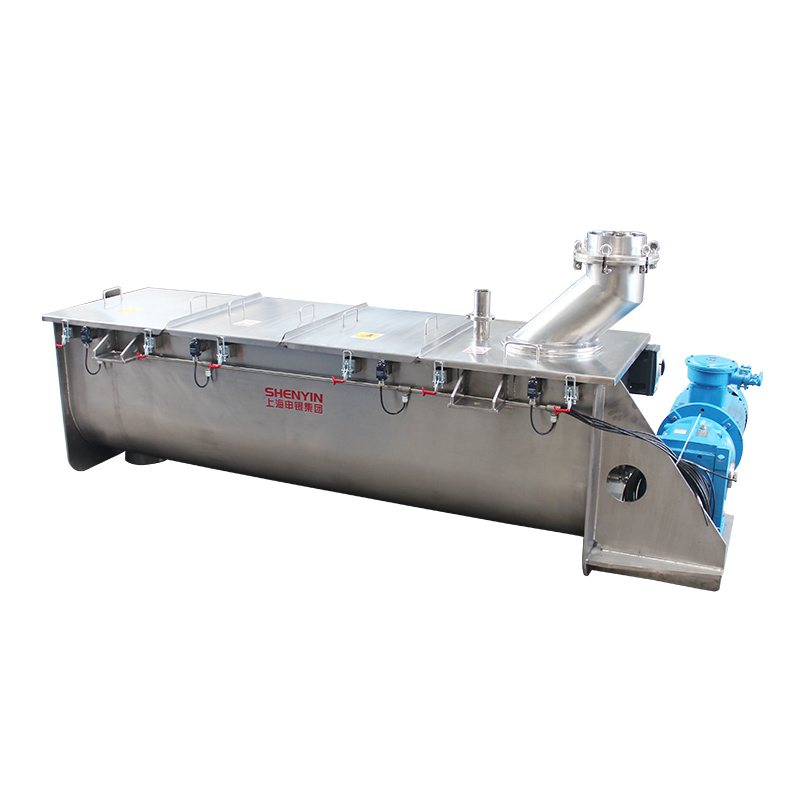 CM Series Mixer




What Main Factors Influence the Quotation of Conical Screw Belt Mixer From Chinese Manufacturers?
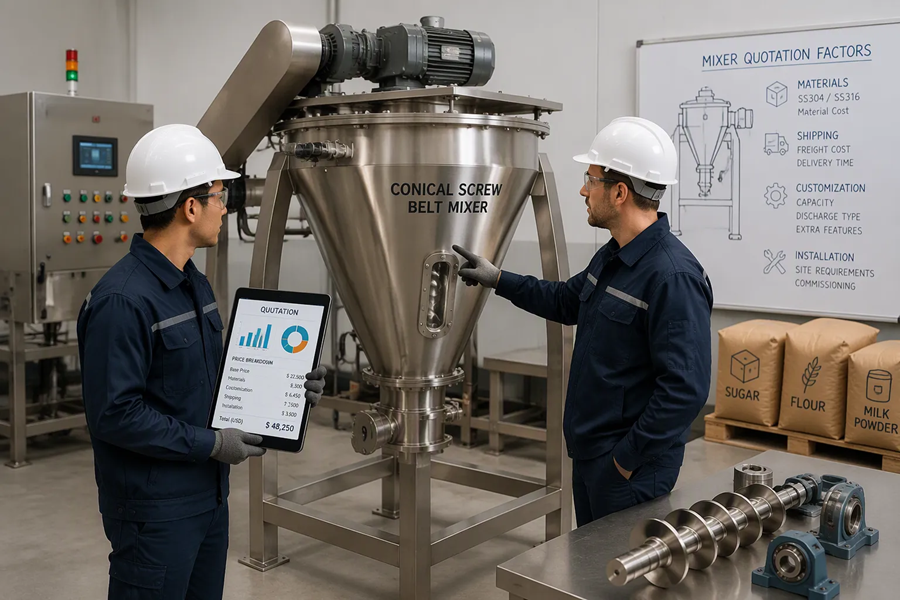
Why do Chinese manufacturers quote such different prices for the same Conical Screw Belt Mixer? Your quotation depends on equipment specifications, materials, customization, automation, certifications, order volume, commercial terms, and supplier positioning. These factors explain most price gaps. This guide helps you compare quotes fairly, budget accurately, and avoid hidden costs.
Key Takeaways
●A Conical Screw Belt Mixer quote depends on equipment details, materials, customization, automation, certifications, order size, payment terms, shipping terms, supplier reputation.
●Send complete technical details. Ask for itemized quotes. Compare suppliers with the same delivery terms.
●The lowest price may hide higher long-term costs. Check reliability, energy efficiency, spare parts, warranty.
Technical Factors That Shape a Conical Screw Belt Mixer Quotation
Each quotation starts with the product you plan to mix. A Conical Screw Belt Mixer must match the material and process. Small specification changes move the price. You should examine four technical areas: material properties, batch volume, component quality, and automation.
Material Properties, Batch Volume, and Mixing Accuracy
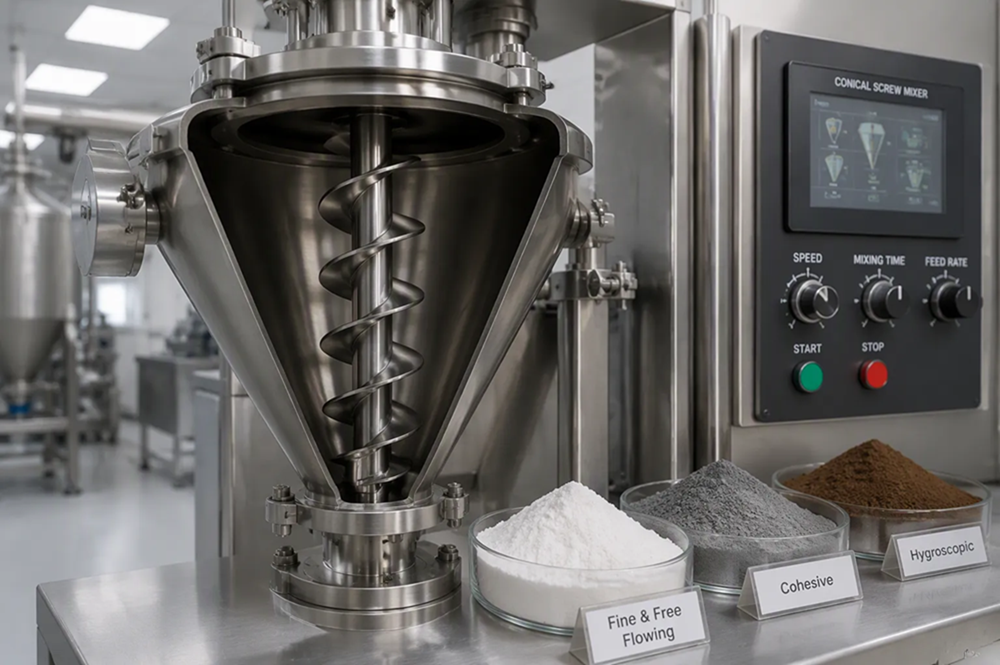
Bulk density forces the first design decision. It determines motor power and drive sizing. Dense powders require heavier drives to avoid mechanical stress and thermal overload. Particle size distribution sets the acceptable screw speed. The manufacturer keeps standard screw rotation near 70 rpm, the orbital arm at 1–2 rpm, and tip speed between 0.5 and 2 m/s. That low-shear motion protects fragile granules. High-viscosity pastes create too much resistance for the rotating screw, so standard units suit dry powders and granules only.
Batch volume shapes the whole machine. Recommended working fill is 30–80% of gross volume. Standard motors range from 5.5–37 kW for working volumes of 100–5,000+ liters. Gross volume models can reach 30,000 L. A larger cylinder needs a stronger transmission, heavier bearings, and a bigger discharge valve. These parts raise the base cost. Mixing accuracy also matters. Tight tolerances force longer cycles or extra instrumentation. Typical cycle time runs 3–8 min.
| Material property | Design impact | Cost impact |
|---|---|---|
| Bulk density | Motor and drive must match weight | Reinforced drive raises the quotation |
| Particle size | Low screw speed protects fragile granules | Speed control and hygiene finishes add cost |
| Viscosity | High-viscosity pastes are not supported | Standard mixers are not quoted for them |
Component Quality, Screw Design, and Automation Choices
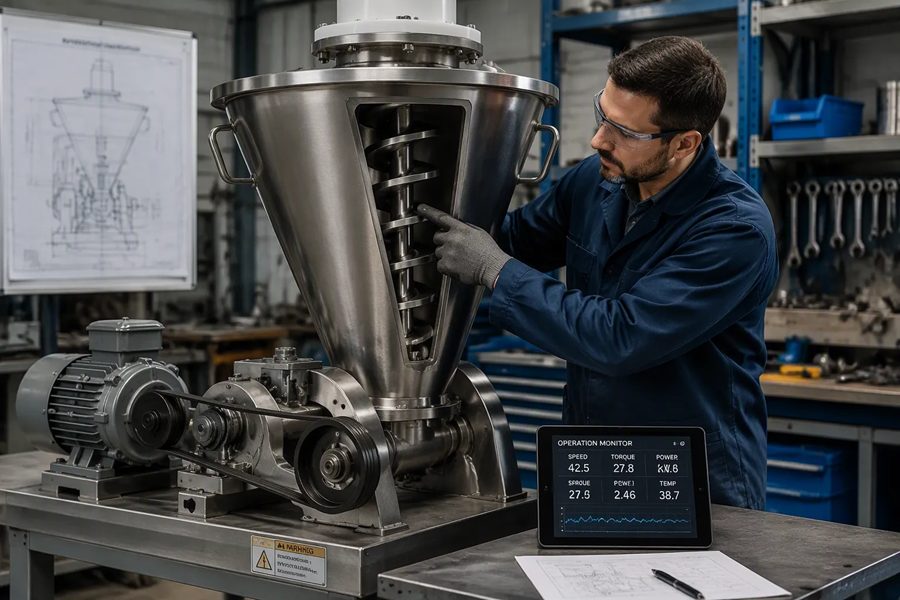
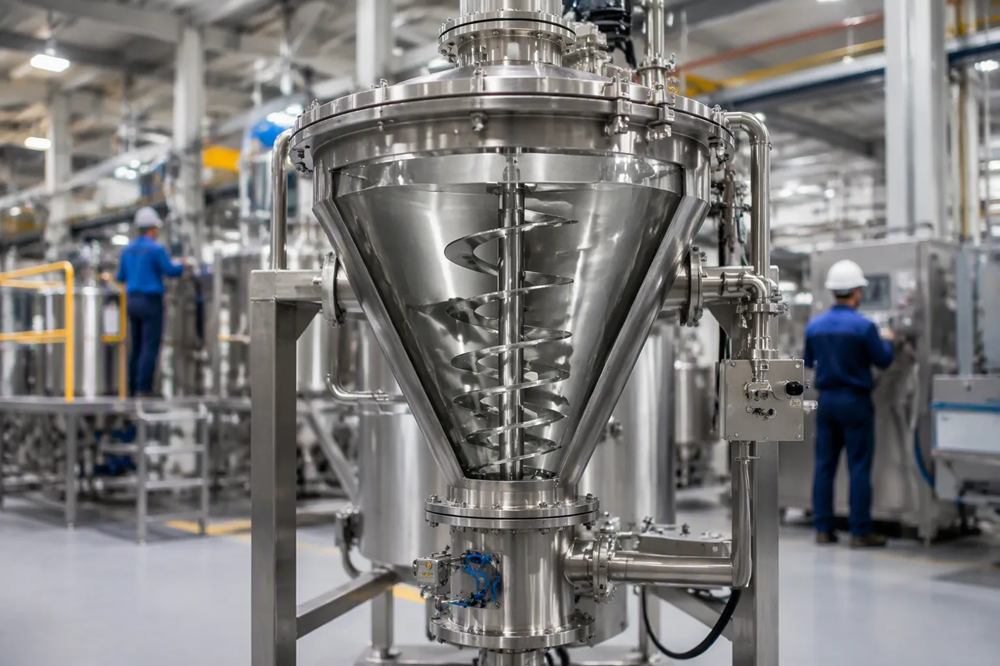
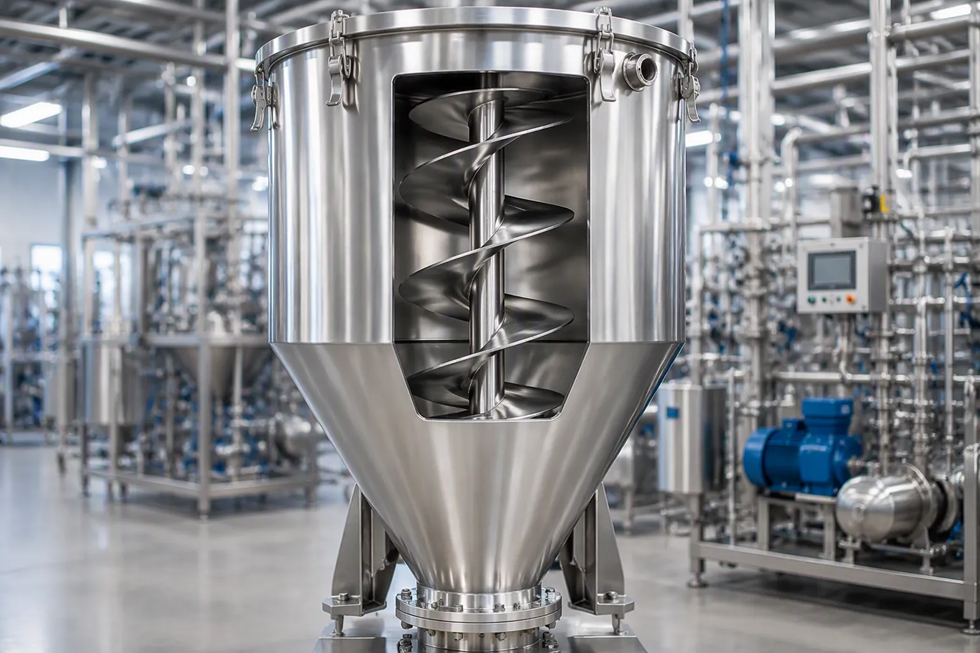
Component choice forms the second price layer. A double-screw Conical Mixer contains a transmission system, two inclined screws, a rotating arm, a cylinder, and a discharge valve. The number of spirals is a quote option. Double-screw mixing runs 2–3 times faster than single-screw mixing. More spirals reduce dead zones. The auger travels around the cone wall and lifts material upward. This vertical flow creates gentle 3D mixing with low power consumption. Hard-chromium plating on the auger and valves adds durability and price.
Contact materials determine reliability. Carbon steel keeps the initial cost low. Manganese steel, SS304, and SS316L handle abrasive or corrosive powders better. Food and pharmaceutical lines often require SS316L with Ra ≤ 0.8 µm and electropolished surfaces. Seals, bearings, custom hoppers, and discharge valves each carry different quality grades. Surface finish alone can change your quotation.
Automation separates economy units from process-grade equipment. A simple starter costs less than an inverter, PLC, and touchscreen. Premium motor, gearbox, inverter, PLC, and touchscreen brands raise price. Heating or cooling jackets, pressure or vacuum versions, and liquid-spraying systems add line items. Match options to production needs.
Commercial and Supplier Factors That Affect the Final Quote
Certifications, Order Volume, and Delivery Lead Time
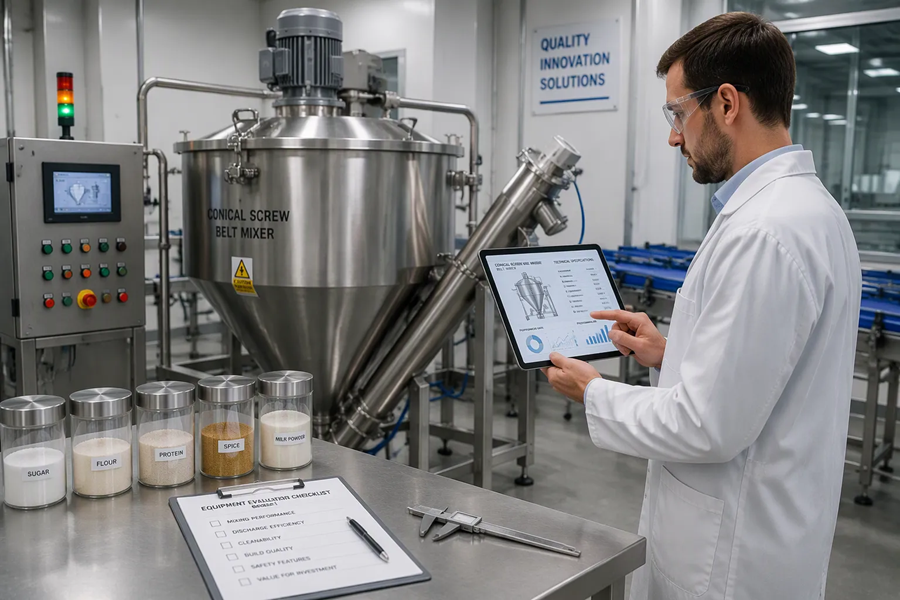
Certifications add engineering labor. CE marking requires conformity testing and technical documentation. FDA compliance demands food-grade materials and validation records. ATEX certification involves explosion-proof design reviews. Each standard raises the quotation. Ask which standards are included. Some suppliers list certification separately. Others include it in the base price. Know the difference when comparing quotes.
Order volume changes per-unit pricing. A manufacturer spreads fixed costs across every unit. One mixer carries those costs alone. Orders of five mixers lower each price. Use volume to negotiate. Keep the same specification across all units. Combine multiple models in one order for a better rate. Confirm volume break points with each supplier.
Delivery lead time also moves the price. Standard production may run 30 to 45 days. A shorter deadline forces overtime. You pay a premium for speed. An off-peak order can earn a discount. Ask for the standard lead time before comparing. Confirm when the lead time starts and whether it includes ocean shipping.
Commercial Terms, Logistics, and Supplier Positioning
Payment terms affect cash flow and risk. Many suppliers ask for a 30% deposit and 70% before shipment. Some accept letters of credit. Others offer better terms for repeat buyers. Payment methods alter the final price because they change supplier risk. A riskier payment structure may push the quote higher.
Incoterms define who pays freight and insurance. EXW places all logistics on you. FOB transfers risk at the port. CIF includes freight and insurance in the quote. These terms can change the apparent price by thousands. Compare quotes only under the same Incoterm. Convert EXW and CIF quotes to the same delivery point.
Exchange rates matter for international buyers. Chinese manufacturers often quote in USD or RMB. Currency swings affect your total landed cost. Lock rates early or request a quote in your currency.
Shipping costs depend on mixer weight and crate size. A large Conical Screw Belt Mixer requires special export packing. Port charges and inland transport add up. Get a freight estimate before finalizing. Check if the quote includes loading charges.
After-sales service and warranty coverage determine long-term value. A lower quote may include a 12-month warranty with no on-site support. A higher quote can include spare parts, remote troubleshooting, and a longer warranty. You pay more upfront but reduce downtime. Ask for a service response time in writing.
Supplier positioning explains many price differences. Established Chinese manufacturers invest in engineering, quality control, and project management. Their quotes reflect that overhead. They honor commitments and respond quickly. Newer workshops may quote lower but carry more risk. Consider total cost of ownership, not just the purchase price.
How to Request Accurate Conical Screw Belt Mixer Quotes
Provide a Complete Technical Specification Sheet
Your request for quotation is only as good as the data you supply. A vague inquiry forces the manufacturer to guess. Guesses lead to padded prices or unsuitable designs. Start with the material type. State whether you mix dry powders, granules, or fragile flakes. Add the bulk density. This value sets motor power and drive sizing. Include the particle size distribution. Fine powders behave differently from coarse granules. Mention viscosity if your process involves pastes. Remember that standard units suit dry powders and granules only.
Next, define your batch volume and mixing accuracy. Give the working volume in liters. The manufacturer sizes the cylinder around a 30–80% working fill. State your required cycle time and homogeneity target. Add power requirements and control system preferences. Do you need a simple starter or a full PLC with touchscreen? List any target certifications such as CE, FDA, or ATEX. A complete sheet lets every supplier quote the same machine. You then compare apples to apples.
Ask for an Itemized Quotation and Clarify Inclusions
A single lump-sum price hides the cost drivers. Ask for an itemized quotation instead. The document should list the machine base price separately. It should show optional components, automation, freight, installation, and warranty as distinct lines. This breakdown reveals what each supplier includes. One quote may bundle CE certification into the base price. Another may charge it as an add-on. You cannot compare them until you see the line items.
Clarify the Incoterm under which the supplier quotes. EXW, FOB, and CIF shift freight and insurance costs between you and the seller. Convert every quote to the same delivery point before you negotiate. Confirm the warranty length and after-sales response time in writing. Ask whether the lead time starts from deposit or from drawing approval. An itemized Conical Screw Belt Mixer quote turns a confusing price gap into a clear, negotiable list.
Before choosing the lowest bid, weigh long-term reliability, energy efficiency, spare parts, and warranty. Use every technical, commercial, and supplier factor as your quotation checklist. Contact shortlisted manufacturers with complete technical details and itemized pricing. This yields accurate, comparable Conical Screw Belt Mixer Quotes. The best value costs more upfront but pays back with dependable service.
FAQ
These answers address the questions buyers ask most often after the first round of supplier quotes arrives.
What Happens If I Send an Incomplete Inquiry?
Manufacturer guesses your needs. Guesses lead to padded prices or unsuitable designs. Send material type, bulk density, batch volume, and target certifications. Complete data ensures accurate comparable quotes.
How Can I Compare Quotes With Different Incoterms?
Convert them to the same delivery point. Choose one Incoterm like FOB or CIF. Then compare. Different terms shift freight and insurance cost between you and the seller by thousands.
How Much Room Do I Have to Negotiate?
Volume drives price down. Order more mixers and pay less per unit. Combine models in one order. Off-peak delivery earns discounts. Match your specification across units for the best rate.